
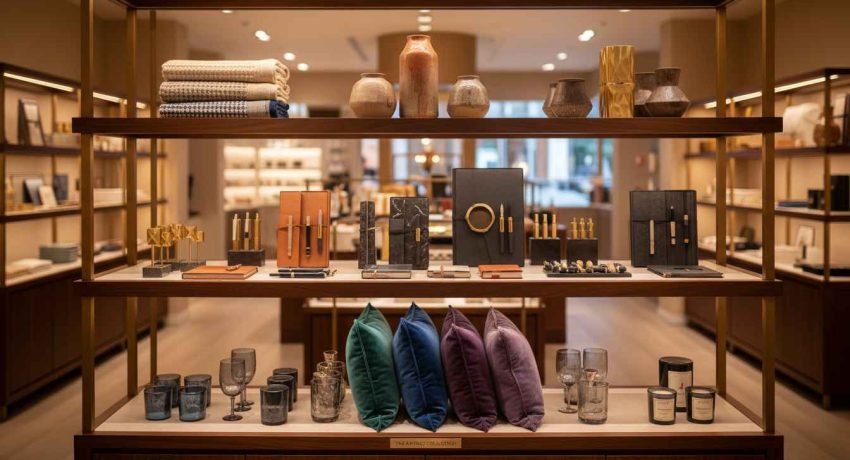

Struggling to get your products noticed in-store? You’re not alone. Many retailers underestimate how significantly the retail display collection aspect can impact sales, customer engagement, and overall brand perception. A poorly organized or unappealing display can leave products overlooked, even if they’re top-quality. Conversely, a thoughtfully designed display can increase product visibility, encourage impulse purchases, and boost your bottom line.
Understanding this aspect goes beyond simply placing items on a shelf – it’s about strategic curation, aesthetic appeal, and aligning with shopper behavior. This article breaks down how you can measure and maximize the return on investment (ROI) of your retail display collection, ensuring every square inch of your retail space contributes to revenue growth. For a wide selection of products to experiment with your displays, check out MochiThings.
Before You Start: Prerequisites
Before diving into optimizing your retail display collection, ensure you have the following:
- A clear understanding of your target audience’s preferences and shopping habits.
- Accurate sales data for all products to identify high-performing and low-performing items.
- Basic knowledge of retail space allocation and visual merchandising principles.
- Access to display fixtures, props, or modular shelving for flexibility.
- Analytical tools to track changes in sales and customer interaction with displays.
Understanding the Retail Display Collection Aspect
The retail display collection aspect refers to how products are grouped, presented, and highlighted within a store. This includes the arrangement of items, color coordination, shelf positioning, and even the lighting used. Every element contributes to customer perception, influencing their decision-making process.
Studies indicate that products placed at eye level sell significantly better than those on lower or higher shelves. Similarly, cohesive groupings – such as themed collections or complementary products – can increase average basket size. Essentially, your display acts as a silent salesperson, guiding shoppers toward purchase decisions.
Key Components of an Effective Display Collection
1. Product Placement: Strategically positioning items based on popularity, seasonality, and profit margin.
2. Theming and Storytelling: Creating a narrative around products that resonate with customers.
3. Color Coordination: Using color theory to capture attention and evoke desired emotions.
4. Lighting: Highlighting key products or promotions to increase visibility.
5. Signage and Labeling: Providing clear information, promotions, or social proof to encourage purchases.
Calculating ROI on Retail Display Collection
ROI in retail display collections measures the effectiveness of your visual merchandising efforts in generating revenue relative to the cost. The basic formula is:
ROI = (Incremental Revenue from Display – Cost of Display Setup) ÷ Cost of Display Setup × 100%
For example, if a new display setup cost $500 and generated an additional $2,000 in sales, the ROI would be:
(2000 – 500) ÷ 500 × 100% = 300%
This high-level calculation can be refined using metrics like foot traffic, dwell time, and conversion rate, offering a more granular understanding of display performance.
Step-by-Step ROI Analysis
1. Identify Target Products: Select the products whose sales you want to track.
2. Document Current Sales: Record baseline sales for a set period before changing the display.
3. Implement Display Changes: Introduce thematically grouped collections, improved placement, or enhanced lighting.
4. Track Sales and Engagement: Monitor incremental sales, customer interaction, and dwell time over a defined period.
5. Compare Costs: Factor in display materials, labor, and potential lost opportunity costs.
6. Calculate ROI: Apply the formula above to determine financial impact.
Alternative Options for Different Budgets
Not every retailer has the budget for premium display fixtures or professional visual merchandisers. Here are cost-effective alternatives:
- DIY Displays: Use everyday items creatively, such as crates, baskets, or repurposed furniture.
- Modular Fixtures: Invest in adaptable shelves that can be reconfigured seasonally.
- Digital Enhancements: Simple digital signage or QR codes can provide product info without high costs.
- Rotational Displays: Rotate high-margin products in limited-time setups to create urgency without expensive materials.
Potential Drawbacks or Who Should Avoid This
While investing in retail display collection optimization can offer significant ROI, it’s not for everyone. Small retailers with extremely low traffic may not see measurable benefits compared to the setup cost. Similarly, if products are highly commoditized with minimal differentiation, the display’s impact may be limited. Additionally, constant redesigns without clear tracking can lead to wasted resources rather than increased revenue.
Best Practices to Maximize ROI
1. Data-Driven Decisions: Base display adjustments on sales data, seasonal trends, and customer insights.
2. Regular Refresh: Rotate displays frequently to maintain novelty and excitement.
3. Cross-Merchandising: Group complementary products to encourage higher spend.
4. Interactive Elements: Incorporate touch-and-try areas or samples where possible.
5. Customer Feedback: Gather input on display appeal and usability to guide future iterations.
Conclusion
Mastering the retail display collection aspect is no longer optional; it’s a necessity for retailers seeking tangible growth. By strategically curating your products, analyzing performance metrics, and making data-backed adjustments, you can dramatically improve both customer experience and ROI. Whether you have a large budget for high-end fixtures or are experimenting with DIY setups, the key is intentionality, measurement, and adaptation. Smart displays don’t just showcase products – they drive sales, foster loyalty, and make your retail space work harder for your business.