
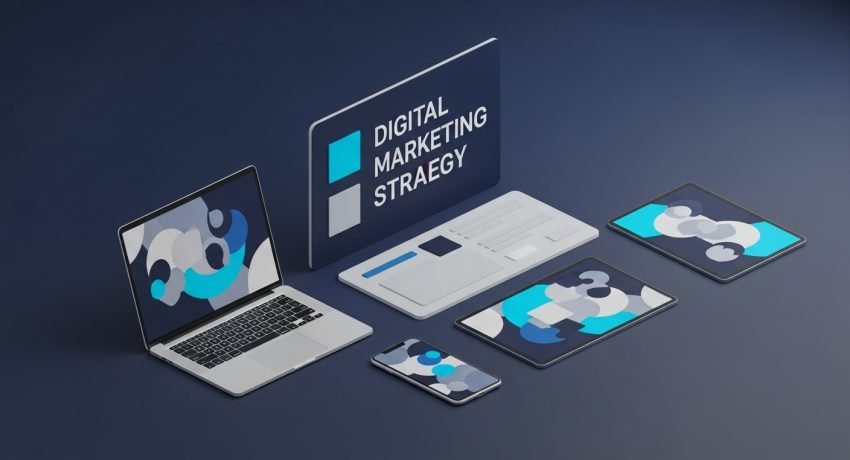

In today’s hyper-competitive digital economy, small and medium-sized enterprises (SMEs) are capturing the lion’s share of market growth by leveraging sophisticated digital marketing strategies. The businesses that thrive are those that master data-driven marketing and utilize advanced tools to optimize revenue streams. While large enterprises may have the budget and resources, nimble, data-empowered companies are redefining industry benchmarks.
Market Friction & Problem: Navigating the Complexity of Digital Marketing
For many business leaders, the challenge of navigating digital marketing complexities looms large. With a multitude of channels – ranging from social media platforms to email campaigns – it’s easy to lose focus on what truly moves the needle. The pressure to invest in every new trend, from SEO to programmatic advertising, has stretched internal resources thin, leaving many businesses struggling to define their digital marketing priorities.
Furthermore, without clear metrics or benchmarks, many businesses invest blindly in digital tactics, leading to fragmented results. This disjointed approach to digital marketing leads to inefficiencies, diminishing the potential of marketing initiatives to drive substantial revenue growth. Businesses are often overwhelmed with data but lack actionable insights that can meaningfully inform their marketing strategy.
Strategic Resolution Protocol
To resolve these challenges, businesses must first address their strategy through clear data-driven goals. This involves defining key performance indicators (KPIs) and aligning digital tactics with overarching business objectives. By analyzing customer data, market trends, and digital engagement, businesses can make more informed decisions on where to invest and how to improve return on investment (ROI).
Future Economic Implications
As businesses continue to adopt a data-centric approach, digital marketing will evolve into a more refined practice. With advancements in AI and machine learning, businesses will be able to predict customer behavior with greater accuracy. This will lead to more personalized and impactful marketing strategies, ultimately driving greater revenue streams across various sectors.
Historical Evolution: How Digital Marketing Became a Core Business Function
The rise of digital marketing has transformed how businesses approach customer acquisition and retention. Initially, businesses relied heavily on traditional forms of marketing, such as print ads, radio, and direct mail. However, as the internet gained popularity in the late 1990s and early 2000s, digital channels quickly became essential for reaching a broader audience.
As businesses began to embrace the digital landscape, SEO, social media, and email marketing became pivotal in reaching potential customers. By 2010, businesses began to realize the true power of data – specifically, how analyzing consumer behavior online could unlock insights that were previously unavailable. This marked the beginning of the data-driven digital marketing era.
Strategic Resolution Protocol
Digital marketing strategies evolved from mass-market approaches to highly targeted campaigns. By using customer segmentation and predictive analytics, businesses have been able to hone in on the most profitable market segments. The integration of data into every aspect of marketing, from customer acquisition to retention, has proven to be one of the most powerful ways to optimize revenue streams.
Future Economic Implications
The future of digital marketing will see even deeper integration with other business functions, such as sales and customer service. Automation and AI will allow for greater personalization, ultimately creating a seamless experience for the customer. As these tools evolve, businesses will find themselves in an even better position to leverage data for long-term growth and profitability.
Revenue Optimization Through Tactical Data Application
Revenue optimization is no longer a matter of guesswork; it’s a precision-driven process underpinned by data analysis. The key to success lies in understanding customer preferences, behaviors, and pain points, which can be gleaned from a variety of data sources, including web traffic, social media engagement, and transaction history.
By applying these insights in a targeted manner, businesses can enhance conversion rates and reduce customer acquisition costs. In addition, continuous testing, monitoring, and adjusting campaigns based on real-time feedback allows businesses to fine-tune their marketing strategies for maximum effectiveness.
As SMEs increasingly harness the power of data-driven strategies to optimize their digital marketing efforts, they must also consider the underlying technical infrastructure that supports these initiatives. A robust digital ecosystem is not merely a luxury but a necessity for businesses aiming to sustain their competitive edge in an evolving marketplace. By focusing on Scaling Enterprise Infrastructure, leaders can effectively address the complexities of their digital marketing channels while ensuring that their IT framework is agile enough to adapt to rapid changes. This alignment between marketing and technology is critical for fostering innovation and scalability, allowing businesses to not only react to market demands but also anticipate them. Such strategic integration can lead to maximized revenue streams and a more resilient business model overall.
Strategic Resolution Protocol
The first step in revenue optimization is developing a cohesive strategy that integrates data from all available sources. Once data is collected, businesses must analyze trends and segment customers based on buying behavior. This segmentation enables businesses to deliver tailored messaging and offers, ultimately leading to improved conversion rates and higher lifetime customer value (CLV).
Future Economic Implications
Looking ahead, businesses will continue to rely on data to predict consumer behavior and refine their marketing tactics. As machine learning algorithms become more sophisticated, businesses will be able to forecast trends with increasing accuracy, ensuring that they remain competitive in an ever-changing digital landscape.
The Role of Customer Engagement in Revenue Growth
Effective customer engagement is key to transforming potential leads into long-term customers. While acquiring new customers is important, retaining existing ones through ongoing engagement can significantly impact the bottom line. Email marketing, social media interaction, and personalized content are just a few of the ways businesses can deepen relationships with their customers.
However, the challenge lies in creating content that resonates with customers while maintaining consistency across channels. Businesses must navigate the delicate balance between pushing for conversions and fostering a genuine connection with their audience. Failure to engage customers on a meaningful level often leads to churn and missed revenue opportunities.
Strategic Resolution Protocol
The solution lies in developing a comprehensive engagement strategy that prioritizes personalization. By leveraging CRM systems and customer data, businesses can create highly targeted campaigns that nurture leads and enhance customer loyalty. Additionally, automated workflows and intelligent remarketing strategies ensure that businesses can engage customers at every stage of the sales funnel.
Future Economic Implications
As customer expectations rise, businesses will need to invest in technologies that enable real-time engagement and communication. Whether through chatbots, AI-driven recommendations, or personalized email campaigns, businesses that prioritize customer engagement will experience sustainable growth and increased revenue streams over time.
Maximizing Impact with Paid Media Strategies
Paid media is a powerful tool for driving immediate traffic and revenue. With the right targeting and budget allocation, businesses can reach high-intent customers who are ready to convert. However, paid media success is not just about spending more money; it’s about spending smarter.
By aligning paid media campaigns with data insights, businesses can increase the efficiency of their ad spend, ensuring that every dollar contributes to business growth. The integration of Google Ads, Facebook Ads, and other platforms into a cohesive strategy allows businesses to capture diverse audiences across various touchpoints.
Strategic Resolution Protocol
Businesses need to adopt a multi-channel approach that leverages the strengths of each platform. For example, Google Ads may be best for targeting high-intent search traffic, while Facebook Ads can engage customers through highly visual and interactive content. By utilizing audience segmentation and real-time data analysis, businesses can optimize their paid media strategies for maximum ROI.
Future Economic Implications
In the future, paid media campaigns will become even more personalized as platforms harness AI to predict consumer behavior. Businesses that adopt a proactive approach to paid media will continue to reap the rewards of increased revenue streams and expanded market share.
Hero Paragraph
When leveraging data to optimize digital marketing, businesses such as Beeline Marketing & Consulting provide essential services that help clients navigate the complexities of donor engagement, content marketing, and paid media strategies. By aligning marketing efforts with data insights, these companies can deliver significant results, ensuring sustained growth and a higher return on investment.
Retail Footprint Model
| Store Location | Paid Media Revenue | Customer Engagement Rate | Lead Conversion Rate |
|---|---|---|---|
| New York | $5,200 | 28% | 15% |
| Los Angeles | $4,800 | 25% | 12% |
| Chicago | $3,700 | 22% | 10% |
| San Francisco | $6,000 | 30% | 17% |
| Miami | $4,300 | 20% | 9% |