A child who reads with ease in third grade rarely got there by accident. The groundwork was laid years earlier, in small daily moments: a story before bed, a parent counting stairs with a toddler, a teacher sounding out letters with a five-year-old. That groundwork is what educators call an elementary education foundation. It is the set of skills, habits, and attitudes a child builds in the earliest school years. Everything after it rests on top.
In 2026, this foundation matters more than ever. Reading scores in the United States have slipped. Classrooms are changing fast, with new technology and new teaching methods arriving every year. Parents want to know what actually works. Teachers want methods backed by evidence, not fashion. This guide brings the two together. It explains what a strong foundation is, why the early years carry so much weight, and how parents and schools can build it step by step.
What Does an Elementary Education Foundation Mean?
The phrase has two meanings, and both matter. First, it describes the learning base itself: reading, writing, maths, language, and the social skills a child gains in kindergarten through the early primary grades. Second, it is the name used by dozens of small community nonprofits across the United States. Groups such as the Salinas City Elementary Education Foundation, the Pleasant Hill Elementary Education Foundation, and the Lower Township Elementary Education Foundation raise money for local schools. They fund books, art supplies, field trips, and classroom projects. There is no single national body behind the name. Each one serves its own district.
This guide focuses on the first meaning: the learning foundation itself. Yet the second meaning carries a useful lesson. Communities keep creating these foundations because they understand something simple. Early schooling shapes everything that follows. When a town raises money for its elementary classrooms, it is investing in the same idea this guide explores.
A strong foundation is not a single subject. It is a bundle of abilities that work together. A child needs to decode words, understand numbers, speak clearly, listen well, manage feelings, and keep trying when work gets hard. Miss one piece, and the others wobble. Build them together, and learning starts to compound.
Why Do the Early Years Matter So Much?
Brains develop fastest in the earliest years of life. Language takes shape, curiosity forms, and the habits of attention are set during this window. By the time a child reaches age five, the brain has already done a large share of its early growth. That does not mean later learning is impossible. It means early learning is efficient. A skill learned at six often takes less effort than the same skill learned at twelve.
The evidence for acting early is strong. Nobel Prize-winning economist James Heckman studied high-quality early childhood programmes in the United States. His team studied high-quality early childhood education programmes and found that comprehensive birth-to-five programmes delivered about a 13 percent return per child, per year. The gains came through better education outcomes, better health, higher employment, and lower long-term costs to taxpayers. An earlier study of the Perry Preschool programme, which served three- and four-year-olds in Michigan in the 1960s, found a return of 7 to 10 percent per year. Starting earlier produced the larger return.
None of this means parents should drill toddlers with flashcards. It means the early years deserve attention, good teaching, and steady routines. Small, regular inputs beat occasional bursts of pressure.
What Are the Building Blocks of a Strong Foundation?
Think of the foundation as six pillars. Each one supports the others. A child who reads well but cannot sit still will struggle in class. Confidence and kindness alone will not save a child who cannot decode words. That child will fall behind in every subject that uses text. The pillars are:
| Pillar | What it covers | Why it matters |
|---|---|---|
| Foundational literacy | Phonemic awareness, phonics, fluency, vocabulary, comprehension | Reading unlocks every other subject |
| Early numeracy | Counting, number sense, place value, simple operations | Maths builds on itself year after year |
| Language and communication | Speaking, listening, vocabulary, storytelling | Words are the raw material of thought |
| Social and emotional skills | Self-control, empathy, cooperation, persistence | Learning happens with other people |
| Curiosity and thinking | Asking questions, solving problems, exploring | Curiosity drives independent learning |
| Learning habits | Routines, focus, homework habits, organisation | Habits carry children through hard days |
Schools that treat these pillars as one system do better than schools that chase a single test score. A reading lesson that includes talk, play, and writing builds three pillars at once. Ask children to explain their thinking during a maths game, and numeracy and language grow together.
How Does Reading Become the First Building Block?
Reading is the skill that opens all the others. History, science, and even maths word problems all demand it. When reading is weak, every subject suffers. Strong reading makes every subject easier.
The urgency is real. In 2024, the National Assessment of Educational Progress found that only 31 percent of fourth graders in the United States scored at or above the Proficient level in reading. Forty percent scored Below Basic, the lowest achievement level. The average score fell five points below 2019, matching the level last seen in 1992. That decline began before the pandemic. It is a long-running problem, not a one-year dip.
Research points to a clear remedy. The science of reading is the body of evidence about how children learn to read and how reading should be taught. It draws on cognitive science, developmental psychology, and classroom research. Its core message is simple: children need explicit, systematic teaching of foundational skills. Guessing from pictures is not a reading strategy. Sounding out words is.
The US Institute of Education Sciences published a practice guide for kindergarten through third grade. It gives four recommendations:
- Teach academic language skills, including vocabulary and the language used to explain ideas and tell stories.
- Develop awareness of the sounds in speech and how those sounds link to letters.
- Teach children to decode words, analyse word parts, and recognise words quickly.
- Make sure every student reads connected text every day, to build accuracy, reading fluency, and comprehension.
Phonics sits at the centre of this approach. At its heart, phonics teaches the links between letters and sounds. Systematic phonics instruction produces the greatest impact when it starts in kindergarten or first grade. Studies show it improves word recognition and spelling. It also helps prevent reading difficulties in children at risk. Phonics alone is not a full reading programme. Children also need vocabulary, fluency practice, and rich books. But without phonics, the rest rests on sand.
Parents can support this at home without becoming teachers. Read aloud every day, even after a child can read alone. Talk about the story. Ask what might happen next. Point out new words and use them again later in the week. Let children see you reading. A home full of books and talk is a powerful reading programme in itself.
What About Maths?
Foundational math skills start earlier than most people think. Maths has its own foundation, and it is built long before formal lessons begin. Counting, comparing sizes, spotting patterns, and sharing fairly are maths. A child who plays with blocks is learning spatial reasoning. Setting the table teaches one-to-one correspondence.
Early numeracy grows in stages. First comes number sense: knowing that five is more than three, and that numbers have an order. Then comes place value: understanding that 24 is two tens and four ones. Operations follow: adding, subtracting, and later multiplying and dividing. Each stage depends on the one before it. A gap in place value in second grade becomes a wall in front of fractions in fourth grade.
Reading and maths are linked more closely than many parents expect. A large study of 355,883 students aged five to twelve found that reading ability promoted higher maths achievement. The effect ran in one direction: stronger reading led to better maths, not the other way around. Word problems showed the strongest link, because children must read, understand, and then calculate. Another study of 554 at-risk children in first through fourth grade found the same pattern. Good reading paved the way for maths growth, especially for children who were below average in maths.
The practical message is clear. If a child struggles with maths word problems, check reading first. The maths may be fine. More often, the words are the barrier.
At home, maths works best when it is woven into daily life. Cooking uses measuring and fractions. Shopping uses money and estimation. Board games use counting and strategy. A short, playful maths moment each day beats a weekly worksheet battle.
Why Do Language and Vocabulary Come Before Everything Else?
Words are the raw material of learning. A child cannot understand a science lesson about evaporation without the words for water, heat, and change. Writing a story is impossible without words for feelings, actions, and places. Vocabulary development grows through talk, reading, and listening. It grows slowly, word by word, year by year.
Talk matters most in the early years. Conversations at meals, in the car, and during play expose children to words they will not meet in picture books alone. Questions help even more. A parent who asks “Why do you think the leaves fell?” is teaching reasoning as well as language. Answering practises the skill of explaining ideas, which school will demand every day.
For children learning in a second language, the foundation needs extra care. A strong first language helps the second one grow. Reading in the home language is not a distraction from English. It builds the same skills: vocabulary, story structure, and comprehension. Schools that welcome home languages give these children a head start, not a handicap.
Storytelling deserves a special place. When children retell a story, they practise sequencing, memory, and sentence structure. Inventing a story practises imagination and planning. Both are early forms of writing. A child who can tell a good story will find writing far easier when the time comes.
How Do Social and Emotional Skills Fit In?
School is a social place. Children learn in groups, wait their turn, share materials, and resolve small conflicts. A child who cannot manage frustration will struggle to learn, no matter how bright they are. Naming a feeling and asking for help lets a child keep learning through hard moments.
Social emotional learning covers self-awareness, self-control, empathy, and relationship skills. Teachers build it through routines, clear expectations, and calm responses to mistakes. Parents build it through consistent boundaries and honest talk about feelings. Neither side can do it alone.
Persistence may be the most valuable of these skills. Learning to read and do maths involves failure. Letters get mixed up. Sums go wrong. Children who believe effort changes outcomes keep trying. Those who believe ability is fixed give up sooner. Teachers call this a growth mindset. Parents build it by praising effort and strategy, not just results. “You kept sounding out that word until you got it” teaches more than “You are so clever.”
Play is not a break from this learning. Learning through play is where much of it happens. Pretend play teaches negotiation and imagination. Building games teach planning and patience. Outdoor play teaches risk judgment and physical coordination. Schools that protect playtime in the early grades are protecting the foundation, not wasting it.
What Should a Good Elementary Classroom Look Like in 2026?
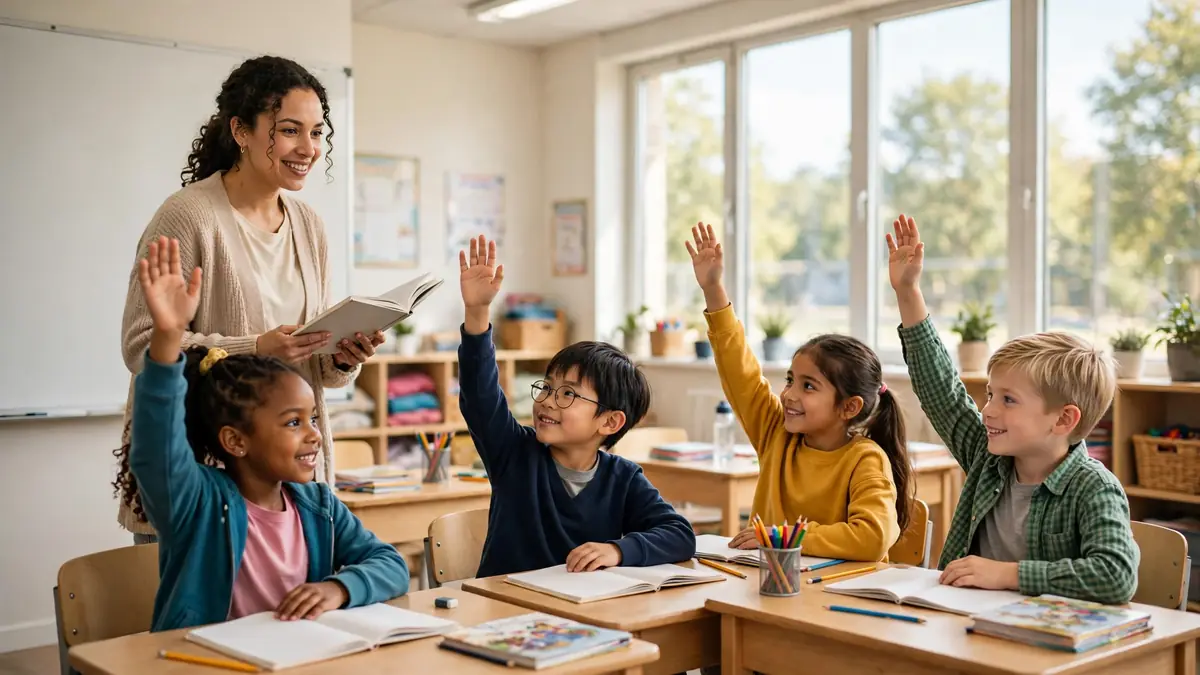
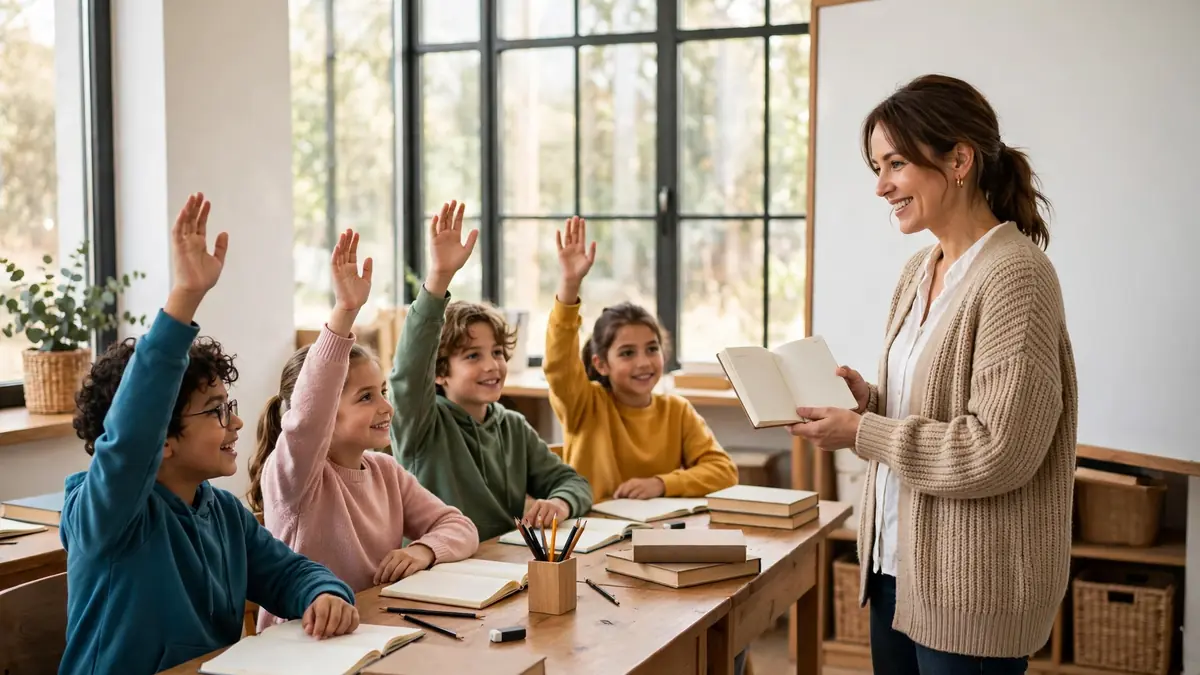
Classrooms have changed. Digital tools, personalised learning, and interactive lessons are now common. The best classrooms use technology as a tool, not as a replacement for teaching. A tablet can give a child extra phonics practice at exactly the right level. It cannot replace a teacher who notices a child is stuck and changes the approach.
Personalised learning is the big trend of 2026. It means teaching that adapts to each child’s level. A strong reader gets harder books. Children still learning letter sounds get more practice with them. This only works when teachers have good information about each child. Short, regular checks beat one big test at the end of term.
Good classrooms share a few features, whatever their budget:
- Clear classroom routines. Children know what happens next. Routines free up mental energy for learning.
- Rich talk. Teachers ask open questions and give children time to answer.
- Daily reading. Every child reads connected text every day, at a level they can manage.
- Hands-on maths. Blocks, counters, and real objects come before abstract symbols.
- Movement and play. Short breaks and active learning keep young minds engaged.
- Kind, firm boundaries. Children feel safe, and they know what is expected.
Class size matters, but teaching quality matters more. A skilled teacher with thirty children can do more than a weak teacher with fifteen. That is why teacher training and coaching are central to any serious plan for elementary education. The best schools invest in their teachers first.
How Can Schools Spot Gaps Early?
The earlier a gap is found, the easier it is to close. A child who cannot recognise letters in kindergarten can catch up with a few months of targeted help. The same child in fourth grade may need years of support. Early screening is the tool that makes this possible.
Screening means short, simple checks of reading and maths skills, given to every child a few times a year. The goal is school readiness: knowing each child is ready for the next step. It is not a high-stakes test. Think of it as a thermometer. It shows teachers who needs extra help and in which skill. Schools then provide small-group support, often called intervention, for the children who need it. The support is specific: phonics for one child, fluency for another, number sense for a third.
Parents should ask about screening at school meetings. Useful questions include: How do you check my child’s reading progress? What happens if my child falls behind? How will you tell me, and how soon? A school with clear answers is a school that takes the foundation seriously.
Watch for warning signs at home too. A child who avoids reading, guesses wildly at words, or cannot retell a simple story may need help. Struggling to count to twenty by the end of kindergarten, or to add small numbers by the end of first grade, is another reason to seek support. None of these signs is a diagnosis. Each is a reason to ask the teacher, early rather than late.
What Does the Research Say About the Payoff?
The case for investing in the early years is unusually strong. Heckman’s work on birth-to-five programmes showed a 13 percent annual return. The Perry Preschool study showed 7 to 10 percent. These returns came through higher earnings, better health, less need for remedial education, and lower crime. Few other public investments perform as well.
The cost of inaction is also visible. According to the World Bank and UNESCO, around 70 percent of ten-year-olds in low- and middle-income countries cannot read and understand a simple text. This is called learning poverty. It is not a problem confined to poor countries. The NAEP results show that reading weakness is widespread in the United States too. Forty percent of fourth graders below Basic is a warning, not a statistic to file away.
None of this research says every child needs the same programme. It says quality matters, timing matters, and consistency matters. A good preschool followed by weak early grades loses much of its benefit. Follow that with strong first and second grades, and the gains keep growing. The foundation is a chain. Every link counts.
What Can Parents Do This Week?
Grand plans fail. Small habits stick. Parent involvement in education works best when it is steady and small. Here is a realistic week of foundation-building that takes minutes a day, not hours:
- Monday: Read one picture book together. Ask your child to retell it in their own words.
- Tuesday: Count something real. Steps to the shop, plates on the table, cars of one colour.
- Wednesday: Teach one new word. Use it three times during the day.
- Thursday: Let your child help cook. Measuring cups are a maths lesson in disguise.
- Friday: Write a short note together. A shopping list or a thank-you card both count.
- Saturday: Play a board game. Taking turns and counting spaces build maths and patience.
- Sunday: Talk about the week. Ask what was hard, what went well, and what your child wants to learn next.
Reading routines deserve special attention. Twenty minutes of reading a day is a common target, and it is a good one. It does not have to be silent reading. Shared reading, where parent and child take turns, works well. So does audiobook listening followed by talk. The goal is regular contact with stories and words, not a stopwatch.
Screen time needs honest handling. Short, high-quality educational content can help. Long stretches of passive video cannot replace talk, play, and reading. A simple rule works for many families: screens after reading, not before it. Keep bedrooms free of screens at night, so sleep stays protected. Tired children cannot learn well, whatever the curriculum says.
How Do You Know the Foundation Is Working?
Progress in the early years is visible in everyday moments. By the end of kindergarten, most children can recognise letters, know many letter sounds, count to twenty, and retell a short story. One year later, most can read simple books, write a few sentences, and add and subtract within twenty. By third grade, most can read chapter books, write a short paragraph, and multiply small numbers. These are rough guides, not deadlines. Children develop at different speeds, and a child who is a little behind in one area often catches up with support.
The deeper signs matter more than any single milestone. A child with a strong foundation asks questions, keeps trying after mistakes, enjoys stories, and talks about what they learned. Dreading school, avoiding books, or saying “I am dumb” is a signal worth hearing. Listen to it. Talk to the teacher. Ask for help early.
Grades and scores are only part of the picture. A child can score well on a worksheet and still lack curiosity. Another child can struggle with spelling and still be a strong thinker. Look at the whole child: reading, maths, talk, friendships, confidence, and joy in learning. When all of those are growing, the foundation is working.
What Questions Do Parents Ask Most?
Should my child start reading before kindergarten?
There is no need to rush. For kindergarten readiness, what helps is exposure: books, songs, rhymes, and talk. A child who arrives at kindergarten knowing letter names and enjoying stories has a head start. Drilling a child with flashcards until they hate books does not. Enjoyment comes first. Skills follow.
Is phonics the only way to teach reading?
No, but it is an essential part. Phonics teaches children to decode words. Vocabulary, fluency, and comprehension complete the picture. A good reading programme includes all of them. Programmes that skip phonics leave many children guessing, and guessing fails as texts get harder.
How much homework should an elementary child have?
Short and purposeful. Ten minutes of reading, a few maths facts, or a small writing task is enough in the early grades. Long homework sessions in elementary school show little benefit and often create conflict at home. Reading together beats worksheets almost every time.
What if my child is behind?
Ask the teacher for specifics. Which skill is behind: decoding, fluency, vocabulary, or comprehension? Then ask what support the school provides and what you can do at home. Early, targeted help works. Waiting rarely does. If the school cannot answer clearly, ask again, in writing, and keep asking.
Does technology help or hurt young learners?
Both, depending on how it is used. Short, interactive practice that adapts to a child’s level can help. Passive video and games designed to hook attention can hurt. The rule is simple: technology should serve a learning goal, not fill time. Teachers and parents should choose the tool, not the other way around.
Why Does the Foundation Deserve More Attention in 2026?
Three trends make 2026 a turning point. First, reading scores have fallen to levels not seen in decades. Second, classrooms are adopting new technology faster than teachers are being trained to use it well. Third, the research base has never been clearer about what works: systematic phonics, rich language, early maths, social-emotional support, and early intervention.
The opportunity is real. Schools that align their teaching with this evidence can reverse the slide. Parents who build reading, talk, and play into daily life give their children a lasting edge. Communities that fund their elementary schools through local foundations are already acting on the same insight.
A strong elementary education foundation is not a luxury. It is the base on which every later success stands. Reading, maths, language, and character all grow from it. The work is unglamorous: sounding out letters, counting blocks, reading one more story. That payoff is a child who can learn anything, because they learned how to learn when it mattered most.