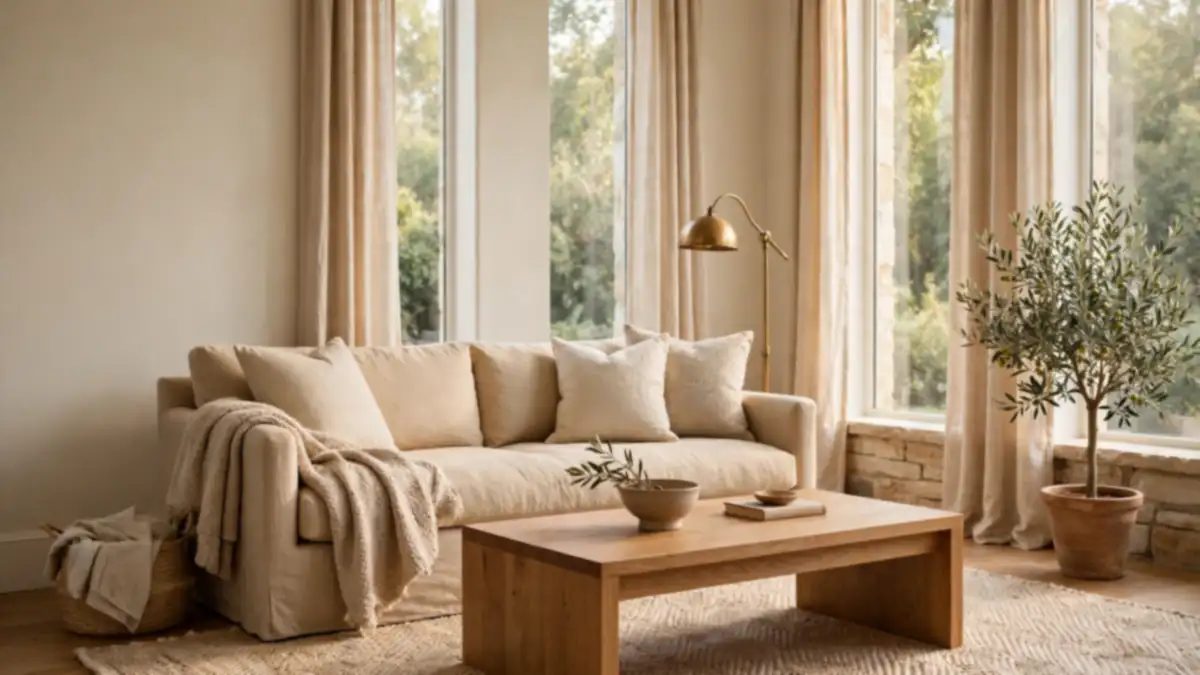
Some trees demand attention all year. The Majestic Beauty fruitless olive is the opposite. It stands quietly in a sunny corner, silver leaves catching the light, and asks for almost nothing in return. No fruit stains the patio. Winter brings no leaf fall to rake. There is no weekly watering schedule to remember. For homeowners who love the Mediterranean look but dread the mess, this tree solves the problem in one planting.
This fruitless olive tree care guide covers the whole story. You will learn what the tree is, where it grows, how to plant it, and how to care for it through its first years. Honest answers on price, pruning, pests, and the local rules that catch some buyers by surprise follow in the same pages. Every fact comes from nursery and gardening sources, and where sources disagree, this guide says so.
What Is the Majestic Beauty Fruitless Olive?
The Majestic Beauty is a cultivar of the common olive, Olea europaea ‘Monher’. Its full botanical name is Olea europaea Monher, and it was discovered by Julian Herman in 1978 in Irvine, California, as a sport of the species, according to Monrovia. A sport is a natural mutation on a single branch, and this one turned out to be special. Its flowers are sterile, so they almost never set fruit.
That single trait changes everything about living with the tree. A fruiting olive drops hundreds of small fruits each autumn. They stain concrete, smear across shoes, and turn walkways slippery. The Majestic Beauty skips all of that. Its small white flowers appear in spring and simply fade away, leaving no fruit behind.
You may also see this tree sold under another name. Some nurseries list it as ‘Royal Fruitless’, a name Western Tree Nursery uses for the same cultivar. If a tag says ‘Monher’, ‘Majestic Beauty’, or ‘Royal Fruitless’, you are looking at the same tree.
| Detail | Majestic Beauty at a glance |
|---|---|
| Scientific name | Olea europaea ‘Monher’ |
| Also sold as | ‘Royal Fruitless’ |
| Type | Evergreen tree |
| Mature size | 25 to 30 ft tall, about 25 ft wide (Monrovia) |
| Growth rate | Slow; about 1 to 2 ft a year in good conditions |
| USDA zones | 8 to 11 |
| Sun | Full sun, 6 to 8 hours a day |
| Water | Regular while young; very little once established |
| Soil | Well drained; pH 6.0 to 7.5 |
| Cold tolerance | Brief dips to about 15°F |
| Leaves | Narrow, gray-green, silvery underneath |
| Flowers | Small white sterile blooms in spring |
| Fruit | None, or a few small non-viable olives at most |
Why Do Homeowners Choose This Tree?
The first reason is the obvious one. There is no fruit to clean up. Monrovia calls it “an elegant but tough tree for the hot, sunny garden” and notes that with no fruit to drop, it can sit near walkways, drives, or pools without any mess. That makes it one of the few shade trees you can plant right beside a patio.
The second reason is water. Once established, this olive is extremely drought tolerant. That is why it appears on so many lists of drought tolerant trees for dry-climate gardens. Monrovia’s care note is short and clear: once established, water only if very dry. In regions with watering restrictions or long dry summers, that trait saves both effort and money.
The third reason is the look. Gray-green leaves are narrow and long, giving the crown an airy appearance, in Monrovia’s words. Over the years, the trunk thickens and twists into the sculptural shape that makes old olive trees so admired. Few trees offer that character without demanding constant care.
The fourth reason is the calendar. As an evergreen, the tree keeps its leaves through every season. There is no bare winter silhouette and no autumn leaf fall to rake. Your garden keeps its structure in January as well as in June.
The fifth reason is resilience. Monrovia lists the tree as deer resistant and tolerant of coastal exposure. It also thrives in hot, dry regions where many ornamental trees struggle. For a sunny, dry garden, it is a forgiving choice.
How Does Majestic Beauty Compare With Other Fruitless Olives?
Majestic Beauty is not the only fruitless olive on the market. Three other cultivars appear in most nurseries, and each has its own strengths. The differences matter, especially if you live where olive pollen is regulated.
| Cultivar | Fruit | Pollen | Size | Best for |
|---|---|---|---|---|
| Majestic Beauty (‘Monher’) | Almost never | Very little | 25–30 ft | Patios, pools, walkways |
| Swan Hill | Rarely | Almost none | 25–30 ft | Allergy-sensitive areas |
| Wilsonii | Sometimes noticeable | Low | 25 ft | Street and shade planting |
| Little Ollie / Skylark Dwarf | Almost never | Very little | Under 6 ft | Pots and small spaces |
Of the four, Majestic Beauty is the most reliably non-fruiting, according to The Spruce. Swan Hill carries a different advantage: it is pollen-free as well as nearly fruitless, which is why it appears on approved-variety lists in Arizona cities. Wilsonii is a beautiful, hardy tree, but The Spruce warns that it may produce enough fruit to be noticeable. Little Ollie and Skylark Dwarf stay compact, which suits containers and small patios.
Your choice depends on your priorities. If a clean patio matters most, Majestic Beauty is the safe pick. For allergy sufferers, Swan Hill has the stronger record. When space is tight, a dwarf variety is the answer.
Where Will a Majestic Beauty Olive Grow?
This tree belongs in warm, sunny climates. Monrovia lists the olive tree USDA zones 8-11 range, which covers much of California, Arizona, Texas, Florida, and the Gulf Coast. It does best with a hot, dry summer and a mild winter, the pattern of its native Mediterranean home.
Cold is the main limit. The Spruce reports that fruitless olives can handle brief dips to about 15 degrees Fahrenheit, though they should not stay that cold for long. Yardwork puts the safe range a little higher, at 15 to 20 degrees. Either way, a hard freeze can damage the foliage. Gardeners in zone 7 sometimes try the tree in a sheltered spot, but that is a gamble, and a cold winter can kill it back to the ground.
Sunlight is not negotiable. Olive trees need full sun for healthy growth. Aim for at least six to eight hours of direct sun a day, with eight being better. A tree planted in partial shade will grow slowly, stay thin, and never develop the dense crown that makes the species attractive.
Soil matters less than drainage. Fruitless olives handle sandy, loamy, and even clay soils, as long as water drains away freely. Greg’s growing guide puts the ideal pH between 6.0 and 7.5, slightly acidic to neutral. What the tree cannot tolerate is wet feet. Waterlogged soil leads to root rot, and that is one of the few things that can kill an otherwise tough olive.
How Do You Plant a Majestic Beauty Olive?
Spring or fall is the right time to plant. Planting a fruitless olive tree takes an afternoon and a few simple tools. Both seasons give the roots months to settle before the stress of summer heat or winter cold. Avoid planting in the middle of a heatwave, when a young tree can dry out before its roots take hold.
Start by choosing the spot with the mature tree in mind. A Majestic Beauty reaches 25 to 30 feet tall and about 25 feet wide, so it needs room. Yardwork recommends at least 30 feet between trees and a clear distance from structures, power lines, and paving. Planting too close to a house is the most common regret, because the tree only gets bigger.
Dig the hole twice as wide as the root ball and the same depth. Set the tree in so the top of the root ball sits level with the surrounding soil, not buried. Backfill with the native soil you dug out, mixed with a little compost. Firm it gently, then water deeply to settle the soil around the roots.
Do not stake the tree unless the site is very windy. A little movement in the breeze helps the trunk grow strong. If you must stake, use soft ties and remove them within a year.
Finish with a layer of mulch around the base, kept a few inches away from the trunk. Mulch holds moisture and keeps weeds down, but mulch piled against the bark can trap dampness and invite rot.
How Much Water Does It Need?
Olive tree watering follows two different rules: one for young trees and one for established ones. Young trees need steady water. During the first growing season, water deeply and regularly so the roots spread wide and deep. One practical rule from a fruitless olive growing guide is to soak the soil to a depth of two to three feet every seven to ten days during dry periods.
Once the tree is established, the schedule changes completely. Monrovia’s advice is to water only if very dry. Greg’s guide suggests a deep watering every two to three weeks during dry spells. Either way, the established tree wants far less water than a lawn or a flower bed.
Always water at the base, not over the leaves. Wet foliage invites fungal problems, and the leaves of this tree are delicate. A soaker hose or drip line is the best tool for the job. It delivers water slowly to the root zone without splashing the crown.
Watch the leaves for clues. Browning leaves and leaf drop usually point to one of two problems: too little water or waterlogged soil. Check the ground before you reach for the hose. If the soil is soggy, the problem is drainage, not drought, and more water will make it worse.
How Should You Feed It?
Olive trees are light feeders. Fertilizer needs are modest, and more is not better. In average soil, a young tree benefits from one application of fertilizer in spring, before new growth starts. Monrovia recommends a general-purpose fertilizer at that time.
For young trees, a high-nitrogen fertilizer encourages strong new growth, according to The Spruce. A balanced 10-10-10 formula also works well in early spring, as several growing guides suggest. Test your soil pH once a year if you can. Olives prefer a slightly alkaline to neutral range, and a simple test tells you whether an amendment is needed.
Do not overfeed. Too much fertilizer pushes soft, leafy growth that is more vulnerable to frost and pests. A mature tree in decent soil often needs no olive tree fertilizer at all. If the leaves look pale or growth seems slow, feed once in spring and watch the response before feeding again.
How Do You Prune a Fruitless Olive?
Olive tree pruning happens in late winter, before spring growth begins. That timing lets you see the branch structure clearly and gives cuts the whole growing season to heal. Remove dead wood, crossing branches, and any shoots growing straight up through the crown.
Keep the shape open. The beauty of this tree is its airy, upright crown, and heavy pruning ruins that look. Thin the canopy lightly so light reaches the inner branches. Never remove more than about a quarter of the crown in a single year.
Watch for suckers. Olive trees send up shoots from the base and along the trunk, and Majestic Beauty is no exception. Rub or cut these off while they are small, before they turn into woody branches. Left alone, they spoil the clean trunk line and steal energy from the crown.
Avoid heavy summer pruning. Cutting hard in hot weather stresses the tree and exposes inner bark to sunburn. Light shaping in summer is fine, but save the real work for late winter.
Can You Grow a Majestic Beauty Olive in a Container?
Yes, and it makes a striking patio tree. The catch is size. In a pot, the tree stays smaller than it would in the ground, because the roots have less room. That limit is actually an advantage on a terrace or balcony.
Choose a large, heavy container with drainage holes. A fruitless olive container should be big enough to hold the tree steady in wind, since the crown catches a lot of air. Clay or terracotta pots work well because they breathe and help the soil dry between waterings. Fill it with a free-draining mix, such as potting soil blended with perlite or gravel.
Container trees need more water than planted ones. Water regularly through the growing season, and never let the pot sit in a saucer of water. In cold weather, move the pot to a sheltered spot or wrap it, since a container offers far less insulation than the ground.
Repot every few years into a container at least 25 percent larger than the root ball. When the tree outgrows the biggest pot you can manage, it is time to plant it in the ground or switch to a dwarf variety such as Little Ollie.
What Pests and Diseases Should You Watch For?
Healthy fruitless olives have few problems. Most olive tree pests are easy to spot early, and the worst threats are diseases that start in wet soil. The branch and twig borer is a small beetle that drills into branches to lay eggs. Prune out affected wood and dispose of it away from the tree.
Peacock spot is a fungal disease that leaves dark, ringed spots on the leaves. It spreads in wet, mild weather. Good air circulation and watering at the base, not overhead, keep it in check. Badly spotted leaves can be removed, but a mild case rarely harms the tree.
Olive knot is a bacterial disease that causes rough swellings on branches. It enters through wounds, so avoid nicking the bark with mowers or trimmers. Cut out infected branches well below the swelling and clean your tools between cuts.
Root rot is the most serious threat, and it is almost always caused by poor drainage. No spray fixes it. The only cure is prevention: plant in well-drained soil, never overwater, and keep mulch away from the trunk.
Scale insects sometimes cluster on twigs and leaves. A strong jet of water removes light infestations, and horticultural oil handles heavier ones. Check the undersides of leaves when you inspect the tree, since that is where scale likes to hide.
Is It Legal to Plant Where You Live?
In most places, yes, without a second thought. Parts of Arizona, however, require a check first. The olive tree banned in Arizona is not this cultivar at all — the bans target pollen-producing varieties. Olive pollen is one of the most potent allergens in the desert Southwest, and several cities have acted on it.
Phoenix has banned the sale and planting of pollen-producing olive trees since 1986. The city’s ordinance treats male olive trees as a public nuisance because of the large amounts of allergenic pollen they release. Tucson took similar action in the 1960s, and Pima County’s code also restricts olive planting.
The good news is that the bans target pollen producers, not every olive. Tempe’s ordinance, for example, allows pollenless and fruitless cultivars such as Swan Hill. Legal Clarity, a legal information site, notes that Majestic Beauty, which rarely produces pollen or mature fruit, is another option that nurseries in the region carry. Even so, the rules differ from one city to the next.
Before you buy, check your city and county rules. Confirm the cultivar name on the plant tag, because the word “olive” alone is not enough information in a regulated area. A quick call to your local nursery or city planning office settles the question in minutes.
How Much Does a Majestic Beauty Olive Cost?
The fruitless olive tree price depends mostly on size. A small tree in a five-gallon pot costs far less than a boxed specimen with a trained trunk. Prices also vary by region and nursery, so treat the figures below as a guide rather than a quote.
| Size | Typical price |
|---|---|
| 1-gallon pot (1–2 ft tall) | $25–$50 |
| 5-gallon pot (3–4 ft tall) | $80–$150 |
| 15-gallon container | $95–$200 |
| 25-gallon container | About $200 |
| 36-inch box | About $500 |
| 48-inch box | About $1,250 |
| 60-inch box | About $2,500 |
The smaller sizes come from general nursery price guides. The larger box prices come from GDNC Nursery in Arizona, which lists $95 for a 15-gallon olive, $200 for a 25-gallon, $500 for a 36-inch box, $1,250 for a 48-inch box, and $2,500 for a 60-inch box. Those figures come with a caveat: the nursery notes that prices are subject to change.
For most homeowners, a 15-gallon tree is the sweet spot. It is big enough to look like a real tree on day one, yet small enough to plant without heavy equipment. A 24-inch or 36-inch box gives instant impact, but you will pay for delivery and possibly for a crew to plant it.
How Can You Design With a Fruitless Olive?
The Majestic Beauty olive tree works as a focal point. One tree in a front yard, lit from below at night, can carry a whole landscape. Monrovia suggests using nighttime lighting to show off the multi-trunk structure and the gray-green foliage after dark.
It also suits the Mediterranean garden. Pair it with Italian cypress for height, grapevines on a wall, and roses for color. Lavender, rosemary, and sage are the classic companions at its base, and all three share its love of sun and sharp drainage. Bold-leaved yucca, cordyline, or agave add contrast beside a modern home.
Near water, the tree earns its keep. Because it drops no fruit, it can stand beside a pool, a walkway, or a driveway without creating a mess. That is the feature that sells it to more homeowners than any other.
For a formal look, plant a pair flanking an entrance or a short row along a drive. Space them at least 30 feet apart so each crown has room to spread. For a relaxed look, let a single tree grow into its natural open shape and underplant it with lavender and stone.
What Mistakes Should You Avoid?
Planting too close to the house is the first mistake. The tree looks small in its nursery pot, but it will reach 25 feet or more. Measure the mature spread before you dig, not after.
Overwatering is the second. An established olive wants dry soil between waterings. A daily sprinkle from a lawn irrigation system keeps the roots wet and invites rot. Put the tree on its own drip zone, or water it by hand.
Planting in shade is the third. A tree that gets less than six hours of sun will grow thin and leggy. If your only sunny spot is small, consider a dwarf variety in a container instead.
Skipping the local rules is the fourth. In Arizona and a few other areas, the wrong cultivar can mean a fine or a forced removal. Check the ordinance, then check the tag.
Buying the wrong variety is the fifth. A tag that just says “olive” may hide a fruiting tree. Confirm the cultivar name — ‘Monher’, ‘Majestic Beauty’, or ‘Royal Fruitless’ — before you pay.
Frequently Asked Questions
Will a Majestic Beauty olive really never produce fruit?
Almost never. Its flowers are sterile, so they do not set viable fruit. In rare cases, a few small, non-viable olives may appear, especially if a fruiting olive grows nearby. The mess is minimal compared with a fruiting tree, and most years there is none at all.
How fast does a Majestic Beauty olive grow?
It grows slowly. The fruitless olive tree growth rate is about one to two feet a year in good conditions, according to a fruitless olive growth guide. Expect it to reach its mature height of 25 to 30 feet in roughly 10 to 15 years with good care.
Is the Majestic Beauty olive allergy-friendly?
It is far better than a fruiting olive, because its sterile flowers produce very little pollen. Swan Hill is the only cultivar with a stronger record, since it is effectively pollen-free. If allergies are your main concern, Swan Hill is worth comparing before you decide.
Can I grow a fruitless olive indoors?
Not for long. Olive trees need six to eight hours of direct sun a day, and even the brightest window rarely provides that. A young tree can spend a season indoors near a south-facing window, but it belongs outside. For a balcony, a dwarf variety in a large pot is the better compromise.
Do fruitless olives need another tree to pollinate?
No. The flowers are sterile, so pollination does not produce fruit anyway. A single Majestic Beauty grows perfectly well on its own, with no partner tree needed.
How long do olive trees live?
Olive trees are famously long-lived. The species has been in cultivation since the third century B.C., according to Monrovia, and individual trees can live for centuries. A well-planted Majestic Beauty should outlast its owner by a wide margin.
Sources: Monrovia (Majestic Beauty Fruitless Olive); The Spruce (Fruitless Olive Tree Plant Care Growing Guide); Yardwork (Majestic Beauty Olive Tree; 4 Best Fruitless Olive Trees); Greg (Ultimate Guide to Fruitless Olive); GDNC Nursery (Olive Tree pricing); Legal Clarity (Why Are Olive Trees Illegal in AZ?); Phoenix Home & Garden (The Mighty Olive Tree).