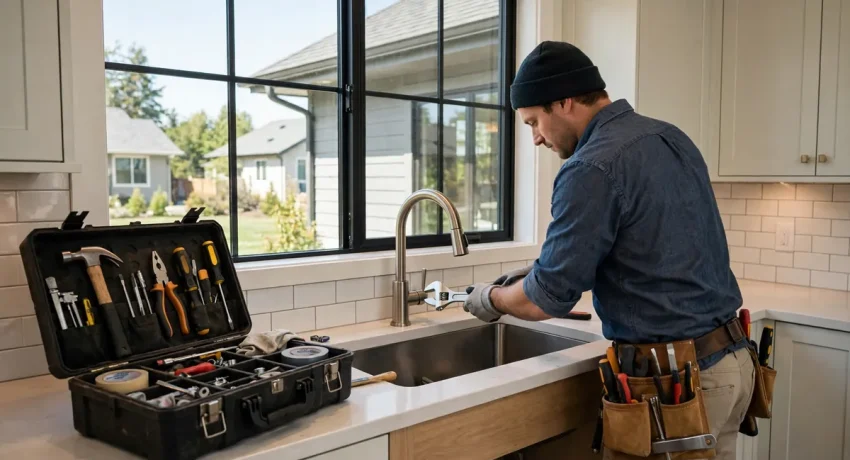

Your home is the most expensive thing most people will ever own. It also asks for steady care. A small leak, a clogged gutter, or a dirty filter rarely looks urgent. Left alone, each one can turn into a repair bill that costs ten times more. This guide covers the full year of home care and maintenance in 2026: a seasonal checklist, real costs, and how to hire help when a job is beyond you.
Most guides stop at a list of tasks. This one goes further. You will find what each season asks of your home, what common jobs cost in 2026, and a clear way to decide between doing it yourself and calling a professional. Every figure comes from a named source. No price is invented.
What counts as home maintenance?
Home maintenance means the routine care that keeps a house safe, dry, and working. It covers the roof, gutters, heating and cooling, plumbing, electrics, and the shell of the building. Safety gear is part of it too, such as smoke alarms and carbon monoxide detectors.
It does not mean redecorating. A new paint colour is a choice. A leaking pipe is maintenance. The line matters because budgets and priorities follow it. Maintenance protects value. Decoration adds style.
There is a simple test. Ask whether the job stops damage or keeps a system working. A yes means it is maintenance. A no means it is an improvement. Both have value. Only one is urgent.
Why does maintenance matter more in 2026?
Homeowners are falling behind. Hippo’s 2026 Housepower Report found that 57% of homeowners say they did not prioritise home maintenance enough in 2025. The same report found that 75% never got around to inspecting seals in water-prone areas. Even more striking, 69% skipped gutter cleaning in 2025.
A 2026 Nextdoor survey with Groundworks found a similar pattern. It showed that 56% of homeowners completed their most recent maintenance task only after noticing something might be wrong. That is the reactive trap. You wait for a symptom. Then you pay emergency prices.
Costs are also rising. Pearl Certification’s 2026 report puts average annual home maintenance at $8,808, up 42% since 2020. Labour and materials both cost more than they did five years ago. A job done on time is now cheaper than ever by comparison. Preventative home maintenance is the cheapest kind of home care.
How much does home maintenance cost in 2026?
Start with the 1% rule. State Farm and many other guides suggest setting aside 1% of your home’s value each year for maintenance. On a $300,000 home, that is $3,000 a year, or $250 a month. For a $400,000 home, it is $4,000 a year.
Most experts now call 1% a floor, not a ceiling. PocketGuard’s 2026 guide recommends 1% to 3% of home value per year. On a $300,000 home, that means $3,000 to $9,000 a year. Older homes sit at the top of that range.
The numbers behind the range tell the same story. Bankrate’s 2025 report, cited by Pearl Certification, puts average annual maintenance at $8,808. That is more than double what 1% yields on a median-priced home of about $400,000. Angi’s 2025 survey found homeowners actually spent $2,041 on maintenance projects. That lower figure covers routine servicing and minor repairs only. It excludes major replacements and emergency breakdowns.
Age matters more than anything else. Clear Home Projects breaks the annual budget down by home age, using routine tasks plus a reserve for replacements:
| Home age | Routine tasks | Replacement reserve | Total per year |
|---|---|---|---|
| Under 10 years | $1,500–$2,500 | $500–$1,500 | $2,000–$4,000 |
| 10–20 years | $2,000–$3,500 | $1,500–$3,000 | $3,500–$6,500 |
| 20–30 years | $2,500–$4,000 | $2,500–$5,000 | $5,000–$9,000 |
| 30+ years | $3,000–$5,000 | $4,000–$8,000 | $7,000–$13,000 |
Put the money in a separate account. A home maintenance budget works best when the money sits in a separate account. Set up a monthly transfer of $200 to $700, depending on your home’s age and value. A dedicated pot turns a $12,000 roof or an $8,000 heating replacement from a crisis into a planned spend.
What are the five monthly habits that prevent most disasters?
Four seasonal home maintenance sessions plus five monthly habits cover most of what a house needs. The monthly five take about twenty minutes in total. OnOtto’s 2026 checklist calls them the highest-leverage habits in the house. Here they are.
First, check the heating and cooling filter. Replace it every one to three months, depending on the season and whether you have pets. A clogged filter strains the system and raises energy bills.
Second, test every smoke alarm and carbon monoxide detector. Press the test button. Replace any detector older than ten years. Batteries are cheap. A missed alarm is not.
Third, look under sinks and around toilets for leaks. A damp patch the size of a coin can mean a slow leak. Catch it early and the fix is small.
Fourth, run water in rarely used drains. Guest bathrooms and floor drains dry out. A dry trap lets sewer smells into the house. A few seconds of running water keeps the trap sealed.
Fifth, walk the outside of the house once a month. Look for damp patches, new cracks, loose tiles, dripping overflows, and blocked drains. Check for signs of pests near bins and vents. A monthly walk catches problems while they are still small. A written home maintenance schedule turns these jobs into a habit.
What should you do in spring?
A spring home maintenance checklist fixes what winter broke. It is also the season to prepare for summer heat. Work from the top of the house down.
Start with the roof and gutters. Look at the roof from the ground for slipped or missing tiles after winter storms. Use binoculars if you need a closer look. Clean the gutters and check that downspouts carry water away from the house. Clear any debris from valleys and flat sections.
Check the outside walls and foundation. Look for cracks in brickwork and eroded joints. Repoint before water gets in. Check that ground levels sit below the damp-proof course. Soil piled against walls traps moisture.
Service the cooling system before the first hot days. An air conditioning tune-up costs $70 to $200, according to Angi’s 2026 guide. The HVAC tune-up cost is the same in spring and fall. Book early. Technicians get busy once the heat arrives.
Turn on outdoor taps and look for leaks. Check hoses and sprinkler heads. A cracked pipe from a winter freeze will show itself here. Fix it before the garden season starts.
Test the sump pump before the spring rains. Pour water into the pit and watch it run. A failed pump during heavy rain can flood a basement in hours.
Finally, check window and door seals. Renew failed sealant around baths, showers, and sinks. Failed sealant is a common cause of hidden leaks. Wash windows and swap screens back in.
What should you do in summer?
Summer defends against heat, water, and storms. It is also the best season for outdoor work, because paint and sealant need dry weather.
Clear the air conditioning condenser. Trim plants away from the unit. Hose off dirt and leaves from the fins. A clear condenser cools better and uses less power.
Check decks, fences, and outdoor play equipment for loose parts. Tighten bolts and replace rotted boards. Repaint or treat external timber while the weather is dry.
Inspect washing machine hoses for bulges and cracks. A burst hose can release hundreds of litres of water in minutes. Replace rubber hoses every three to five years. Braided steel hoses last longer.
Test ground-fault circuit interrupter (GFCI) outlets in kitchens, bathrooms, and outdoors. Press the test button, then reset. A GFCI that will not trip is a safety risk. Replace it.
Clear dryer vents and lint traps. Lint build-up is a fire risk and makes the dryer work harder. Vacuum the vent hose and the outside flap.
Check the refrigerator and freezer seals during hot weather. Close the door on a banknote. If it slides out easily, the seal is weak. A weak seal wastes energy and shortens the life of the appliance.
What should you do in fall?
Fall decides whether winter is boring or expensive. A fall home maintenance checklist is the most important list of the year. Every winter disaster is prevented in October.
Book the heating tune-up before the rush. A furnace tune-up costs $70 to $200, according to Angi. The technician should check the thermostat, burners, electrical parts, and safety controls. Replace the furnace filter at the same time.
Clean the gutters after the leaves drop. Professional gutter cleaning costs an average of $168 per visit, with most homeowners paying $119 to $234, according to Angi’s 2026 cost data. Homes near trees may need a second clean. Overflowing gutters soak walls and cause damp.
Inspect the roof for damaged shingles. Book repairs before the wet weekends start. A small repair now costs far less than water damage later.
Drain outdoor faucets and disconnect garden hoses. Cover outdoor taps so they do not freeze. A burst outdoor pipe is one of the most common winter claims.
Seal drafty gaps around windows and doors with caulk or weatherstripping. Check the attic insulation. Warm air escaping through the roof melts snow, which refreezes at the eaves and forms ice dams.
Have the chimney swept and checked if you burn wood. Test every smoke and carbon monoxide detector before you light the first fire. Swap the batteries while you are at it.
Restock the emergency kit before storm season. Power cuts are common during fall storms. Keep bottled water, about a gallon per person per day, plus torches, batteries, and a first-aid kit.
What should you do in winter?
Winter is about watchfulness, not projects. The work is mostly checking and preventing.
Know where the main water shutoff is. Make sure everyone old enough in the house can find it and turn it. A burst pipe can release a huge amount of water in minutes. Knowing the shutoff saves the house.
Insulate exposed pipes in lofts, garages, and outside walls. Keep heating on low when you are away, or use frost protection. Never turn the heating fully off in freezing weather.
Watch for ice dams on the roof. They form when snow melts and refreezes at the eaves. Look for icicles and water stains on ceilings. Clear heavy snow from the roof edge if you can do so safely from the ground.
Check the loft after heavy rain or snow for leaks and damp patches. Look for condensation and mould, especially in bathrooms and bedrooms. Use extract fans and ventilate.
Replace furnace filters on the schedule in the manual. A dirty filter in winter makes the furnace work harder and can cause it to shut down.
Keep paths clear and have salt or sand ready. Check outdoor lights. Short days mean more time in the dark. Good lighting prevents falls.
Winter is also a good time to book spring professionals at off-season rates. Roofers and painters often have gaps in their diaries. A winter booking can mean a better price and a faster start.
What do common home maintenance jobs cost in 2026?
Costs vary by city and by home. Coastal metros run about 30% above the national average. Smaller cities and rural areas run about 10% to 20% below it. The ranges below are US national figures from Angi, HomeAdvisor, and Housecall Pro, published in 2026. Treat them as planning numbers, not quotes.
| Job | Typical cost in 2026 | How often |
|---|---|---|
| Heating or cooling tune-up | $70–$200 | Twice a year |
| HVAC maintenance plan | $150–$500 per year | Annual |
| HVAC repair (average) | $350 (range $130–$2,000) | As needed |
| Gutter cleaning | $119–$234 per visit | Twice a year |
| Roof inspection | $125–$571 (average $331) | Once a year |
| Roof cleaning | $295–$624 | Every 1–2 years |
| Roof repair | $300–$2,500 | As needed |
| Roof replacement | $8,000–$25,000 | Every 20–50 years |
| Handyman visit (average project) | $390 (range $134–$612) | As needed |
| Home inspection | $300–$500 | When buying |
| Duct cleaning | $250–$1,000 | Every 3–5 years |
Roof replacement is usually the largest single expense. PocketGuard puts it at $9,000 to $12,000 on average, depending on size and materials. A full replacement can reach $25,000 for a large or complex roof. That is why annual inspection matters. A $331 inspection can spot a $300 repair before it becomes a $12,000 replacement. The roof maintenance cost for a typical home runs $250 to $650 for a bundled visit, according to 2026 sources.
How much does a handyman cost in 2026?
Handyman cost 2026 data comes from HomeAdvisor and Angi. Most handymen charge $60 to $125 per hour in 2026, according to HomeAdvisor’s 2026 cost data. The handyman hourly rate is the starting point for almost every quote. The national average sits near $75 to $90 per hour. An independent handyman typically charges $50 to $80. A handyman company charges $80 to $125. Emergency or after-hours work can reach $200 per hour.
Almost every handyman has a minimum charge of one to two hours. That means even a ten-minute job costs $150 to $250. Fixr reports a common minimum of about $130. A trip fee of $50 to $100 may apply, though some waive it if you hire them for the job.
Flat rates are common for standard jobs. Angi’s 2026 data shows a faucet replacement at $100 to $300, a toilet replacement at $150 to $350, and hanging shelves at $150 to $500. A ceiling fan install runs $150 to $275. Mounting a television runs $150 to $300. These are labour ranges. Materials and fixtures are usually extra.
Location changes the price a lot. Angi’s June 2026 data puts the average handyman project at $299 in Phoenix and $399 in Minneapolis. Coastal cities such as New York and San Francisco run $90 to $150 per hour. Smaller towns run $50 to $70 per hour. Always get local quotes for your actual job.
Should you do it yourself or hire a professional?
The DIY vs hire a professional choice is the decision that saves or costs the most money. A good rule is simple. Do it yourself when the job is safe, legal, and easy to undo. Hire a professional when the job involves gas, mains electricity, structural work, or a roof.
| Job | DIY or pro? | Why |
|---|---|---|
| Change filters, test alarms | DIY | Safe, quick, no tools needed |
| Clean gutters (single storey) | DIY with care | Use a stable ladder and a spotter |
| Paint a room, hang pictures | DIY | Cosmetic, easy to fix |
| Fix a running toilet | DIY or handyman | Parts are cheap, steps are simple |
| Boiler or furnace service | Pro only | Gas work needs a qualified engineer |
| Electrical panel work | Pro only | Needs a licensed electrician |
| Roof repairs | Pro only | Height risk plus hidden damage |
| Plumbing beyond fixtures | Pro only | Pipe work can flood a house |
Honesty about your own limits is part of the skill. A bad DIY repair often costs more to fix than the original job. It can also void a warranty or an insurance claim. If you are unsure, get a quote first. A quote is usually free. A mistake is not.
Bundle small jobs into one visit. A handyman charges a minimum of one to two hours either way. A list of five small jobs in one visit costs far less than five separate call-outs. Walk the house with a notepad before you call. Write down every loose handle, dripping tap, and cracked tile.
How to hire a handyman or contractor?
Start with a clear list. Write down every task, with photos. A clear scope gets you comparable quotes. A vague request gets you vague prices. Describe the work the same way to every candidate.
Check credentials before you book. Licensing rules vary by state and city. Some work needs a licensed electrician or plumber by law. In Arizona, for example, a handyman working under $1,000 does not need a licence under the handyman exemption. Above $1,000, the R-62 Minor Home Improvements licence applies, and jobs over $5,000 or needing a permit are excluded. Your state will have its own rules. Ask your local authority.
Insurance is not optional. At a minimum, the worker should carry liability insurance. It protects you if something goes wrong in your home. Ask for proof and check the expiry date. No insurance is a big red flag.
Get three written quotes for the same scope. Compare the full job, not the headline rate. Ask whether materials, travel, clean-up, and return visits are included. Also ask how extra work is priced. A quote that is far below the others is a warning sign, not a bargain.
Check references and reviews. Read recent reviews, not just the best ones. The three-star reviews are often the most honest. Ask past clients whether the work finished on time and whether problems were fixed. Friends and neighbours are still the best source. Nextdoor recommendations are tied to real identities in your area.
Get everything in writing, even for small jobs. The agreement should cover the scope of work, the timeline, the total cost, who supplies materials, and any warranty. Verbal agreements leave too much room for confusion. Never pay the full amount up front. A deposit of 10% to 30% is normal for larger jobs. Hold the rest until the work is done right.
Watch for red flags. Be wary of door-to-door workers who happen to be in your area. Scare tactics, pressure to decide today, and demands for full cash payment are all warning signs. A professional will answer questions, show paperwork, and give you time to decide.
What mistakes do homeowners make most often?
The first mistake is waiting for a symptom. More than half of homeowners act only after something looks wrong. By then, the repair is bigger and dearer. Home repair costs rise fast when small jobs are ignored. A calendar beats a crisis every time.
The second mistake is skipping gutters. Hippo’s 2026 report found 69% of homeowners skipped gutter cleaning in 2025. Clogged gutters are one of the cheapest problems to prevent and one of the dearest to ignore. Water that overflows a gutter soaks walls, rots timber, and cracks foundations.
The third mistake is choosing on price alone. The cheapest quote often leaves out materials, clean-up, or a return visit. It can also mean no insurance and no warranty. Compare the full scope before you compare the price.
The fourth mistake is ignoring small leaks. A slow drip under a sink or behind a toilet can rot a floor before you notice. Check under sinks monthly. Look for stains, smells, and soft spots.
The fifth mistake is forgetting the paperwork. Keep records of every service, repair, and warranty. A service history helps when you sell the house. It also helps when a warranty claim or an insurance claim needs proof.
Frequently Asked Questions
How much should I spend on home maintenance each year?
Budget 1% to 3% of your home’s value per year. On a $300,000 home, that is $3,000 to $9,000 a year. Newer homes sit near the bottom of the range. Homes over 30 years old sit near the top. Pearl Certification puts the national average at $8,808 a year in 2026.
What is the most important maintenance task?
Keeping water out. Clean gutters, fix roof damage, and seal gaps around windows and doors. Water causes more damage than any other single factor. Most of it starts small and gets worse quietly.
How often should I service my heating and cooling system?
Twice a year. Service the air conditioning in spring and the furnace in fall. A tune-up costs $70 to $200 per visit. An annual plan covering both visits runs $150 to $500 a year.
Can a handyman do electrical or plumbing work?
It depends on your state and the job. A handyman can usually swap a light fitting or replace a tap. Mains electrical work, panel changes, and pipe work beyond fixtures need a licensed specialist in most states. Check your local rules before you book.
How do I find a reliable handyman?
Start with neighbours and friends. Then check Google reviews with 4.5 stars or more and at least 20 reviews. Read the three-star reviews for honest feedback. Verify the licence and insurance yourself. Get three written quotes for the same scope.
Is a home maintenance plan worth it?
It can be, if it covers two tune-ups a year and gives priority booking. Plans run $150 to $500 a year. Compare the plan price with the cost of two separate tune-ups. Read the fine print. Some plans exclude parts and emergency call-outs.
Sources: OnOtto home maintenance checklist (July 2026); Fixing Home Guide seasonal checklist (October 2026); IADAC Construct seasonal checklist (October 2026); Pearl Certification Home Maintenance Cost Annual Report 2026; Bankrate Hidden Costs of Homeownership (2025); Angi 2026 HVAC repair cost guide and handyman cost data; HomeAdvisor 2026 handyman rates; Housecall Pro 2026 HVAC pricing; Hippo 2026 Housepower Report; Nextdoor and Groundworks 2026 homeowner survey; Checkatrade house maintenance cost guide (August 2026); Select Home Warranty annual cost guide (2026); Clear Home Projects home maintenance cost schedule; AllBetter choosing the right handyman (October 2026); Mr. Handyman hiring tips; Rosie on the House handyman hiring guide.