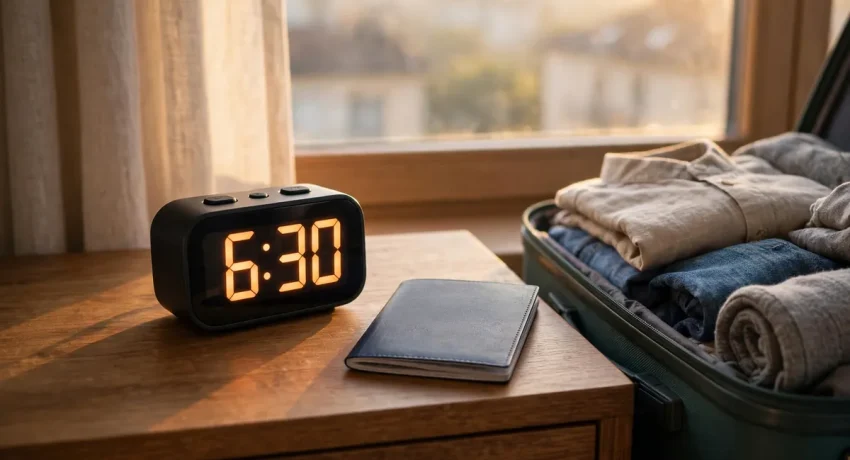

Your phone alarm has one job on a travel morning, and it fails more often than anyone admits. A phone that never switched to the new time zone, a battery that died overnight, or a hotel room where the phone sat on silent can each cost you a flight. Travelers on packing forums tell the same story again and again: one missed alarm, one missed flight home. A small alarm clock for travel costs less than an airport coffee and removes the whole risk. This guide picks the best travel alarm clocks for 2026 and explains how to choose one. It also clears up a strange story along the way. The “Rensie travel alarm clock” that travel blogs keep recommending does not exist as a modern product. Rensie was a vintage German clockmaker, and its clocks now live in antique shops.
Why Do You Still Need a Travel Alarm Clock in 2026?
Phones do almost everything, so a separate alarm clock can feel old-fashioned. Yet a dedicated clock solves three problems that phones keep creating. First, a phone alarm depends on the phone. If the battery dies, the software updates overnight, or the phone stays on silent from the flight, the alarm never rings. A battery clock has no software and no notifications to silence it. Second, a clock is always set to local time. You move the hour when you land, and it stays put. Phones usually handle time zones well, but “usually” is a poor promise before an early flight. Third, a clock is a backup. Most experienced travelers run two alarms: the phone and a small clock. One can fail. Two rarely fail together.
There is a comfort angle too. A clock with a dark screen and no glowing notifications helps some people sleep better. Light sleepers often prefer a silent analog clock to a phone that buzzes with messages through the night. And in places with unreliable power — a rural guesthouse, a campsite, a night train — a battery clock simply works.
What Happened to the Rensie Travel Alarm Clock?
If you searched for a Rensie travel alarm clock before landing here, you probably found pages that praise it as the ultimate travel companion. Here is the honest truth: there is no modern Rensie travel alarm clock to buy. Rensie was a German clockmaker from the 1930s to the 1960s. Its travel clocks were small mechanical folding clocks, often in brass cases covered with green shagreen, a kind of sharkskin leather. They had jewelled mechanical movements and needed winding every day.
Today those clocks turn up only as antiques. A 1930s Art Deco Rensie travel clock in brass and green shagreen is listed on 1stDibs at $295. On eBay, a 1940s Rensie globe alarm clock sold for $79.99. A leather-cased Rensie desk clock from the mid-20th century was valued at $70 to $90. In short, vintage Rensie pieces change hands for roughly $70 to $300 depending on condition, and they are collectibles, not travel gear.
So where did the modern “Rensie travel alarm clock” come from? It appears to be spun content: old articles that mixed a real vintage brand name with a generic travel clock description. There is no official Rensie website. No current retailer stocks a Rensie travel clock, and no review site has tested one. If a page tells you the Rensie clock has a digital display, a snooze button and a temperature readout, it is describing a different product under a borrowed name. The rest of this guide covers the clocks you can actually buy in 2026.
Which Travel Alarm Clock Is Best in 2026?
The best alarm clock for travel, for most people, is the Travelwey Digital. It does one job, shows the time and rings once, and it does it well. Popular Science picked it as its travel clock for being simple and compact. If you want the quietest option, the Peakeep Ultra Small is a silent travel alarm clock. It fits in a jacket pocket. For something beautiful on the nightstand, the Braun BC02 is the design classic. The table below compares the ten best options at a glance, and the sections after it explain each one.
| Clock | Type | Best for | Batteries | Price guide |
|---|---|---|---|---|
| Travelwey Digital | Digital | Most travelers | 2 x AAA | About $13 |
| Peakeep Ultra Small | Analog | Light sleepers | 1 x AA | About $11 |
| Braun BC02 | Analog | Design lovers | 1 x AA | About £20 (UK) |
| MeesMeek 6201P | Digital, folding | Feature lovers | 2 x AAA included | Budget |
| Casio TQ-140 | Analog | Glow-in-the-dark reading | 1 x AA | Budget |
| Braun BC08 | Digital | 24-hour time fans | 1 x AAA | Mid-range |
| Sonic Alert SBP | Vibrating | Deep sleepers, hearing loss | Included | Mid-range |
| Sharp SPC483 | Digital | Big numbers | Not included | Budget |
| Betus Foldable LCD | Digital, folding | Spare in the suitcase | Not stated | Budget |
| Tinload T0805 | Analog | Reading without glasses | Not stated | Budget |
Prices move often, so treat the figures above as a guide to the price band rather than a quote. The budget picks cluster around $10 to $15, the Braun models cost roughly twice that, and the vibrating Sonic Alert sits in the middle.
How Good Is the Travelwey Digital?
The Travelwey travel alarm clock is the simplest clock on this list, and that is its strength. It shows the time and one alarm and nothing else. A switch turns the screen off for packing, which stops the backlight switching on inside a bag, and a tap on the top bar lights the big numbers for a few seconds. Two AAA batteries power it, and the alarm is a single beep that cannot be changed. Popular Science chose it as its travel pick because it is simple and compact, and the Ezvid Wiki’s October 2026 update kept it at number one for the same reason.
Its limits are honest ones. The single beep can be too soft for heavy sleepers. You cannot set a second alarm. The volume and tone are fixed, and it will not charge your phone. None of that matters if you want a clock that simply works. At around $13, it is also one of the cheapest options here. Buy it if you want the least fuss. Skip it if you sleep through gentle beeps.
Is the Peakeep Ultra Small Really Silent?
Yes, and that is the point. The Peakeep travel alarm clock is an analog model with a sweeping second hand, so it makes no ticking sound through the night. It measures about 2.25 inches on each side and fits in a jacket pocket. Its beep starts gently and grows more urgent the longer it rings, which is kinder than a sudden blast. A bar on top handles snooze and the light, and the hands glow faintly in the dark. One AA battery runs it for more than six months.
Setting the alarm takes patience. You turn a small wheel on the back, which is fiddly in the dark, and the alarm time is only as precise as the wheel. The warranty runs just 90 days, which is short for a product you trust with early flights. At around $11, though, it is the cheapest clock on this list. Buy it if ticking keeps you awake or you pack very light. Skip it if you need to set an alarm to the exact minute.
Why Does the Braun BC02 Cost More?
The Braun BC02 is a small white analog cube with a yellow second hand and a quiet quartz movement. It looks like a design object because it is one: Braun’s clocks have won design awards for decades, and the BC02 is sold in museum design stores. Its alarm starts slow and gets faster and louder until you stop it, a pattern called a crescendo alarm. One wide button on top covers snooze and the light, and the hands carry glow paint for night reading. A two-year warranty backs it, which is the longest on this list.
You pay for the design and the warranty. At about £19.99 on Amazon UK, it costs roughly twice the budget picks. The AA battery is sold separately, and the alarm is set by a small wheel on the back, like the Peakeep. Buy it if you want a clock that looks good on a hotel nightstand and will last for years. Skip it if every dollar counts or you want a digital display.
What Does the MeesMeek 6201P Offer?
The MeesMeek travel alarm clock folds shut like a compact mirror and opens to a wide 3.54-inch screen. It shows the date, the weekday and the room temperature alongside the time. Two alarm volumes are on offer. A weekday-only setting lets you sleep in on Saturday and Sunday without touching the alarm. The screen stays readable at night thanks to a light button. Batteries come in the box.
It packs the most features per dollar on this list, but the case is light plastic that feels flimsy, and the maker does not state a warranty. If you like information on your clock — date, temperature, day of the week — this is your pick. For rough handling in a packed bag, the folding design protects the screen, but the case itself is the weak point.
Can You Read the Casio TQ-140 in the Dark?
Yes, for a few minutes. The Casio TQ-140 has big green glow-in-the-dark numerals that you can read without hunting for a light. It is a plain black analog cube with a beep alarm and a snooze bar across the top, and it slips into almost any bag. The catch is that the glow fades within minutes once the lights go out. It helps at bedtime more than at 4 a.m. On the downside, the alarm can sound a few minutes early or late. Casio publishes almost no specifications for it. It is a budget pick for travelers who like a simple analog cube and do not need precision.
Who Should Buy the Braun BC08?
Frequent flyers who read itineraries in 24-hour time will like the Braun BC08. It is a palm-size digital cube with white digits on a black screen, and it shows the time in 24-hour format. Its beep builds the longer you ignore it, and one button on top handles snooze and the backlight. It runs on a single AAA battery, which you buy separately. The dark screen can be hard to read in bright daylight, and some sleepers find the alarm too quiet. Buy it if you live in 24-hour time. Otherwise, the BC02 gives you the same brand quality with an analog face that reads better in daylight.
What If You Sleep Through Every Alarm?
Sound is not the answer for everyone. The Sonic Alert SBP is the travel alarm clock for heavy sleepers and for people who are deaf or hard of hearing. You tuck it under a pillow and its built-in motor vibrates when the alarm goes off. It can use sound, vibration, or both. A clip holds it on a pillow or bag strap, and the batteries come included. The pop-up screen is tiny, and some units quit within weeks, so test it at home before a trip. It is the only clock on this list that wakes you by touch rather than sound, and for deep sleepers that difference matters more than any feature list.
If vibration sounds extreme, remember the alternative. A louder beep wakes the whole hotel room, while a vibrating alarm clock wakes only you. For shared rooms, dorms, and night trains, that is a real advantage.
Which Other Travel Clocks Are Worth a Look?
Three more models round out the list. The Sharp SPC483 is an ordinary nightstand clock that also packs well. Its rubbery coating feels soft in the hand, the numbers are big for a clock this small, and pressing the top bar brings up a blue light for a few seconds. The alarm gets louder as it rings. It does not fold, so the screen sits exposed in a bag, and the batteries cost extra.
The Betus Foldable LCD is a spare to leave in a suitcase. It packs a calendar, a thermometer and a countdown timer into a thin flip case, and its screen is big and clear in daylight. The silver version has no backlight at all, so it is hard to read in a dark hotel room. Setting it takes many button presses, and it can drift by a couple of minutes a month.
The Tinload T0805 has big, bold numbers that you can read at arm’s length, which helps if your glasses sit on the nightstand. It is a silent analog clock with sweeping hands, a beep that builds in steps, and a light you hold a button for. Timekeeping is uneven from clock to clock, and some stop sounding after a few months. It is a fine budget pick, but test it before you trust it with a flight.
Should You Choose Analog or Digital?
Analog clocks win on silence and simplicity. An analog travel alarm clock uses a sweep movement, where the second hand glides instead of stepping, so it makes no ticking sound. That matters in a quiet hotel room: one traveler on the Rick Steves packing forum warned that some small clocks tick loudly enough to keep a light sleeper awake. The trade-off is setting. An analog alarm is set with a wheel on the back, there is no 24-hour display, and the alarm time is only as precise as the wheel.
A digital travel alarm clock is easier to set to the minute and to change across time zones. Folding models close like a compact, which protects the screen and buttons in a bag, and many add the date and room temperature. Watch for clocks that need dozens of presses to move the hour. A backlight you can trigger by touch helps in a dark room. But a light button that is not covered when the clock is folded can switch on in a packed bag. Whatever you choose, pick a travel alarm clock with snooze if you like a second chance in the morning.
How Loud Does a Travel Alarm Need to Be?
Most small travel clocks beep at a moderate level, and a few let you pick between two volumes. That is fine for most people, but not through earplugs, which is when a loud travel alarm clock earns its place. A poster on the Rick Steves Europe forum could not wake up through earplugs, so she switched to a louder model. Others in the thread praised alarms that start soft and grow louder. These crescendo alarms are gentler at first and harder to sleep through.
If you wear earplugs, test your clock with them at home before you travel. Sharing a room calls for a gentler approach. A crescendo alarm or a vibrating clock is kinder to the other person than a sudden loud beep. And if you are a very deep sleeper, no beep will do: get the Sonic Alert SBP or a bed shaker instead.
What About Batteries, Packing and Time Zones?
Every clock on this list is a battery operated alarm clock, which is the point: no plug, no adapter, no outlet hunting. Many analog travel clocks ship without a battery, so buy the AA or AAA before you leave, and pack a spare. A single AA can run a basic analog clock for many months. Forum travelers report two common problems on the road: battery doors that pop open and reset the clock, and alarms that go off inside a suitcase. Turn the alarm switch off or take the battery out when you pack, and tape a loose battery door.
Skip radio-controlled, or atomic, clocks for overseas trips. They set themselves from a time signal like the U.S. NIST WWVB station or Germany’s equivalent, and they cannot sync outside its range. One forum poster could not set one in Turkey. A plain quartz clock just needs you to move the hour. Set it to local time when you land, and keep your phone alarm as a second alarm, not the only one.
How Do You Set Up a Travel Alarm for a Trip?
Buy the clock at least a week before you travel and test it at home. Set the alarm for the morning, sleep with it on the nightstand, and see whether it wakes you. Check the volume through earplugs if you wear them. Put fresh batteries in before the trip, and pack one spare of the right size. Tape the battery door if it feels loose.
On the night before an early start, set the clock and the phone for the same time, then set the phone five minutes later as a backup. Put the clock where you can reach it without getting up, and make sure the alarm switch is on. When you pack to go home, switch the alarm off or remove the battery, or it may ring inside your bag at 30,000 feet. These steps take five minutes and remove the most common ways a travel alarm fails.
Who Can Skip a Travel Alarm Clock?
Not everyone needs one. If you always travel with a charged phone, sleep lightly, and never cross time zones, your phone is probably enough. Business travelers who stay in one city and wake at the same time each day rarely miss an alarm. And if you travel with a partner who wakes early, you already have a backup.
Everyone else should pack one. Night-train sleepers, early-flight catchers, campers, and anyone who has ever missed an alarm will get their money’s worth from a $13 clock on the first trip. It weighs less than your phone charger and takes up less space than a pair of socks.
Frequently Asked Questions
Is the Rensie travel alarm clock real?
Rensie was a real German clockmaker, but its travel clocks date from the 1930s to the 1960s. They were mechanical folding clocks in brass and shagreen leather, and today they sell only as antiques for roughly $70 to $300. There is no modern Rensie travel alarm clock to buy, and no official Rensie website sells one.
What is the best travel alarm clock in 2026?
For most travelers, the Travelwey Digital. It is simple, cheap at around $13, and Popular Science picked it as its travel clock. Light sleepers should look at the silent Peakeep Ultra Small, and design lovers should look at the Braun BC02.
Do travel alarm clocks tick?
Good ones do not. Look for a sweep movement, where the second hand glides instead of stepping. The Peakeep Ultra Small and the Tinload T0805 both use sweep movements. Cheap stepping clocks tick loudly enough to keep a light sleeper awake.
How much should a travel alarm clock cost?
Most good ones cost $10 to $20. Budget picks here cluster around $11 to $13. The Braun models cost roughly twice that, and you pay for design and a longer warranty. Anything over $40 is paying for features you do not need on the road.
Can I use my phone instead of a travel alarm clock?
Yes, and most travelers do. The case for a clock is as a backup: phones fail across time zones, run out of battery, or stay on silent. A small battery clock removes that risk for about $13. Run both alarms on important mornings.
Will a travel alarm clock work abroad?
A plain quartz clock works anywhere, because you set the hour by hand. Skip radio-controlled atomic clocks for overseas trips, since they cannot pick up their home time signal abroad. Battery clocks need no plug adapter, which is another reason travelers prefer them.
Sources: Ezvid Wiki (October 26, 2026); Popular Science; TechGearLab; Rick Steves Travel Forum; 1stDibs and eBay listings.