
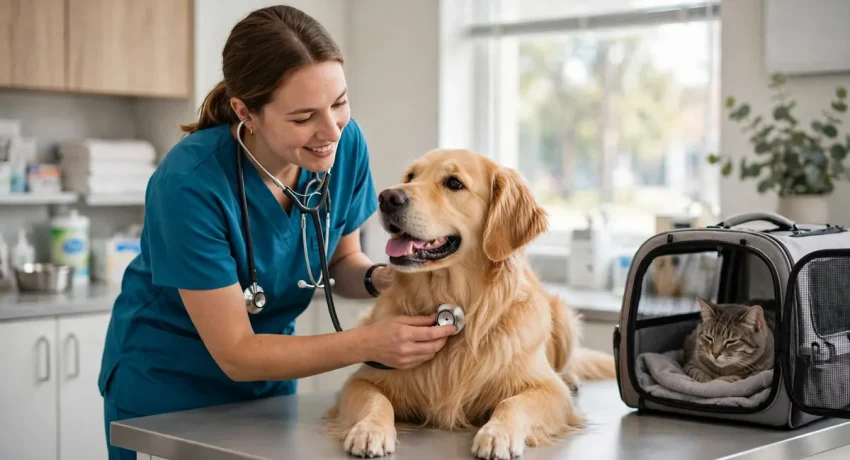

Choosing a vet is one of the most personal decisions a pet owner makes. You hand over a family member. A stranger then holds the animal that sleeps at the foot of your bed. So the question is simple: how do you know a hospital is good before your pet ever walks through the door?
Livermore Family Pet Hospital has been answering that question since 1957. The hospital sits on Railroad Avenue in Livermore, California. It has held American Animal Hospital Association accreditation for nearly seventy years. And its clients keep saying the same thing in review after review: nobody rushes you here.
This guide covers what the hospital actually offers, what it costs, and what to expect on a first visit. Every fact comes from the hospital’s own website, its published wellness plan, or verified review and directory listings. Prices that are not the hospital’s own are clearly labelled as typical US ranges.
What Is Livermore Family Pet Hospital?
Livermore Family Pet Hospital is a full-service veterinary hospital in Livermore, California. It treats dogs and cats. Its team describes its mission in plain terms: the highest standards of veterinary medicine, delivered with care, respect, transparency, and compassion.
Two facts set it apart right away. First, it has served the Tri-Valley since 1957. That is nearly seven decades in one community. Second, it has been accredited by the American Animal Hospital Association (AAHA) since 1957 as well. AAHA accreditation is voluntary. An AAHA accredited vet hospital must pass inspection of its equipment, medical protocols, and staff training. Only a small minority of practices in the United States and Canada earn it.
Longevity alone proves nothing. But a hospital that has kept accreditation for almost seventy years has been inspected again and again. That is a meaningful signal.
| Fact | Detail |
|---|---|
| Hospital | Livermore Family Pet Hospital |
| Address | 2494 Railroad Ave, Livermore, CA 94550 |
| Phone | (925) 447-1420 |
| wecare@livermorefamilypet.com | |
| Founded | 1957 |
| Accreditation | American Animal Hospital Association, since 1957 |
| Patients | Dogs and cats |
| Area served | Livermore and the Tri-Valley, California |
Where Is the Hospital and When Is It Open?
The hospital stands at 2494 Railroad Avenue in Livermore, California. Livermore sits in the Tri-Valley, east of the San Francisco Bay Area. Nearby clinics include the Animal Hospital of Livermore, about half a mile away, and Adobe Pet Hospital, about six-tenths of a mile away. Owners who search for a veterinary hospital near me in Livermore will find this practice on Railroad Avenue.
Directory listings give these opening hours: Monday 8:30 AM to 5:30 PM, Tuesday 8:30 AM to 7:00 PM, Wednesday and Thursday 8:30 AM to 5:30 PM, and Friday 8:30 AM to 10:00 PM. Tuesday is the late evening. Hours can change, so call ahead before you drive over. The hospital also offers an online portal for scheduling appointments, requesting prescriptions, and managing your pet’s records.
One practical note matters here. As an emergency vet Livermore pet owners can call during opening hours, the hospital lists emergency care among its services. That does not mean it is open around the clock. If your pet needs help outside opening hours, call first. The team can tell you whether to come in or go to a 24-hour emergency hospital.
Who Are the Vets Behind the Hospital?
A hospital is its people. Livermore Family Pet Hospital introduces its veterinarians on its own team page. Four doctors lead the medical team.
Dr. Heather Moore owns the hospital. She knew she wanted to be a veterinarian when she was just a toddler. Clients mention her by name in reviews again and again. One owner wrote that her dog is friends with everyone there and that she trusts nobody else with him.
Dr. Lisa Zinn joined the hospital in September 2009. She graduated from the UC Davis School of Veterinary Medicine in 2008. Since then, she has spent well over a decade caring for Livermore pets.
Dr. Allie grew up in the Tri-Valley. She is back in the area as a Tri-Valley veterinarian caring for her own community’s pets. Her story is a local one: a childhood love of animals that turned into a career at home.
Dr. Laura Rensink joined the team in September 2026. She was already a well-established and loved veterinarian in Livermore before she arrived. Her arrival added another familiar face for long-time clients.
Reviews also praise Dr. Shubin and Dr. Ali by name. Behind the doctors stands a larger team. It includes registered veterinary technicians, a treatment team lead, a pharmacy specialist, and family care representatives. One technician has worked there since 2005. Another joined as a student through a local occupational program and stayed. Low staff turnover is a quiet sign of a healthy hospital.
What Services Does the Hospital Offer?
The hospital offers preventive care as well as advanced diagnostic and surgical services. Its own service lists cover dogs and cats from kittenhood and puppyhood through old age. The veterinary services Livermore pet owners use most are wellness exams, vaccines, and dental care. Here is what it provides.
Wellness and preventive care. A pet wellness exam Livermore owners book twice a year forms the core of the program. A head-to-tail assessment checks weight, joints, heart, teeth, and more. As a dog vet Livermore families rely on, the hospital covers puppy care through senior care. Vaccines follow an individual protocol for each pet. Pet vaccinations Livermore vets recommend are tailored to each animal’s age, lifestyle, and risk. Flea and tick control, deworming, and heartworm prevention are part of routine care.
Diagnostics. The hospital runs in-house laboratory testing, diagnostic imaging, and ultrasound. Faster lab results mean faster answers. Blood, urine, and fecal testing support both wellness screening and sick-pet workups.
Surgery and anesthesia. Services include spay and neuter procedures, soft tissue surgery, and orthopedic surgery. For spay neuter Livermore pet owners can book procedures with full monitoring and pain management. Anesthesia comes with monitoring of heart rate, blood pressure, oxygen, and temperature. A dedicated team member watches vital signs throughout every procedure.
Teeth and gums. For pet dental care Livermore owners can book exams, professional cleanings under anesthesia, full-mouth X-rays, scaling, and polishing. The hospital notes that periodontal disease signs appear in 70% to 80% of pets as young as three years old. Left alone, dental disease causes pain, gum damage, tooth loss, and jawbone breakdown.
Specialist-style care in-house. Cardiology, dermatology, allergy testing, eye care, behavior services, and pain management are all listed. Cold laser therapy treats post-operative pain, arthritis, and other inflammatory conditions. Nutrition advice is tailored to each pet’s life stage and health needs.
Everyday essentials. Microchip identification, OFA certification evaluation, house calls in some cases, and an in-house pharmacy round out the list. Prescriptions can also be requested through the online portal.
| Service area | What it includes |
|---|---|
| Wellness exams | Semi-annual head-to-tail exams, vaccines, parasite control |
| Diagnostics | In-house lab, bloodwork, X-rays, ultrasound |
| Surgery | Spay/neuter, soft tissue, orthopedic surgery |
| Dental care | Cleanings under anesthesia, full-mouth X-rays, extractions |
| Cardiology | Heart exams, EKG, heart ultrasound |
| Dermatology and allergy | Skin conditions, allergy testing and treatment |
| Behavior | Counselling for learned behavior problems |
| Pain management | Laser therapy, medication, arthritis care |
| Senior care | Twice-yearly exams, bloodwork, age-related screening |
| Other | Microchipping, house calls, pharmacy, nutrition advice |
What Makes the Cat Care Different?
Cats are not small dogs. Livermore Family Pet Hospital treats them that way. It runs a cat-friendly hospital with a dedicated feline-only examination room. Staff use feline pheromones and soft, cozy surfaces to help cats feel safe. As a cat friendly vet Livermore families praise, the team lets cats move at their own pace instead of rushing them.
Why does this matter? Cats hide illness well. A sick cat often just becomes less active and less interactive. A cat that stops greeting you at the door may be telling you something. The hospital’s own guidance is clear: any obvious change in behavior deserves a call to the office.
Its cat services list is long. It covers allergy testing, anesthesia, behavior, cardiology, dental care, dermatology, deworming, imaging, eye care, flea and tick control, heartworm prevention, house calls, kitten care, lab work, laser therapy, medications, microchipping, nutrition, OFA evaluation, pain management, preventive care, senior care, spay or neuter, surgery, and vaccinations. Owners searching for a cat vet Livermore trusts will find this feline service list unusually detailed.
How Does the Hospital Care for Pets at Every Life Stage?
The hospital plans care around six life stages for cats. Each stage brings different needs. Kittens need vaccines and early training. Prime-age adults need steady prevention. Seniors need closer watching.
- Kitten: 0 to 6 months
- Junior: 7 months to 2 years
- Prime: 3 to 6 years
- Mature: 7 to 10 years
- Senior: 11 to 14 years
- Geriatric: 15 years and older
For dogs, the same idea applies. Senior pet care Livermore owners arrange here means twice-yearly exams and regular bloodwork. Each visit is a nose-to-tail check. The team watches weight, vision, heart function, and dental health. It looks for early signs of arthritis, heart murmurs, and other age-related problems. Blood work runs alongside the exam. X-rays or ultrasound follow when the history calls for them.
Early detection is the point. A problem found at a routine visit is often smaller, cheaper, and easier to treat than the same problem found months later. That is the whole argument for preventive care in one sentence.
What Do the Wellness Plans Cost?
Here is something unusual: the hospital publishes its wellness plan pricing. The pet wellness plan cost starts at $39.00 per month for the Feline Adult plan, with a one-time enrollment fee of $30.00. The plan includes a doctor exam, annual junior wellness diagnostics, core vaccines as recommended by your veterinarian, and a routine nail trim.
Add-on services are priced by the month as well. A Grade 1-2 dental procedure, including full-mouth X-rays, IV fluids, anesthesia, monitoring, and polishing, costs about $81.58 per month. A spay adds about $54.34 per month. A neuter adds about $15.75 per month. Feline leukemia vaccination adds $4.61 per month. Up to twelve months of preventatives adds $14.93 per month.
The hospital says the plan saves over $70 per year before any optional services. Plans are customizable by life stage. They may include exams, vaccines, diagnostic tests, parasite control, dental care, and elective surgery. Monthly payments spread the cost instead of stacking it into one big bill.
Two honest notes belong here. First, these figures come from the hospital’s own published plan sheet. Prices can change, so confirm the current rate before you sign up. Second, one reviewer found the wellness plan platform clunky to update. The care earned praise. The paperwork did not.
What Does a Vet Visit Cost in 2026?
Livermore Family Pet Hospital does not publish a full price list for every service. That is normal. Most private practices quote by phone or after an exam. But you can still plan. The ranges below are typical US figures from published 2026 guides. They are not this hospital’s prices.
| Service | Typical US range |
|---|---|
| Routine wellness exam | $50 to $150 |
| Vaccination package | $75 to $200 |
| Spay or neuter surgery | $100 to $400 |
| Dental cleaning | $300 to $800 |
| Diagnostic imaging | $200 to $1,000 |
| Emergency care | $200 to $1,500 or more |
| Emergency exam fee alone | $150 to $300 or more |
| Pet insurance premium | $20 to $100 per month |
Costs vary by city, clinic, and the size of your pet. Livermore sits in the Bay Area, where prices often run above the national middle. Ask for a written estimate before any procedure. A good hospital will break it down: exam fee, lab work, medication, and follow-up. If the total surprises you, ask what can wait and what cannot. Honest hospitals answer that question plainly.
Pet insurance is worth a look before trouble starts. Monthly premiums typically run $20 to $100 depending on coverage and your pet’s age. Most policies exclude pre-existing conditions. That is why timing matters. Buy the policy while your pet is healthy, not after a diagnosis.
What Do Pet Owners Say About the Hospital?
Reviews tell you what a website cannot. Livermore Family Pet Hospital carries recent five-star Google reviews from September and October 2026. The same themes repeat.
Owners praise the staff first. “The people are the real highlight,” one reviewer wrote. Another said the team never rushes a visit. They talk through everything they are doing. Options are explained in order, by level, and every question gets a patient answer.
Communication earns special mention. One owner with a very sick cat wrote that the vets explained everything, knew quickly what the problem likely was, and arranged referral for advanced ultrasound when needed. Another said the hospital gave detailed information about her pet after every visit. A third said the online portal makes scheduling and prescription requests easy.
Cat owners are vocal fans. Reviews call the hospital very cat friendly. One owner said her cats are loved on and well treated. Another said Dr. Ali and the team genuinely love animals and treat clients with kindness.
Honest reviews include complaints too. Two owners said the hospital costs more than some other clinics in the area. One called it overpriced. Both still praised the care. One reviewer asked the hospital to improve its wellness plan platform. Updating information took too many steps. These are useful warnings. Price and paperwork are real parts of the experience.
Read the pattern, not just the stars. When dozens of owners mention the same strengths — no rushing, clear explanations, gentle handling — that is a culture, not a lucky day. The only recurring complaints are price and a website tool, so the medical care itself is not in question.
How Do You Choose the Right Vet Hospital?
Use Livermore Family Pet Hospital as a yardstick. These checks work for any veterinary hospital you compare it with. A quick search for vet Livermore CA or Livermore vet hospital brings this practice up at once. Anyone looking for a veterinarian Livermore CA residents recommend will see the same name in review after review.
Check accreditation. AAHA accreditation means an outside body inspected the hospital. Ask any clinic whether it holds accreditation and when it was last inspected. A hospital that volunteers this information is proud of it for a reason.
Match services to your pet. A healthy young dog needs vaccines and prevention. An older cat needs dental care and bloodwork. An exotic pet needs a specialist. List what your pet actually needs, then check that the hospital provides it in-house. Referrals are fine, but a hospital that handles most care under one roof saves you trips.
Visit the building. Is it clean? Does the waiting area feel calm? Are cats and dogs separated? A short tour tells you more than a website does. Watch how staff greet animals. Notice whether anyone rushes.
Ask about costs before you need them. Request a written estimate for a routine visit and for a common procedure. Ask what a wellness plan covers and what it does not. Compare the answers across clinics. The cheapest exam is not always the cheapest year of care.
Test the communication. Call with a question. Do they answer? Are explanations clear and plain? Your vet will deliver hard news one day. You want a team that talks plainly and listens well.
Read recent reviews. Look for patterns across many reviews, not single stories. Recent reviews matter more than old ones. Staff changes, and so does quality.
Plan for emergencies. Ask what happens after hours. Know the nearest 24-hour emergency hospital before you need it. Save both numbers in your phone today.
How Should You Prepare for a First Visit?
A little preparation makes the first visit smoother for your pet and for the vet. Bring any records you have. Vaccine history, prior lab results, and medication lists all help. If you adopted your pet, bring the shelter paperwork too.
Write down your questions before you arrive. Appetite changes, sleep patterns, odd behavior, and lumps are all worth mentioning. Note when each change started. Vets diagnose from patterns, and your observations are data.
Feed your pet normally unless the hospital tells you otherwise. Bring a favorite treat or blanket for comfort. For cats, use a sturdy carrier with a familiar-smelling towel inside. Cover the carrier with a light cloth on the drive. It reduces stress.
Arrive a few minutes early. New-patient paperwork takes time. Bring a stool sample if the hospital asks for one. Many clinics request it for parasite screening at a first visit.
Ask what happens next before you leave. When are lab results due? Who calls you? What signs should prompt a call back? Write the answers down. Good hospitals welcome these questions.
What Should You Do in a Pet Emergency?
Emergencies are frightening. A plan made in calm minutes saves frantic ones later. Keep your vet’s number and the nearest 24-hour emergency hospital’s number in your phone. Know the driving route. Tell a family member where both numbers live.
If your pet is hurt or suddenly very ill, call first. The hospital can tell you whether to come in now or go straight to an emergency center. Describe what you see in plain words. When did it start? What changed? Is your pet breathing normally? Can it stand?
Do not give human medicine to a pet unless a veterinarian tells you to. Many common painkillers are dangerous for dogs and cats. Do not try to diagnose the problem yourself. Your job in an emergency is simple: stay calm, keep your pet safe and still, and get expert help fast.
This article gives general information only. It is not veterinary advice for any specific animal. Only a veterinarian who examines your pet can diagnose or treat it.
Frequently Asked Questions
Where is Livermore Family Pet Hospital located?
The hospital is at 2494 Railroad Ave, Livermore, CA 94550. It serves Livermore and the wider Tri-Valley area of California. Call (925) 447-1420 to confirm hours and availability before you visit.
Is Livermore Family Pet Hospital AAHA accredited?
Yes. The hospital has been accredited by the American Animal Hospital Association since 1957. AAHA accreditation is voluntary and requires passing inspections of equipment, medical protocols, and staff training.
Does the hospital treat cats as well as dogs?
Yes. The hospital treats dogs and cats. It runs a cat-friendly service with a dedicated feline-only exam room, feline pheromones, and staff trained to handle cats gently at their own pace.
How much does the wellness plan cost?
The Feline Adult wellness plan starts at $39.00 per month with a one-time $30.00 enrollment fee, according to the hospital’s own published plan sheet. It includes a doctor exam, annual wellness diagnostics, core vaccines, and a routine nail trim. Dental, spay, and neuter add-ons cost extra per month. Confirm current prices with the hospital before signing up.
How much does a vet visit cost in Livermore?
The hospital does not publish a full price list. Typical US ranges in 2026 run $50 to $150 for a routine wellness exam and $300 to $800 for a dental cleaning. Bay Area prices often sit above the national middle. Ask the hospital for a written estimate before any procedure.
What should I bring to my pet’s first visit?
Bring vaccine records, prior lab results, and a list of current medications. Write down your questions in advance. Note any behavior or appetite changes and when they started. Bring a stool sample if the hospital asks for one, and a carrier with a familiar towel for cats.
Sources: Livermore Family Pet Hospital official website (livermorefamilypet.com), including its cat services page, team page, preventive care and dental care articles, and published Feline Adult wellness plan sheet; BestProsInTown and TopVet directory listings for address, hours, and services; Google client reviews from September and October 2026; 2026 veterinary cost guides from IntuitionLink and VisionaryEcho. Cost ranges are typical US figures from published guides, not this hospital’s prices. Confirm hours, services, and prices with the hospital before visiting.