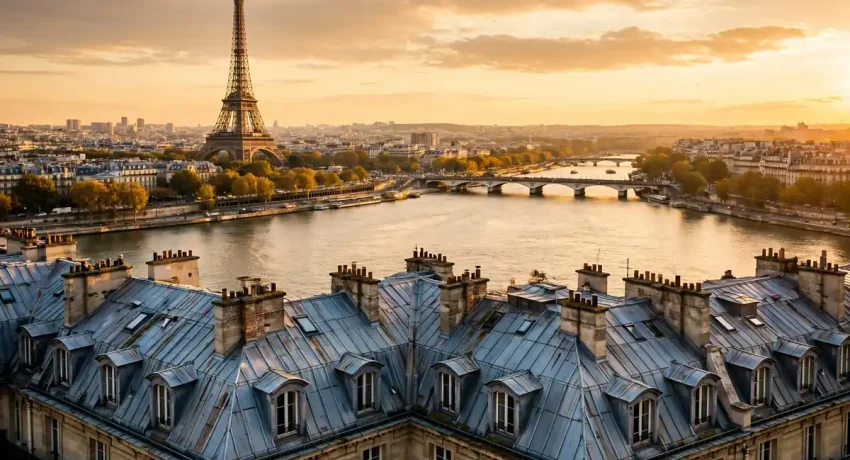

Paris does not need an introduction. It needs a plan. The city holds the most visited museum on earth, the most famous tower on earth, and a cathedral that rose from ashes in front of the whole world. Yet most first-time visitors lose hours in queues they could have avoided, or pay more than they needed to, because the rules changed in 2026. This guide covers the most popular places to visit in Paris as they actually work right now: what each one costs, when to go, and how to see it without wasting your day.
What Are the Most Popular Places to Visit in Paris in 2026?
The short list has not changed in decades. What has changed is the price of entry and the need to book ahead. Since January 2026, the Louvre, the Sainte-Chapelle and Versailles charge visitors from outside Europe more than European residents. The Eiffel Tower brings in new fares in January 2027. Notre-Dame is open again after its December 2024 reopening. And two famous viewpoints are gone for years: the Montparnasse Tower deck closed in March 2026 for a renovation expected to last about five years, and the Centre Pompidou closed in September 2025 until around 2030.
Here is the honest snapshot, with 2026 prices for an adult visitor from outside Europe. Prices are the official or widely listed rates at the time of writing. Always check the official site before you pay, because Paris prices do move.
| Place | What it costs in 2026 | Time to allow | Book ahead? |
|---|---|---|---|
| Eiffel Tower | €14.80–€36.70 | 2–3 hours | Yes, essential |
| Louvre | €32 (non-EEA) / €22 (EEA) | 3–4 hours | Yes, timed entry |
| Notre-Dame | Free (towers €16) | 45 minutes | Free slot helps |
| Sacré-Cœur | Free (dome €8) | 30 minutes | No |
| Arc de Triomphe | €16–€22 | 1 hour | Recommended |
| Musée d’Orsay | About €16–€18 | 2–3 hours | Yes |
| Sainte-Chapelle | €22 (non-EEA) / €16 (EEA) | 45 minutes | Yes, timed slot |
| Seine river cruise | From about €18–€20 | 1 hour | Same day is fine |
| Versailles (Passport) | €35 high season / €25 low season | Half to full day | Yes, timed entry |
| Luxembourg Gardens | Free | 1–2 hours | No |
The pattern is simple. The three places that punish walk-up visitors are the Eiffel Tower, the Louvre and Versailles. Book those first. Everything else can be planned around them.
Which Eiffel Tower Ticket Should You Buy?
The Eiffel Tower is the single most popular place to visit in Paris, and its ticket menu confuses almost everyone. There are four official tickets, sold on the official site toureiffel.paris. The operator is SETE, and the official Eiffel Tower tickets 2026 rates are the same wherever you check them.
| Ticket | Adult price | What you get |
|---|---|---|
| Stairs to the 2nd floor | €14.80 | 674 steps on foot, no lift |
| Lift to the 2nd floor | €23.50 | Elevator straight to the 2nd floor |
| Stairs + lift to the summit | €28.00 | Climb to the 2nd floor, lift to the top |
| Lift to the summit | €36.70 | Elevator all the way to the top |
Young visitors pay less. Youth aged 12 to 24 pay about half the adult fare, children aged 4 to 11 pay about a quarter, and children under 4 go free. Residents of the European Union under 26 can enter free with ID. The tower has three floors: the 1st floor at 57 metres, the 2nd floor at 116 metres, and the summit at 276 metres.
Is the Summit Worth the Extra Money?
For most first-time visitors, the honest answer is no. The 2nd floor has the best all-round view in Paris. You are high enough to feel the height, and low enough to still recognise the Louvre, the Seine, the Arc de Triomphe and Sacré-Cœur on its hill. The summit adds height and a longer queue, plus the small Champagne bar at the top and Gustave Eiffel’s restored office. Buy the summit ticket only if standing at the very top is a bucket-list must for you.
One rule catches people out. You choose your floor when you buy, and there is no on-site upgrade to the summit. A 2nd-floor ticket stays a 2nd-floor ticket. The stairs stop at the 2nd floor too. There is no ticket that lets you climb all the way to the summit on foot in 2026. The €28 combo is the closest thing to it.
When Is the Best Time to Go Up?
Lift tickets go on sale about 60 days ahead, and stair tickets about 30 days ahead. Summit slots sell out fastest, and sunset slots in summer can vanish within hours of release. Since late September 2026, stair tickets also need an advance reservation, so the old walk-up stairs option is gone. The tower opens daily at 9:30, and closes at 23:00 most of the year, later in peak summer. Go at opening time for the shortest queues, or book a late slot and watch the tower sparkle. It lights up every hour on the hour after dark, for five minutes at a time.
Two more facts to know before you book. The Paris Museum Pass does not cover the Eiffel Tower. And new fares arrive on 11 January 2027, so if your trip is after that date, check the new prices on the official site.
How Do You Visit the Louvre Without Wasting the Day?
The Louvre is the most visited museum in the world, and the biggest mistake is trying to see it all. It holds around 35,000 works across eight departments, in a former royal palace. Nobody sees it in a day. The people who enjoy it pick three anchors and let the walk between them be part of the visit.
The 2026 change that matters most is the price. Since 14 January 2026, the Louvre charges two prices for the first time in its history. If you search for the Louvre tickets price, you will see two numbers, and which one you pay depends on where you live. Visitors from the European Economic Area pay €22. Everyone else pays €32. Visitors under 18 enter free whatever their nationality, and EEA residents under 26 enter free with ID. Entry is also free for everyone on the first Friday evening of the month, except in July and August, and on 14 July. Timed entry is mandatory, and every ticket includes a time slot. That slot is the skip-the-line system. There is no separate ticket to buy.
Where Is the Mona Lisa, and How Do You Actually See Her?
The Mona Lisa hangs in the Denon Wing, Level 1, Room 711, the Salle des États. She is due to move to a purpose-built room beneath the Cour Carrée around 2031, but she remains in Room 711 for now. Expect a crowd at every open hour. The public queue ends at a barrier about 3 to 4 metres from the painting, which sits behind climate-controlled glass. You cannot walk up to it. Photos are allowed without flash, and without a selfie stick.
The smart route is simple. Book the first 9:00 entry slot, and start away from the Mona Lisa. See the Winged Victory of Samothrace above the Daru Staircase first, then the Venus de Milo, then the Egyptian collections. Come back to the Mona Lisa after the first rush has thinned. Or use a Wednesday or Friday evening, when the museum stays open until 9 pm and the day-trippers have gone. The quietest windows are Monday and Thursday between 9 and 10:30 in the morning. The busiest hours are around 2 to 3 in the afternoon, and weekend mornings from about 11.
Which Entrance Should You Use?
The glass Pyramid is the main entrance, and it is the busiest. The Carrousel du Louvre entrance, reached from 99 Rue de Rivoli or straight from the Palais Royal–Musée du Louvre métro, usually moves faster. Arrive about 30 minutes before your slot. Travel light, because security screening is mandatory. There is no re-entry, so plan food and breaks before you leave. The museum is closed every Tuesday, and on 1 January, 1 May and 25 December. Individual rooms can close on a rotating schedule, so check the official site the day before you go.
Allow three to four hours for the highlights, or two hours for the three anchor works. Opposite the Mona Lisa hangs Veronese’s Wedding at Cana, the largest painting in the museum. Most visitors never notice it, because they are facing the other way.
What Is Notre-Dame Like Now That It Has Reopened?
Notre-Dame de Paris reopened on 8 December 2024, after five years of restoration following the fire of 15 April 2019. The Notre-Dame reopening was watched around the world, and the ceremony was held on 7 December, with general visits resuming the next day. In 2025, more than 11 million people visited it, and the cathedral now draws close to 35,000 visitors a day. It is once again one of the most popular places to visit in Paris, and it is also one of the few that costs nothing.
Entry to the nave is free for everyone, at any age. No ticket is required. A free timed reservation is optional, and it opens only two to three days before your visit date, so it is useless for planning weeks ahead. It is worth checking once you are close to your trip, because walk-in queues can run two to three hours from April to October. Any website charging for standard entry is not legitimate. Only the official site notredamedeparis.fr issues the free slots.
The cathedral is open Monday to Friday from 7:50 to 19:00, on Thursdays until 22:00, and on Saturday and Sunday from 8:15 to 19:30. It closes to tourist access during scheduled Masses, so time your visit around them. Weekday Masses are at 8:00, 9:00, 12:15 and 18:15. Shoulders and knees must be covered at entry.
What About the Towers and the Treasury?
The bell towers reopened on 20 September 2025, after full structural restoration. A tower ticket costs €16 for adults, and it must be booked online in advance. There is no sale on site. Children under 18 and EU residents under 26 enter free, but they still need a timed slot. The climb takes you face to face with the gargoyles, and up to 360-degree views from 69 metres. The Treasury is a separate paid visit, and the Archaeological Crypt beneath the square is another. The spire, rebuilt exactly as it was, is visible from across the river and is one of the best free sights in the city.
Restoration work is not fully finished. The square in front of the cathedral has been partly closed since August 2026, and work on the east end has been under way since 2025. None of that stops a visit. It only means the outside is still partly scaffolded in places.
Why Is Sacré-Cœur and Montmartre Still the Best Free View in Paris?
Sacré-Cœur stands on the Butte Montmartre, the highest point in Paris. The white basilica is free to enter, with no ticket and no booking, every day from about 6:30 to 22:30. Photography is not allowed inside, and the mosaic ceiling alone is worth the walk. The terrace and the steps outside are one of the great free viewpoints in the city, and they cost nothing at all.
The dome is a separate paid ticket: €8 for adults and €5 for children, bought on site only. There is no online booking. The climb is about 280 to 300 steps up a narrow staircase, with no elevator. Dome hours are roughly 9:00 to 20:30 from April to September, and 9:00 to 17:00 from October to March. Allow 30 minutes for the basilica, and add 45 minutes for the dome climb.
Getting up the hill is part of the experience. The funicular costs one métro ticket, and the 222 steps beside it are free. Montmartre Paris is at its best before 10 in the morning, when the lanes around Sacré-Cœur are quiet. By midday they are packed. Behind the basilica, the Place du Tertre is where artists still set up their easels, and the Clos Montmartre is a working vineyard in the middle of Paris. The streets around Rue des Abbesses hold some of the best bakeries in the city, including one that has won the city’s best baguette prize more than once.
Is the Arc de Triomphe Terrace Worth the Climb?
The Arc de Triomphe stands at the western end of the Champs-Élysées, at the centre of twelve avenues that radiate out like a star. It was commissioned by Napoleon in 1806 and completed in 1836. The terrace on top is one of the best viewpoints in Paris, especially at golden hour, when the city lights come on and the avenues stretch away in every direction.
Arc de Triomphe tickets cost around €16 in the low season and around €22 in the high season, so check the official rate for your dates. The climb is 284 steps, and the lift has been out of order, so the terrace is stairs only at the time of writing. Never cross the roundabout on foot. Reach the Arc through the underground passage from the Champs-Élysées or the métro. The Champs-Élysées Paris avenue runs about 1.9 kilometres from the Arc to the Place de la Concorde, and it is best walked in the early morning, before the shops open and the crowds arrive. At Christmas, the avenue is strung with lights and festive decorations.
Why Do So Many Visitors Prefer the Musée d’Orsay to the Louvre?
The Musée d’Orsay sits in a former railway station on the Left Bank, and it holds the world’s largest collection of Impressionist and Post-Impressionist art. Monet, Renoir, Degas, Manet, Van Gogh, Gauguin and Cézanne are all here. The building is smaller than the Louvre, the art is easier to follow, and most visitors see it properly in two to three hours. That is why so many people leave saying they preferred it.
A ticket costs about €16 to €18, depending on where and how you buy it. Musée d’Orsay tickets are free for under-18s and for EEA residents under 26, and for everyone on the first Sunday of the month, with online booking required for the free slot. The museum is open Tuesday to Sunday from 9:30 to 18:00, and until 21:45 on Thursdays. It is closed on Mondays, and on 1 May and 25 December. Thursday evening is the quietest time to go, and the ticket price is lower then too.
Start on the 5th floor, where the Impressionist galleries are. Look out through the back of the giant station clock, and Sacré-Cœur is framed on the hill across the river. Van Gogh’s Starry Night Over the Rhône and his self-portraits are here, along with Monet’s series paintings and Renoir’s dancers. The museum is redesigning its reception areas until summer 2028, but it remains open and all the collections remain on view.
What Makes Sainte-Chapelle Worth a Timed Ticket?
Sainte-Chapelle is a small chapel on the Île de la Cité, a short walk from Notre-Dame, and it holds one of the most jaw-dropping interiors in Paris. It was built in the 1240s under King Louis IX to house holy relics, including the Crown of Thorns, which the king had bought for more than three times what the chapel itself cost to build. The upper chapel is almost entirely stained glass, more than 1,000 square metres of it, telling biblical stories in colour.
Since 12 January 2026, Sainte-Chapelle tickets cost €16 for EEA residents and €22 for everyone else. Entry is by timed slot, so book ahead on the official ticketing page. Go on a clear day, late in the morning, when the light comes through the glass. That is when the chapel earns its reputation. Allow 45 minutes, and pair it with Notre-Dame on the same walk, since the two are minutes apart.
Is a Seine River Cruise Worth It?
A one-hour Seine cruise is the easiest way to see Paris from the water, and it is one of the most popular places to visit in Paris for first-time visitors precisely because it asks nothing of you. The simplest Seine river cruise Paris offers is the one-hour sightseeing loop. You sit down, and the city passes by: the Eiffel Tower, Notre-Dame, the Louvre, the Musée d’Orsay, the Pont Alexandre III. A basic sightseeing cruise costs from about €18 to €20. Dinner cruises cost much more, and they are a different experience entirely.
The cruise is worth it at sunset, or after dark when the monuments are lit. It is less special in the middle of a grey afternoon. Boats leave from several points along the river, including the Pont de l’Alma near the Eiffel Tower. Same-day booking is usually fine for a basic cruise. If you want a dinner cruise, book ahead. The riverbanks of the Seine have been a UNESCO World Heritage site since 1991, and the cruise is the simplest way to see why.
Where Do Parisians Actually Spend a Sunny Afternoon?
The Jardin du Luxembourg, on the Left Bank, is where Paris goes when the sun comes out. Luxembourg Gardens Paris is free, needs no ticket, and is the best place in Paris to do nothing for an hour. It was created in the 1600s for Marie de’ Medici, and it is still the city’s most loved garden.
The garden holds the Luxembourg Palace, now the seat of the French Senate, and more than a hundred statues, including the Medici Fountain tucked away in a quiet corner. The Orangerie and the Orsay are a short walk away. Come in the late afternoon, when the light turns gold and the crowds thin. The garden closes at dusk, and the closing time changes with the season, so check the gate times on the day.
What Is the Difference Between Saint-Germain and Le Marais?
Saint-Germain-des-Prés and Le Marais are the two neighbourhoods visitors ask about most, and they feel very different. The Left Bank quarter is the old literary heart of the city. The Café de Flore and Les Deux Magots are still there, still crowded, still expensive, and still worth one coffee for the atmosphere. The streets around the church of Saint-Germain-des-Prés hold bookshops, galleries and quiet squares. It is elegant, calm and pricey.
Le Marais, on the Right Bank, is denser and livelier. Its streets are medieval, its courtyards hide galleries and workshops, and Le Marais Paris food is the best in the city for a casual lunch. Rue des Rosiers is famous for falafel, and the Place des Vosges is the oldest planned square in Paris, built in the early 1600s, with arcades all around it. The Musée Carnavalet, which tells the story of Paris itself, is free for its permanent collections, as are the Petit Palais and the Musée d’Art Moderne. If you have one afternoon to wander with no plan, spend it in Le Marais.
Is Versailles Worth a Full Day Trip?
The Palace of Versailles sits about 45 minutes from central Paris by RER C, to Versailles Rive Gauche station. A Versailles day trip from Paris is the grandest half-day out of the city: the home Louis XIV moved his court to in 1682, and the place where the Treaty of Versailles was signed in 1919. The Hall of Mirrors alone is worth the trip. The gardens, the Trianon palaces and Marie Antoinette’s hamlet fill the rest of the day.
Versailles changed its prices in 2026 too. The Passport ticket, which covers the whole estate, costs €35 in high season and €25 in low season for non-EEA visitors, and €32 or €22 for EEA nationals and residents. The Trianon estate alone costs €15, or €12 for EEA visitors. The gardens are free in low season, and €15 or €12 in high season. Children under 18 and EEA residents under 26 enter free. Timed entry is mandatory for the palace, even for free-entry visitors, so book a slot online. The palace is closed on Mondays. The Musical Fountains season runs from 1 April to 1 November 2026.
Go on a weekday if you can, arrive at opening, and see the palace first. The crowds build fast after 11 in the morning. Take the gardens in the afternoon, when the palace is at its busiest. Allow a half day at minimum, and a full day if you want the Trianon and the hamlet as well. The audio guide is a separate charge of about €5.
How Many Days Do You Need in Paris?
Wondering how many days in Paris you need? Three is the honest minimum for the most popular places to visit in Paris. Four or five days lets you slow down. Here is how a Paris itinerary 3 days long can work without rushing.
What Does a Good Paris Itinerary for 3 Days Look Like?
Day one is the river and the icons. Start at the Eiffel Tower at opening time, walk the Champ de Mars, then cross to the Trocadéro for the classic photo. Take a Seine cruise in the late afternoon, and finish at the Arc de Triomphe terrace at golden hour. Day two is the museums. Book the Louvre for the first 9:00 slot, spend the morning there, then walk through the Tuileries Garden to the Place de la Concorde. Spend the afternoon at the Musée d’Orsay, and the evening in Saint-Germain. Day three is the islands and the hill. Start at Notre-Dame, walk to Sainte-Chapelle, then take the métro to Montmartre. Spend the afternoon in the village lanes, climb to Sacré-Cœur, and finish with dinner in Le Marais.
With a fourth day, add Versailles. A fifth day is for a slow morning in the Luxembourg Gardens, the Musée de l’Orangerie for Monet’s Water Lilies, and an evening in the Canal Saint-Martin area. The city rewards a slower pace. The worst Paris trips are the ones that try to fit everything into two days.
Is the Paris Museum Pass Worth It in 2026?
The Paris Museum Pass costs €85 for two days, €105 for four days, and €125 for six days. It covers more than 50 museums and monuments across Paris and the surrounding region, including the Louvre, the Musée d’Orsay, the Arc de Triomphe, the Sainte-Chapelle and Versailles. It does not cover the Eiffel Tower, the Catacombs, the Palais Garnier, the Sacré-Cœur dome, boat trips or private museums.
Whether it pays depends on where you live. Since January 2026, non-EEA visitors pay more at the big sights, so the pass pays off faster for them. A non-EEA visitor breaks even after about three big sites over two days. A European resident needs about four. The pass is worth it if you string visits together. It is dead money if you visit one museum a day and spend the rest of your time walking and eating. You still need timed reservations at the Louvre, the Orsay, the Sainte-Chapelle and Versailles, even with the pass.
What Has Changed in Paris in 2026?
Three changes affect almost every visitor, and older guides miss them. The most popular places to visit in Paris have not changed, but the rules for visiting them have. First, the two-tier pricing. Since January 2026, the Louvre charges €32 to non-EEA visitors and €22 to EEA residents, and the Sainte-Chapelle and Versailles have similar splits. Second, the Eiffel Tower brings in new fares on 11 January 2027, and stair tickets have needed advance booking since late September 2026. Third, two famous sights are closed for years. The Montparnasse Tower observation deck closed on 31 March 2026 for a renovation expected to last at least five years, and the Centre Pompidou closed on 22 September 2025 for work running to around 2030.
The good news is real too. Notre-Dame is open again, free, and drawing more than 11 million visitors a year. The towers reopened in September 2025. And the city is still basking in its post-Olympic glow, with newly renovated pedestrian zones and a revitalised riverfront. If a guide still lists the Montparnasse deck or the Pompidou as open, it is out of date.
When Is the Best Time to Visit Paris?
The best time to visit Paris is in the shoulder seasons: April to June, and September to October. The weather is pleasant, the light is beautiful, and the crowds are thinner than in peak summer. The most popular places to visit in Paris are busiest in July and August, with the longest queues and the highest prices. Winter is the quietest time, and the cheapest, but the days are short and the gardens are bare. Christmas on the Champs-Élysées is worth seeing once, when the avenue is lit up.
Getting around is simple. The métro covers the whole city, and a single ticket costs about €2.15 at the time of writing. Most of the most popular places to visit in Paris sit within a few métro stops of each other, so a Paris attractions map is less useful than good shoes. Walk when you can. Paris is a city best understood on foot, between the big sights, in the streets that no guide can list.
Frequently Asked Questions
What are the most popular places to visit in Paris?
The Eiffel Tower, the Louvre, Notre-Dame Cathedral, Sacré-Cœur and Montmartre, the Arc de Triomphe, the Musée d’Orsay, the Sainte-Chapelle, a Seine river cruise, the Champs-Élysées and the Palace of Versailles. Add the Luxembourg Gardens and Le Marais for the Paris that locals actually live in.
How much does it cost to visit the main Paris attractions?
For an adult visitor from outside Europe in 2026, expect about €36.70 for the Eiffel Tower summit by lift, €32 for the Louvre, €16 for the Notre-Dame towers, €16 to €22 for the Arc de Triomphe, about €16 to €18 for the Musée d’Orsay, €22 for the Sainte-Chapelle, and €35 for a Versailles Passport in high season. Notre-Dame, Sacré-Cœur and the Luxembourg Gardens are free.
Is Notre-Dame open in 2026?
Yes. Notre-Dame reopened on 8 December 2024 after five years of restoration following the April 2019 fire. Entry to the nave is free. The bell towers reopened on 20 September 2025, and a tower ticket costs €16, booked online in advance.
Do you need to book Paris attractions in advance?
Yes, for the Eiffel Tower, the Louvre and Versailles, all of which run on timed entry and sell out in peak season. The Musée d’Orsay and the Sainte-Chapelle also need timed bookings. Notre-Dame entry is free, but a free timed slot booked two to three days ahead helps you skip the walk-in queue.
How many days should you spend in Paris?
Three days is the minimum for the headline sights. Four or five days lets you add Versailles and a slower day in the neighbourhoods. The city rewards a slower pace, and the worst trips are the ones that try to fit everything into two days.
Paris has been the world’s most visited city for a reason. The icons are real, and they are worth the queues. But the city is at its best in the hours between the icons: a coffee in Saint-Germain, a walk through Le Marais, an afternoon in the Luxembourg Gardens. Book the big three early, leave room for the rest, and let Paris do the rest itself.