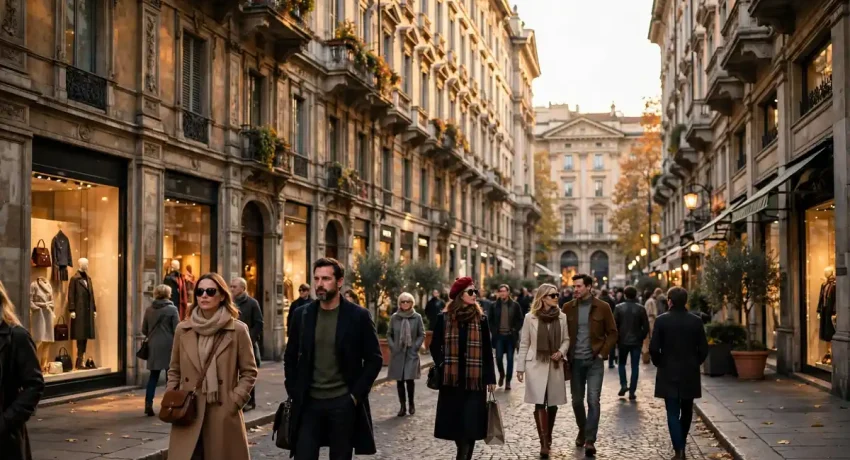

Milan never really sleeps during fashion week. For seven days, the Quadrilatero fills with editors in flat shoes. Buyers wear sunglasses. Photographers chase the next street-style moment. When the shows end, the city takes over, and dinner becomes a second runway.
The September 2026 edition has just wrapped. Vogue World turned the Galleria Vittorio Emanuele II into a stage. Prada opened with 63 versions of the skirt. Across the city, the newest hotels and restaurants were booked solid for the week. The good news is that the hot spots stay open long after the front row flies home. This guide covers the Milan the fashion crowd is actually using in 2026. You will find the new hotels, the restaurants everyone is trying to book, the shops that just opened and the neighbourhoods worth your time.
Why Is Milan the Place to Be in 2026?
Milan’s September week ran from 22 to 28 September 2026. It presented the Spring/Summer 2027 womenswear collections. The official calendar is run by the Camera Nazionale della Moda Italiana. It packed in 203 events, with more than 60 runway shows. The final day was reserved for digital presentations.
It was a week of big statements. Prada built its show around 63 interpretations of the skirt. Gucci turned shopping itself into a show concept. Bottega Veneta made lightness its material proposition.
The week opened with Vogue World: Milano on 22 September, inside the Galleria. It was the fifth edition of the travelling Vogue event, and its first in Italy. The theme was “The Human Touch in the Age of Technology”. Across five acts, it travelled from Renaissance craftsmanship and Italy’s industrial history to the rise of “Made in Italy” and the link between fashion and technology. Dakota Johnson, Jennifer Lopez, Hunter Schafer, Pamela Anderson and Naomi Campbell were among the guests. Italian designers in attendance included Miuccia Prada, Alessandro Michele, Donatella Versace, Domenico Dolce, Stefano Gabbana, Pierpaolo Piccioli and Maria Grazia Chiuri.
What makes 2026 different is that the excitement is not confined to the runway. Milan is rebuilding and rebranding itself at the same time. The Torre Velasca tower is being reborn as a vertical village of residences, restaurants and a private club. A brand-new tasting route runs through the MonteNapoleone district. New hotels, boutiques and wellness studios have opened across the centre. If you want the wider seasonal picture first, our guide to fall fashion trends from New York Fashion Week sets the scene before Milan takes it further.
When Is Milan Fashion Week in 2026?
Milan Fashion Week runs four times a year. There are two womenswear editions and two menswear editions. The 2026 calendar looked like this:
| Edition | Dates in 2026 | Collections shown |
|---|---|---|
| Men’s Fashion Week | 16 to 20 January | Fall/Winter 2026/27 menswear |
| Women’s Fashion Week | 24 February to 2 March | Fall/Winter 2026/27 womenswear |
| Men’s Fashion Week | 19 to 23 June | Spring/Summer 2027 menswear |
| Women’s Fashion Week | 22 to 28 September | Spring/Summer 2027 womenswear |
That September womenswear week has now concluded. February 2027 brings the next big womenswear window. Exact dates for that edition are released by the Camera Nazionale della Moda Italiana closer to the time. Check the official calendar before you book. One thing to know before you plan: the official shows are generally accessible by invitation only. That does not mean the city is closed to you. During fashion week, the Fashion Hub at Palazzo Morando on Via Sant’Andrea is open to the public. Pop-ups and installations fill the Quadrilatero, Brera and Tortona. Events such as the Vogue Café at Palazzo Giureconsulti welcome visitors who register in advance.
Where Should the Fashion Crowd Stay in Milan?
Your hotel is your base camp during fashion week. In Milan, it is also part of the experience. The smartest move is to stay in the Fashion District or Brera. From there, you can walk to most shows, restaurants and boutiques. These are the addresses the fashion crowd is booking in 2026.
Which hotels are new or newly reopened?
The Carlton by Rocco Forte is one of the city’s newest luxury hotels. It reopened in late 2025 after a full transformation of the historic property. The building was formerly the Baglioni hotel. It now has 71 guest rooms and suites, two restaurants, two bars and a 3,000-square-foot spa. A spa of that size is a rarity in this part of town. Its position next to Via Senato and Via della Spiga puts you right beside the luxury boutiques. The shows are a short walk away.
Portrait Milano comes from the Ferragamo family’s Lungarno Collection. It sits in the heart of the Quadrilatero della Moda. The hotel occupies a former 16th-century seminary beside Corso Venezia. It has 73 rooms and suites arranged around a colonnaded courtyard. That courtyard has become a public square, the Piazza del Quadrilatero. During fashion week, it turns into a kind of open-air front row. The Grand Spa is Moroccan in spirit. It has a royal hammam and a pool for counter-current swimming.
Casa Brera is another newer name on the fashion crowd’s list. The hotel is known for its rooftop pool and its position in the Brera district. Travellers who want to be close to the action will love it. It is also ideal for those who prefer Brera’s quieter, gallery-lined streets to the glitz of the Quadrilatero.
Which classic hotels still lead the pack?
The Bvlgari Hotel Milano hides on a private street near Brera and Via Montenapoleone. Behind its doors, an 18th-century palazzo combines a private garden with a spa. It remains the choice for travellers who want total discretion. The Four Seasons Milano is housed in a converted 15th-century convent on Via Gesù. That convent sits just outside the Fashion District. It still delivers one of the city’s most consistently five-star experiences.
The Mandarin Oriental Milan is about as central as it gets. It is close to the Duomo, La Scala and the Galleria Vittorio Emanuele II. The hotel has 104 rooms, including 34 suites. They were designed by Italian architect Antonio Citterio. Seta, a two-Michelin-starred restaurant, is also here, along with the Mandarin Bar and Bistrot. On Via Manzoni, the Armani Hotel Milano offers the restrained design language of Giorgio Armani in the Quadrilatero. Reached through the Galleria, the Park Hyatt Milano is a reliable base for anyone who wants the Duomo on their doorstep. Finally, the Grand Hotel et de Milan and Casa Cipriani round out the list for travellers who value history and privacy.
| Hotel | Best for | Area |
|---|---|---|
| The Carlton by Rocco Forte | Newest luxury opening, spa | Via Senato, Quadrilatero |
| Portrait Milano | People-watching, courtyard scene | Corso Venezia, Quadrilatero |
| Casa Brera | Rooftop pool, Brera calm | Brera |
| Bvlgari Hotel Milano | Discretion, garden and spa | Brera, Via Montenapoleone |
| Four Seasons Milano | Classic five-star service | Via Gesù, Quadrilatero |
| Mandarin Oriental, Milan | Dinner, central location | Via Monte di Pietà |
| Armani Hotel Milano | Skyline views, design | Via Manzoni, Quadrilatero |
| Park Hyatt Milano | Duomo location, dining | Galleria, Duomo |
Where Do Fashion People Eat in Milan Right Now?
A fashion week day rarely ends when the last model leaves the runway. The restaurants take over. A table after 9pm becomes almost as hard to get as a front-row seat. Book before you arrive, especially for dinner.
What is the hottest new restaurant in Milan?
Sushisamba Milano is the table everyone is talking about. The New York-born restaurant opened in January 2026 on the ground floor of Torre Velasca. By late January, every table was spoken for, with reservations stretching into March. The menu fuses Brazilian, Japanese and Peruvian flavours. Expect sushi and sashimi, robata grill specialties and Nikkei-inspired dishes. Peruvian-style ceviche appears in the raw section. Reimagined caipirinhas are the signature pour at the bar.
But Sushisamba is part of a much bigger story. Torre Velasca is Milan’s most recognisable postwar tower. It is being reborn after years of restoration. The project is backed by more than €40 million from Dubai-based Sunset Hospitality Group. Developers Hines and architects Asti Architetti have kept the tower’s distinctive mushroom-shaped silhouette. They are turning it into a vertical village of residences, restaurants, wellness spaces and a private club. The residential part offers 72 suites under the Mett Suites and Residences brand. Mia, a rooftop restaurant celebrating Milanese cuisine, was due to open on the 18th floor in June. Madison House, an exclusive members club, was due to follow on the floor below in July.
Where should you book for a classic Milanese dinner?
La Rue on Corso Garibaldi offers a structured gastronomic experience. It starts with a salad, then a main course built around entrecôte with La Rue sauce and fresh fries. Homemade desserts follow. A vegetarian and vegan option is available. Next door, La Rue Baguette focuses on its namesake dish with a twist on the classic French staple.
Seta, inside the Mandarin Oriental, is the city’s fine-dining benchmark. Chef Antonio Guida runs a two-Michelin-starred kitchen. It draws on northern Italian cuisine with influences from his travels. Dishes are built around contemporary presentations and seasonal ingredients. At the Park Hyatt Milano, Pellico 3 serves two tasting menus from chef Guido Paternollo. One is “La mia città”, his personal tribute to Milan. The other is a seasonal menu shaped by current ingredients.
For seafood, Langosteria on Via Savona is built around fish and the day’s market arrivals. It has an extensive selection of raw preparations. Da Giacomo is known for seafood and an elegant old-Milan atmosphere. IYO Kaiseki brings Japanese cuisine to the fashion-week circuit. It is listed by the Michelin Guide. Ratanà in the Isola area offers a less formal, Milanese counterpoint. Ristorante Cracco, inside the Galleria Vittorio Emanuele II, remains one of the city’s leading fine-dining addresses. Ceresio 7 combines rooftop dining with views over the city.
Is there a smarter way to taste Milan in one day?
Yes. La Vendemmia is a citywide tasting route in the MonteNapoleone district. It blends classic Italian fare with Asian influences. The set price is €40 for lunch and €75 for dinner. Your route begins at the historic Marchesi 1824 and Cova cafés. There you can try saffron risotto and seasonal dishes. It then moves through Sant Ambroeus and the rooftop terrace of A’ Riccione Terrazza 12 on Via Durini. From there it continues to Ristorante Isola in Piazza Cordusio for Southern Italian specialties. The Japanese restaurant Sachi follows, along with Gio Gio’s on Via Caminadella, PanEVO in The Westin Palace and Ristorante Berton in Porta Nuova. Sushisamba inside the Torre Velasca is the newest stop on the circuit. For a first-time visitor, it is the most efficient way to eat across the fashion district in a single day.
Where Can You Drink and Do Aperitivo Like a Local?
Aperitivo is Milan’s great leveller. Between about six and eight in the evening, the city stops for a drink and a plate of small bites. During fashion week, every aperitivo becomes a meeting. For aperitivo, the Navigli canals are the classic setting. Along the water, the bars fill with editors, buyers and locals. Here, the atmosphere is far more relaxed than the Quadrilatero.
For a rooftop view, Ceresio 7 pairs cocktails with a panorama over the city. The Mandarin Bar and Bistrot inside the Mandarin Oriental is a polished choice between shows. Over at Portrait Milano, the bar opens onto the Piazza del Quadrilatero. It is one of the best people-watching spots in the city during fashion week. The rule is the same everywhere. Arrive early, or accept that the best tables go to the people who booked ahead.
Where Is the Best Shopping in Milan for Fashion Lovers?
Shopping is the reason many people come to Milan in the first place. The Quadrilatero della Moda is still the centre of it. Via Montenapoleone is the heart of Milanese luxury shopping. It has boutiques from Gucci, Prada, Bottega Veneta and Valentino. Via della Spiga offers a quieter, pedestrian setting. Sant’Andrea and Manzoni complete the rectangle of streets that gives the district its name.
Brera suits a different mood. This district is better for independent galleries, design stores and smaller fashion labels. It has a village feel that the Quadrilatero does not have. For vintage fashion, the boutiques around Porta Venezia and the Navigli district are the places to hunt. The concept store 10 Corso Como remains a fashion-week landmark. Its Project Room hosted events during the September week.
Which new shops should you visit in 2026?
Alice + Olivia has opened its first store in Milan in the Quadrilatero district. The two-story boutique has a soft blush and powder-pink interior. It has polished terrazzo floors and exposed wooden beams, paying homage to Milanese architecture. Roberto Cavalli’s new boutique on Via Santo Spirito elevates the luxury retail scene. It is a 1,728-square-foot space showcasing the brand’s haute couture line, Roberto Cavalli Atelier. The shop also carries ready-to-wear, fragrances, eyewear and home designs.
For something temporary, look for the Carven pop-up at the Antonia multibrand store. It showcased the brand’s spring 2026 collections for two weeks. The pop-up included a collaboration with French artist Juliette Teste. Her sculptural vessels reinterpreted Carven’s aesthetic. The collection blended sportswear with elegant fabrics such as lace and silk. It used a monochrome palette of whites, blacks, grays and ecru. Pop-ups like this are the reason it pays to walk the Quadrilatero every day during fashion week. The city changes while you are in it.
How Do You Recover Between Shows?
Fashion week is a marathon. Milan’s newest wellness studios are built for exactly that. Noï, on Via Pontida, is a wellness sanctuary that marries Pilates with Japanese tea rituals. It was founded by Iryna Kovalchuk and Lucy Podoprygora. The 1,512-square-foot space offers reformer Pilates and a tea ritual designed to slow the city down. Formula House of Core, on Corso Monforte, takes a different approach. It offers Pilates classes founded by Maria Sofia Rovera, with a Plunge Room for cold immersion after a long day on your feet. Thriom, founded by Marie Van Rijckeghem, combines flow classes, reformer Pilates and recovery treatments in a holistic programme.
If you would rather not leave your hotel, the spas are part of the draw. Portrait Milano’s Grand Spa has a royal hammam and a counter-current pool. The Bvlgari Hotel has a full spa behind its private garden. Meanwhile, the Carlton’s 3,000-square-foot spa is one of the few of its size in the fashion district. Book treatments as early as you book dinner. During fashion week, both fill up.
What Else Is Worth Seeing Between Shows?
Milan rewards the visitor who looks up from the schedule. The Fondazione Prada is currently showing “Over, Under and in Between”. It is an exhibition by artist Mona Hatoum. The show explores instability and fragility through three installations. Palazzo Reale hosted the opening Gala Dinner during fashion week. It confirms its role as the cultural heart of the week, with major exhibitions running alongside the shows. The Galleria Vittorio Emanuele II itself is worth an unhurried walk. This arcade connects Piazza del Duomo and Piazza della Scala. It has long been associated with Milan’s luxury shopping culture. After Vogue World, it feels more like a stage than ever.
Brera’s galleries and the design district around Via Tortona offer a quieter counterpoint to the runway rush. Tortona was once an industrial zone. It is now the city’s design quarter. Its showrooms and studios spill over into fashion week with presentations and installations that are often open to the public.
How Do You Plan a Milan Fashion Week Trip?
A little planning goes a long way in Milan during fashion week. Milan Linate Airport is the most convenient airport for central Milan. The leading hotels are reachable in around 15 to 25 minutes by car, depending on traffic. Book your hotel and your restaurant tables as early as you can. Rates rise as fashion week approaches, and the best rooms and tables go first.
Remember that the official shows are generally invitation only. Build your trip around what is open to everyone. The Fashion Hub at Palazzo Morando on Via Sant’Andrea is open to the public during the week. Beyond the Hub, the districts themselves are the show. Wander through Brera, Tortona or the Quadrilatero and you will come across pop-ups, installations, exhibitions and events that anyone can attend. Pack flat shoes for the days. You will walk further than you expect. Save the heels for the evening. Leave room in your schedule for the unplanned. In Milan during fashion week, the best hot spot is often the one you stumble into between appointments.
Frequently Asked Questions
When is the next Milan Fashion Week?
The next womenswear week lands in February 2027. It will present the Fall/Winter 2027/28 collections. Milan runs four fashion weeks a year. Menswear takes January and June, while womenswear takes February and September. The exact dates are published by the Camera Nazionale della Moda Italiana. Check the official calendar before booking.
Can anyone attend Milan Fashion Week shows?
The official runway shows are generally accessible by invitation only. But much of the week is open to everyone. The Fashion Hub at Palazzo Morando welcomes the public. Pop-ups and installations fill the Quadrilatero, Brera and Tortona. Events such as the Vogue Café welcome visitors too, some with advance registration.
Where is the best area to stay in Milan for fashion week?
The Quadrilatero della Moda and Brera put you closest to the shows. They also put you closest to the boutiques and the restaurants. Porta Nuova and Isola offer a newer, more contemporary energy. They are a short ride from the centre. Wherever you stay, book early. The best rooms disappear months ahead of the September and February weeks.
Is Milan worth visiting outside fashion week?
Yes. Almost everything in this guide is open all year. The hotels, the restaurants, the boutiques and the exhibitions do not close when the shows end. Outside fashion week, you get the same city with easier reservations. You also get lower rates and shorter queues. The Quadrilatero is still the Quadrilatero.
Milan in 2026 is a city that knows exactly what it is. The shows set the agenda. But the hot spots are what you remember. Think of a courtyard drink at Portrait, a late table at Sushisamba, a new boutique on Via Santo Spirito and a quiet hour at Noï before the next show. Go for the fashion week, and stay for the city that makes it possible.