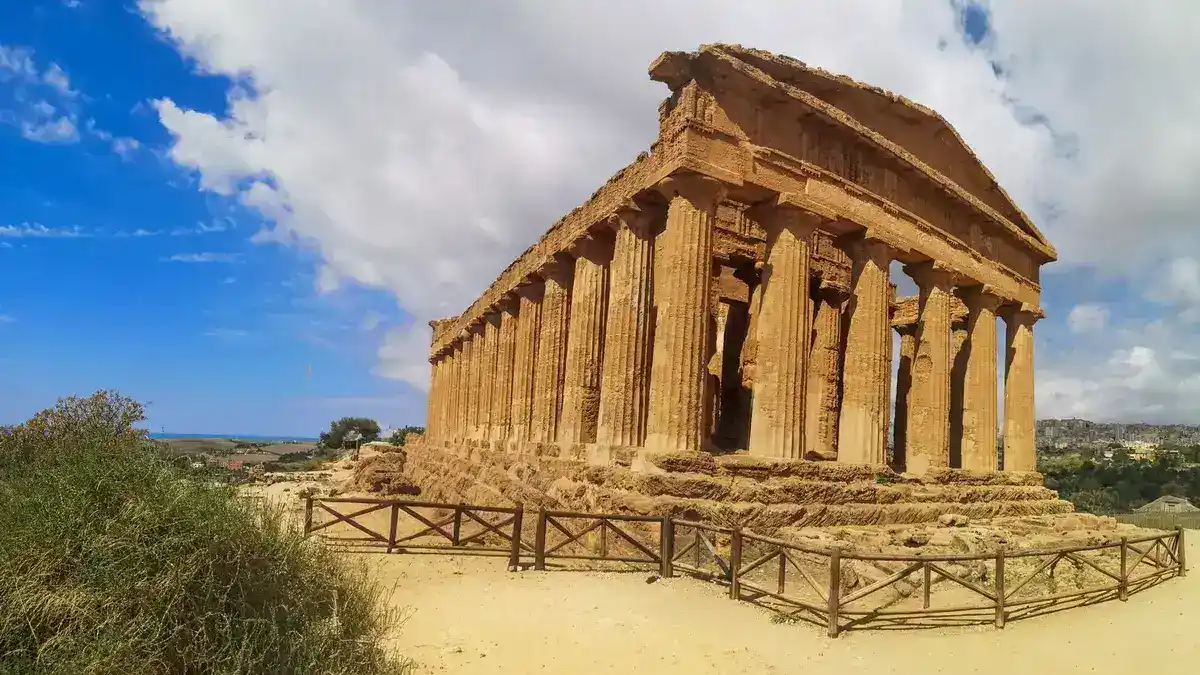

Georgia is the country, not the American state. It sits in the Caucasus, wedged between the Black Sea and the mountains that divide Europe from Asia. Fewer than four million people live here. Yet the country packs in snow peaks, wine valleys, a Black Sea coast, cave monasteries and one of the oldest food cultures on Earth. A week is enough to see the highlights. Two weeks lets you slow down and do it properly. This Georgia country travel guide covers the top places to visit in Georgia country in 2026, with verified prices, best months and a working 7-day plan.
Why Is Georgia Worth Visiting in 2026?
Georgia is still cheap by European standards. A full day, with a guesthouse bed, three meals and local transport, typically costs 40 to 60 dollars. Hotels in central Tbilisi average 55 to 85 dollars a night for rooms that would cost four times as much in Western Europe. The food alone justifies the trip. Khachapuri, the cheese bread, starts at about 10 lari. Khinkali dumplings cost around 0.80 lari each. Wine has been made here for 8,000 years, and a tasting in Kakheti starts at about 30 lari.
One rule changed in 2026. Travel insurance is now mandatory for every visitor entering Georgia, in force since 1 January 2026. Georgia visa free entry covers citizens of roughly 95 countries, who can stay for up to 365 days. Buy insurance before you fly, and carry proof of it. The country is small. Kazbegi is about three hours from Tbilisi by car. Kakheti takes two hours. Batumi takes five. That compact size is the real gift. You can cross from mountains to sea in a single day.
Which Place in Georgia Should You Visit First?
Georgia rewards different travellers in different ways. This table matches the top places to visit in Georgia country to the trip you actually want.
| If you want… | Go here | Best months |
|---|---|---|
| Mountains and hiking | Kazbegi and Svaneti | June to September |
| Wine and slow villages | Kakheti and Sighnaghi | September to October |
| City life and food | Tbilisi | April to June, September to October |
| Beaches and resorts | Batumi | June to September |
| Caves and canyons | Kutaisi and Martvili | April to October |
| Remote wilderness | Tusheti | June to September only |
| Skiing | Gudauri and Mestia | December to March |
| History and churches | Mtskheta and Vardzia | Year round |
What Makes Tbilisi the Best Starting Point?
Tbilisi, Georgia, is the capital, and it is where almost every trip begins. The Old Town sits under the 4th-century Narikala Fortress, reached by cable car or on foot. Below it, the Abanotubani district holds the Tbilisi sulphur baths that gave the city its name. A private bath for two typically runs 80 to 120 lari, roughly 28 to 42 euros. The domed brick bathhouses are one of the most photographed sights in the city.
Old Tbilisi rewards slow walking. Colourful balconies lean over narrow lanes. Churches sit beside wine bars and Soviet-era courtyards. The Chronicle of Georgia, a huge brutalist monument on a hill above the sea, is often called the Stonehenge of Tbilisi. Fabrika, a repurposed Soviet sewing factory, is now the centre of the creative scene, with hostels, cafes and shops. The Dezerter Bazaar is the main food market, and it is the best place to taste churchkhela, the walnut sweet, and fresh sulguni cheese.
Stay at least two full days in Tbilisi. One day covers the Old Town, the fortress and the baths. The second day is for the neighbourhoods of Vera and Vake, the museums, and the river walk. Tbilisi works in every season. Winters are cold but the roads and sites stay open, and the crowds thin out. It is the first stop on any list of the top places to visit in Georgia country.
Why Is Mtskheta Worth a Half Day?
Mtskheta, Georgia, was the ancient capital of the country, and it sits about 30 minutes from Tbilisi. The Svetitskhoveli Cathedral is its centrepiece. Tradition says the robe of Jesus is kept here, which makes it a major pilgrimage site. The cathedral is a UNESCO World Heritage site, along with the Jvari Monastery on the hill above the town, where the Aragvi and Mtkvari rivers meet.
Mtskheta is small and walkable. Most visitors come for a morning, see the cathedral and the monastery, eat lunch by the river, and return to Tbilisi by early afternoon. It pairs naturally with a Kazbegi day, since both lie on the same road north. If you only have one free morning in Georgia, spend it here.
What Is So Special About Kazbegi?
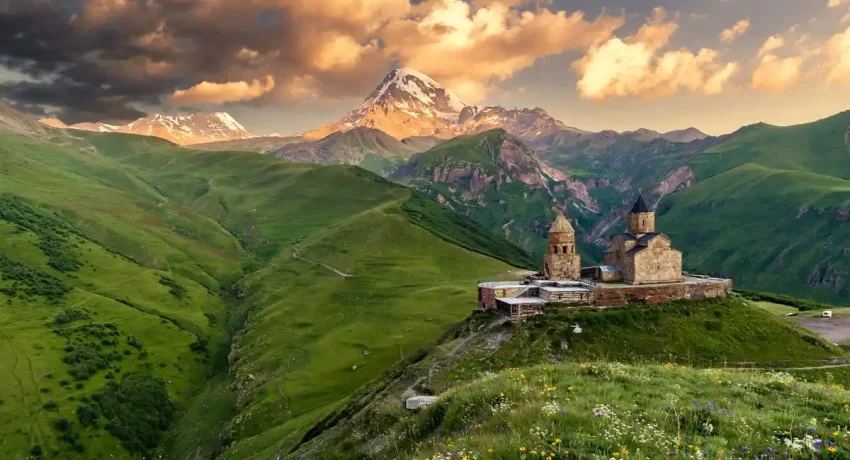
Kazbegi, Georgia, officially called Stepantsminda, is the postcard of the country. The 14th-century Gergeti Trinity Church stands on a ridge at 2,170 metres, with the 5,047-metre peak of Mount Kazbek directly behind it. The hike from town takes two to three hours uphill. Off-road vehicles also run the track, at about 20 to 30 lari per person. There is a modest entrance fee of around 3 lari for the church grounds.
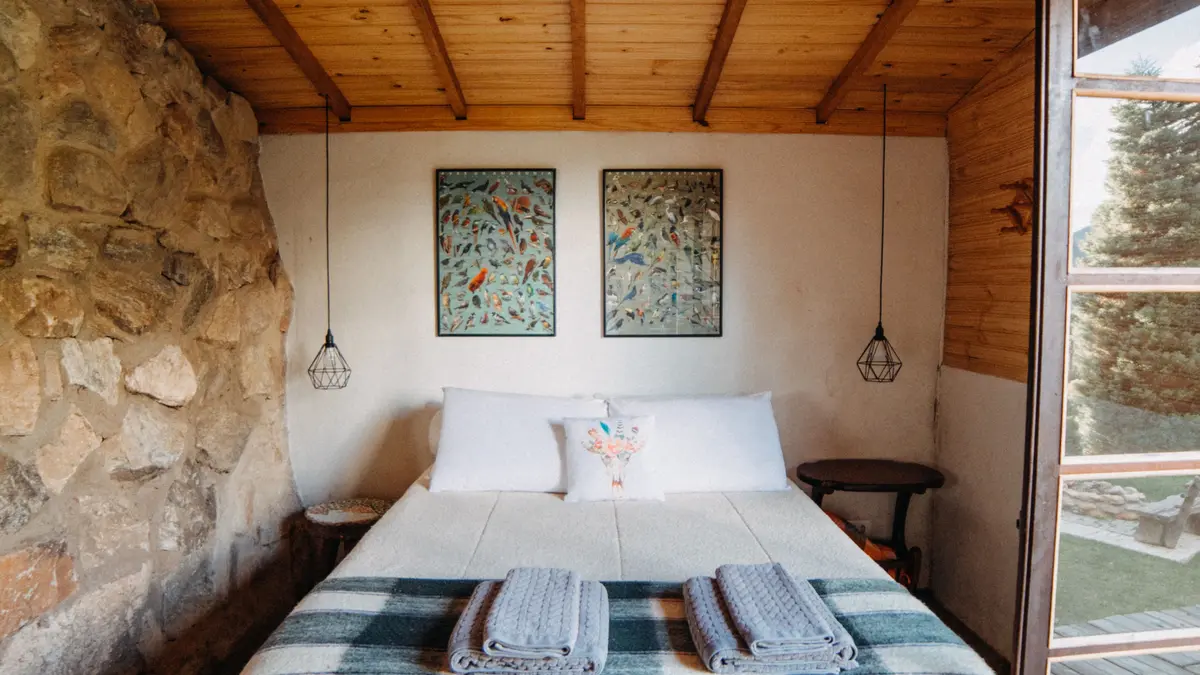
The drive up is half the experience. The Georgian Military Highway from Tbilisi passes the Ananuri Fortress, a 16th-century castle complex on the Aragvi River, and climbs through the Gudauri ski resort. The whole drive takes about three hours. Kazbegi is an easy overnight trip. Basic guesthouses in town cost 30 to 60 dollars a night. Rooms Hotel Kazbegi, the mid-range option with the famous view, runs 180 to 250 dollars.
Stay two days if you can. One day covers the church and the town. The second day is for the Truso Valley or the Gveleti Waterfall hike. The Military Highway can close briefly during winter storms near Gudauri, so check conditions before a winter drive. Summer is the safe season for hiking, and the light in September is the best of the year.
Why Is Kakheti Called the Birthplace of Wine?
Archaeologists trace winemaking in Kakheti back 8,000 years. The tradition uses qvevri, large clay vessels buried in the ground, and it is listed by UNESCO. The Kakheti wine region is about two hours east of Tbilisi by road. Tastings at family wineries typically start at about 30 lari, and a bottle of homemade wine can cost as little as 10 lari.
Sighnaghi, Georgia, is the best base. The walled town sits on a ridge above the Alazani Valley, with the Caucasus behind it. Its 18th-century walls run for kilometres around the hilltop. The Bodbe Monastery nearby is where St Nino, who brought Christianity to Georgia, is buried. Alaverdi Monastery, one of the tallest churches in the country, sits among vineyards a short drive away.
Come in autumn if you can. The rtveli, the grape harvest, runs from late September to mid-October. Villages fill with picking, crushing and feasting, and the vineyards turn gold. The gold is as striking as the maple season further north — see the best places to visit in Canada in autumn. Small family wineries welcome drop-in tastings at 15 to 30 dollars per person including food. A guesthouse attached to a working winery costs 50 to 80 dollars per person including all meals. Two or three days in Kakheti is the right amount. Kakheti is one of the top places to visit in Georgia country for wine lovers.
How Hard Is It to Reach Svaneti?
Svaneti, Georgia, is the hardest region to reach, and the most rewarding. It sits 450 kilometres from Tbilisi, an eight to nine hour drive along mountain roads. Small propeller planes fly from Tbilisi and Kutaisi to Mestia in about an hour, when the weather allows, with fares typically 65 to 100 lari. The overnight train from Tbilisi to Zugdidi leaves around 9 pm and arrives at 5:30 am. Marshrutkas from Zugdidi to Mestia take about three to four hours and cost 30 to 40 lari.
Mestia is the regional centre, a town of about 2,500 people with an airport, a museum and restaurants. The real highlight is Ushguli, Georgia, a UNESCO World Heritage village at 2,200 metres. It is the highest permanently inhabited settlement in Europe, with about 70 residents and roughly 30 medieval stone towers. Mount Shkhara, Georgia’s highest peak at 5,193 metres, rises directly behind the village. The road from Mestia to Ushguli is 45 to 60 kilometres of gravel track, and it needs a 4WD. Shared 4×4 taxis from Mestia’s main square cost around 40 to 50 lari per person.
Plan at least three days. One day to travel, one day in Mestia, one day in Ushguli. The classic Mestia to Ushguli trek covers 58 kilometres over four days, crossing the 2,719-metre Chkhunderi Pass. It is Georgia’s great multi-day walk, in the same spirit as the Andean routes in our guide to the best places to visit in South America. Guesthouses in the villages offer beds, hot showers and home cooking. Hike between June and mid-October. The Hatsvali and Tetnuldi ski lifts run in winter, and the Koruldi Lakes hike above Mestia gives a 360-degree panorama from 2,700 metres. Svaneti is where Georgia feels oldest, and it is worth the effort.
What Does Batumi Offer on the Black Sea?
Batumi, Georgia, is the country’s Black Sea resort city, about five hours from Tbilisi. Marshrutkas cost about 25 lari and take five to six hours. The train costs about 35 lari for second class. Batumi grew fast in recent years, and its airport handled around 29 percent more passengers in 2025 than the year before.
The city mixes a long seaside boulevard, modern architecture and lush gardens. The Batumi Botanical Garden sits on a green headland above the sea. The Alphabet Tower and the Ali and Nino moving statue are the modern landmarks on the waterfront. The old town has 19th-century buildings, cafes and a lively evening scene. Beaches here are pebbly rather than sandy, and the water is warmest from June to September.
Stay two days. One day covers the boulevard, the old town and the botanical garden. The second day is for a trip into the Adjara mountains, to the Mtirala National Park or the waterfalls near the Turkish border. Batumi is the warmest corner of Georgia, and it is the best place to end a trip. It rounds out the top places to visit in Georgia country on the coast. If you want winter sun instead, see the best places to visit in February.
Why Is Vardzia One of Georgia’s Great Wonders?
The Vardzia cave monastery is carved into a cliff in southern Georgia, built in the 12th century under Queen Tamar. Hundreds of rooms, chapels and tunnels were cut into the rock face, along with a church painted with frescoes. An earthquake in the 13th century exposed much of the complex to the open air, which is why it looks so dramatic today.
Vardzia sits near the town of Aspindza, close to the Turkish border. It is a long day trip from Tbilisi, about four hours each way, so most visitors stay overnight in the area. The nearby Khertvisi Fortress, one of the oldest fortresses in Georgia, makes a good stop on the same route. Vardzia is quiet, vast and unlike anything else in the Caucasus. It belongs on any list of the top places to visit in Georgia country.
What Is Uplistsikhe, and Why Visit Gori?
Uplistsikhe is an ancient cave town carved into rock near Gori, more than 2,000 years old. It was once a major trading centre on the Silk Road, with dwellings, a theatre, temples and a wine cellar cut from stone. The site sits on a hill above the Mtkvari River, and the walk through it takes about two hours.
Gori itself is best known as the birthplace of Joseph Stalin, and the Stalin Museum stands in the town centre. Many visitors skip the museum and come only for Uplistsikhe, which is the real reason to stop here. The town is about an hour west of Tbilisi on the road to Kutaisi, so it fits easily into a westbound itinerary. Combine it with a stop at the Ateni Sioni church, a 7th-century church in a quiet gorge nearby.
What Can You See Around Kutaisi?
Kutaisi is Georgia’s second city, and it is the gateway to the canyons and caves of the west. The Bagrati Cathedral, rebuilt and listed by UNESCO, stands on a hill above the Rioni River. The city itself is relaxed, with a good food scene and lower prices than Tbilisi.
Two natural sights sit nearby. Prometheus Cave is a 1.4-kilometre underground walk through six halls of stalactites, ending with a boat ride on an underground river. From 1 April 2026, entry for foreign visitors costs 40 lari, and the boat ride costs 30 lari. Children under six enter free. Martvili Canyon is a turquoise river gorge with a 700-metre stone walkway, three viewpoints and a boat trip. Entry costs 40 lari, the boat ride 30 lari, and the zipline 60 lari. Both sites are easy day trips from Kutaisi, and organised tours from Tbilisi cover both in one long day.
Stay a night in Kutaisi if you can. The morning light in the canyon is better than the afternoon, and the city is a pleasant place to eat and sleep. Kutaisi Airport also handles international flights, so some travellers start or end their trip here instead of Tbilisi.
Why Is Borjomi More Than Just Water?
Borjomi is famous for its mineral water, bottled here since the 19th century. The town sits in a green gorge in the Lesser Caucasus, and the Borjomi-Kharagauli National Park behind it is one of the largest protected areas in Europe. The central park in town has a spring where you can taste the water straight from the source. It tastes of salt and sulphur, and locals swear by it.
Borjomi works as a rest stop between Tbilisi and the west. The park offers marked hiking trails, from short walks to multi-day routes with mountain huts. The town itself is quiet, with Soviet-era sanatoriums beside newer hotels. One night here breaks up a long drive and adds forest and fresh air to a trip that is otherwise heavy on cities and wine.
When Is the Right Time to Visit Tusheti?
Tusheti is the wildest region in Georgia, and it is only reachable from June through September. The Abano Pass, the only road in, closes completely from around October through May. Snow and landslides shut the high valleys for most of the year. That short window is what keeps Tusheti empty and special.
The main village is Omalo, a cluster of stone towers above a high valley. Hiking here is the point. Trails run to remote villages, alpine lakes and old shrines, and horses carry bags between guesthouses. The region has no hotels in the usual sense. Family guesthouses provide beds and meals, and the food is simple and generous. Tusheti suits experienced travellers who are comfortable with rough roads and basic comforts. If you go, build your whole itinerary around the June to September window rather than a fixed date.
Is Gudauri Worth Visiting Outside Winter?
Gudauri is Georgia’s main ski resort, sitting on the Georgian Military Highway between Tbilisi and Kazbegi. The ski season runs from December to March, with lifts, slopes and a small resort village. It is the easiest ski trip from the capital, about two hours by car.
Outside winter, Gudauri is a stop on the road, not a destination. The views across the Aragvi valley are superb in summer, and paragliders fly from the slopes in the warm months. Most travellers pass through on the way to Kazbegi and stop for lunch and photos. If you ski, add a day here in winter. For a very different kind of winter city trip, see the best places to visit in New York in winter.
When Is the Best Time to Visit Georgia?
April to October is the main season, but each region has its own sweet spot. Spring brings green valleys and wildflowers. Autumn brings the grape harvest and golden vineyards. Summer is best for the high mountains, and winter is for skiing. This table sums it up.
| Month | What is best | What to know |
|---|---|---|
| April to June | Tbilisi, Kakheti, flowers | Mild weather, fewer crowds |
| June to August | Kazbegi, Svaneti, Tusheti, Batumi | Peak season, book guesthouses early |
| September to October | Wine harvest, autumn colours | Best light, harvest festivals |
| November to March | Skiing, city trips | Cold, mountain roads can close |
September is the single best month for a first trip. The weather is warm, the crowds have gone, hotel prices drop by about a third, and the wine harvest is on. Autumn colour sweeps across the continent at the same time — see the best places to visit during fall in Europe for more seasonal ideas. June to August is the busiest period, especially in Kazbegi and Batumi. Winter trips work well for Tbilisi, the wine region and the ski resorts, but Tusheti and the highest parts of Svaneti are closed.
How Much Does a Trip to Georgia Cost?
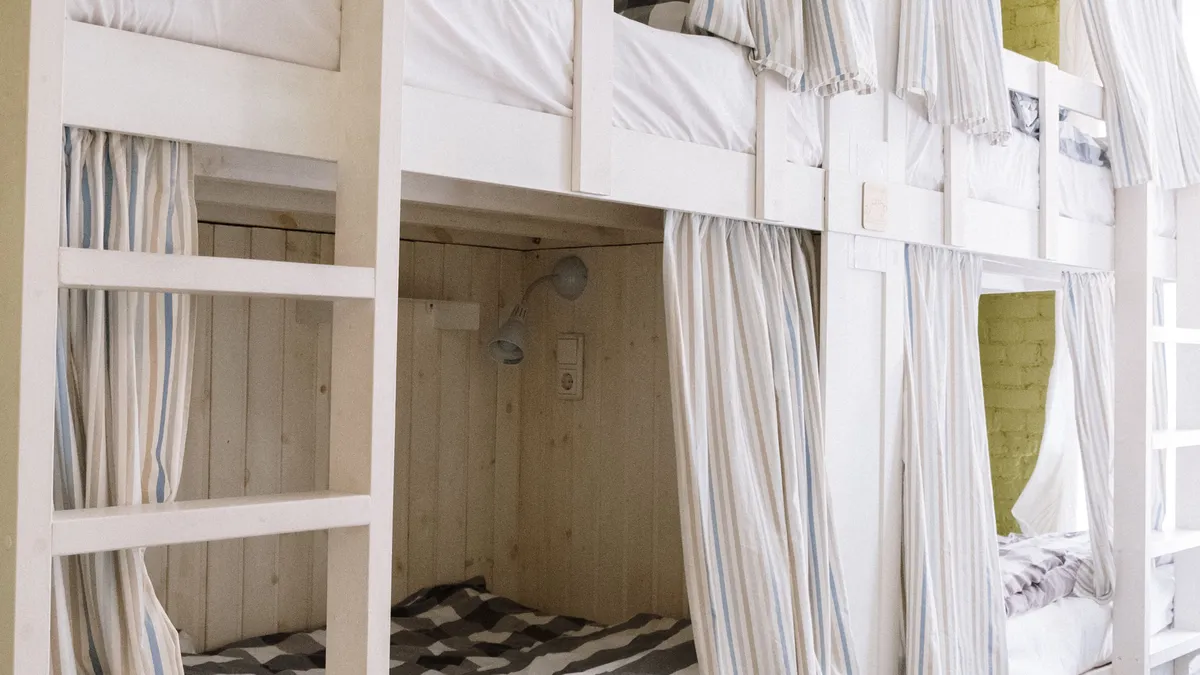
Georgia travel costs are among the lowest in Europe for travellers. A typical day costs 40 to 60 dollars on a comfortable budget. Hostels run 7 to 25 dollars a night. Budget hotels cost 15 to 55 dollars for a private room. Guesthouses in the mountains charge 40 to 60 dollars per person including breakfast and dinner. Car rental starts at about 18 dollars a day. Marshrutkas between cities cost 10 to 25 lari. A full dinner in a local restaurant costs 7 to 15 dollars.
| Item | Typical price |
|---|---|
| Hostel dorm | 7 to 25 dollars a night |
| Budget hotel, private room | 15 to 55 dollars a night |
| Mountain guesthouse, half board | 40 to 60 dollars a night |
| Khachapuri | From 10 lari |
| Khinkali | About 0.80 lari each |
| Full dinner | 7 to 15 dollars |
| Marshrutka, Tbilisi to Kazbegi | 10 lari |
| Marshrutka, Tbilisi to Batumi | 25 lari |
| Train, Tbilisi to Batumi, 2nd class | 35 lari |
| Car rental | From 18 dollars a day |
| Prometheus Cave entry | 40 lari, boat 30 lari |
| Martvili Canyon entry | 40 lari, boat 30 lari |
Prices are in Georgian lari unless stated otherwise. The lari moves against the dollar, so treat conversions as approximate and check before you book. Cash is essential in rural areas and mountain villages, where cards are often not accepted. ATMs are easy to find in Tbilisi, Batumi and Kutaisi, but not on the trekking routes. A seven-day trip for one person, excluding international flights, typically costs 400 to 750 dollars.
How Do You Get Around Georgia?
Marshrutkas are the main public transport. These are shared minibuses that leave from bus stations, usually in the morning, and depart when they fill up. They connect every town in the country. The Kazbegi marshrutka costs 10 lari and takes three hours. Kutaisi costs 15 lari and takes three to four hours. Mestia costs 20 lari from Kutaisi and takes four to five hours. Batumi costs 25 lari and takes five to six hours.
Trains are slower but comfortable. The Tbilisi to Batumi train costs 35 lari for second class. An overnight sleeper runs from Tbilisi to Zugdidi, leaving around 9 pm and arriving at 5:30 am, which connects with the morning marshrutkas to Mestia. In Tbilisi, metro rides cost about 0.20 to 0.35 dollars, paid with a Metromoney card. Renting a car gives the most freedom, especially in Kakheti and the mountains, and prices start at about 18 dollars a day. Drive carefully. Mountain roads are narrow, livestock wanders onto them, and winter conditions can change fast.
What Should You Eat in Georgia?
Georgian food is one of the best reasons to visit. Khachapuri is the cheese bread, and the Adjarian version arrives as a boat of dough filled with cheese and a raw egg yolk. Khinkali are soup dumplings, eaten by hand, with the dough knot discarded. A supra is the traditional feast, with toasts led by a tamada, or toastmaster, and tables that never seem to empty.
Wine is served with almost every meal. The qvevri method, fermenting wine in buried clay vessels, is 8,000 years old. Kakheti produces most of the country’s wine, and tastings start at about 30 lari. In Svaneti, try kubdari, the meat-stuffed flatbread. Mountain meals are simple: bread, cheese, potatoes, beans and grilled meat. Vegetarians do well in Georgia, since many dishes are built around cheese, beans, aubergine and walnuts. A full dinner in a local restaurant costs 7 to 15 dollars, and the portions are generous.
Is Georgia Safe for Tourists?
Georgia is widely considered one of the safer countries in the region for travellers. Violent crime against visitors is rare. The main risks are practical ones. Mountain roads are rough, weather changes fast, and medical facilities outside the cities are basic. That is one reason travel insurance is now mandatory for entry, in force since 1 January 2026. Buy a policy that covers mountain rescue and emergency evacuation if you plan to hike.
Two regions are off limits. Most governments advise against all travel to South Ossetia and Abkhazia, the breakaway territories in the north and west. Do not attempt to enter them. They are not part of a normal tourist itinerary, and the border areas are controlled. Elsewhere, normal precautions apply. Keep valuables out of sight in crowded markets, use licensed taxis or ride apps in Tbilisi, and carry cash in the mountains. Solo women travellers generally report feeling safe in Georgia, especially in Tbilisi and the main tourist towns. Standard care after dark in quiet areas is enough. For more on travelling alone as a woman, see our guide to the best places to visit for single woman in 2026.
What Does a 7-Day Georgia Itinerary Look Like?
Plan your Georgia itinerary: 7 days covers the highlights without rushing. This plan uses Tbilisi as the base, then moves north, east and west in turn.
Tbilisi gets the first two days. Walk the Old Town, ride up to Narikala Fortress, and soak in the sulphur baths. Spend the second day in the Vera and Vake neighbourhoods, browse Fabrika, and eat at the Dezerter Bazaar. The third day: Mtskheta in the morning, then drive the Georgian Military Highway to Kazbegi, stopping at Ananuri Fortress. On the fourth day, hike to Gergeti Trinity Church in the morning, then drive back to Tbilisi in the afternoon.
The fifth day belongs to Kakheti. Drive east to Sighnaghi, walk the walls, visit Bodbe Monastery, and taste wine at two family wineries. Stay overnight at a winery guesthouse. On day six, return to Tbilisi, then take the evening train or marshrutka west to Kutaisi. The final day covers Prometheus Cave and Martvili Canyon in the morning, Bagrati Cathedral in the afternoon, and a flight home from Kutaisi Airport if your flight allows it.
With ten days, add Svaneti. Take the overnight train to Zugdidi, spend three days in Mestia and Ushguli, and return the same way. With fourteen days, add Batumi and Tusheti in summer, or a slow week in Kakheti during the harvest. The country rewards extra days more than most places in Europe.
Frequently Asked Questions
Do you need a visa to visit Georgia?
Citizens of roughly 95 countries can enter visa free and stay for up to 365 days. Check your own passport rules before you travel. Travel insurance is mandatory for every visitor since 1 January 2026, so buy a policy and carry proof of it.
What is the best month to visit Georgia?
September is the best single month for a first trip. The weather is warm, the crowds are gone, and the wine harvest is on. June to August is best for the high mountains. April to June is best for flowers and city walking. December to March is best for skiing.
How many days do you need in Georgia?
Seven days covers Tbilisi, Kazbegi, Kakheti and Kutaisi. Ten days adds Svaneti. Fourteen days adds Batumi and Tusheti in summer. Fewer than five days is not enough, since the driving distances eat into sightseeing time.
Is Georgia expensive to visit?
No. A comfortable day costs 40 to 60 dollars, including a guesthouse, meals and transport. A seven-day trip, excluding international flights, typically costs 400 to 750 dollars per person. Wine, food and transport are all cheap by European standards.
Can you drink the tap water in Georgia?
Tap water in Tbilisi and most towns is generally considered safe, and the mineral water in Borjomi comes straight from the spring. In mountain villages, ask your guesthouse host. Bottled water is cheap and widely available everywhere.
What language do people speak in Georgia?
Georgian is the official language, with its own unique alphabet. English is widely spoken in Tbilisi, Batumi and tourist areas, and by younger people everywhere. Russian is still understood by many older Georgians. Learning a few Georgian words, like gamarjoba for hello, goes a long way.
Georgia is a small country with an outsized gift for travellers. Mountains, wine, ancient churches and a Black Sea coast all fit into a week, and the prices make it one of the best-value trips in Europe. It belongs on any world bucket list — see the most interesting places in the world to visit in 2026. Start with Tbilisi, add Kazbegi and Kakheti, and let the country set the pace from there. The top places to visit in Georgia country are not far apart, but they feel like different worlds. That is the whole point of going.