
Lomé does not shout. It hums. The capital of Togo sits on the Gulf of Guinea, where palm trees lean over a long beach and the air smells of salt, grilled fish and wood smoke. Most travellers pass through it on the way to somewhere else. That is a mistake. The best places to visit in Lomé Togo pack a whole country into one small coastal city: a giant market run by powerful women traders, the largest voodoo market in West Africa, German colonial buildings, a calm lagoon town where Togo’s history began, and green mountains two hours inland. This guide covers them all, with verified 2026 prices, visa rules and honest practical advice.
Why Does Lomé Deserve More Than a Stopover?
Togo is a slim country. It stretches roughly 550 kilometres from the palm-lined beaches of the south to the rugged hills of the north. Lomé, its capital and largest city, holds around 1.5 million people. The city began as a small fishing village. German administrators made it their capital in 1897. Togo became independent on 27 April 1960. Today Lomé is the home of ASKY Airlines, one of West Africa’s main regional carriers, and its deep-water port is one of the busiest in the region. Yet the city still feels human in scale. You can cross the centre on foot. The beach is never far away. And the welcome is warm. French is the official language, and a few words of it go a long way. English works in larger hotels and with tour guides, but French opens doors everywhere else.
Lomé also rewards slow travel. The markets are best in the morning, when the light is soft and the stalls are full. The beach is best at sunset, when fishing boats come in and the sky turns gold. The fetish market is best with a guide, unhurried. The best places to visit in Lomé Togo are spread across the city, the lake, and the mountains, and this guide takes them in order. Give the city two full days, and add a third for the mountains.
What Should You Know Before You Go?
A little preparation makes the best places to visit in Lomé Togo easy to enjoy. This Lomé Togo travel guide starts with the practical rules that matter most in 2026.
| Topic | What to know in 2026 |
|---|---|
| Visa | Most non-African visitors need an e-Visa, applied for online before travel. Processing takes up to 5 business days. |
| Money | West African CFA franc (XOF). Fixed to the euro at 1 EUR = 655.957 CFA. Cash is king outside Lomé. |
| Language | French is official. Ewe is widely spoken in the south. English is limited outside hotels and tours. |
| Health | Yellow fever vaccination is required, and malaria prevention is recommended. Bring the certificate. |
| Best time | Dry season, November to March. Daytime highs usually sit around 28–32°C. |
| Getting there | Gnassingbé Eyadéma International Airport (LFW), about 15 minutes from the centre by taxi. |
The Togo visa e-visa system is now fully online. There is no visa on arrival, so do not count on one. Fees are set in CFA francs and cover five options.
| e-Visa option | Fee (CFA) | About (euro) |
|---|---|---|
| 15 days, single entry | 25,000 | About €38 |
| 15 days, multiple entry | 35,000 | About €53 |
| 30 days | 45,000 | About €69 |
| 31 to 90 days | 65,000 | About €99 |
One big change arrived in 2026. Since 18 May 2026, nationals of all African Union member states can enter Togo visa-free for up to 30 days. Everyone, visa-free or not, must still complete the online immigration form at least 24 hours before arrival. Apply at least two to three weeks ahead, because the official guidance warns of possible delays. Entry rules can change at short notice, so confirm them on the official portal before you travel.
Money is simple once you know the system. The Togo currency CFA franc is shared with Benin, Côte d’Ivoire, Senegal and other West African states, which makes onward travel easy. The euro peg is fixed, so the dollar rate floats around 550–600 CFA to one US dollar. Bring euros or dollars to exchange. ATMs exist in Lomé but can be unreliable, and cards work only at larger hotels and some restaurants. Outside the capital, cash is essential.
When Is the Best Time to Visit Lomé?
The best time to visit Togo is the dry season, from November to March. The weather is warm and mostly dry. The humidity drops a little. The roads to Kpalimé are in their best shape. The waterfalls still run well in November and December, after the rains. January and February are the driest months, and the most comfortable for walking around the markets.
The rainy season runs roughly from April to October, with two peaks in the south. The rain rarely ruins a trip, but the mountain trails get muddy and the sea gets rougher. If you travel in the rains, plan the Kpalimé day trip for the morning, and keep the afternoons flexible. The beach is still beautiful in the rain, just wilder.
Lomé is warm all year. Daytime highs usually sit around 28–32°C, and the nights stay warm too. The sea breeze helps. Pack light clothes, a hat, sunscreen, and a rain jacket if you travel outside the dry season. A small day pack, water, and good walking shoes matter more than anything else.
Where Is the Heart of Lomé?
The Grand Marché Lomé is the heart of the city. It is the largest open-air market in Togo, a maze of thousands of stalls in the city centre. Cloth, beads, spices, dried fish, yams, baskets, sandals, phone chargers, and second-hand clothes all sit side by side. The noise is constant. The colours are strong. The smells change every few steps, from smoked fish to fresh ginger.
The market’s most famous traders are the Nana Benz. These women built fortunes selling expensive pagne cloth imported from Europe, and their name comes from the Mercedes-Benz cars they became known for driving. They still control much of the cloth trade today. For anyone planning Lomé Togo things to do, the Grand Marché belongs at the top of the list. Their stalls are a good place to buy wax-print fabric, and they bargain hard. A polite greeting in French, a smile, and a willingness to walk away will get you a fair price.
Go early in the morning, when the market is at its liveliest and the heat is still bearable. Keep your bag in front of you. Ask before taking photos of people. Buy small things first, like spices or soap, to get a feel for prices. The market sits right next to the Sacred Heart Cathedral, so the two make a natural pair. It is the first of the best places to visit in Lomé Togo that most travellers see, and it sets the tone for the city.
One honest note: the Grand Marché is a working market, not a tourist show. It is crowded, loud, and sometimes overwhelming. That is the point. If you want a calmer version, the smaller neighbourhood markets in Hédzranawoé and Tokoin are worth a wander too.
What Will You Find at the Akodessewa Fetish Market?
The Akodessewa fetish market is the most famous of all the best places to visit in Lomé Togo, and the most misunderstood. It is one of the largest voodoo markets in West Africa, with guides listing more than 20,000 objects on display. Skulls, skins, dried herbs, roots, bones, and carved figures fill the stalls. It looks strange to an outsider. For the people who shop there, it is simply everyday life.
Here is the key fact: this is a working pharmacy, not a show. Vodun is a living religion in Togo, practised daily by thousands of people. The market supplies the ingredients for healing, protection, and ritual. The sellers are traditional healers and herbalists, and many of them will explain what each item is for if you ask with respect.
Visit with a local guide. The guide will introduce you, translate, and explain what you are seeing. Ask before taking any photos, and accept a no without argument. Do not touch the ritual objects unless invited. Show respect for everything you see, even if it looks unfamiliar. A small purchase, like a soap or a herb bundle, is a polite way to say thank you. Budget about an hour here, and go in the morning, when the market is busiest.
Some visitors find the animal parts upsetting. That is understandable. The market is honest about what it is, and nobody will force you to look at anything. If it is not for you, skip it without guilt. The rest of Lomé has plenty to offer.
Which Colonial Buildings Are Worth Your Time?
Lomé’s German colonial past is still visible in the city centre, and three buildings tell the story best.
Why Is Lomé Cathedral So Striking?
The Lomé Cathedral, the Sacred Heart Cathedral, is a neo-Gothic church with twin spires that rise over the Grand Marché. It was completed in 1902, when Togo was a German colony, and its red and white brickwork stands out against the market’s chaos. Step inside for a few quiet minutes. The stained glass is beautiful in the morning light. The cathedral is still an active parish church, so dress modestly and keep your voice down.
What Is the Palais de Lomé?
The Palais de Lomé was built in 1898 as the palace of the colonial governors, first German and then French. It sits in gardens near the sea, and today it works as an art and culture centre, with exhibitions, concerts, and a restaurant. The building itself is the attraction: high ceilings, wide verandas, and a garden that looks out toward the water. It is one of the calmest places in the city, and a good stop after the noise of the market.
What Does the Independence Monument Mean?
The Independence Monument stands in the middle of the Place de l’Indépendance, a landscaped roundabout in the city centre. It marks Togo’s independence from France on 27 April 1960. The monument is a tall, elegant figure, and it is one of the most photographed spots in Lomé. Go at sunset, when the light is warm and the traffic slows a little. Nearby, the Palais des Congrès is a landmark in its own right, and it houses the National Museum.
What Is Inside the Togo National Museum?
The Togo National Museum sits inside the Palais des Congrès, a short walk from the Independence Monument. It is small, and that is its charm. The collection covers Togo’s history and cultures: masks, jewellery, musical instruments, pottery, weapons, and textiles from the country’s many peoples. The Ewe, the Kabye, the Tem, and others are all represented.
Allow about an hour. The labels are mostly in French, so a guide helps if you do not read the language. The museum is a good first stop on your first day, because it gives context to everything else you will see. The markets, the shrines, and the colonial buildings all make more sense after it.
One practical note: opening hours can vary, and the museum sometimes closes without notice. Ask your hotel to confirm the hours on the morning you plan to go. Entry is inexpensive, and photography rules vary, so ask at the door.
Is Lomé Beach Safe for Swimming?
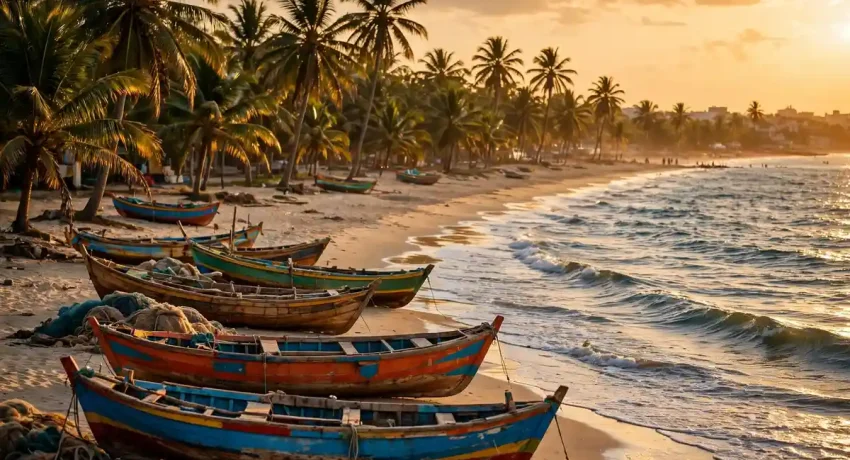
Lomé Togo beaches run for kilometres along the Gulf of Guinea, and they are beautiful at sunset. Palm trees line the sand. Fishing boats rest on the shore. Families gather in the evening, and the breeze off the water cools the city. The beach is one of the best places to visit in Lomé Togo for a slow evening, not for a swim.
The honest answer is that the surf can be rough and the currents strong. There are no lifeguards on most stretches. Many visitors paddle and wade, but few swim far out. If you want to swim, use a hotel pool, or ask a local guide which stretch is calmest on the day. Never swim alone, and never swim at night.
The beach is still worth your time. Walk it in the late afternoon, when the fishermen pull in their nets and the light turns gold. Buy grilled fish from a beachside stall. Watch the sun go down over the water. The best beach moments in Lomé are on the sand, not in the sea.
Why Is Togoville So Important?
Togoville is a small town on the northern shore of Lake Togo, reached by pirogue, a traditional wooden canoe, from the beach town of Agbodrafo. The town is a quiet place. It is also where the history of Togo began. A day trip to Togoville Togo is the easiest history lesson in the country, and the best places to visit in Lomé Togo include it for a reason.
On 5 July 1884, the German explorer Gustav Nachtigal signed a treaty here with Chief Mlapa III, the chief of Togoville. That treaty created the German protectorate over the coastal territory, and the village’s name eventually gave the whole country its name. Togoville was the first German colonial capital, before the capital moved to Lomé in 1897.
The town is also a centre of Vodun spirituality. Shrines and sacred sites sit alongside the Catholic cathedral, which German missionaries built in 1910. The cathedral holds a painting of a Black Madonna, and local tradition holds that the Virgin Mary appeared here in the early 1970s. The mix of Catholic and Vodun practice, side by side, is characteristically Togolese. Visit with a guide, who can explain the shrines and introduce you to the priests. Ask before photographing anything sacred.
The lake itself is worth the trip. The crossing by pirogue takes about twenty minutes, and the fishermen cast their nets standing in their canoes. The water is calm. The bird life is good. On the far side, the town moves slowly, and the market is small and friendly.
What Makes Aneho Worth the Drive?
Aneho Togo sits east of Lomé, near the border with Benin, and it was the first capital of the country. The town was once called Petit-Popo, and it was a trading port long before the colonial era. The French set up trading posts here in the 1600s. Enslaved Africans were shipped from this coast in the 17th and 18th centuries, and the town does not hide that history.
The Wood House in nearby Agbodrafo is a slave house, a small museum that tells the story of the trade. It is a sobering stop, and a necessary one. The house is modest, and the story is told plainly. Allow half an hour, and go with a guide who can explain the context.
Aneho itself is a quiet, handsome town, with colonial buildings, a lagoon, and a beach where Lake Togo meets the Atlantic Ocean. The meeting point is called Apounoukpa. The town is at its best in the late afternoon, when the light is soft and the fishermen are working. Combine Aneho with Togoville in one day trip: Togoville in the morning, the lake crossing, then Aneho in the afternoon.
How Do You Spend a Day in Kpalimé?
Kpalimé Togo is the green escape from Lomé, about 120 kilometres north on the well-paved Route Nationale 5. The drive takes roughly two hours. The town sits in the Kloto mountains, among cocoa and coffee farms, and the air is cooler and damper than on the coast. The best places to visit in Lomé Togo are not all in the city, and Kpalimé is the proof. It is the base for the best hiking and nature in southern Togo.
Can You Climb Mount Agou?
Mount Agou is the highest peak in Togo at 986 metres, and the climb is the region’s classic hike. The trail starts near the village of Kebo Djigbé, also written Dzigbé, and the ascent takes about one to two hours. The path winds through forest and mountain villages, then steepens near the top. The summit gives wide views across the hills and, on a clear day, toward Ghana. Start early, before the heat builds, and carry at least two litres of water per person. A local guide is inexpensive and worth it: the trail is not always well marked, and the guide knows the villages.
Which Waterfalls Should You Visit?
The Womé waterfall is the favourite. It sits in a forest clearing about 8 kilometres from Kpalimé, and the water is clear and cool. The descent to the falls involves around 300 steps down, and the same climb back up, so take your time. Swimming is allowed, and after the Mount Agou hike, the water feels wonderful. The Kpimé waterfall is the taller one, a cascade of about 35 metres through tropical forest, with natural pools at the base. Local guides list entry at around 1,500 CFA. Visit the waterfalls between November and February, when they still run well after the rains but the trails are dry.
What Else Is There to See in Kpalimé?
Castle Viale, a stone house built by a German colonial officer, stands on a hill above the town, with views over Kpalimé and the surrounding hills. The town’s craft villages are worth a wander: woodcarvers, weavers, and potters work in the open, and you can buy directly from them. Coffee and cocoa farms surround the town, and some welcome visitors. The German cathedral in the town centre is a reminder of the colonial era.
Getting there is easy. Shared taxis from Lomé cost around 5,000 CFA for the two-and-a-half-hour journey. A private car with a driver is more comfortable and lets you stop at the waterfalls. Listed private day tours from Lomé, including transport, a guide, and site fees, run roughly $100–$230 per person. That is a fair price for a full day, and it removes all the logistics.
What Does Lomé Taste Like?
Togolese food is hearty, spicy, and generous. Fufu, a smooth dough made from yam or cassava, is the staple, served with sauces made from leaves, okra, or groundnuts. Grilled fish is everywhere on the coast, often served with spicy piment sauce and fried plantain. Yams appear in many forms: boiled, fried, or pounded. Akpan, a fermented maize drink, is a refreshing street snack.
Eat where the locals eat. The market stalls and small maquis, open-air eateries, serve the best food at the lowest prices. A plate of grilled fish with plantain and sauce costs a fraction of a hotel meal, and it tastes better. In the evening, the beachside stalls grill the day’s catch over charcoal. Ask for the fish of the day, and eat it with your hands, as the locals do.
Drink bottled water, and avoid ice from unknown sources. The local beer is good and cheap, and the fresh fruit juices are excellent. Mango, pineapple, and passion fruit are in season for much of the year.
Where Should You Stay in Lomé?
Lomé has hotels for most budgets, and most of them sit near the beach or in the centre. The established names are the Hotel 2 Février, a tall tower in the city centre with wide views, and the Hotel Sarakawa, a beachfront hotel with gardens and a pool. Both are comfortable and well run, and both are good bases for a first visit.
Smaller guesthouses and boutique hotels cluster in the Tokoin and Hédzranawoé districts, and they are often better value. They are quieter, closer to the markets, and the owners usually know the city well. Book ahead in the dry season, when the better rooms go fast. Whatever you choose, check that the air conditioning works, that the water pressure is good, and that the hotel has a generator, because power cuts happen.
How Much Does a Trip to Lomé Cost?
Lomé is one of the cheaper capitals in West Africa, and the ranges below are honest estimates for 2026. Prices vary, and the CFA franc’s fixed euro peg keeps them stable.
| Daily budget | About (CFA) | About (USD) | What it covers |
|---|---|---|---|
| Budget | 25,000–40,000 | $40–$65 | Guesthouse, street food, shared taxis, market visits |
| Mid-range | 60,000–100,000 | $95–$160 | Comfortable hotel, restaurant meals, private taxi, a guide |
| Comfortable | 120,000+ | $190+ | Beachfront hotel, private car and driver, guided tours |
Day trips are the biggest extra. A private Kpalimé tour, with transport and a guide, is listed at roughly $100–$230 per person. A Togoville and Aneho day trip with a guide usually costs less, because the distances are shorter. Museum entries are inexpensive. The Grand Marché costs nothing to enter, and the Akodessewa fetish market is free to walk through, though a guide’s fee is worth paying.
How Do You Get Around Lomé?
Getting around Lomé is easy and cheap. The zémidjans, motorcycle taxis, are the fastest way through traffic, and a ride across town costs roughly 200–500 CFA. Agree the price before you get on. Shared taxis run fixed routes for a few hundred CFA. A private taxi for a trip across town costs roughly 2,000–5,000 CFA, and a half-day hire is negotiable.
For day trips, hire a private car with a driver through your hotel or a tour operator. The roads to Togoville, Aneho, and Kpalimé are paved and in reasonable shape. Driving yourself is possible, but the traffic, the informal rules, and the language barrier make a driver a better choice for a first visit.
Walking is the best way to see the centre. The market, the cathedral, the Independence Monument, and the Palais de Lomé are all within walking distance of each other. Walk in the morning or late afternoon, when the heat is kinder, and carry water.
Is Lomé Safe?
Lomé Togo safety is a fair question, and the honest answer is that the city is generally safe for visitors who take normal care. The centre and the beachfront are busy during the day, and the main risks are petty theft and bag-snatching in the markets. Keep your bag in front of you, do not flash valuables, and do not walk alone at night in quiet areas.
At night, take a taxi or a ride-hailing car rather than walking. The neighbourhoods around the beach hotels and the centre are the safest after dark. Avoid the beach at night. Keep your passport and most of your cash in the hotel safe, and carry only what you need.
Two practical points matter more than anything else. First, the sun and the heat: drink water constantly, wear a hat, and rest in the shade. Second, the sea: the currents are strong, so do not swim far out. With those two things in mind, Lomé is a relaxed and welcoming city.
What Does a 3-Day Lomé Itinerary Look Like?
Three days is the sweet spot for the best places to visit in Lomé Togo. It gives you the city, the lake, and the mountains, without rushing. Here is a plan that works.
| Day | Morning | Afternoon | Evening |
|---|---|---|---|
| Day 1 — the city | National Museum, then the Grand Marché | Akodessewa fetish market with a guide | Cathedral square, then grilled fish on the beach |
| Day 2 — the lake | Pirogue across Lake Togo to Togoville | Wood House at Agbodrafo, then Aneho and Apounoukpa | Sunset at Lomé Beach, dinner in the centre |
| Day 3 — the mountains | Early drive to Kpalimé, climb Mount Agou | Womé waterfall swim, craft villages, Castle Viale | Back in Lomé, a last walk along the beach |
If you have a fourth day, add the Palais de Lomé gardens in the morning and a slow afternoon in the Tokoin markets. If you have only two days, drop the mountains and keep the city and the lake. The Lomé itinerary 3 days plan above is a starting point, not a rule. The city rewards anyone who slows down.
Frequently Asked Questions
Do I need a visa to visit Lomé, Togo?
Most non-African visitors need an e-Visa, applied for online at least five business days before travel. Nationals of African Union member states have been visa-free for up to 30 days since 18 May 2026. Everyone must complete the online immigration form at least 24 hours before arrival.
What is the best time to visit Lomé?
The dry season, from November to March, is the best time. The weather is warm and dry, the roads are at their best, and the waterfalls still run well in November and December.
Is the Akodessewa fetish market safe to visit?
Yes, with a local guide. It is a working religious market, not a tourist attraction. Go in the morning, ask before taking photos, and treat the sellers and their beliefs with respect.
Can you swim at Lomé Beach?
The beach is beautiful, but the surf is rough and the currents are strong, with no lifeguards on most stretches. Most visitors wade and walk rather than swim far out. Hotel pools are the safer choice for a proper swim.
How far is Kpalimé from Lomé?
About 120 kilometres, roughly two hours by road on Route Nationale 5. Shared taxis cost around 5,000 CFA, and listed private day tours run roughly $100–$230 per person, including transport and a guide.
What currency does Togo use?
The West African CFA franc (XOF), fixed to the euro at 1 EUR = 655.957 CFA. Bring euros or dollars to exchange, and carry cash outside Lomé, where cards rarely work.