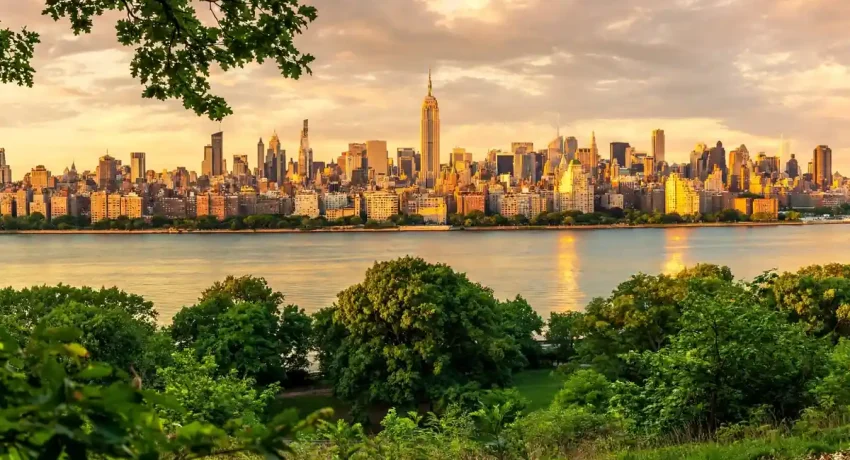

Say New York and most people picture Manhattan. They see yellow cabs, tall towers and a skyline they already know from films. That picture is real, but it is only a small part of the story. New York is a whole state, and it is bigger than England. It holds a great city, eleven long glacial lakes, six million acres of mountain forest and one of the most famous waterfalls on Earth.
This guide covers the full state in 2026. If you are asking what the places to visit in New York are, this guide has the answer. You will find the classic New York City attractions, the best museums, the neighbourhoods worth your time and the upstate places that surprise first-time visitors. Prices are the ones published for 2026. Where a price can change, the article says so.
Why Is New York State Bigger Than Most Travellers Think?
New York State covers about 54,555 square miles. That makes it larger than England. Driving from New York City to Niagara Falls takes seven to eight hours without stops. Many visitors never leave the city, and that is a shame. The state packs a remarkable range into one trip: city streets, river towns, wine country, mountain lakes and a waterfall that draws millions every year.
About 65 million people visited New York City in 2024, the most recent full-year figure available. New York State Parks recorded a record 88.3 million visits in the same year. The places to visit in New York stretch from the Atlantic Ocean to Lake Erie. People come for the icons, then stay for the lakes and the small towns. A good plan gives both sides of the state a fair share of your days.
America turns 250 in 2026, and New York is marking it in a big way. Nearly a third of Revolutionary War battles were fought on New York soil. Historic sites from Fort Ticonderoga to Saratoga National Historical Park are running special programmes through the year. If you like history, 2026 is a strong year to visit upstate.
What Are the Must-See Places in New York City?
New York City has five boroughs, but most first-time visitors spend their days in Manhattan and Brooklyn. The icons below are the places people travel across the world to see. They are busy for a reason. Book timed tickets in advance and go early in the day.
How Do You See the Statue of Liberty Without the Crowds?
The Statue of Liberty was a gift from France and has stood in New York Harbour since 1886. The only ferry that lands on Liberty Island is Statue City Cruises, sailing from Battery Park. Statue of Liberty tickets cost around $26 for an adult in 2026 and include Ellis Island. Crown tickets are limited and sell out months ahead, so book early if you want to climb inside the statue.
Go on the first ferry of the day. The island is quieter, the light is better for photos and you finish before the midday crowds arrive. Allow at least half a day for the statue and Ellis Island together. The immigration museum on Ellis Island is one of the most moving places in the city, and many visitors rush past it.
What Is It Like at the Top of the Empire State Building?
The Empire State Building is still the most famous tower in the city. Its 86th-floor deck sits 1,050 feet up, with open-air views in every direction. Empire State Building tickets cost roughly $46 to $57 for an adult in 2026, depending on the time of day. Sunset slots cost more and sell first.
Arrive at opening or go late in the evening for the shortest queues. The 102nd-floor observatory costs extra and adds a glass-enclosed view from higher up. If you only pick one classic deck, this is the one. It is the building every other skyline photo is measured against.
Why Is Central Park Worth a Whole Morning?
Central Park covers 843 acres in the middle of Manhattan. It opened in 1858, when the city around it was still growing north. Central Park New York is the most visited urban park in the United States, with around 42 million visits a year. Today it holds lakes, meadows, a zoo, a castle and miles of paths. It is free to enter, and it is the best free thing in New York.
Start at the southern end near the Pond, then walk north past the Bethesda Terrace and the Lake. Rent a rowboat at the Loeb Boathouse or climb to Belvedere Castle for a view over the Great Lawn. In spring the cherry trees bloom around the Reservoir. In autumn the maples turn the Ramble gold and red. Give the park a full morning. An hour is not enough.
What Should You Do in Times Square and Around It?
Times Square is loud, bright and crowded at every hour. It is worth one visit, preferably after dark when the screens light up the street. Walk through, take your photo, then step away. The streets around it hold better things: Broadway theatres, the shops of Fifth Avenue and the quiet of Bryant Park, two blocks away.
Bryant Park has free lawn chairs, a carousel and a winter village in the cold months. In summer it hosts free films and lunchtime concerts. It is a good place to rest between the big sights. From here, the New York Public Library is a five-minute walk, and its reading room is one of the grandest public spaces in America.
How Do You Visit the 9/11 Memorial and Museum?
The 9/11 Memorial is free and open to the public. Two square pools sit in the footprints of the Twin Towers, with the names of the victims cut into bronze around the edges. It is a quiet place in a loud city. The museum below costs around $36 for an adult in 2026. It tells the story of the day through objects, recordings and photographs. Allow two hours and expect it to be emotional.
From the memorial, walk to the waterfront for a view across the Hudson. The Oculus, the white ribbed transit hub beside the site, is worth a look from inside. One World Observatory, at the top of the tower next door, costs around $48 and gives a different view of the harbour than the older decks uptown.
Which Observation Deck Should You Choose in 2026?
New York has five major observation decks, and they sell the same skyline from different angles. You do not need all five. Pick one or two. This table compares them on the facts that matter most.
| Deck | Height | Adult ticket (2026) | Best for |
|---|---|---|---|
| Empire State Building, 86th floor | 1,050 feet | About $46–$57 | The classic experience |
| Top of the Rock | 850 feet | About $42–$65 | Photos with the Empire State Building in frame |
| Edge, Hudson Yards | 1,131 feet | About $42–$69 | Glass floor and open-air ledge |
| One World Observatory | 1,268 feet | About $48 | Harbour and downtown views |
| SUMMIT One Vanderbilt | 1,063 feet | From $48 | Mirrors, art and a playful visit |
Top of the Rock is the best choice for photographers. It looks straight at the Empire State Building, so the city’s most famous tower sits inside your pictures. Edge suits thrill-seekers, with a triangular platform that juts out from the building and a glass floor to stand on. SUMMIT is more art installation than viewpoint, with mirrored rooms and glass ledges. Families with teenagers tend to love it. Older visitors often prefer the calm of the Empire State Building.
Buying a pass can cut the cost sharply if you plan three or more paid sights. The New York CityPASS costs $149 for an adult in 2026 and covers five attractions over nine days, with advertised savings of up to 51 percent. It includes the Empire State Building, Top of the Rock, the Statue of Liberty ferry, the 9/11 Museum and the American Museum of Natural History. The smaller C3 pass costs $109 for any three of the same list. The Go City Explorer Pass starts at $89 for two attractions. Do the maths before you buy. A pass only saves money when you actually use it.
What Are the Best Museums in New York City?
New York holds some of the best museums in the world. You cannot see them all in one trip, so choose by interest. The Metropolitan Museum of Art is the biggest and the most rewarding single visit. An adult ticket costs $30 in 2026, seniors pay $22 and students pay $17. Children under 12 go free. The ticket covers both the Met Fifth Avenue and the Met Cloisters on the same day. New York State residents can pay what they wish. The museum is closed on Wednesdays and stays open until 9 pm on Fridays and Saturdays.
The American Museum of Natural History costs around $43 for an adult. Its dinosaur halls, the blue whale model and the planetarium fill a whole afternoon. The Museum of Modern Art charges $25 for adults, and under-16s go free. Its collection runs from Van Gogh’s Starry Night to modern design. The Whitney Museum of American Art, now included in the CityPASS, is the best place for American art after 1900. The Guggenheim’s spiral building is as famous as the art inside it.
Smaller museums reward a slower pace. The Intrepid Sea, Air and Space Museum, around $38, lets you walk the deck of an aircraft carrier and see the Space Shuttle Enterprise. The Tenement Museum on the Lower East Side tells the story of immigrants through one restored building. The Frick Collection, reopened after restoration, is a jewel-box mansion of old masters. Pick two big museums and one small one. That is enough for most trips.
Which Neighbourhoods Show the Real New York?
The icons are only half the city. The other half lives in the neighbourhoods, and that is where the best meals, the best walks and the best stories are. The places to visit in New York are not all in Manhattan. Things to do in New York City change completely when you leave Midtown behind.
Start in Brooklyn. Walk across the Brooklyn Bridge in the morning, when the light falls on the Manhattan skyline behind you. The bridge opened in 1883 and the walk takes about 30 minutes. On the far side, DUMBO has cobbled streets, old warehouses and the famous view of the Manhattan Bridge framed between two brick buildings. Brooklyn Heights has quiet brownstone streets and a promenade with one of the best views in the city.
Greenwich Village is the city’s most walkable neighbourhood. Its streets curve instead of following the grid, and its townhouses hold cafes, bookshops and jazz clubs. Washington Square Park is the heart of it. Nearby, the High Line runs 1.45 miles along an old elevated railway through Chelsea, with gardens and art above the street. Walk it at sunset, then eat in the Chelsea Market below.
Queens is the most diverse place in America. More than 130 languages are spoken in the borough. In Jackson Heights you can eat food from a dozen countries on a single street. Flushing has some of the best Chinese food in the country. If you care about food more than sights, give Queens a day. Harlem has gospel on Sunday mornings, the Apollo Theater and some of the city’s best soul food. The Bronx holds the New York Botanical Garden and Yankee Stadium. Each borough earns its place in the plan.
How Do You Get Around New York City Without Wasting Money?
The subway is the fastest way across the city. A single ride costs $2.90 in 2026. Tap a bank card or phone at the turnstile with OMNY, the contactless system, and you never need a ticket machine. Buses cost the same and are better for cross-town trips, since the subway runs mostly north to south. Walking is often faster than the subway for short hops in Manhattan. The blocks are long north to south, so a ten-block walk can take 15 minutes.
From JFK Airport, the AirTrain to Jamaica station costs $8.75, then the subway into Manhattan adds $2.90. The whole trip takes 60 to 90 minutes. A taxi from JFK to Manhattan is a flat $70, plus surcharges, tolls and tip. From LaGuardia, the free Q70 bus connects to the subway. From Newark, the train to Penn Station is the quickest route. Avoid driving in Manhattan. Parking costs a fortune, and the traffic moves slowly.
Book the big sights for early morning and walk between the ones that sit close together. The Met, Central Park and the Upper East Side form one cluster. Lower Manhattan holds the Statue of Liberty ferry, the 9/11 Memorial and Wall Street in a small area. Grouping sights by neighbourhood saves hours of subway rides and keeps the day relaxed.
What Are the Best Places to Visit in the Hudson Valley?
The Hudson Valley begins about an hour north of the city and runs up the river to Albany. It is the easiest Hudson Valley day trip from Manhattan, and one of the most rewarding places to visit in New York for a first-time visitor. Trains leave Grand Central for Beacon, Cold Spring and Hudson several times a day. Driving gives more freedom, but the train is simpler and the views along the river are part of the trip.
Beacon is the valley’s art town. Dia:Beacon fills a former Nabisco factory with large-scale modern art, and the main street below it has cafes and bookshops. A short climb up Beacon Mountain gives a view over the river and the Highlands. Cold Spring, one stop south, is a small river village with antique shops and a waterfront park. The hike up Bull Hill, also called Mount Taurus, is steep but short, and the view from the top is one of the best in the valley.
Hudson, two hours north by train, has a main street full of galleries, antique shops and restaurants. Fifteen minutes outside town, Art Omi is a free outdoor sculpture park with more than 60 works spread across fields and woods. Sleepy Hollow, closer to the city, is famous for Washington Irving’s Headless Horseman tale. Its old cemetery and the Philipsburg Manor bring the story to life, especially in October.
Further north, the valley holds grand houses from the Gilded Age. The Vanderbilt Mansion in Hyde Park looks over the river from formal gardens. Kykuit, the Rockefeller estate at Pocantico Hills, has art, gardens and views that explain why the family chose this bend of the river. Storm King Art Center, a 500-acre outdoor museum near New Windsor, mixes huge sculptures with rolling hills. Give the valley at least one full day. Two is better.
What Makes the Finger Lakes Worth the Drive?
The Finger Lakes are eleven long, narrow lakes carved by glaciers in central New York. The region is about a four-hour drive from the city, and it rewards the journey with waterfalls, wine and small towns that feel a world away from Manhattan. Finger Lakes New York is the state’s most underrated region, and the places to visit in New York keep getting better the further north you drive.
Watkins Glen State Park is the star. Its gorge trail passes 19 waterfalls in about two miles, through stone tunnels and under bridges. USA Today named it one of the top three state parks in the entire United States in 2026. Go early in the morning or late in the afternoon to walk the gorge without crowds. The trail is slippery when wet, so wear proper shoes. Seneca Lake, the largest of the lakes by volume, has a wine trail with dozens of tasting rooms. The region grows some of the best Riesling in America.
Ithaca sits at the southern tip of Cayuga Lake and is the region’s liveliest town. Taughannock Falls State Park, just north of town, has a waterfall 215 feet tall, higher than Niagara. Robert H. Treman State Park has swimming holes and a gorge trail of its own. The town itself has a farmers market, bookshops and restaurants that punch above their weight. Skaneateles, on the clearest of the lakes, is the prettiest village in the region. Its main street runs down to the water, and the lake is clean enough to drink from, as locals like to say.
More than 100 wineries ring the lakes, and most welcome visitors for tastings. Seneca Lake and Cayuga Lake have the most tasting rooms, while Keuka Lake has the oldest wine history in the region. Many wineries charge a small tasting fee, often waived if you buy a bottle. If you plan to taste, nominate a driver or book a tour. The roads between the lakes are winding and the views are distracting in the best way.
What Should You See in the Adirondacks?
The Adirondack Park covers six million acres, making it the largest park in the contiguous United States. It is bigger than several states, and it holds mountains, lakes and small towns that feel far from anywhere. Adirondacks New York is wild country, and it suits travellers who like to hike, paddle or simply sit by a lake.
Lake Placid New York is the natural base. The village hosted the Winter Olympics in 1932 and again in 1980, when the United States ice hockey team beat the Soviet Union in the “Miracle on Ice”. The Olympic sites still stand, and you can ride the bobsled track, skate on the Olympic rink or take the gondola up Whiteface Mountain. Mirror Lake, in the middle of the village, is perfect for a morning paddle. The main street has shops, restaurants and a relaxed pace.
The High Peaks region around Lake Placid holds 46 peaks above 4,000 feet. Cascade Mountain, at 4,098 feet, is the most popular first climb, with wide views from the summit. Easier walks lead to waterfalls and fire towers with views over the forest. Saranac Lake, a quieter village nearby, has a lakefront, a carousel and a slower rhythm. The Wild Center in Tupper Lake is a natural history museum with treetop trails, and its outdoor exhibition of six giant troll sculptures runs until 31 October 2026.
Lake George, at the southern edge of the park, is the family favourite. Its clear water suits swimming and boating, and the village has arcades, mini-golf and boat cruises. The lake is 32 miles long, and a cruise from the village to the northern end takes most of a day. In autumn the hills around the lake turn red and gold, and the crowds thin out. The Adirondacks are best in late spring, summer and early autumn. Winter brings deep snow and cold, and many roads and lodges close.
Why Is Niagara Falls Better From the New York Side?
Niagara Falls sits on the border with Canada, and both sides have their fans. The New York side is the better choice for getting close to the water. Niagara Falls State Park, founded in 1885, is the oldest state park in America, and entry to the park itself is free. Parking is charged. The American Falls, Bridal Veil Falls and the great Horseshoe Falls all sit within a short walk of each other.
The Maid of the Mist is the boat ride that defines the visit. It has carried passengers since 1846. In 2026 the season runs from 24 April to 8 November. An adult ticket costs $30.25, children aged 6 to 12 pay $19.75 and under-fives ride free. The 20-minute ride sails past the American Falls and into the basin of the Horseshoe Falls, where the water falls on three sides at once. Boats leave every 15 minutes and boarding is first come, first served. The blue poncho is included, and you will need it.
Cave of the Winds is the second essential stop. It costs around $23 in season and takes you down to wooden decks at the base of Bridal Veil Falls, where the spray hits like a storm. The Hurricane Deck puts you within feet of the falling water. Go in the morning, when the light catches the mist and the queues are shorter. From the park, the town of Niagara Falls New York has a long way to go, but the city of Buffalo, 20 minutes away, is worth a stop. Its art deco city hall, the Albright-Knox Art Gallery and the Anchor Bar, where Buffalo wings were invented, make a good afternoon.
Crossing to the Canadian side needs a passport. The view from Ontario is wider, and the town there is busier and more built up. Many travellers see both sides in one day. If you only have time for one, the New York side wins for the boat and the decks. The Canadian side wins for the postcard view. Our guide to the best places to visit in Canada in autumn covers the other side of the border in more depth, if you plan to cross over.
What Are the Best Small Towns in Upstate New York?
Upstate New York is a string of small towns, each with its own reason to stop. Saratoga Springs New York is the most famous of them. Its race course is one of the oldest in the United States, and the 2026 racing season brings the town alive in summer. The mineral springs that gave the town its name still flow in the park, and the main street has restaurants, bookshops and a lively evening scene.
Cooperstown sits on Otsego Lake, the lake James Fenimore Cooper called Glimmerglass. The National Baseball Hall of Fame is the draw, and it is worth a visit even if you do not follow the sport. The building tells the story of America through baseball, and the town around it is a picture of small-town life. Woodstock, in the Catskills, still carries its 1969 festival spirit in its shops and music venues. Rhinebeck, in the Hudson Valley, has a walkable main street, a farmers market and the oldest inn in America, the Beekman Arms, dating to 1766.
Canandaigua, at the northern tip of its lake, has wineries on the hills above the water and the Sonnenberg Gardens, a 50-acre estate with a Victorian mansion and formal gardens. Skaneateles, already mentioned for its lake, is also one of the best towns for a slow afternoon. The pattern is the same everywhere upstate: a main street, a lake or a mountain, and a slower pace than the city. An upstate New York road trip works best when you stop in these towns instead of driving past them.
What About the Catskills and Long Island?
The Catskills sit two hours north of the city and hold the tallest waterfalls in the state. Kaaterskill Falls drops 260 feet in two tiers, and the trail to its base is short but steep. The region is famous for fly-fishing, farm breweries and small towns like Phoenicia, where you can tube down Esopus Creek in summer. Woodstock and Hunter are the best bases. In autumn the Catskills rival the Adirondacks for colour, and the crowds are smaller.
Long Island stretches east from the city in two forks. The North Fork is wine country, with tasting rooms, farm stands and quiet beaches. The South Fork holds the Hamptons, where the beaches are wide and the prices are high. Montauk, at the very tip, has the oldest lighthouse in New York State, built in 1796, and some of the best seafood on the coast. The Hamptons are expensive in summer. The North Fork is the better value, and in autumn the vineyards turn gold.
Letchworth State Park, between the Finger Lakes and Buffalo, is called the Grand Canyon of the East. Its gorge holds three major waterfalls, and the park covers 17,000 acres. It is a natural stop on a drive from the Finger Lakes to Niagara Falls, and it is quieter than both. If your route passes it, give it half a day.
When Is the Best Time to Visit New York?
The best time to visit New York depends on what you want to do. Spring and autumn are the sweet spots for most travellers. Summer is hot and busy. Winter is cold in the city and very cold upstate, but it has its own rewards, which our New York winter guide covers in full.
| Season | Weather | Crowds | Best for |
|---|---|---|---|
| Spring, April to June | Mild, 15–24°C | Moderate | City walks, gardens, waterfalls at full flow |
| Summer, July to August | Hot and humid, 25–32°C | Peak | Lakes, beaches, festivals, long days |
| Autumn, September to October | Cool, 12–22°C | Moderate | Fall colour, wine country, hiking |
| Winter, November to March | Cold, −1–7°C | Low upstate, high in the city at Christmas | City lights, museums, skiing |
For fall colour, the Adirondacks peak first, usually in late September, and the colour moves south through October. The Finger Lakes and the Catskills peak in mid-October. Our Minnesota fall guide shows how the colour season works across the northern states, and the timing is similar here. If you want warm weather in the cold months, our February guide lists the best warm escapes for that month.
How Much Does a Trip to New York Cost in 2026?
New York is not a cheap destination, but it can be managed at every budget. The city is the expensive part. Upstate is far cheaper. These are typical daily costs per person, excluding flights, and prices vary by season. Check before you book.
| Style | New York City per day | Upstate per day |
|---|---|---|
| Budget | $90–$140 | $70–$110 |
| Mid-range | $180–$280 | $130–$200 |
| Comfortable | $350+ | $250+ |
A budget day in the city means a hostel or a room outside Manhattan, subway rides, a bagel for breakfast, a slice for lunch and free sights like Central Park and the High Line. A mid-range day means a three-star hotel, two paid sights and a proper dinner. Upstate, a mid-range day covers a motel or inn, a state park visit, a winery tasting and dinner in a small town. Car rental upstate costs roughly $60 to $90 a day in 2026, and you will need one. The trains serve the Hudson Valley well, but the Finger Lakes, the Adirondacks and Niagara Falls all need a car.
Free and cheap things cut the bill fast. Central Park, the High Line, the 9/11 Memorial, the Staten Island Ferry and the Brooklyn Bridge are all free. The Met is free for New York residents and $30 for visitors. Many museums have free evenings. A CityPASS pays for itself if you visit three or more major sights, and the math is simple: the Empire State Building, the Natural History Museum and the 9/11 Museum already cost around $136 bought separately.
How Do You Plan a 7-Day New York Itinerary?
Seven days is enough to see the city and one upstate region properly. This New York itinerary 7 days plan splits the week into four days in the city and three days upstate. It keeps driving to a minimum and groups sights by area.
The first day covers Lower Manhattan: the Statue of Liberty ferry in the morning, the 9/11 Memorial and Museum in the afternoon, and a walk across the Brooklyn Bridge at sunset. On the second day, head to Midtown: the Empire State Building or Top of the Rock, Bryant Park, Fifth Avenue and Times Square after dark. The third day belongs to museums and the park: the Met in the morning, Central Park in the afternoon and dinner in the Upper West Side. Spend the fourth day in the neighbourhoods: Greenwich Village, the High Line, Chelsea Market and Brooklyn, with dinner in Queens if you like food.
The fifth day is the drive north. Pick one region and give it three days. The Hudson Valley is the easiest: Beacon and Cold Spring on day five, the mansions and Storm King on day six, and Sleepy Hollow on the way back on day seven. The Finger Lakes need more driving: Watkins Glen and Seneca Lake on day five, Ithaca and Taughannock on day six, Skaneateles and the drive back on day seven. Niagara Falls works as a two-day trip from Buffalo, with the Maid of the Mist, Cave of the Winds and the city itself. Do not try to see every region in one week. One region done well beats three regions rushed.
What Should You Know Before You Go?
Book the big sights in advance. Timed tickets for the Statue of Liberty crown, the Empire State Building at sunset and the Maid of the Mist on summer weekends sell out. The same applies to popular restaurants and Broadway shows. America 250 events in 2026 will draw extra visitors to historic sites upstate, so book those too.
Tipping is expected everywhere in the United States. Restaurants take 18 to 20 percent. Taxi drivers, hotel staff and tour guides all expect a tip. Prices on menus do not include tax, so the bill will be higher than the menu suggests. Sales tax in New York City is 8.875 percent. Credit cards work everywhere, and you rarely need cash. ATMs charge fees, so take cash only if you need it.
New York is a safe city by American standards, and it is one of the most visited places in the world. Normal city sense applies: watch your bag on the subway, avoid empty cars late at night and stick to busy streets after dark. Solo travellers will find the city easy to navigate, and our guide to the best places for single women travellers has practical safety tips that apply anywhere. For a different kind of city break on the other side of the country, our San Francisco guide makes a good companion read.
Pack for the season. Spring and autumn need layers and a rain jacket. Summer needs light clothes, sunscreen and water. Upstate trails need proper shoes, not trainers. Winter needs a real coat, gloves and warm boots. The weather changes fast in the mountains, and a sunny morning can turn into a cold afternoon.
Frequently Asked Questions
How many days do you need in New York?
Three days covers the main places to visit in New York City. Five days lets you add the neighbourhoods and the museums. Seven days is the sweet spot for the city plus one upstate region. Two weeks covers the city, the Hudson Valley, the Finger Lakes and Niagara Falls at a relaxed pace.
Is New York City expensive to visit?
It can be. A mid-range day in the city costs roughly $180 to $280 per person in 2026. Free sights, a CityPASS and subway travel keep the cost down. Upstate is much cheaper, with mid-range days around $130 to $200.
Do you need a car in New York?
Not in the city. The subway, buses and walking cover everything. Upstate, a car is essential. The Finger Lakes, the Adirondacks and Niagara Falls have little public transport between sights. The Hudson Valley is the exception, with trains from Grand Central.
What is the best month to visit New York?
May and September are the best months for most travellers. The weather is mild, the crowds are smaller than in summer and the parks are at their best. October is the best month for fall colour upstate. December is the best month for the city’s festive season.
Can you visit Niagara Falls and New York City in one trip?
Yes, but allow at least six or seven days. The drive between them takes seven to eight hours, so fly into Buffalo or take a domestic flight between the two. One night at the falls is enough for the boat, the decks and the park.
Is the Statue of Liberty worth it?
Yes, for most visitors. The ferry ride, the island and Ellis Island together make one of the best half-days in the city. Book the first ferry to avoid the crowds. If you are short on time, the free Staten Island Ferry passes close to the statue and gives a good view from the water.
New York rewards travellers who look past the skyline. The city has the icons, the museums and the neighbourhoods. Upstate has the lakes, the mountains and the small towns. The places to visit in New York are endless, but these are the ones that earn their place. This New York travel guide 2026 gives you both halves of the state, with real prices and a plan that works. Pick your season, book the big sights early and leave room in the plan for the places you discover by accident. Those are usually the ones you remember.