
San Francisco does not behave like other American cities. It is small, just seven miles by seven miles. The city is steep, foggy, and expensive. And it still manages to surprise people who think they have seen it all in photographs. The best places to visit in San Francisco are not just the famous bridge and the old prison. They are the neighbourhoods, the markets, the parks, and the views that appear when the fog lifts for an hour.
This guide covers the best places to visit in San Francisco in 2026 with honest, verified detail. You will find real ticket prices, booking rules, and the mistakes first-time visitors make. Prices are labelled where they vary by date. Where a figure could not be verified, the guide says so instead of guessing.
Why Is San Francisco Different From Every Other American City?
San Francisco sits on a hilly peninsula between the Pacific Ocean and San Francisco Bay. The city was built on steep slopes, so its streets climb at angles that surprise first-time drivers. The weather is unusual too. Summer is often cold and foggy. Autumn is usually the warmest season. Locals joke that the fog has a name, Karl, and that it arrives like an uninvited guest.
The city rewards walkers. Most of the famous sights sit within a few miles of each other. A good pair of shoes matters more than a rental car. In fact, a car is often a burden here. Parking is scarce and costly. The hills make driving stressful. Public transport, walking, and the occasional cable car cover almost everything.
San Francisco is also a city of strong neighbourhoods. Chinatown feels nothing like the Mission District. The Marina feels nothing like Haight-Ashbury. Each area has its own food, history, and pace. That is why the best places to visit in San Francisco mix the icons with at least two or three neighbourhoods.
Where Should You Start With the Best Places to Visit in San Francisco?
With so many things to do in San Francisco, start with this list if your time is short. These are the ten places that define the city for most first-time visitors. The rest of this guide explains each one in detail.
| Place | Why Go | Time Needed |
|---|---|---|
| Golden Gate Bridge | The icon, best on foot or by bike | 1–2 hours |
| Alcatraz Island | The famous prison, book weeks ahead | Half a day |
| Cable cars | The moving landmark, best on Powell-Hyde | 30–60 minutes |
| Fisherman’s Wharf and Pier 39 | Sea lions, chowder, bay views | 2–3 hours |
| Chinatown | Oldest Chinatown in North America | 2 hours |
| Painted Ladies | The famous Victorian row at Alamo Square | 30 minutes |
| Golden Gate Park | Gardens, museums, bison, and calm | Half a day |
| Ferry Building | Saturday farmers market on the waterfront | 1–2 hours |
| Mission District | Murals, burritos, and Dolores Park | Half a day |
| Muir Woods and Sausalito | Redwoods and a bay-side town, one trip | Half a day |
How Do You Cross the Golden Gate Bridge?
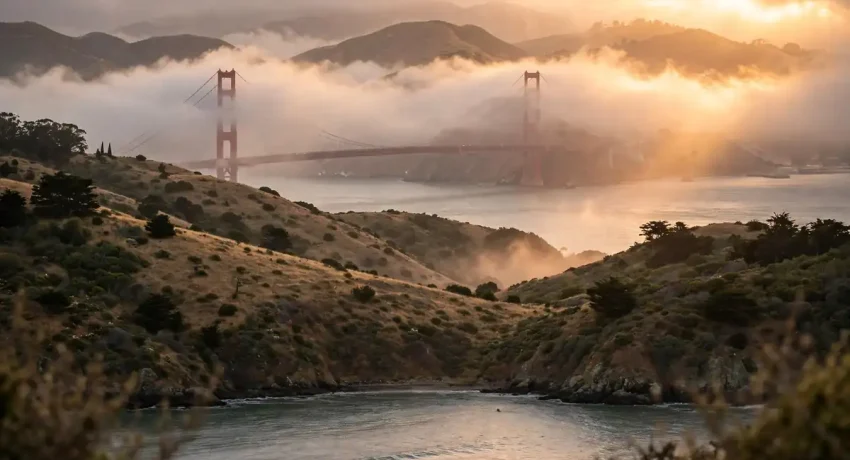
The Golden Gate Bridge San Francisco visitors know from postcards opened on 27 May 1937. It is 1.7 miles long. Its two towers rise 746 feet above the water. The colour is called International Orange. It was chosen to stand out in the fog and to match the warm tones of the surrounding hills.
Walking across is free, and it is one of the best places to visit in San Francisco on foot. The crossing takes about 35 minutes each way. Cyclists use a separate sidewalk. Check the signs on the day, because the rules for which side each group uses can change.
When should you go? Morning is usually clearest. Fog often rolls in during the afternoon, especially in summer. If the bridge is wrapped in fog when you arrive, wait an hour. The fog often lifts, at least partly, and the view changes fast.
Where Are the Best Viewpoints of the Golden Gate Bridge?
Battery Spencer, on the Marin side, gives the classic high view. It looks down on the bridge with the city behind it. Go early, because the small car park fills fast. Crissy Field, on the city side, gives a water-level view. It is a flat, easy walk from the Marina. Fort Point, under the southern end of the bridge, is the most dramatic spot. You stand beneath the roadway and hear the traffic above you.
Do not drive across just to say you did it. The bridge is far better on foot. If you cycle, ride to Sausalito and take the ferry back. That route is one of the best half-day trips in the Bay Area, and this guide covers it later.
Is Alcatraz Worth the Price and the Planning?
Alcatraz is one of the best places to visit in San Francisco, and the single most popular paid attraction in the city. It was a federal prison from 1934 to 1963. Its inmates included Al Capone and Robert Stroud, known as the Birdman. The famous escape of 1962, when three men vanished from their cells, has never been solved. The island also carries a second history. Native American activists occupied it from 1969 to 1971, and their graffiti is still visible in the cellhouse.
The answer to the question is yes, Alcatraz is worth it, but only if you book early. Tickets are released 90 days in advance. In summer, day tours sell out four to six weeks ahead. The night tour sells out even faster. If you arrive without a ticket, you will almost certainly miss out.
How Much Do Alcatraz Tickets Cost in 2026?
Alcatraz tickets in 2026 start at around $47.95 for an adult day tour. The night tour costs around $59.65. The Behind the Scenes tour, which visits areas closed to other visitors, costs around $104.65. All prices include the round-trip ferry from Pier 33 and the cellhouse audio tour. Children and seniors pay less. Under-fives travel free.
Book only through the official operator, City Experiences. It is the sole authorised ferry company for the island. Many bay cruises sail past Alcatraz without landing. Check that your ticket actually includes the island stop.
What Should You Know Before Your Alcatraz Visit?
Ferries leave Pier 33 from 8:45 AM. The first sailing is the quietest. Most visitors spend two and a half to three hours on the island, including the ferry ride. The audio tour is excellent. It is narrated by former guards and inmates, and it takes about 45 minutes.
One date matters for 2026 planning. Alcatraz is closed from 26 October to 19 November 2026 for dock repairs. If your trip falls in that window, plan around it. The island is also closed on Thanksgiving, Christmas, and New Year’s Day. Arrive at Pier 33 at least 30 minutes before your ferry, with photo ID for adults.
What Is the Best Way to Ride a Cable Car?
San Francisco cable cars are the world’s last manually operated cable car system. They were invented by Andrew Hallidie, and the first line opened in 1873. The cars have no engines. They grip a moving cable under the street, and the gripman controls the speed by hand. It is a strange, wonderful way to travel.
Three lines still run. The Powell-Hyde line has the best views. It climbs from Union Square, passes Lombard Street, and drops steeply toward Fisherman’s Wharf. The Powell-Mason line is similar but ends a little further east. The California Street line is quieter. It crosses the hills east to west and is the one locals use most.
How Much Does a Cable Car Ride Cost in 2026?
A single cable car ride costs $9 in 2026. That is a steep price for one ride, so plan around it. A one-day Visitor Passport costs $15 and covers unlimited Muni buses, streetcars, and cable cars. A three-day passport costs $35. If you plan two cable car rides in a day, the passport already pays for itself.
One change is coming. From 4 January 2027, a single cable car ride rises to $12. A new $18 Cable Car Plus pass will cover unlimited Muni travel for a day. For trips in 2026, the $9 fare still applies.
How Do You Skip the Cable Car Queues?
The queues at the Powell Street turnaround can take an hour in summer. The trick is simple. Walk a few stops up the line and board there. Cars often have space mid-route, and you can still grab an outside seat. The California Street line rarely has a long queue at all. Visit the free Cable Car Museum at Washington and Mason streets to see the cables and the old grip machinery in action.
What Should You Eat at Fisherman’s Wharf and Pier 39?
Fisherman’s Wharf San Francisco is where the city meets the bay. It is touristy, and locals will tell you so. Go anyway. Pier 39 is the heart of it. It has shops, restaurants, street performers, and the Aquarium of the Bay.
The sea lions are the main event. They arrived at Pier 39 in early 1990, a few months after the Loma Prieta earthquake of October 1989. Nobody knows exactly why they chose the marina, but they stayed. Hundreds gather on the docks in winter. In summer, many leave to breed further south, so the docks can look quiet. Even then, a few usually remain.
Eat clam chowder in a sourdough bread bowl. Boudin Bakery, at the wharf, has baked sourdough in San Francisco since 1849. The bread bowl is the classic order. It is filling, cheap by city standards, and best eaten while walking along the water. Ghirardelli Square, a short walk west, is the place for chocolate. The old chocolate factory is now a shopping square, and the ice cream sundaes are famous.
What Will You Find in Chinatown?
Chinatown San Francisco is the oldest Chinatown in North America. It was established in 1848, during the Gold Rush. No other Chinatown outside Asia is larger. Enter through the Dragon Gate on Grant Avenue. It was built in 1970 and is the most photographed entrance in the neighbourhood.
Chinatown is one of the best places to visit in San Francisco for food lovers, and it rewards slow wandering. Grant Avenue has the souvenir shops and the crowds. The side streets have the real life. Stockton Street has produce markets and butcher shops. Ross Alley holds the Golden Gate Fortune Cookie Factory, where workers fold cookies by hand. It has operated since 1962.
Eat dim sum for lunch. The small plates arrive on carts or by order, and a full meal costs far less than a sit-down dinner elsewhere in the city. Herbal shops sell remedies that have been used for centuries. Tea shops offer tastings. If you want a quiet break, the Tin How Temple, on Waverly Place, is the oldest Taoist temple in the United States. It dates from 1852.
Where Are the Painted Ladies and Why Does Everyone Photograph Them?
The Painted Ladies San Francisco postcards made famous stand at 710 to 720 Steiner Street, facing Alamo Square. They were built between 1892 and 1896. The row is called “Postcard Row” because its photo, with the downtown skyline behind them, appears on postcards everywhere. The television show Full House made them famous around the world in its opening credits.
The best view is from the top of the hill in Alamo Square Park. Go in the late afternoon, when the light is warm and the skyline is clear. The houses are private homes, so you cannot go inside. The park itself is the attraction. It is a good picnic spot, and it gives one of the best free views in the city.
Combine the Painted Ladies with a walk through the surrounding neighbourhood. Alamo Square and the Western Addition have some of the city’s finest Victorian architecture. Fillmore Street, a few blocks west, has cafes and shops that are far less crowded than the tourist areas.
Is Lombard Street Really That Steep?
Lombard Street San Francisco is famous for its eight sharp hairpin turns between Hyde and Leavenworth streets. It was built in 1922 to make a very steep hill safe for cars. The turns slow traffic to a crawl. The street is lined with flowers, and the view down toward the bay is lovely.
Here is the honest detail most guides skip. Lombard Street is the crookedest street in the city, but it is not the steepest. Filbert Street, a few blocks away, is steeper. Lombard is the one worth visiting, because the turns and the gardens make it beautiful.
Walk it from the bottom up, or take the Powell-Hyde cable car to the top and walk down. Driving it is slow and frustrating. The queue of cars can take 30 minutes or more. Residents have asked visitors for years to be respectful. Keep noise down, do not block driveways, and take your photo and move on.
How Do You Spend a Day in Golden Gate Park?
Golden Gate Park covers 1,017 acres. It is about 20 percent larger than Central Park in New York. The park was built on sand dunes in the 1870s, and it took decades of planting to turn it green. Today it holds gardens, lakes, museums, and even a herd of bison. It is one of the best places to visit in San Francisco for a slow afternoon.
Start at the Conservatory of Flowers, a glass greenhouse from 1879. It holds tropical plants and rare orchids. Then walk to the Japanese Tea Garden. It dates from 1894 and is the oldest public Japanese garden in the United States. Inside are a pagoda, a stone lantern, and a tea house. There is a small admission fee, so check the price on the day.
The park’s two big museums sit across from each other on the Music Concourse. The de Young Museum covers American art from the 17th century to today. The California Academy of Sciences covers the natural world. You can see one properly in a morning. Both in one day is possible but tiring. Pick the one that matches your mood.
Which Museum Should You Pick: California Academy of Sciences or de Young?
The California Academy of Sciences is the better choice for families and for anyone who loves science. It holds an aquarium, a planetarium, a rainforest, and a natural history museum under one living roof. The rainforest dome is the highlight. You climb through four floors of tropical plants and free-flying birds, then take a lift down past the aquarium. Adult admission is $49, or $55 at peak times. Youth tickets cost $45 to $49. Children aged 3 to 12 pay $39 to $45. Under-twos enter free.
The de Young Museum is the better choice for art lovers. It holds American paintings, sculpture, and textiles. Its tower, the Hamon Observation Tower, gives a free panoramic view of the park and the city. General admission starts from around $20 for adults. The museum is closed on Mondays, so check the day before you go.
Do not miss the bison paddock. A small herd of American bison has lived in the park since the 1890s. They are easy to find near the western end of the park. The windmill at the park’s western edge is another quiet highlight. It once pumped water for the park’s irrigation.
Why Is the Ferry Building Worth a Saturday Morning?
The Ferry Building opened in 1898. Its clock tower was once the tallest structure in the city. It survived the 1906 earthquake and fire. Today it is a food hall and a market, and it sits at the foot of Market Street on the Embarcadero.
The farmers market is the reason to go. The Ferry Building San Francisco market runs on Tuesdays and Saturdays. Saturday is the big day, from 8 AM to 2 PM. Local farms sell fruit, vegetables, bread, cheese, and flowers. Food stalls serve breakfast and lunch. It is crowded, lively, and very San Franciscan.
Inside the building, the shops sell artisan cheese, chocolate, bread, and coffee. It is a good place to buy gifts that are actually made in the Bay Area. After the market, walk along the Embarcadero toward Pier 39. The walk is flat, the views are open, and the bay is on your right the whole way.
What Makes the Mission District Special?
The Mission District San Francisco is the oldest neighbourhood in the city, and the centre of its Latino culture. Mission San Francisco de Asís, founded in 1776, is the oldest surviving structure in the city.
Start with the murals. Balmy Alley and Clarion Alley are covered in murals that tell the stories of the community. They cover immigration, politics, and daily life. The paintings change over time, so each visit feels a little different. Respect the art. These walls belong to the people who live here.
Eat a Mission burrito. The style was invented here, at El Faro in 1961. It is large, wrapped in foil, and filled with rice, beans, meat, and salsa. Cheap, filling, and genuinely local, it is a true city staple. Dolores Park, at the top of the Mission, is the best place to eat it. The park has wide lawns, palm trees, and a view of the downtown skyline. On sunny weekends, it fills with locals.
Should You Take a Day Trip to Muir Woods and Sausalito?
Yes, if you have a spare half day. Muir Woods is a grove of old-growth coast redwoods, about 45 minutes by car from the city. The trees are hundreds of years old. Some rise more than 250 feet. Walking beneath them is quiet in a way that surprises people. The forest floor is soft, the light is filtered, and the air smells of damp earth.
Planning matters here. Muir Woods entry costs $15 for visitors aged 16 and over. Parking needs a reservation in advance. The shuttle costs $4 for a round trip, and it also needs a reservation. There is no mobile phone reception and no Wi-Fi in the woods. Save your confirmation offline before you go.
A Muir Woods day trip pairs perfectly with Sausalito. The small town sits on the bay, just north of the Golden Gate Bridge. It has art galleries, cafes, and a waterfront walk. The Sausalito ferry back to San Francisco costs around $14 for a round trip. The ride takes about 30 minutes. It gives one of the best views of the skyline from the water, and it is a calm way to end the day.
What Other Viewpoints Are Worth Your Time?
Coit Tower stands 210 feet tall on Telegraph Hill. It was built in 1933 with money left by Lillie Hitchcock Coit, a wealthy eccentric who loved the city’s firefighters. Inside, the walls carry murals painted in 1934. The lift to the top costs a small fee, and the view covers the Bay Bridge, the bay, and the city streets below.
Twin Peaks is the highest natural viewpoint in the city, at 922 feet. On a clear day, you can see the whole bay, from the Golden Gate to the East Bay hills. It is windy up there, so bring a jacket even in summer. The peaks are best at sunset, when the city lights come on below.
For a quieter option, try the Presidio. The former military base is now a national park site. It has trails, forests, and views of the bridge from the bluffs. The Walt Disney Family Museum sits inside the Presidio. It tells the story of Walt Disney’s life and work, and it is far less crowded than the bigger museums.
How Do You Get Around San Francisco Without a Car?
You do not need a car in San Francisco. In fact, most visitors are happier without one. The city is compact, and its public transport is good once you understand it.
Muni runs the buses, the light rail, the historic streetcars, and the cable cars. A single Muni ride costs $2.85 with a Clipper card or a contactless bank card, or $3.00 in cash. The fare is valid for 120 minutes. A day pass costs $5.70. The Visitor Passport, at $15 for one day or $35 for three days, adds the cable cars and is the best deal for most visitors.
San Francisco BART is the regional train system. It connects the city to Oakland, Berkeley, and the airports. From San Francisco International Airport, BART takes about 30 minutes to reach downtown and costs under $11. That is far faster than driving in traffic. Clipper cards work on both Muni and BART, and you can also tap a contactless bank card or phone.
Walking is the real secret. The hills are steep, but the distances are short. The F Market streetcar, which runs along the Embarcadero and Market Street, uses vintage trams from around the world. It is both transport and a small museum on wheels.
When Is the Best Time to Visit San Francisco?
September and October are usually the warmest and clearest months. Locals call it Indian summer. The fog lifts, the skies clear, and the city shows its best side. If you can choose your dates, pick these months.
Summer is the foggiest season. June, July, and August bring cold wind and thick fog, especially in the morning. Many visitors arrive in shorts and buy a fleece on the first day. Bring layers whatever the season. A light jacket is useful even in September.
Winter is mild and wet. Rain falls mostly from November to March. The city rarely gets very cold, and the rain usually comes in short bursts. Hotel prices drop in winter, and the crowds thin out. Spring is pleasant, with wildflowers in the parks and fewer visitors than summer.
How Much Does a 3-Day Trip to San Francisco Cost?
San Francisco is one of the most expensive cities in the United States. A coffee costs around $6. Lunch usually runs $25 to $30. But a careful traveller can keep costs under control. The table below gives realistic ranges for a three-day visit.
| Item | Budget Range | Notes |
|---|---|---|
| Hotel, 3 nights | $450–$900 | Cheaper outside Union Square and Fisherman’s Wharf |
| Food, 3 days | $150–$300 | Mix of markets, casual meals, and one good dinner |
| Transport | $35–$60 | Three-day Visitor Passport plus BART from the airport |
| Attractions | $100–$200 | Alcatraz plus one or two museums |
| Total per person | $735–$1,460 | Excluding flights, sharing a room |
Save money with a CityPASS. It costs around $90 and covers four top attractions, including the California Academy of Sciences. That can save up to 45 percent compared with buying tickets separately. Free sights help too. The Golden Gate Bridge walk, the Painted Ladies, Dolores Park, the Cable Car Museum, and the Ferry Building market all cost nothing.
What Does a Perfect 3-Day San Francisco Itinerary Look Like?
This San Francisco itinerary 3 days plan groups nearby sights together, so you spend less time travelling and more time seeing the city.
What Should You Do on Day One?
Start at the Ferry Building farmers market if it is a Tuesday or Saturday. Then ride the F streetcar to Fisherman’s Wharf. Watch the sea lions at Pier 39 and eat chowder in a bread bowl. In the afternoon, take the Powell-Hyde cable car up the hill, walk down Lombard Street, and finish at Ghirardelli Square for chocolate.
What Should You Do on Day Two?
Take the morning ferry to Alcatraz. Allow three hours. After lunch, walk through Chinatown and its side streets. Then ride a bus or walk to the Painted Ladies at Alamo Square. End the day in the Mission District with murals, a burrito, and an hour in Dolores Park.
What Should You Do on Day Three?
Walk or cycle across the Golden Gate Bridge in the morning, when the air is clearest. Come back through the Presidio. Spend the afternoon in Golden Gate Park, choosing either the California Academy of Sciences or the de Young Museum. If you prefer a day trip, swap the park for Muir Woods and Sausalito instead.
Frequently Asked Questions
How many days do you need in San Francisco?
Three days cover the icons and two or three neighbourhoods comfortably. Two days are enough for the highlights only, but the pace is rushed. Five days let you add day trips to Muir Woods, wine country, or the coast.
Is San Francisco safe for tourists?
The main tourist areas are generally safe during the day. Take the usual city precautions. Watch your belongings on crowded buses and cable cars. Avoid the Tenderloin and parts of Civic Center at night. Do not leave valuables visible in a parked car anywhere in the city.
Is a Car Necessary in San Francisco?
No. Muni, BART, cable cars, and walking cover the city well. A car is useful only for day trips beyond the city, and even then a tour or a one-day rental is often simpler than keeping a car for the whole stay.
What is the foggiest month in San Francisco?
July and August are usually the foggiest months. The fog rolls in from the Pacific in the morning and often clears by the afternoon. September and October are the clearest months.
Can you walk across the Golden Gate Bridge for free?
Yes. Walking across the bridge is free. The crossing takes about 35 minutes each way. Cyclists can ride across too, on a separate sidewalk.
San Francisco rewards the visitor who slows down. The bridge and the prison are the postcards, but the city itself is the prize. It is in the murals of the Mission, the fog on the bridge, the sourdough at the wharf, and the view from a park bench in Alamo Square. Plan the big tickets early, leave room for wandering, and pack a jacket. The best places to visit in San Francisco are the ones you find between the sights you planned.