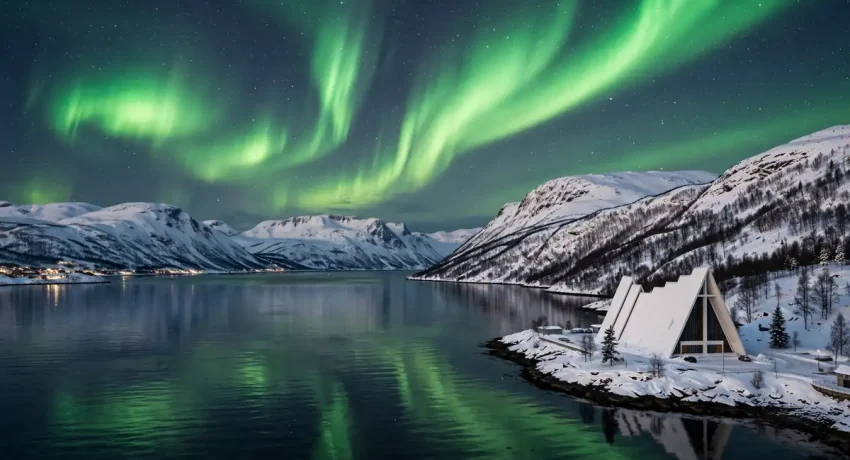

Tromsø sits so far north that the sun disappears for seven weeks in winter and refuses to set for two months in summer. The city stands at 69.65°N, about 350 kilometres north of the Arctic Circle, and it is the largest city in Northern Norway. Around 78,000 people live here, on a small island between fjords and sharp peaks. Most visitors come for one thing: the Northern Lights. They stay because the city turns out to be far more than a viewing platform. This guide covers the best places to visit in Tromsø in 2026, with verified prices, honest season advice, and the mistakes other guides still make.
Two of those mistakes matter. First, many guides still quote old cable car prices. The Fjellheisen return ticket costs 645 NOK for adults in 2026, not the 495 or 595 NOK you will find in older articles. Second, the famous Midnight Concert does not take place in the white Arctic Cathedral. It plays in the yellow wooden Tromsø Cathedral in the city centre. People book one church and turn up at the other. This guide keeps the two straight.
Why is Tromsø one of the best places to see the Northern Lights?
Tromsø lies directly under the auroral oval, the ring around the magnetic pole where the Northern Lights appear most often. The lights can show on almost any clear, dark night from late August to early April. Because the city sits so far north, the aurora becomes visible here at a Kp index of just 2, which is a low level of geomagnetic activity. In plain terms, Tromsø does not need a rare storm. It needs a dark sky and a gap in the clouds.
That last point is the catch. Tromsø is a coastal city, and coastal weather is changeable. Cloud cover is the real enemy, not a weak aurora. Local guides spend the evening driving inland, sometimes across the border into Finland, looking for clear sky. A good tour is really a weather chase with a guide who reads the forecast. No operator can promise a sighting, and any tour that does is not being honest with you.
The lights are usually most active between about 20:00 and 02:00. The American weather agency NOAA gives 22:00 to 02:00 as the most useful window, though displays can start earlier or run later. Stay out for several hours. The sky can look empty at 21:00 and fill with green curtains by midnight.
When is the best time to visit Tromsø?
The answer depends on what you want. Tromsø has two peak seasons, and they feel like different cities. The dark season runs from October to March and brings the aurora, snow, and whales. The light season runs from May to July and brings the midnight sun, hiking, and kayaking. There is no single best month. Each month suits a different thing, and the best places to visit in Tromsø change with the season.
| Month | Light | What is special |
|---|---|---|
| September | Darkness returns, 9–11 hours of night | Aurora season starts; autumn colours; fjord reflections |
| October | 12–15 hours of night | Peak aurora month; first snow; whale season begins mid-month |
| November | 16–20 hours of night | Peak aurora month; whales arrive; polar night starts late in the month |
| December | Polar night; zero measured sunshine hours in the whole month | Longest nights; deep snow; Christmas atmosphere |
| January | Polar night until mid-month, then light returns | Peak aurora month; whales still here; coldest stretch |
| February | Daylight grows fast | Peak aurora month; best balance of clear skies and daylight |
| March | Long bright days, dark nights | Peak aurora month; skiing; equinox boost to solar activity |
| April | Nights shrink quickly | Last aurora chances early in the month; spring skiing |
| May | Midnight sun from about 20 May | Sun never sets; hiking season opens; no aurora |
| June–July | 24 hours of daylight | Midnight sun; kayaking; Sommarøy beaches; warmest weather |
| August | Darkness returns late in the month | Last midnight sun days; first faint aurora late August |
The polar night runs from about 27 November to 15 January. The Tromsø polar night means the sun stays below the horizon for the whole period. That sounds bleak, but the reality is softer. Around midday the sky turns a deep blue twilight for a few hours, and the light on the snow is beautiful. Many visitors say the blue hour is the most photogenic time of the year.
The midnight sun runs from about 20 May to 22 July. The Tromsø midnight sun circles the sky and never sets. You can hike at midnight in full daylight, and the fjords glow gold at 2 a.m. Temperatures in summer are usually 10–18°C, so bring a jacket even in July.
If the aurora is your main goal, plan three to five nights. One cloudy night can ruin a two-night trip, while a longer stay gives the weather time to clear. Book your first aurora tour for your first night, so you have later nights to try again if the sky stays cloudy.
What does a Tromsø northern lights tour actually cost?
Aurora tours in Tromsø come in several formats, and the price gap is wide. A standard bus chase is the cheapest way to hunt with a guide. A small-group minibus costs more but moves faster and stops in better spots. Camp evenings add a warm base, food, and a fire. Prices below come from operator listings checked in October 2026. Treat them as a guide, not a quote, because operators change prices between seasons.
| Tour type | Price per person | What you get |
|---|---|---|
| Guided bus chase, about 6 hours | From NOK 1,285 | Transport, guide, warm clothing where stated |
| Small-group minibus chase | About NOK 1,400–2,400 | Fewer people, faster moves, photography help |
| Camp evening at Camp Tamok | From NOK 1,295 | Warm camp, food, a base to wait in comfort |
| Sámi evening with reindeer | About NOK 2,745 | Sámi culture, reindeer feeding, dinner, aurora hunt |
| 24-hour cruise on MV Quest | From NOK 6,499 | Cabin, three meals, aurora from the deck |
Photography tours cost more, usually NOK 2,500–3,500 per person. They suit people who want portraits under the lights and help with camera settings. A standard tour is fine if you just want to watch the sky.
October, November, February, and March are the peak months, according to local operators. The darkest weeks, from late November to mid-January, give the longest viewing window each night. September and March offer a good balance: strong aurora activity around the equinoxes, milder weather, and some daylight for sightseeing. Geomagnetic storms are nearly twice as likely around the spring and autumn equinoxes, in late September to October and February to March.
Can you see the Northern Lights for free in Tromsø?
Yes, you can. The aurora is free. What you pay for on a tour is transport, local knowledge, and warmth. If you want to try on your own, walk away from the city lights. Telegrafbukta beach at the southern tip of the island and Prestvannet lake are local favourites for free viewing. Both are easy to reach on foot or by bus, and both have dark skies above the water and the hills.
Check the Kp forecast and the cloud forecast before you go out. A Kp of 2 or more can be enough in Tromsø. A clear sky matters more than a high Kp number. Dress far warmer than you think you need. Standing still in Arctic wind for two hours feels very different from walking through town. Thermal layers, a windproof shell, insulated boots, gloves, and a hat are not optional. Bring a thermos of something hot.
Self-driving is a real option in winter, and it lets you chase clear sky on your own schedule. The smallest hire cars start from around 250–350 NOK a day if you book well ahead, though prices climb steeply in peak season. Winter driving here means snow, ice, and darkness, so only drive if you are comfortable with those conditions. Never stop on a narrow road to look at the sky. Pull fully off the road or use a car park.
What is the Fjellheisen cable car really like?
Fjellheisen is the cable car that runs from Tromsdalen, across the bridge from the city centre, up to the Storsteinen plateau at 421 metres above sea level. The ride takes about four minutes. The view from the top is the fastest way to understand Tromsø, and the cable car is one of the best places to visit in Tromsø on your first day.
The 2026 prices are higher than many older guides say. A return ticket costs 645 NOK for adults and 310 NOK for children aged 3 to 15. A family return for two adults and two children costs 1,360 NOK. A one-way ticket costs 415 NOK for adults. The cable car runs daily from 09:00 to midnight, with departures every 30 minutes. Stay at the top as long as you like within those hours.
Two practical warnings for 2026. First, a rebuild of the new Fjellheisen is under way, but the cable car stays open. Parking at the lower station is not currently possible, so take bus 26 or walk. Second, wheelchair access is not available until the end of 2027. Queues can reach 45–60 minutes at peak times in summer, so arrive before 10:00 or after 18:00.
The lower station stands at Solliveien 12 in Tromsdalen, about 15 minutes on foot from the city centre across the Tromsø Bridge. The bridge is 1,036 metres long and takes 15–20 minutes to cross on foot. Until 1 November 2026 the bridge is closed to ordinary car traffic, though it stays open to people on foot and on bikes. Buses use the bridge from 7 a.m. to 5 p.m. and the tunnel after that, so check the Svipper app for the latest bus 26 times.
If you would rather climb, the Sherpa Steps run from the lower station to the summit. The stone staircase has 1,203 steps and is free. It is a steep, serious climb, and in winter the steps can be icy. Most people ride up and walk down, which is the best of both. The summit café, Fjellstua, is open from 09:00 to 23:30 and serves food and hot drinks with the same view.
Which cathedral is which, and why does it matter?
Tromsø has two famous churches, and mixing them up is the most common mistake visitors make. The white triangular church across the bridge is the Arctic Cathedral. The yellow wooden church in the city centre is Tromsø Cathedral. They are different buildings with different stories, and the famous evening concert happens in the yellow one.
Ishavskatedralen, the Arctic Cathedral, is the parish church of Tromsdalen. The Arctic Cathedral Tromsø visitors photograph most is the white triangular church across the bridge. It is not a cathedral in the church sense at all. The name is a nickname for its shape. The white concrete triangles were designed by Jan Inge Hovig and completed in 1965, inspired by Arctic ice and Sámi tents. Inside, a huge stained-glass window fills the east wall. Entry costs NOK 90 at the door. Opening hours are 10:00 to 17:00 most days, and 09:00 to 18:00 from June to mid-August. It stands about 20 minutes on foot from the city centre, and the Fjellheisen cable car is ten minutes further on.
Tromsø Cathedral, or Tromsø domkirke, stands at Kirkegata 7 in the city centre. Christian Heinrich Grosch designed it, and it was completed in 1861. No other fully wooden church in Norway matches it, and it is the northernmost Protestant church in the world. The building is also the largest wooden church in Northern Europe. The yellow paint makes it easy to spot among the shops and cafés of Storgata.
The Midnight Concert is a 30-minute performance of psalms, folk tunes, traditional North Norwegian music, and Sámi music. It starts at 23:00, with doors opening at 22:30. Tickets cost from about $32 per person. The 2026–27 season runs from 1 November 2026 to 31 March 2027. Children under 8 are not admitted. The listing warns clearly that the concert is in the yellow wooden church in the city centre, not in the white Arctic Cathedral over the bridge. Book the right church.
What are the best museums to visit in Tromsø?
Tromsø has a small set of museums, and three of them are worth your time. If you are listing things to do in Tromsø for a winter trip, the museums belong on the list. They are among the best places to visit in Tromsø when the weather turns, and they cover the Arctic, the polar explorers, and the Sámi people who have lived in the north for centuries.
The Polar Museum Tromsø is housed in an old customs warehouse on the harbourfront. It tells the stories of trapping, sealing, and polar expeditions, including the expeditions of Roald Amundsen and Fridtjof Nansen. Amundsen is the explorer who reached the South Pole first, in 1911, and Tromsø was his gateway to the Arctic. Entry costs 130 NOK, and under-18s go free. Allow about an hour.
Polaria Tromsø is the Arctic aquarium a short walk along the waterfront. Bearded seals are the stars, and the staff feed them and talk about Arctic marine life several times a day. The building also holds exhibitions on the Arctic climate and a panoramic film. Entry costs 395 NOK for adults and 220 NOK for children aged 3 to 15. A family ticket for two adults and three children costs 925 NOK.
The Arctic University Museum of Norway, often called the Tromsø Museum, sits at the southern end of the island. It holds exhibitions on the Northern Lights, Arctic natural history, and the strongest Sámi collection in the city. Entry costs 130 NOK, and under-18s go free. Both museums are reachable by local bus.
Two free stops round out a museum day. The Arctic-Alpine Botanic Garden is the world’s northernmost botanic garden. Entry is free and it is open 24 hours a day. The Perspektivet Museum, in a handsome old building in the centre, shows photographs and exhibitions about Tromsø life through the centuries. The Northern Norway Art Museum, also free, shows art from the north in a compact gallery.
Where can you see whales near Tromsø?
Whale watching in Tromsø runs from mid-October to the end of January, when humpback whales and orcas follow the herring into the fjords north of the city. Tromsø whale watching is best in November to early January, and the fjords north of the city are among the best places to visit in Tromsø in winter. The whales gather most often around Skjervøy, which takes about 2.5 hours to reach by boat from Tromsø. November to early January is the most reliable window. Early in the season the animals have just arrived and feed hard, so the activity is often more intense than later on.
Three kinds of boat run the trips. The hybrid-electric catamaran is the comfortable choice: quiet, heated inside, with big windows and an open deck. It costs about NOK 1,791–1,990 per person and takes 8–9 hours. The high-speed catamaran is faster to the whales and costs about €173 per person. The heated ship, an all-inclusive cruise with food, costs about €242 per person. A 24-hour cruise on MV Quest, with a cabin and three meals, starts at NOK 6,499 per person.
The RIB safari is the adventurous choice. An open rigid inflatable boat takes at most 12 guests, and you wear a thermal suit against the cold and spray. The full day lasts about 12–12.5 hours, including a bus that leaves Tromsø at 05:00 for Skjervøy, and about three hours at sea with the whales. It costs about €306–310 per person. You must be at least 14 years old and 140 cm tall to join.
No boat can promise a sighting. The whales follow the herring, and the herring move. Sightings are likely in season, but they are never guaranteed. Some operators offer a free second tour if no whales are seen, subject to available places, so ask about that when you book. Dress for the deck, not the cabin. Even on a heated boat, you will want to stand outside when the whales surface, and the wind off the Arctic sea in January is bitter.
How do fjord cruises and kayaking work in Tromsø?
A fjord cruise is the easiest way to see the landscape that surrounds Tromsø. Boats run year-round, and a typical trip lasts about four hours. The route passes steep mountains, small fishing villages, and sea eagles if you are lucky. Winter cruises run in the blue twilight of midday, which gives the fjords a strange, soft light. Summer cruises run under the midnight sun.
Kayaking is the slower, closer alternative. Guided trips paddle through the fjords around Kvaløya, the large island connected to Tromsø by the Sandnessund Bridge. Kvaløya is the fifth largest island in Norway, and its fjords, Ersfjord and Grøtfjord, are the most photographed spots near the city. Summer is the kayaking season. The water is cold all year, so go with a guide, wear the dry suit they provide, and do not paddle alone.
Dog sledding and snowmobiling fill the winter days between aurora nights. Tours start from about NOK 1,790 per person, and many run from Camp Tamok in the Tamok valley, about 75 minutes from the city. You can drive your own team after a short lesson. Snowmobile tours run in the same valley, with a guide leading the group through the snow. Reindeer sledding is the oldest form of transport in the region, and Sámi-led tours combine a short sled ride with feeding the animals and hearing about Sámi culture.
What is the old town of Tromsø like?
The old town is compact, walkable, and full of wooden houses. Storgata, the main street, runs through the centre with shops, cafés, and restaurants. The old town is one of the best places to visit in Tromsø on foot. The harbourfront at Prostneset is where the Hurtigruten coastal steamer calls, and where the whale and fjord boats leave. The wooden houses along the back streets are the oldest in the city, some dating to the 1800s, and they give Tromsø a warmth that concrete Arctic towns lack.
Mack Brewery is a local institution. Founded in 1877, it is the world’s northernmost brewery. Its pub, Ølhallen, opened in 1928 and is the oldest pub in Tromsø. The hall serves Mack beers and a wide range of Norwegian craft beer, and the walls are covered with brewery history. It is a good place to warm up after a cold walk, and a good place to talk to locals.
Food in Tromsø is expensive, and the city is honest about it. A mid-range traveller should budget roughly $260–325 per person per day in 2026, covering a hotel, food, and one major tour. Fish is the thing to eat: Arctic cod, salmon, and king crab appear on most menus. Reindeer is also common, and many restaurants serve it as a stew or a steak. Book restaurants ahead in winter, because the city fills with aurora tourists and tables go fast.
Is Sommarøy worth a day trip from Tromsø?
Sommarøy is a small fishing village on an island about 60 kilometres west of Tromsø, roughly an hour by car. A Sommarøy day trip from Tromsø takes 4.5–5 hours by coach. The island has white sand beaches, colourful houses, and mountains that drop straight into the sea. Life here feels a world away from the city, and it is one of the best places to watch the midnight sun in summer, when the sun dips toward the horizon and never quite sets.
The easiest way to visit is a guided coach tour, which takes 4.5–5 hours and includes coastal stops and a salmon picnic. The coach has a toilet, and thermal suits and a sauna are extras on some departures. If you drive yourself, the road crosses Kvaløya and passes Ersfjord and Grøtfjord on the way. The beaches are beautiful in every season, though nobody sunbathes on them in winter. Walk the shore, look at the sea, and watch for the aurora after dark, because Sommarøy has far less light pollution than the city.
Sommarøy is also a good base for a night or two. The Sommarøy Arctic Hotel sits on the island, just under an hour from Tromsø, and its remote location gives you a real chance of seeing the Northern Lights from your door. Staying out here for one night, then returning to the city, is a smart way to split a trip.
Are the Lyngen Alps the best day trip from Tromsø?
For mountain scenery, yes. The Lyngen Alps are the most spectacular mountains anywhere near Tromsø, with peaks reaching 1,834 metres. Glaciers, fjords, and sharp ridges fill the whole peninsula. You can drive a loop through them in a day, and the ferry crossing is part of the pleasure.
The drive runs about 150 kilometres and takes roughly 2.5 hours each way. From Tromsø, drive east to Breivikeidet and take the car ferry to Svensby. The crossing takes about 20 minutes, and the views of the Lyngen Alps from the deck are vast, even in wind and cold. Get out of the car and stand on deck if you can.
A small-group scenic expedition is the easier option if you do not want to drive. A Lyngen Alps Tromsø day trip takes about 6.5 hours, carries at most eight guests, and includes a short ferry crossing and a warm lunch. Children under six cannot join. The guide can answer questions and point out the peaks, which is hard to do while driving yourself.
Senja is the other big day trip, and it needs a full nine hours. The island circuit runs by road and ferry, with Husøy, Ersfjord Beach, and Tungeneset on the planned route. Choose Senja only if you can give it the whole day. If your time is short, Sommarøy takes 4.5–5 hours and leaves room for another activity, while Lyngen takes about 6.5 hours. Pick your destination first, then choose the trip that fits.
How do you get to Tromsø and around the city?
Most visitors fly into Tromsø Airport, Langnes, about two hours from Oslo by air. The Tromsø airport to city centre bus costs NOK 125 one way. Taxis are available, but the bus is the sensible choice. Tromsø is also a port on the Hurtigruten coastal route, and the ships call at Prostneset in the centre. Arriving by sea, with the fjords sliding past the deck, is a fine way to start a trip.
Inside the city, walking covers the centre. The island is small, and most hotels, restaurants, and museums sit within a short walk of Storgata. Local buses run by Troms Fylkestrafikk serve the whole island, Tromsdalen, and Kvaløya. Buy tickets in the Svipper app, which also shows live times. A single bus ticket costs about 50 NOK.
Norway is part of Schengen. Many visitors can stay visa-free for up to 90 days in any 180-day period. The European travel authorisation, ETIAS, is expected in the last quarter of 2026 and will cost €20 for visa-exempt travellers, though the date could change. Check the official EU website before you travel.
A rental car is useful for Sommarøy, the Lyngen Alps, and chasing clear aurora skies at night. It is not needed inside the city. Winter driving means snow, ice, and darkness, so only hire a car if you are comfortable with those conditions. Fuel and parking cost more than in most of Europe, and the Tromsø Bridge is closed to ordinary car traffic until 1 November 2026.
How much does a trip to Tromsø cost in 2026?
Tromsø is one of the pricier destinations in Norway, and Norway is one of the most expensive countries in Europe. Even so, the best places to visit in Tromsø repay the cost, because the aurora, the cable car, and the fjords are all within a short ride of the centre. The numbers below are a realistic guide for 2026, not a promise. Prices change between seasons, and February costs far more than September.
| Item | Typical cost | Notes |
|---|---|---|
| Mid-range hotel, per night | About $275–300 | Cheaper in September, dearer in February |
| Aurora tour, per person | NOK 1,285–2,400 | Bus chase to small-group minibus |
| Fjellheisen cable car, return | NOK 645 adult | Child 3–15 NOK 310 |
| Whale watching, per person | About NOK 1,791–1,990 | Hybrid catamaran, 8–9 hours |
| Arctic Cathedral entry | NOK 90 | At the door |
| Midnight Concert | From about $32 | 23:00, Tromsø Cathedral, Nov–Mar |
| Polaria | NOK 395 adult | Child 3–15 NOK 220 |
| Polar Museum | NOK 130 | Under 18 free |
| Airport bus, one way | NOK 125 | To the city centre |
| Daily budget, mid-range | About $260–325 | Hotel, food, one major tour |
A week for two in September, with a three-star hotel, a northern lights tour, and the cable car, comes to roughly £1,350–£2,250 before flights. The same week in February costs roughly £2,350–£3,400. September is the quiet, kinder month. February is when the bill climbs. Book flights and hotels early for February, and expect the best aurora tours to sell out.
What does a 3-day Tromsø itinerary look like?
Three full days cover the city well. A Tromsø itinerary 3 days long covers the best places to visit in Tromsø without rushing. The plan below is for a winter trip, when the aurora is the reason you came. A summer trip swaps the aurora night for a midnight sun hike and the whale watching for kayaking.
Day one: the city and the view. Start in the old town. Walk Storgata, visit the Polar Museum, and look inside Tromsø Cathedral. Cross the Tromsø Bridge on foot to the Arctic Cathedral, then ride the Fjellheisen cable car to Storsteinen for the view. Eat dinner in the centre, then join a northern lights tour in the evening. Book the tour for your first night, so you have two more nights to try again.
Day two: the fjords and the whales. Take a whale watching trip or a fjord cruise in the morning. The boats leave from Prostneset and the trips take most of the day. Back in town, visit Polaria and the Arctic University Museum. In the evening, go to the Midnight Concert in Tromsø Cathedral if it is running, or chase the aurora again from Telegrafbukta beach.
Day three: the day trip. Choose Sommarøy for beaches and coast, or the Lyngen Alps for mountains. Both need most of the day. If the weather turns bad, stay in town instead: the botanic garden, the Perspektivet Museum, the Northern Norway Art Museum, and Ølhallen fill a slow day well. End the trip with one last aurora hunt, because the third night is often the lucky one.
What should you pack for Tromsø in winter?
Pack for standing still in the cold, not for walking through it. Packing for a Tromsø Norway winter means dressing for wind that finds every gap. Thermal base layers, a fleece mid-layer, and a windproof, waterproof shell work better than one heavy coat. Insulated boots with grip are essential, because the streets ice over. Bring a warm hat, a neck gaiter, and two pairs of gloves: thin liners for your camera and thick mittens for waiting.
Hand warmers help on long aurora nights. A head torch with a red-light mode is useful, because white light ruins your night vision and annoys other watchers. Pack a power bank, because phone batteries drain fast in the cold. Keep it in an inside pocket, close to your body, and your phone will last far longer.
Camera users should bring a tripod. The aurora needs long exposures, and no hand can hold a camera steady for ten seconds in the wind. Set the focus to infinity before it gets dark, and practise the settings at home. If you are using a phone, the night mode on recent models can capture a bright display, though it will never match a tripod and a real camera.
What is the best time to visit Tromsø for the Northern Lights?
The honest answer is that the Tromsø northern lights best time is the longest trip you can afford between October and March. The aurora appears on most clear nights in that window, and the limiting factor is cloud, not solar activity. A five-night stay in February beats a two-night stay in November, because five nights give the weather five chances to clear.
October and March are the sweet spot for many travellers. The equinoxes bring a boost to geomagnetic activity, the weather is milder than mid-winter, and you get daylight for sightseeing. November to January gives the longest nights and the deepest snow, but also the coldest air and, along the coast, the cloudiest skies. December has no sun at all, which some visitors love and others find hard.
One more honest note: the Ice Domes, the ice hotel near Tromsø, are not opening for winter 2026–27. Older guides still list them as a highlight. Check the current status of any seasonal attraction before you plan around it, because Arctic businesses change plans between seasons.
Frequently Asked Questions
Is Tromsø the best place in Norway to see the Northern Lights?
Tromsø is one of the best places in the world to see the Northern Lights, and the best-connected base in Norway. The best places to visit in Tromsø — the aurora viewpoints, the cable car, and the fjords — are all within a short ride of the centre. It sits directly under the auroral oval, it has the most flights, the widest choice of tours, and the most operators willing to drive across borders in search of clear sky. Smaller towns can have darker skies, but none matches Tromsø for choice and backup plans.
How many days do you need in Tromsø?
Three full days cover the city, the cable car, the museums, and one day trip. Four to five nights are better if the aurora is your main goal, because they give the weather time to clear. A week lets you add Senja, a second day trip, and a slower pace.
Can you see the Northern Lights from Tromsø city centre?
Yes, on a strong night you can see the aurora from the city centre. The lights are often bright enough to show over the rooftops. For the best view, walk to a dark spot like Telegrafbukta beach or Prestvannet lake, or join a tour that drives away from the city lights.
Is Tromsø expensive?
Yes. Tromsø is one of the pricier destinations in Norway, which is itself one of the most expensive countries in Europe. A mid-range traveller should budget roughly $260–325 per person per day in 2026, covering a hotel, food, and one major tour. The museums and the botanic garden are cheap or free, which helps.
What is the coldest month in Tromsø?
January is usually the coldest month, with temperatures often between -25°C and -8°C inland, though the coast stays milder. December and February are also cold. Dress in layers, cover your skin, and take the cold seriously, especially on the water and on the mountains.