
Type “Crypto Finance Sisidunia” into a search box and you will find confident articles about a platform that promises to unlock the future of wealth. Read a little closer and something odd appears. None of those articles names a company address, a regulator, a founder, or an official website. That gap matters. This guide starts with the honest answer about the name, then gives you the crypto finance guide that actually works in 2026: how crypto works, wallets, exchanges, DeFi, risks, and how to spot the scams. It is written as a crypto for beginners guide, so no prior knowledge is assumed.
What Is Crypto Finance Sisidunia?
Short answer: it is not a verifiable crypto platform. No company registration, licence, address, founder, or official website can be confirmed for a business called “Crypto Finance Sisidunia”. It does not appear in official financial records or widely available crypto databases. Even the one article that uses the name at length admits this plainly. It says the phrase “isn’t a widely recognized term or a clearly defined entity” and “doesn’t appear in official financial records or widely available crypto databases”.
So what is it? The evidence points to a spun content label rather than a real product. A site called sisidunia.com publishes generic, machine-written crypto articles with titles like “Yearn Finance Kit Crypto”. Those pages describe well-known protocols such as Yearn Finance, not a platform of their own. Nothing on the site shows a product, a team, a token, or a way to sign up. The name itself looks like two words stuck together: “crypto finance” plus “sisidunia”, a made-up brand word.
There is one confusion risk worth flagging. A separate project called Sedunia (sedunia.io) runs a blockchain ecosystem for gaming and digital asset economies, with a SED token on Binance Smart Chain. Sedunia is a different name and a different project. It is not Crypto Finance Sisidunia, and nothing links the two.
What Do the Claims Say, and What Can Be Verified?
| Claim found online | What verification shows |
|---|---|
| A platform shaping the Indonesian crypto landscape | No Indonesian company record, licence, or listing found under this name |
| A crypto education platform for Indonesians | No courses, teachers, or platform pages exist under this name |
| A venture fund for Indonesian blockchain startups | No fund, portfolio, or investment record found |
| An official website or app | None found; only spun blog pages mention the phrase |
None of this means crypto itself is fake. It means this particular name has no verifiable business behind it. Anyone who asks you to send money to a platform with this name should be treated with the same care as any unverified scheme. The rest of this guide covers the real subject: crypto finance in 2026.
What Is Cryptocurrency?
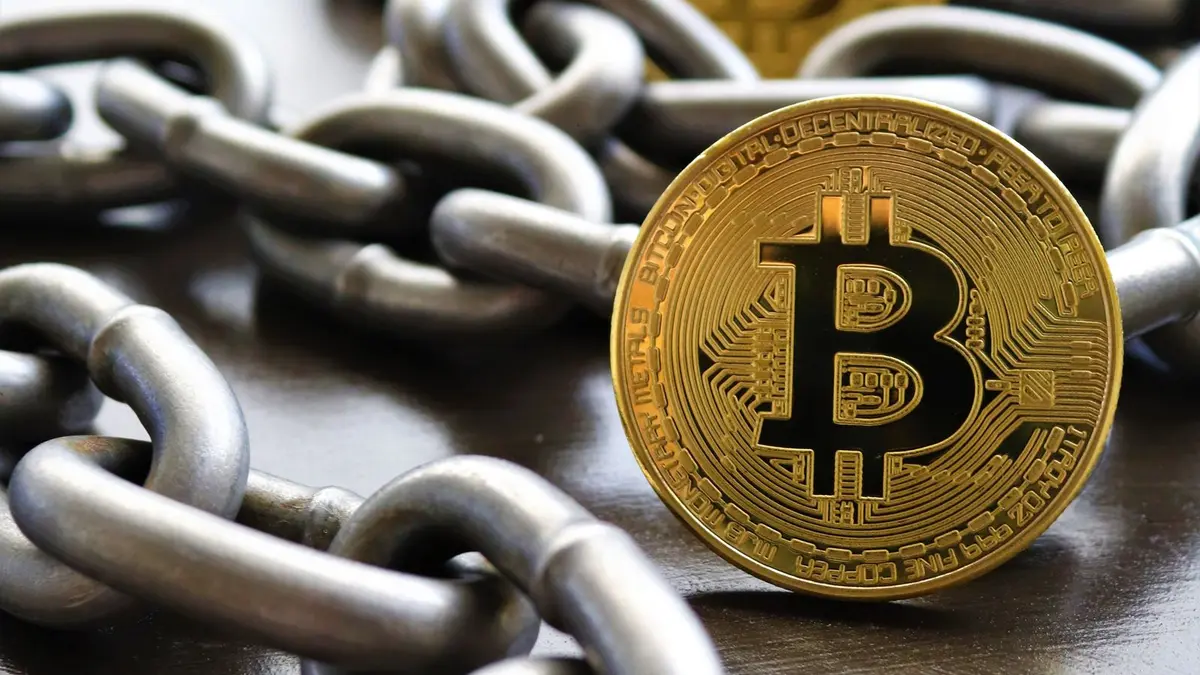
Cryptocurrency is digital money that moves without a bank in the middle. No institution approves the transfer, no central authority prints more of it, and no company takes a cut for processing it. A shared public record, checked by thousands of computers at once, does that job instead.
Bitcoin started the story. In late 2008, a person or group writing under the name Satoshi Nakamoto published a white paper describing electronic cash that could move between two people directly. The timing mattered. Banks had just nearly collapsed in the global financial crisis, and trust in the old system was low. Bitcoin’s supply is capped at 21 million coins, a limit written into its code from the start. That cap was a direct answer to a system where central banks can print more currency whenever they choose.
Today, more than 10,000 cryptocurrencies exist. Most of them are inactive, abandoned, or outright scams. A handful account for most of the real activity. Bitcoin remains the largest by a wide margin. Ethereum works differently: it is a platform where developers build applications, from smart contracts to decentralised finance tools. Most of the activity beyond simple buying and holding runs through Ethereum or a competing platform like it. Stablecoins, including Tether (USDT) and USD Coin (USDC), are pegged to the dollar, so one coin equals roughly one dollar.
How Does Blockchain Work?
Blockchain is the infrastructure, and crypto is one application of it. To understand how crypto works, start with the ledger underneath it. Owning cryptocurrency does not mean owning blockchain technology itself. Think of a blockchain as a ledger that thousands of computers share. Every transaction is grouped into a block, and each block links to the one before it. Once a block is added, changing it would mean changing every block after it on thousands of machines at once. That is what makes the record hard to tamper with.
Networks confirm transactions in different ways, but the goal is always the same: stop double spending and agree on the history. Bitcoin uses proof of work, where computers compete to solve puzzles and the winner adds the next block. Many newer networks use proof of stake, where validators lock up coins as a deposit and are chosen to confirm blocks. Validators check that the sender has enough funds and a valid digital signature before the data becomes permanent.
Fees matter too. You pay a small fee, often called gas, so validators process your transaction. Costs vary with network traffic. On a quiet day, a transfer can cost pennies. During a rush, the same transfer can cost far more. Beginners often learn this the expensive way.
What Are the Main Types of Crypto?
“Crypto” is not one thing. Coins run on their own networks. Tokens are built on existing networks. Stablecoins track a stable value like one dollar. NFTs represent ownership of a digital item. Utility tokens unlock a service inside an app. Each type carries different risks, and mixing them up is a common beginner mistake.
| Type | Example | What it does |
|---|---|---|
| Coin | Bitcoin, Ethereum | Runs its own network; used for payments, fees, or storing value |
| Stablecoin | USDT, USDC | Pegged to the dollar; used for trading and moving money |
| Token | Thousands exist | Built on another network; powers apps, games, or services |
| Governance token | UNI, AAVE | Lets holders vote on how a protocol changes |
| NFT | Digital art, collectibles | Represents ownership of a unique digital item |
Stablecoins deserve special attention because they are the practical entry point for most people. DeFiLlama put the stablecoin market at about $305 billion on 21 September 2026. Tether’s USDT held about 60% of that total, around $183 billion, with USD Coin at roughly $74 billion. Most stablecoin value never touches a DeFi protocol at all. It sits on exchanges or moves between wallets as a dollar substitute.
How Do Crypto Wallets Work?
A wallet does not store coins inside an app. It manages keys that control coins on the network. This is the single most misunderstood idea in crypto, and getting it wrong costs people real money.
Every wallet has two parts. A public address works like a receiving location, and you can share it freely. A private key authorises spending, and you must never share it. A recovery phrase, also called a seed phrase, is a list of 12 or 24 words that can recreate the keys and the wallet. Lose the recovery phrase and there is no reset button. No customer support team can restore it. If someone else gets your recovery phrase, they can drain your wallet, and the transfer cannot be reversed.
Which Wallet Should a Beginner Use?
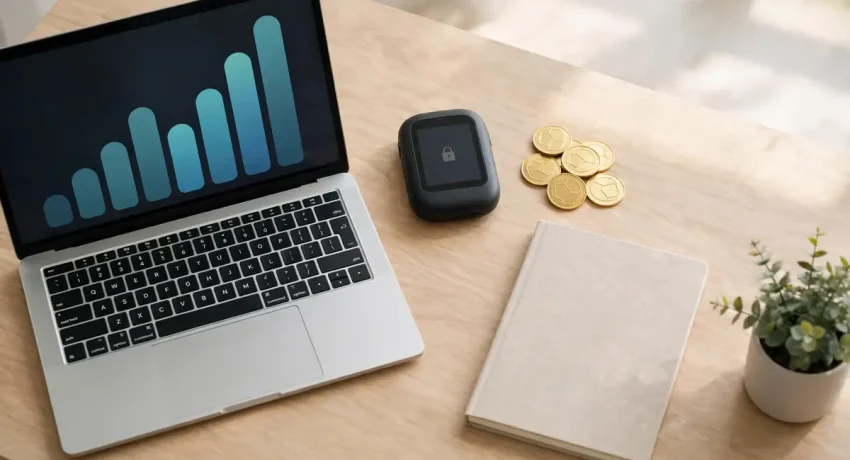
Hot wallets live on a phone or computer and connect to the internet. They are convenient for small amounts and everyday use. Cold wallets, usually hardware devices, stay offline and are safer for larger holdings. A sensible setup splits the two: a hot wallet for small, active amounts and a cold wallet for the rest. Write the recovery phrase on paper, store it somewhere safe, and never photograph it or save it in a cloud note. That one habit prevents more losses than any other.
Exchanges also hold crypto for you, but that is different from owning it yourself. When coins sit on an exchange, the exchange holds the keys. If the exchange fails, freezes withdrawals, or gets hacked, your access goes with it. History has repeated this lesson several times. Moving long-term holdings to a wallet you control is the standard advice for a reason.
How Do You Buy Cryptocurrency?
Most beginners start on crypto exchanges. A centralised exchange, often called a CEX, acts as an intermediary that lets you deposit ordinary currency and purchase crypto without much trouble. If you are wondering how to buy cryptocurrency for the first time, the steps below cover the whole process. You create an account, verify your identity, fund it, and place an order. Identity checks are legally required on regulated exchanges, so expect to upload a government ID and possibly a selfie. The process usually takes ten to fifteen minutes.
Funding works in two main ways. A bank transfer costs less but takes a few days to clear. A debit card is instant but comes with a higher fee. Once funded, you enter a dollar amount and buy. Many beginners choose major coins like Bitcoin and Ethereum first, while others start with stablecoins such as USDT or USDC.
What Is the Difference Between a CEX and a DEX?
A decentralised exchange, or DEX, lets you trade from your own wallet without relying on a central authority. No company holds your funds during the swap. Smart contracts handle the trade instead. Uniswap is the best-known example. On 10 September 2026, it recorded about $65.4 billion of trading volume over 30 days, roughly a quarter of all DEX volume.
For a beginner, a CEX is usually the simpler first step. A DEX offers more control and access to newer tokens, but it also demands more care: you approve transactions yourself, you pay network fees, and a wrong address means lost funds. In short, a centralized exchange holds your funds for you, while a decentralized exchange lets you trade directly from your wallet. Neither option is risk-free. The choice depends on how much control you want and how much responsibility you are ready to take.
What Is DeFi, and How Does It Work?
DeFi stands for decentralised finance. It rebuilds financial services as programs on a public blockchain, so lending, trading, and saving run through code that holds the money instead of a company that holds it for you. Everything else follows from that one substitution.
Lending is the clearest example. On a protocol like Aave, you deposit crypto as collateral and borrow against it. The loan is over-collateralised, because a contract cannot sue you if you fail to repay. If the collateral value falls too far, the code liquidates it automatically. There is no phone call and no grace period. Aave held about $18.1 billion in value locked on 10 September 2026, making it the largest lending protocol.
Trading works through liquidity pools. Instead of an order book, a DEX prices trades off a formula, and users who supply tokens to the pool earn a share of the trading fees. Yield comes from trading fees, borrowing demand, staking rewards, and token incentives. On 10 September 2026, that meant roughly 2.33% a year on staked ETH and 3.71% on supplied USDC, against a 13-week US Treasury bill at 3.90%. In other words, the “safe” on-chain returns were not beating a plain government bill.
How Big Is DeFi in 2026?
Smaller than the hype suggests, and still very real. DeFiLlama measured $87.5 billion locked across DeFi protocols on 10 September 2026, inside a 2026 range of $68.4 billion to $127.5 billion. That is well below the November 2021 peak of $177.5 billion. By 22 September 2026 the figure had risen to about $96.3 billion, roughly 3.3% of a $2.96 trillion crypto market. Ethereum holds more than half of the value, around 56%, and liquid staking is now larger than lending.
Two rules changed the landscape in 2026. The United States passed the GENIUS Act, which created a real rulebook for stablecoins. The European Union enforces MiCA, its own crypto framework. For the first time, businesses can ask which stablecoin is compliant in a given market and get a clear answer. Regulation has not removed the risk, but it has removed some of the guesswork.
Security remains the binding constraint. Across 301 DeFi protocol incidents in 2025 and 2026, DeFiLlama counted about $1.91 billion in losses, mostly from accounting bugs, broken access control, and cross-chain messaging flaws, not from the blockchain itself. Smart contracts compose: they call each other inside one transaction, which is why the ecosystem ships fast and why one failure spreads.
What Are the Risks of Crypto Finance?
Volatility comes first. Crypto trades 24 hours a day, seven days a week, all year. Daily moves of 3% to 15% are typical for many coins, compared with 1% to 3% for stocks. A position can move 20% against you while you sleep. Prices are driven by investor sentiment, institutional adoption, economic news, and regulation. Even small changes can cause large swings.
Crypto regulation is the second risk. Rules differ by country and change often. Some platforms require identity checks, some tokens are restricted in certain regions, and access can disappear with little warning. In 2026, crypto access depends on where you live. Plan for that reality instead of assuming every on-ramp stays open forever.
Crypto scams are the third risk, and they cause more beginner losses than market moves do. Most losses come from links, not from charts. Fake exchanges, fake support accounts, and fake investment platforms drain wallets every day. The technology can work perfectly and you can still lose money through a fake link, weak security, or signing an approval you did not understand.
How Do You Spot a Crypto Scam?
The numbers explain why this section matters most. The FBI’s Internet Crime Complaint Center received 181,565 cryptocurrency-related complaints in 2025, and reported crypto losses reached about $11.3 billion, up 22% on 2024. Crypto investment scams alone cost victims $7.2 billion. People aged 60 and over reported $4.4 billion of the crypto losses. The Federal Trade Commission found a similar pattern. Americans reported losing $15.9 billion to fraud in 2025. Investment scams were the most damaging category at $7.9 billion, with a median individual loss above $10,000.
Scammers use the same tricks again and again. Learn the pattern once and you will recognise it everywhere.
- Guaranteed returns. No real investment guarantees returns. The FTC puts it plainly: there are no guaranteed returns, and no investments without risks.
- Pressure to act now. A deadline that expires in hours is a pressure tactic, not a real offer.
- Crypto-only payment. Demands to pay only in crypto, gift cards, or wire transfers are a major warning sign.
- Stranger contact. Most crypto investment scams start on social media, often with a friendly stranger or a hacked friend’s account.
- Blocked withdrawals. A platform that lets you deposit easily but blocks withdrawals is almost certainly fake.
- No address or licence. A real financial business can be checked. If you cannot find a company record, a regulator, or an address, walk away.
- Returns that scale with deposits. Promises that bigger deposits earn bigger guaranteed returns are a classic Ponzi shape.
Before sending money anywhere, run three checks. Search the company name plus the word “scam” and read beyond the first page. Check whether the business is registered with a regulator, such as through Investor.gov in the United States. And never send crypto to an address given in a direct message. If something goes wrong, report it to the FBI’s IC3 at ic3.gov and to the FTC at ReportFraud.ftc.gov. Reports help investigators connect related cases.
How Do You Start Safely in 2026?
Start small and treat the first months as education, not income. Crypto should not be step one in anyone’s finances. An emergency fund, a budget, and paying off high-interest debt come first. Money you cannot afford to lose has no place in a market that can move 15% in a day.
Use a regulated exchange, turn on two-factor authentication, and move long-term holdings to a wallet you control. Crypto wallet security comes down to a few habits: two-factor authentication, a recovery phrase stored on paper, and never sharing your private key. Write down your recovery phrase on paper and store it safely. Never share it with anyone, including people who claim to be support staff. Real support will never ask for it.
Keep a simple rule for new opportunities: if you cannot explain how it makes money, do not put money in it. Yield that looks too good usually comes from token incentives that fade, from leverage that can wipe you out, or from a scheme that pays early users with later users’ deposits. None of those are a plan.
Finally, remember the name that started this guide. “Crypto Finance Sisidunia” has no verifiable platform behind it, and the honest answer is to say so. The crypto market in 2026 is real, large, and full of both genuine tools and genuine traps. Knowing the difference starts with checking what is real before you trust it with your money.
Frequently Asked Questions
Is Crypto Finance Sisidunia a real platform?
No verifiable evidence shows it is. There is no company registration, licence, address, founder, or official website that can be confirmed. The phrase appears only in spun blog content, and the one article that discusses it admits it is not a recognised entity.
What is the safest way for a beginner to buy crypto?
Use a regulated centralised exchange, verify your identity, fund the account by bank transfer to keep fees low, and start with a small amount. Move long-term holdings to a wallet you control, and store your recovery phrase on paper.
What is the difference between a coin and a token?
A coin runs on its own network, like Bitcoin or Ethereum. A token is built on an existing network and usually powers an app, a game, or a service. Stablecoins are a special type of token pegged to the dollar.
Can you lose crypto even if the technology works?
Yes, and most beginners do. Losses usually come from scams, fake links, lost recovery phrases, or signing approvals without understanding them. The blockchain can work perfectly while the person using it still loses everything.
Is DeFi safe in 2026?
DeFi is real but risky. About $96 billion was locked in protocols in September 2026, yet exploits caused roughly $1.9 billion in losses across 2025 and 2026. Smart contract bugs, not the blockchain itself, caused most of the damage. Treat every protocol as experimental until you understand its risks.
Should I invest in crypto?
This guide is educational only and is not financial advice. Crypto is volatile, lightly regulated in many places, and heavily targeted by scammers. Anyone considering it should first build an emergency fund, understand the risks, and only use money they can afford to lose.
This article is for general education only. It is not financial advice, and it does not recommend buying or selling any cryptocurrency. Crypto prices are volatile, rules vary by country, and scams are common. Always verify a platform through official records before sending money.