
Summer is coming. Your child has energy to burn, and you have a calendar to fill. A youth sports summer camp sounds perfect. But which one? And what will your child actually do all day? This guide answers both questions for one of the most popular options in the United States: i9 Sports summer camp. You will learn what the program is, what a camp day looks like, what it costs, and how to decide if it fits your child. No hype. Just the facts parents need.
What Is i9 Sports, Exactly?
i9 Sports is a youth sports franchise. It runs leagues, camps, and clinics for boys and girls across the United States. The company describes itself as the nation’s largest multi-sport provider focused solely on high-quality, community-based youth sports programs. It reports more than 5 million registrations in communities across the country.
Its leagues cover kids ages 3 to 14. Sports include flag football, soccer, basketball, baseball, t-ball, volleyball, lacrosse, tennis, and cheerleading. Some locations add multi-sport programs and after-school programs. Three rules shape every i9 Sports program. First, there are no tryouts. Every child can join, whatever their skill level. Second, the focus is fun and sportsmanship, not winning at all costs. Third, the schedule respects busy families. In most leagues, practice happens right before the game. That means one day per week, not four.
Parents who have used the program often point to the same things. The one-day-a-week format is easy to fit around work. Coaches teach skills without shouting. And the children get a jersey, a medal, and a real sense of belonging. That is the core idea. Sport should be fun first, and the rest follows.
What Does an i9 Sports Summer Camp Day Actually Look Like?
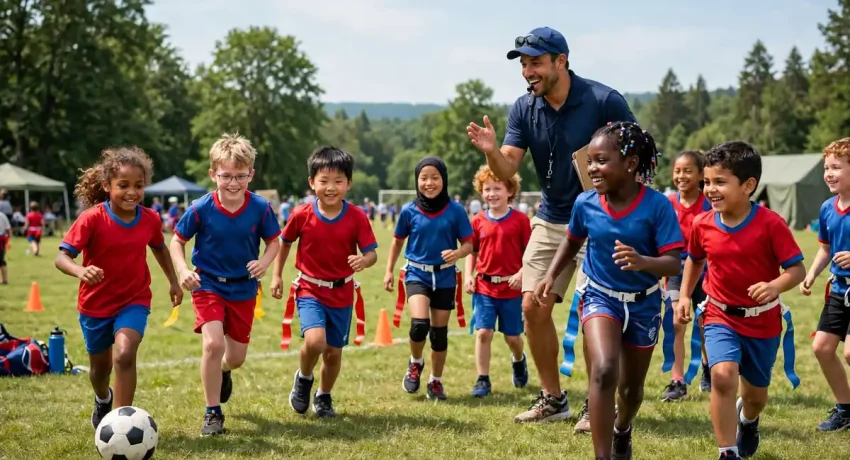
Summer camps come in two main forms. The best-known one is Nike Kids Camps powered by i9 Sports. These are multi-sport day camps for kids ages 5 to 12. Campers try a mix of sports during the week. Flag football, soccer, basketball, volleyball, and baseball are the core sports. The exact mix varies by location.
Age groups are kept separate. A 5-year-old does not train with a 12-year-old. Each age group cycles through the same sports, but the drills match the age. Younger kids focus on basic skills and fun games. Older kids, ages 9 to 12, also build flexibility, speed, endurance, and strength. Most of that work uses body weight. Light medicine balls appear now and then.
Camps run Monday to Friday. Many locations offer full-day and half-day options. Fridays are typically half days. A typical half-day camp runs about three to three and a half hours. One 2026 listing in Colorado, for example, runs half-day morning camps from 8:45 AM to 12:15 PM. An extended morning option runs 9:00 AM to 1:00 PM. Full-day camps usually run from about 9 AM to 3 PM. Check your local program for exact times.
One point matters for planning. i9 Sports runs day camps only. There are no sleep-away camps. Your child comes home every evening. For many families, that is a plus. It keeps the cost down, and it suits younger children who are not ready for a week away from home.
Which Sports Can Kids Try at i9 Sports Summer Camp?
The camp menu depends on your location, but the list below covers what most programs offer. Use it to match a camp to your child’s interests.
| Sport | What Kids Do | Typical Ages |
|---|---|---|
| Flag football | Throwing, catching, running routes, small games | 4–14 |
| Soccer | Dribbling, passing, shooting, small-sided games | 3–14 |
| Basketball | Ball handling, shooting, footwork, team play | 5–14 |
| Baseball and t-ball | Hitting off a tee or coach pitch, fielding, base running | 3–14 |
| Volleyball | Serving, passing, setting, short rallies | 7–13 |
| Lacrosse | Stick skills, passing, shooting, scrimmages | 7–14 |
| Tennis | Rallies, footwork, serving basics | 5–12 |
| Multi-sport | A mix of several sports across the week | 5–12 |
Youth flag football deserves a special mention. Participation has grown more than 25% since 2019, and a flag football summer camp suits children who like team games without tackling. Soccer is a great first sport for young children. A soccer summer camp for kids works well from age 3, and most camps keep the games small-sided so every child touches the ball.
Not sure which sport your child will like? The multi-sport camp is the safest first step. Kids sample everything, and by Friday they usually have a favourite. That beats guessing in advance and booking a full week of one sport they may not enjoy.
How Is a Summer Camp Different From a Summer League?
i9 Sports runs both camps and leagues in summer, and parents often mix them up. A camp is a week-long program, usually Monday to Friday. Kids try several sports and build basic skills. A league is a season. It runs for several weeks, often from just after school ends through late August. Kids play one sport, one day per week, with practice right before the game.
Which one fits your child? A camp suits a child who wants to try new sports, or a family that needs full-week cover during the holidays. Leagues suit children who already like one sport and want regular games. Many families do both. Camp in June, league through July and August. The two formats work well together.
What Does i9 Sports Summer Camp Cost in 2026?
Sports camp cost is the first question most parents ask. There is no single national price. i9 Sports is a franchise. Each local program sets its own prices. So always check the page for your nearest location before you budget. Still, published examples give a useful range. Kids summer camp prices vary widely by city and format, so treat the table below as a guide, not a quote.
| Program | Example Price | Notes |
|---|---|---|
| Nike Kids Camp, half-day week | $265–$275 | Denver-area listing, summer 2026 |
| Multi-sport half-day camp | $140 per week | Georgia listing, older season |
| League season, 8 games | About $140 | Parent account, Forsyth County, Georgia |
| Basketball academy | $120 for 25 sessions | Chicago listing |
| Typical big-city day camp | $400–$900 per week | Los Angeles guide, 2026 rates |
For comparison, sleep-away sports camps cost far more, often $1,500 to $3,500 or more per session. i9 Sports camps sit at the affordable end of that range. They are day camps, and they are built for local families.
What does the fee usually include? A camp T-shirt is common. League fees usually include a jersey and a sportsmanship medal or end-of-season award. Ask what is included before you pay. Extra costs can include cleats, shin guards, or a glove, depending on the sport. Some locations offer scholarships, so it is worth asking your local program. Early-bird pricing is common across youth camps, and registering early can save money.
What Do Kids Actually Gain From a Sports Camp?
The benefits of youth sports go beyond fitness. A good camp gives your child more than tired legs. The gains fall into four groups. First, physical skills. Kids run, jump, throw, and catch every day. Coordination and fitness improve fast at this age. Second, social skills. Team games teach children to share, to listen, and to work with others. Third, confidence. A child who could not catch a ball on Monday can catch one by Friday. That progress is visible, and it matters. Fourth, a love of movement. Children who enjoy sport young are more likely to stay active later.
Research backs the fun-first approach. The Aspen Institute’s Project Play initiative surveys thousands of young people about their sports experience. Its findings are clear. Kids say they play for their friends and for fun. Winning barely cracks the top five reasons. Chasing a scholarship does not come close. Fewer than 7% of high school athletes go on to play in college.
The same research warns about pressure. On average, children quit a sport at around age 12. The most common reason is simple: it stopped being fun. Bad coaching ranks high too. That is why a camp that puts fun first is not a soft option. It is the option most likely to keep your child playing.
One popular statistic deserves a correction. You may have heard that 70% of kids quit sports by age 13. Researchers at the Aspen Institute and Lasell University traced that number and found no clear primary source. It is outdated and unsupported. The real picture is more hopeful. Regular participation among kids ages 6 to 12 rose for three straight years through 2024, reaching its highest level since 2015. Flag football participation has grown more than 25% since 2019. Project Play’s goal is 63% youth sports participation by 2030, up from around 55% now.
Trying several sports also helps. A multi-sport camp builds a broad base of movement skills. Children who only play one sport from age six can burn out or pick up overuse injuries. Sampling different games keeps things fresh and builds a stronger all-round athlete.
How to Choose a Sports Camp for Your Child?
Start with your child, not the brochure. Ask what they want to do. A child who loves soccer will not enjoy a week of baseball drills. Shy children may prefer a small local camp to a huge regional one. Then check the practical points below.
- Age fit. Make sure the camp groups children by age. i9 Sports Nike Kids Camps serve ages 5 to 12, with age groups kept apart. That separation matters more than any facility.
- Coach quality. Research on youth sport is consistent. Coaching quality matters more than facilities, camp reputation, or price. Ask who will coach your child and what training they have. At some i9 Sports locations, coaches must complete an online training program and a background check before they can coach.
- Group size. Small groups mean more touches of the ball and more attention. A coach-to-athlete ratio above 15 to 1 is a warning sign.
- Schedule. Ask for the daily plan in writing. You should be able to see what happens each hour, not just a list of sports.
- Location and times. A camp near home with hours that fit your workday beats a famous camp an hour away.
- Safety. Ask about first aid, shade and water breaks, and the plan for extreme heat or storms.
- Cost. Compare the full cost, including gear and lunch, not just the headline fee.
If you can, visit first. Watch a session. Look at the coaches. Are they talking to the children, or shouting at them? Do the children look happy? Ten minutes on the sideline tells you more than any website.
What Should You Ask Before You Register?
Seven questions cover almost everything. Ask them by phone or email before you pay.
What Sports Will My Child Actually Play Each Day?
Get the real list, not the marketing list. Some camps advertise eight sports and only run four. Ask which sports run on which days, and how much time each one gets.
How Are Age Groups Split?
Ask for the exact age bands. A camp that mixes 5-year-olds with 12-year-olds is a bad sign. Good camps keep the bands tight and adjust the drills for each group.
Who Coaches the Camp, and What Training Do They Have?
Ask for names and backgrounds. Look for coaches with youth coaching experience, not just playing experience. Playing well and teaching well are different skills.
What Is the Coach-to-Child Ratio?
Small ratios mean more coaching per child. Anything above 15 children per coach should make you pause. For the youngest groups, even lower is better.
What Happens in Bad Weather or Extreme Heat?
Summer camps run in hot months. Ask about shade, water breaks, indoor space, and the heat policy. Summer camp safety for kids starts with a written plan for heat, storms, and first aid. A good camp has that plan ready, not a shrug.
What Is the Refund and Cancellation Policy?
Plans change. Children get sick. Ask what happens if you cancel, and whether you can switch weeks. Get the answer in writing before you register.
Is Lunch Provided, or Should I Pack One?
Some full-day camps include lunch. Many do not. One older i9 Sports listing told parents to pack a lunch each day. Check before the first morning, or your child will be hungry by noon.
What Should Your Child Pack for Camp?
Packing right makes the week smoother. Use this kids sports camp packing list as a starting point, and add anything your camp asks for.
- A large water bottle, filled and labelled with your child’s name
- Sunscreen, plus a hat for outdoor sessions
- Comfortable athletic clothes and a spare set
- Sports shoes, and cleats for field sports if the camp asks for them
- Shin guards for soccer, and a glove for baseball, if needed
- A packed lunch and snacks, unless the camp provides food
- Any medication, with written instructions for the coaches
- A small bag your child can carry on their own
Label everything. Lost water bottles are the most common camp casualty. A name on the bottle saves you buying a new one every week.
What Are the Red Flags to Watch Out For?
Most camps are fine. A few are not. Watch for these warning signs when you research any youth sports camp.
- No clear daily schedule, or a camp that cannot describe what a day looks like
- No information about who the coaches are or what training they have
- Groups larger than 15 children per coach
- Win-at-all-costs language, or pressure for young children to specialize in one sport
- No written safety, refund, or cancellation policy
- A price far above local norms with no clear reason for it
Trust your instincts too. If the camp feels chaotic on a visit, or the staff seem annoyed by questions, look elsewhere. Your child will spend a full week there. The people matter more than the logo.
What If There Is No i9 Sports Camp Near You?
i9 Sports runs programs in communities across the United States, but it does not cover every town. If the nearest location is too far, you still have good options.
- Nike Sports Camps. Run by US Sports Camps, the largest youth sports camp network in the country, with programs in more than 20 sports at hundreds of locations. These suit children who want deeper coaching in one sport.
- City recreation departments. Many parks and recreation departments run affordable summer sports camps. They are local, cheap, and easy to reach.
- School-run programs. Some schools open their fields and gyms for summer sports weeks. Ask at your child’s school office.
- Single-sport clubs. If your child loves one game, a local soccer, basketball, or baseball club may run its own summer camp.
To find the nearest i9 Sports program, use the program search on i9sports.com. Enter your ZIP code and it shows leagues, camps, and clinics near you. That is the fastest way to check dates, ages, and prices for your area.
Frequently Asked Questions
What Ages Can Join i9 Sports Summer Camp?
The Nike Kids Camps are a summer camp for kids ages 5 to 12. Wider i9 Sports leagues, camps, and clinics cover ages 3 to 14, depending on the sport and location. Age groups are kept separate so children train with peers at a similar stage.
Does My Child Need Experience to Join?
No. There are no tryouts, and all skill levels are welcome. The program is built for beginners as well as children who already play. Coaches focus on basic skills and fun games, not on cutting the weakest players.
Is i9 Sports Summer Camp a Sleep-Away Camp?
No. i9 Sports runs day camps only. Campers go home every evening. Full-day and half-day options are available at most locations, and Fridays are typically half days.
How Long Does a Camp Week Last?
Most camps run Monday to Friday for one week. You can usually book more than one week. Half-day camps run about three to three and a half hours a day. Full-day camps run from about 9 AM to 3 PM.
What Should My Child Wear to Camp?
Athletic clothes and sports shoes are the basics. Bring cleats for field sports if the camp asks for them. Pack a water bottle, sunscreen, and a hat. Label everything with your child’s name.
When Should I Register for Summer Camp?
Register early. Registration usually opens months ahead of summer, and popular weeks fill fast. Early-bird pricing is common, so booking early can also save money. Registration often closes the Friday before each camp week, but waiting that long risks missing out.
Summer only comes once a year. A week at a good kids sports camp can give your child new skills, new friends, and a summer they actually remember. Of all the youth sports camps 2026 offers, i9 Sports stands out for being local, affordable, and fun first. Check the program near you, ask the seven questions above, and let your child try a sport they have never played. That is what summer is for.
Sources: i9sports.com (Nike Kids Camps page); enrichment.kids program listings for i9 Sports; Macaroni KID local listings (Englewood, Lakewood, Duluth, Bradenton); US Sports Camps, “What Are the Best Summer Sports Camps for Kids in 2026?”; LA Summer Camps guide; Aspen Institute Project Play research via USA TODAY, April 2026; Oakland County Moms, “i9 Sports Summer Leagues 2026”. Prices are examples from published listings and vary by location. Check your local i9 Sports page for current rates.