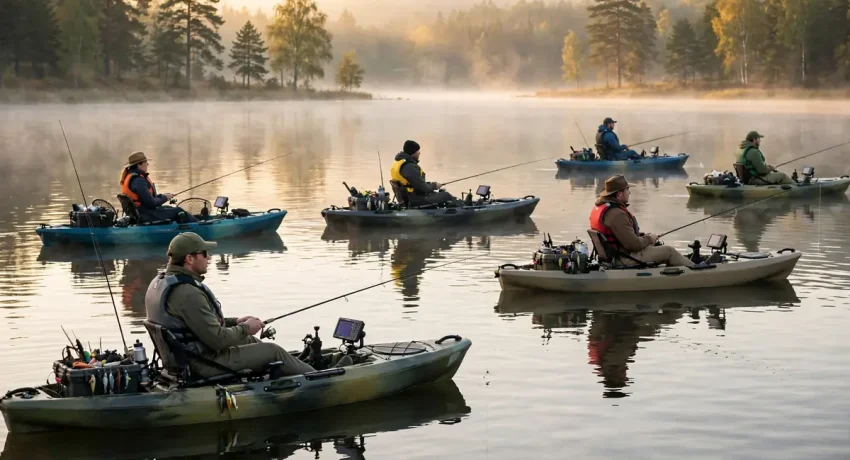

The lake is still. Mist hangs over the water. A dozen kayaks drift apart as the sun comes up, and every angler is already focused on the first cast. Nobody on the water is thinking about insurance. That is normal. Insurance only becomes interesting when something goes wrong, and at a fishing tournament, plenty can go wrong.
Kayak fishing tournaments have grown fast. Local club events now sit beside national series such as Kayak Bass Fishing and the Hobie Kayak Fishing Series. Entry fees, prize money, sponsors, and crowds have all grown with them. The risk has grown too.
This guide explains kayak fishing tournament insurance in plain language. It covers what organisers need, what individual anglers need, what policies cost in 2026, and the mistakes that leave people unprotected. Treat this guide as general information, not insurance advice for a specific person or event. A licensed broker can confirm what your event needs.
What Is Kayak Fishing Tournament Insurance?
There is no single product called kayak fishing tournament insurance. The name covers a stack of different policies that fit together. Each one protects a different person against a different risk.
For organisers, the core cover is event liability insurance. It pays when a third party is injured or their property is damaged because of the event. For anglers, the core covers are kayak and gear insurance, personal liability, and sometimes tournament fee reimbursement. A participant accident policy can sit between the two, paying small medical costs without a finding of fault.
Think of it as layers. The organiser’s policy protects the event. The angler’s policy protects the person and the kit. The waiver sits on top of both, and it is not a substitute for either one. The sections below take each layer in turn.
Why Did Tournament Insurance Suddenly Become a Big Deal in 2026?
For years, many small tournaments ran on a handshake and a waiver. That changed in 2025. In April that year, three men died in a boat collision during a Major League Fishing Tackle Warehouse Invitational tournament on Smith Lake, Alabama. The men were John K. Clark, Jeffrey C. Little, and Joey Broom. Professional angler Flint Davis was later indicted on three counts of manslaughter. Lisa Little, the widow of Jeffrey Little, filed a lawsuit against Major League Fishing.
That crash involved bass boats, not kayaks. Yet the shockwave reached every kind of fishing event. Writing in Wired2Fish, organisers described a wave of cancellations across Alabama. Tournament directors said they were scared to run events. They worried that one accident could cost them everything if their insurance was tested.
Kayak events are smaller and slower than bass boat events. The boats are lighter, the speeds are lower, and the fields are spread out. None of that removes the risk. Anglers still capsize, collide, and get hurt. Spectators still slip at the launch. A single claim can still close a small club. That is why organisers now ask harder questions about cover before they open entries.
Who Needs Cover at a Kayak Fishing Tournament?
Two groups need cover, and they need different things. The organiser carries the risk of the whole event. The angler carries the risk of one person and one kayak. Kayak tournament liability falls on both groups, but a policy that suits one rarely suits the other.
| Who | Main risk | Main cover |
|---|---|---|
| Organiser | Injury or damage caused by the event | Event liability insurance |
| Angler | Injury, gear loss, liability to others | Kayak, gear, and personal liability cover |
| Volunteers and staff | Injury while working the event | Covered under the organiser’s policy or workers’ cover — check first |
| Venue or landowner | Damage to their property | Named as additional insured on the organiser’s policy |
| Spectators | Injury at the launch or weigh-in | Covered under the organiser’s liability policy |
What Does Event Liability Insurance Cover for Organisers?
Event liability insurance is the foundation. It covers claims from third parties for bodily injury and property damage caused by the event. If a spectator trips over a cable at the weigh-in and breaks an arm, this is the policy that responds. The same policy responds if a volunteer’s trailer damages a dock.
Standard limits in the United States run to $1 million per occurrence and $2 million in aggregate. Per occurrence is the most the insurer pays for one incident. Aggregate is the most it pays across the whole policy period. Most venues ask for proof of cover at these limits before they let you use the site. Many also ask to be named as an additional insured, which means the venue gets protection under your policy for claims tied to the event.
Fishing tournament organiser insurance is usually bought as a one-day policy or an annual policy. A one-day policy suits a club that runs a single event. An annual policy suits a series that runs events all season. The cover is the same in principle. The difference is how often you buy it.
What Does a Standard Policy Leave Out?
A standard liability policy is narrower than most organisers expect. It does not cover cancellation or bad weather. Fishing tournament cancellation insurance is a separate purchase, and it often has a tight buying window. Some insurers will not sell it within 14 or 15 days of the event.
It does not cover your vendors, performers, or contractors either. They need their own certificates. It also does not cover participant injuries by itself. A separate participant accident policy handles that. The American Canoe Association (ACA) programme shows the same pattern. Its event insurance covers on-water activities only. Off-water activities and non-paddling sports are not covered, and the ACA will refer organisers elsewhere for those.
Read the exclusions before you buy. Wear and tear, gradual deterioration, and manufacturer defects are common exclusions on gear cover. Pollution, aircraft, and professional liability are common exclusions on liability programmes. If a risk matters to your event, confirm in writing that it is covered.
What About Participant Accident Cover?
Participant accident cover pays medical costs when an angler is hurt, without anyone having to prove fault. It is a different product from spectator liability. A liability policy asks who was to blame. An accident policy simply pays the bill, up to its limit.
Limits are modest. Some event policies include around $10,000 of medical payments cover. That will not pay for a major hospital stay. It will cover a clinic visit, stitches, or an X-ray after a fall at the launch. For a kayak event, where capsizes and hook injuries are the common accidents, that kind of cover is often the most-used part of the whole insurance stack.
Organisers should ask their broker whether accident cover is included or an add-on. Anglers should not assume it exists. Check the entry pack. If the tournament offers no accident cover, your own health insurance and personal accident cover become the safety net.
What Insurance Does an Individual Angler Need?
An angler’s needs are simpler than an organiser’s, but they are easy to get wrong. Kayak fishing insurance for one person is built from four covers: the kayak and gear, liability to other people, competition use, and the entry fee.
How Do You Insure a Fishing Kayak and Its Gear?
Start by adding up the real value. A fishing kayak with a pedal drive, a fish finder, a trolling motor, rods, and tackle can cost far more than the hull alone. Most homeowner policies include only a small watercraft sub-limit, commonly around $1,500. That limit often excludes theft away from home and damage in transit.
Kayak fishing equipment theft is the common claim. A kayak stolen from a truck bed or a roof rack is the scenario insurers see most. Damage while trailering or on the roof rack is also frequently excluded under home cover. Electronics are the most expensive and least covered items. If your kayak and gear are worth more than $1,500, a dedicated kayak policy is usually worth it. BoatUS offers specialised kayak and stand-up paddleboard cover, and other marine insurers offer similar policies.
List expensive items separately. Some policies ask you to specify any single item worth more than a set amount. In the United Kingdom, Angling Protect asks anglers to list items worth over £1,000. The same habit helps everywhere. Photograph your gear, keep receipts, and record serial numbers. A claim is far easier when you can prove what you owned. Kayak fishing gear insurance works best when the insurer knows exactly what it is covering.
Does Your Policy Cover Competition Use?
This is the trap most anglers miss. Many recreational policies exclude competitions and tournaments. The kayak fishing competition exclusion is easy to overlook because it sits in the fine print. A standard policy assumes you paddle for fun. A tournament is a different use, and insurers price it differently.
The fix is a competition endorsement. Tell the insurer you race, add the endorsement, schedule the race boat and paddles, and raise the liability limit for events. Carry proof of cover to the event. The Boat Insurance Authority’s 2026 guidance puts it plainly: disclose racing and add an endorsement, because standard policies frequently limit racing cover. Confirm it in writing before your first event of the season.
Boat insurance tournament fishing cover varies by insurer and policy. A standard boat policy is written for personal, recreational use. Some insurers include occasional tournament use automatically. Others restrict it or require disclosure. The only safe answer is the one in writing from your insurer. Ask before the season starts, not after a claim.
Travel insurance has the same gap. Rise & Shield, for example, covers kayaking on an amateur basis only. Its policy excludes competitions and tournaments. If you travel to an event abroad, do not assume your travel policy covers race day. Check the activity list and the exclusions.
What Is Tournament Fee Reimbursement?
Tournament fee reimbursement is a small but useful cover. If a covered claim keeps you from competing, it pays back your entry fee. Charter Lakes lists it as part of its fishing guide programme, alongside professional angler liability and equipment cover. Entry fees for big events can run into hundreds of dollars. Getting that money back softens the blow when a breakdown or an injury ends your weekend before it starts.
What About Personal Liability?
Personal liability covers you when you injure someone else or damage their property. A loose kayak in a car park, a cast that hooks a bystander, or a collision on the water can all lead to a claim. Individual angler policies in the United Kingdom commonly include £2 million of personal liability. Limits vary by country and insurer, so check your own policy. If you ever guide or carry paying passengers, a personal policy will not extend to that. Paid trips need commercial cover.
Professional angler liability is a related cover for people who earn from the sport. Charter Lakes describes it as cover for seminars, sport shows, and public events. If you run clinics, speak at shows, or appear as a sponsored angler, ask whether your policy includes it. A weekend angler rarely needs it. A working pro often does.
Do Waivers Replace Insurance?
No. A waiver and an insurance policy do different jobs. A fishing tournament liability waiver is a signed agreement in which the angler accepts the risks and releases the organiser from claims. Insurance is a promise to pay when a claim happens anyway. Waivers help. They do not pay legal bills.
Every major kayak series uses one. The kayak bass fishing waiver used by Kayak Bass Fishing (KBF) requires entrants to affirm they are 18 or older, declare they are fit to take part, and accept that the risk of injury is significant, including the potential for permanent paralysis and death. Entrants release KBF, its owners, officers, officials, and volunteer staff from claims, even when those claims arise from negligence. Long Island Kayak Bass Fishing uses a similar waiver. The Hobie Kayak Fishing Series in Australia does the same.
Some federations go further. The Bass Federation and FLW require boaters to certify that they hold property damage watercraft liability insurance with a reasonable limit, and to show proof on request. That is the model to copy. A waiver collects the angler’s agreement. Proof of insurance collects the angler’s cover. A well-run tournament asks for both.
Waivers have limits. A court can challenge one. A claim can still be filed, and the cost of defending it falls outside the waiver. That is what insurance is for. Treat the waiver as one layer, not the whole wall.
What Safety Rules Do Insurers Care About?
Insurers care about safety rules because safety rules reduce claims. Kayak PFD requirements start with federal law. Under United States Coast Guard rules (33 CFR § 175.15), every recreational vessel must carry at least one wearable, Coast Guard-approved personal flotation device (PFD) for each person on board. Children under 13 must wear one while the vessel is under way. An inflatable PFD only counts as a PFD if it is worn.
Most tournaments go further than the law. KBF and other series require a PFD to be worn at all times on the water. A PFD left in the hatch does not help anyone in a capsize. State rules can be stricter still. Many states require all paddlers to wear a PFD during cold-water months, from late autumn to late spring. Check the rules for the water you fish, not just the federal baseline.
Fishing tournament safety rules also shape the waiver. The KBF waiver asks anglers to leave the water and tell the tournament director if they see an unusual hazard. That kind of rule matters to an insurer. It shows the organiser runs a controlled event. A controlled event is a cheaper event to insure. Keep a written safety plan, brief your volunteers, and record your checks. Paperwork is dull, but it is what turns a good safety culture into a defensible one.
How Much Does Kayak Fishing Tournament Insurance Cost in 2026?
Prices vary widely, so treat every figure here as a published range, not a quote. Your event, your location, and your claims history will move the number. The table below gathers the ranges that insurers and brokers publish for 2026.
| Cover | Typical published range |
|---|---|
| One-day event liability (US, small event) | $75–$300 per event |
| Single-day event liability (US, general) | $100–$1,000 per event |
| ACA event insurance fee | $20 per event, plus $25 rush fee inside 10 business days |
| Outfitters and guides annual programme | Minimum premium $1,000 per year |
| One-off event liability (UK) | From £26.99 for one day |
| One-day event liability (Canada) | From $65 |
| Event liability funded from entry fees (example) | $15 of a $75 entry fee (Arizona Crappie Association, 2026) |
Several factors move the price. More anglers mean more risk. Extra days add more exposure. Alcohol, structures, and large crowds push the price up. A history of claims pushes it up further. Higher limits cost more, and lower deductibles cost more. The cheapest way to keep the price down is to run a tight event: clear rules, signed waivers, a safety plan, and no surprises for the insurer.
Buy early. Liability cover can often be bought the day before an event, and some insurers offer same-day binding for simple single-day events. Cancellation cover is different. Many insurers will not sell it within two weeks of the event. If you want weather cover, buy it when you book the venue, not when the forecast turns.
How Do You Buy It?
What Should an Organiser Do?
- Read the venue contract and the permit. Note the liability limit and whether the venue must be named as an additional insured.
- Count the anglers, the days, and the activities. Include set-up, pre-fishing, and the weigh-in.
- Get quotes at least 30 days before the event. The ACA needs 10 business days for a standard request.
- Choose the limits, add participant accident cover, and add cancellation cover if you need it.
- Collect a signed waiver from every angler. Keep the forms on file.
- Send the certificate of insurance to the venue and keep a copy with the tournament director.
What Should an Angler Do?
- Add up the value of your kayak, paddle, electronics, and tackle.
- Read your homeowner policy. Find the watercraft sub-limit and the theft-away-from-home exclusion.
- Tell your insurer you fish tournaments. Ask for a competition endorsement in writing.
- Schedule expensive items and raise your liability limit for events.
- Carry proof of cover to the event, on paper or on your phone.
What Should You Check Before You Buy a Policy?
Use this checklist before you pay for any policy. If the broker cannot answer a question, that is an answer in itself.
- Does the policy cover tournament and competition use by name?
- What are the per-occurrence and aggregate limits?
- Can the venue be named as an additional insured, and what does it cost?
- Is cancellation or weather cover included, or is it a separate purchase?
- Is participant accident cover included? What is the medical limit?
- Is gear covered in transit and when stolen away from home?
- Are expensive items scheduled, or capped at a single-item limit?
- What is the deductible, and does it apply per claim or per event?
- What are the exclusions — wear and tear, defects, pollution, professional liability?
- How fast can the policy be bound, and what is the rush fee?
What Mistakes Do Anglers and Organisers Keep Making?
The same mistakes appear again and again. Most of them come from assuming a policy covers something it does not.
Does Travel Insurance Cover Race Day?
Travel policies often cover kayaking as a holiday activity. They rarely cover competitions. Rise & Shield states the point clearly: activities are covered on an amateur basis only, and the policy excludes competitions and tournaments. Read the activity list before you travel.
Does Home Insurance Cover the Kit?
A homeowner policy is built for the home. Its watercraft sub-limit is small, commonly around $1,500, and theft away from home is often excluded. A tournament kayak with electronics can be worth several times that limit. Count the value, then buy the cover that matches it.
Is a Waiver the Same as Insurance?
A waiver is a legal agreement, not a fund. It does not pay medical bills or legal fees. A court can still challenge it. Insurance pays. A tournament needs both.
What Happens If You Hide Tournament Use?
Some anglers never tell their boat insurer they fish tournaments. That silence can void a claim. Insurers ask about use for a reason. Disclose it, get the endorsement, and keep the confirmation in writing. Boat insurers work with tournament anglers every day. The conversation is routine.
When Is Cancellation Cover Too Late to Buy?
Cancellation cover has a short buying window. Some insurers stop selling it two weeks before the event. Others will not issue it more than 24 months ahead. If weather cover matters, buy it early and read the triggers.
Frequently Asked Questions
Do I need insurance to fish a kayak tournament?
It depends on the event. Some tournaments require proof of liability cover before they accept your entry. The Bass Federation and FLW ask boaters to certify they hold watercraft liability insurance. Even when it is not required, cover protects you if you injure someone or damage their property. Check the entry pack before you pay.
Does my boat insurance cover tournament fishing?
Sometimes. A standard boat policy is written for personal, recreational use. Some insurers include occasional tournament use automatically. Others restrict it or require disclosure. The only safe answer is the one in writing from your insurer. Ask before the season starts, not after a claim.
Does travel insurance cover kayak fishing tournaments?
Usually not. Most travel policies cover kayaking as a leisure activity and exclude competitions and tournaments. Check the activity list and the exclusions in your policy documents. If race day is not listed, it is not covered.
How much does one-day event insurance cost?
For a small, low-risk event in the United States, published ranges start around $75 to $300 for a one-day liability policy with $1 million per occurrence. Larger events, alcohol, structures, and multi-day schedules push the price higher. In Canada, online programmes advertise from $65. One-off event cover in the United Kingdom starts from £26.99.
Does a waiver mean the organiser cannot be sued?
No. A waiver reduces the risk of a successful claim, but it does not prevent a claim from being filed. It also does not pay the cost of defending one. That is the insurer’s job. Waivers and insurance work together. Neither one replaces the other.
Is a life jacket required in a kayak tournament?
Federal law requires at least one Coast Guard-approved PFD on board for each person, and children under 13 must wear one while the vessel is under way. Most tournaments require every angler to wear a PFD at all times on the water. State rules can be stricter, especially in cold-water months. Wear it. A PFD in the hatch is not a PFD.
Sources: American Canoe Association event insurance guidance (americancanoe.org); Charter Lakes fishing guide insurance (charterlakes.com); RecLending Insurance Services on boat insurance and tournament fishing (reclendinginsuranceservice.com); Boat Insurance Authority competition kayak insurance and fishing kayak insurance guides, July 2026 (boatinsuranceauthority.com); Wired2Fish on tournament cancellations and liability (wired2fish.com); Arizona Crappie Association 2026 Spring Crappie Classic entry form (azcrappie.com); K&K Insurance outfitters and guides programme (insure.kandkinsurance.com); Kayak Bass Fishing waiver via TourneyX (tourneyx.com); Long Island Kayak Bass Fishing waiver (likbf.com); Hobie Kayak Fishing Series waiver (hobiefishing.com.au); Kentucky Bass Federation participant release (kybassfed.com); Angling Protect angler and guide insurance (anglingprotect.co.uk); Rise & Shield kayak travel insurance (riseandshield.com); SportsCover Direct deep sea fishing insurance (sportscoverdirect.com); Eventist event insurance in Canada (eventist.ca); LegalClarity on event insurance costs (legalclarity.org); 33 CFR § 175.15, personal flotation devices required (law.cornell.edu). This article is general information, not insurance advice.