
A tiny ring now promises to replace your watch, your sleep lab, and your fitness coach. It has no screen. There are no buttons at all. Yet it costs as much as a phone. And the internet cannot stop talking about it. Smart rings are the fastest-growing wearable category of 2026, yet most people who buy one have never held one. This guide cuts through the hype with verified numbers, real prices, and honest limits, so you can decide before you spend.
First, one honest note. If you searched for a single product called the KS Ring, you will not find one product to review. The name covers several unrelated things: a budget smart ring sold as the KSIX Saturn, a contactless payment ring that shut down in 2022, and handcrafted jewellery sold under similar names. There is no single KS Ring with one price, one app, and one set of specs. So this article does something more useful. It reviews the whole category, with the real products, the real prices, and the real evidence.
What Is a Smart Ring, Really?
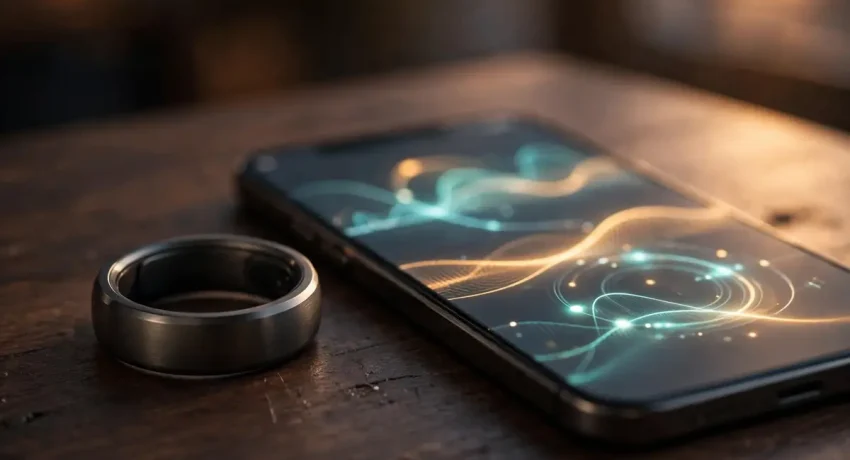
A smart ring is a finger-worn sensor. It packs light sensors, a temperature sensor, and a motion sensor into a band a few millimetres thick. From your finger, it reads blood flow and turns that signal into heart rate, heart rate variability, sleep stages, temperature changes, and step counts. Your phone does the thinking. The ring only collects.
The idea is simple. Your finger stays still at night, and its blood flow is steady. That gives cleaner readings than a wrist device that slides around while you sleep. The trade is also simple. There is no screen, no GPS, and no speaker. A ring cannot show you a map, play music, or take a call. It watches quietly and reports later.
| Feature | Smart ring | Smartwatch |
|---|---|---|
| Screen | None | Yes, full display |
| GPS | No | Yes, on most models |
| Sleep tracking | Strong, finger stays still | Good, but bulkier at night |
| Battery life | 3 to 8 days | 1 to 2 days, usually |
| Comfort at night | Easy to forget | Many people take it off |
| Notifications | None on the ring | Calls, texts, apps |
| Price range | About $299 to $499 | About $199 to $799 |
What Does the Hype Promise?
Marketing for smart rings promises a lot. It promises lab-grade sleep data, early illness warnings, stress scores, recovery scores, and a body that finally makes sense. Some of that is real. Much of it is a stretch. Here is what the promise usually includes.
- Sleep stages broken into light, deep, and REM, with a nightly score.
- Heart rate variability tracked through the night as a recovery signal.
- Skin temperature trends that can flag a fever or a cycle change.
- Readiness scores that tell you whether to train hard or rest.
- Step counts, calories, and activity goals without a screen.
- Blood oxygen readings during sleep.
Notice what is missing from that list. No real-time workout screen. A GPS route is missing too. Fall detection is absent on most rings. And there is no medical diagnosis. The hype rarely says that part out loud.
How Big Is the Smart Ring Market in 2026?
The smart ring market is small, fast-growing, and dominated by one company. That matters, because a market this concentrated behaves differently from the watch market. One company’s pricing, one company’s subscription, and one company’s patents shape the whole category. Every ring also runs on tiny chips, and the global chip shortage showed how fragile that supply chain can be.
IDC, the research firm, projects smart ring shipments to jump about 49% in 2026, far ahead of the roughly 6% growth projected for smartwatches. About 4.3 million rings shipped worldwide in 2025, up 49% on the year before. Compare that with about 163 million smartwatches. That is roughly one ring for every 38 watches. The category is booming, but it is still a niche.
Market size estimates vary by source, and you should treat them as estimates, not exact counts. IDC-based reporting puts the market at about $518.9 million in 2026, growing to about $3.77 billion by 2034. Persistence Market Research puts it at about $502.7 million in 2026, reaching about $2,506.5 million by 2033, a compound annual growth rate of 25.8%. The two firms disagree on the long-term total, but they agree on the direction. Growth is strong.
One number matters more than the rest. Oura, the Finnish maker of the Oura Ring, held roughly 79% of global smart ring shipments in the first quarter of 2026, according to Smart Analytics Global. In the first half of 2025, Oura held about 74%, with Samsung and Ultrahuman at about 9% each, according to Omdia. Four rings in every five carry one brand. North America accounts for about 69% of shipments. The category ships roughly 6 million units a year.
Who Actually Makes the Rings Worth Buying?
The honest shortlist is short. Oura leads. Samsung is the big-company rival. RingConn is the value pick. Ultrahuman is rebuilding after a legal fight. Everything else is a niche or a gamble. Here is the field as it stands in 2026.
| Ring | Price from | Subscription | Works with | Battery |
|---|---|---|---|---|
| Oura Ring 5 | $399 | $5.99 a month | iPhone and Android | Up to 8 days |
| Oura Ring 4 | $349 | $5.99 a month | iPhone and Android | 7 to 8 days |
| Samsung Galaxy Ring | $399.99 list | None | Android only | Up to 7 days |
| RingConn Gen 2 | $299 | None | iPhone and Android | Up to 12 days |
| Ultrahuman Ring Pro | Varies by finish | None required | iPhone and Android | Up to 10 days |
| KSIX Saturn Smart Ring | Budget tier | None | iPhone and Android | Up to 3 days |
What Does the Oura Ring 5 Offer?
The Oura Ring 5 is the category leader, and the numbers explain why. Launched in June 2026, it is slimmer than the Ring 4, with redesigned sensors. Pricing starts at $399, or $499 for premium finishes. The membership costs $5.99 a month or $69.99 a year. Oura sold 3.6 million rings in the twelve months to June 2026 and had 5.0 million paying members at 30 June 2026, double a year earlier. The company also filed confidentially for an IPO valuing it at about $11 billion.
That membership is the catch. Without it, the app shows only basic data. Sleep scores, readiness scores, and trends live behind the paywall. The membership is about 20% of Oura’s revenue and its highest-margin line. You are not just buying a ring. Instead, you are joining a subscription.
The Oura Ring 4 is still on sale from $349, often discounted. It shares the same new software as the Ring 5. For many buyers, it is the better value. You get nearly the same tracking for $50 less.
What Does the Samsung Galaxy Ring Offer?
The Samsung Galaxy Ring launched in July 2024 at $399.99. It delivers Samsung Health insights with no required subscription. That is its biggest advantage over Oura. In 2026, it has repeatedly sold for $299.99. The catch is compatibility. It works only with Android phones. iPhone owners cannot use it.
Samsung has not launched a second-generation ring. There was no Galaxy Ring 2 at its July 22, 2026 Unpacked event. Samsung has confirmed the Galaxy Ring 2 is in active development and is expected in early 2027, most likely alongside the Galaxy S27 series. A May 2026 report from Korean publication ETNews said it is virtually impossible for Samsung to ship the Ring 2 in 2026.
Part of the delay is legal. Oura filed a complaint with the US International Trade Commission in November 2025, alleging that Samsung infringed its smart ring patents. Samsung countersued. In July 2026, Samsung suffered a setback when the Patent Trial and Appeal Board ruled that Samsung failed to invalidate one of Oura’s key patents covering wearable ring design. Samsung challenged 11 Oura patents. Six were struck down, while five survived review. Samsung is appealing the remaining decisions.
What Happened to Ultrahuman and the Other Challengers?
Ultrahuman, the Indian maker of the Ring AIR, lost its US sales after an October 2025 import ban stemming from its patent loss to Oura. The Ring Pro has been selling since May 2026 after a redesign, but the Ring AIR is still barred in the United States. That is a warning. In a market where one company holds the key patents, challengers can vanish from a whole country overnight.
RingConn has become the leading independent challenger, according to Smart Analytics Global. The RingConn Gen 2 costs $299 and charges no monthly fee. It unlocks every core metric at purchase. Reviewers frame it as the lower-cost-of-ownership alternative to Oura. Its battery runs up to 12 days, longer than Oura’s.
At the budget end sits the KSIX Saturn Smart Ring, the product behind the “KS Ring” name in some listings. Its user manual lists a 15 mAh ring battery, a 200 mAh charging case, up to 3 days of battery life, a one-hour charge, IP68 and 5ATM water resistance, and a stainless steel and resin body. Pairing happens through the QRing app, and it comes in five sizes, even working as a camera remote. As a cheap way to try the category, it works, but its battery and sensors are a step below the leaders.
How Accurate Is a Smart Ring, Really?
This is the question the hype avoids. A smart ring is accurate at some things and shaky at others. The honest answer depends on what you measure and when you measure it.
Sleep tracking is the strongest case. A 96-person polysomnography study of the Oura algorithm found 76 to 91% per-stage accuracy, though the study was funded by Oura. Independent reviewers note that sleep staging was validated only on an earlier generation, the Gen 3, in Oura-funded studies. No independent check of the Ring 4’s sleep staging has been published. That does not mean the data is wrong. It means the strongest proof comes from the company selling the ring.
Smart ring heart rate data is strongest at night, when the finger is still and blood flow is steady. Heart rate variability is the second strong case. In one independent validation, Dial 2025, overnight recordings from 13 people across 536 nights showed the Oura Ring 4’s nighttime heart rate variability staying close to an ECG reference. Daytime readings drift under motion. That pattern holds across brands. At night, when the finger is still, the data is good. During a workout, it is less reliable.
Smart ring accuracy also depends on fit. A loose ring slides, and the sensor loses contact. A tight ring is uncomfortable and gets taken off. Sizing kits exist for a reason. Most brands send a free sizing kit before you order. Use it. Wear the test ring for a full day and night before you pick a size. How sensors are checked before they reach consumers is a whole field in itself, and our thermal testing technology guide explains how hardware gets validated under controlled conditions.
One more limit matters. A smart ring is not a medical device. Diagnosing sleep apnoea, heart disease, or any illness is beyond it. Still, it can flag a pattern worth showing a clinician. That is useful, but it is not a diagnosis.
What Does a Smart Ring Actually Cost?
The smart ring price you see on the box is not the price you pay over three years. Subscriptions change the maths, and Oura is the only major brand that charges one. The smart ring subscription is the hidden cost most buyers miss: $5.99 a month sounds small until you multiply it by 36 months.
| Ring | Upfront | Year 1 total | 3-year total |
|---|---|---|---|
| Oura Ring 4 | $349 | About $419 | About $565 |
| Oura Ring 5 | $399 | About $469 | About $615 |
| Samsung Galaxy Ring | $399.99 list, often $299.99 | $299.99 to $399.99 | $299.99 to $399.99 |
| RingConn Gen 2 | $299 | $299 | $299 |
The Oura membership costs $5.99 a month, which compounds to $71.88 a year. Over three years, that adds about $216 to the sticker price. The Samsung Galaxy Ring, the RingConn Gen 2, and the Ultrahuman Ring Pro unlock every core feature at purchase with $0 owed monthly. Only Oura charges a recurring fee. If the subscription bothers you, that fact alone may decide your purchase.
There is also a hidden cost. Rings cannot be resized. If your finger size changes, or you order the wrong size, you may need a replacement. Check the return policy before you buy. Most brands allow exchanges within 30 days, but the rules vary.
What Can a Smart Ring Not Do?
The list of limits is longer than the ads suggest. The smart ring disadvantages are just as clear as the benefits: no screen, no GPS, and no notifications. Knowing the limits before you buy saves disappointment.
- It cannot show notifications, maps, or messages. There is no screen.
- It cannot track GPS. Runs and rides need your phone or a watch.
- It cannot measure blood pressure accurately. Some rings claim it, but no major ring offers medical-grade blood pressure.
- It cannot detect falls or call for help on its own.
- It cannot replace a medical device. Sleep apnoea screening needs a clinical study.
- It cannot track workouts as precisely as a chest strap. Wrist and finger sensors both struggle with fast, intense movement.
- It cannot charge itself. Every ring needs a charging case or cable every few days.
None of this makes a smart ring useless. That makes it a specialist. At heart, it is a sleep and recovery tracker that happens to sit on your finger. Judge it on that job, not on the jobs it was never built to do.
Who Should Buy One, and Who Should Not?
A smart ring suits some people well and others not at all. The deciding factor is what you want to measure and what you already own. The smart ring benefits show up most clearly for people who want sleep data without a watch at night.
| You should buy one if… | You should skip it if… |
|---|---|
| You want sleep and recovery data without a watch at night | You want GPS, maps, or notifications on your wrist |
| You hate wearing a watch to bed | You train hard and need precise workout metrics |
| You want a discreet tracker for work or formal events | You need a medical-grade device for a health condition |
| You will actually check the data and change habits | You will wear it for a week and forget the app exists |
| You are fine paying a subscription, or you pick a no-fee ring | The monthly fee would annoy you every single month |
How Do You Pick the Right Size?
Smart ring sizing is the most common reason buyers end up unhappy. Fingers change size through the day. They swell in heat, shrink in cold, and change after exercise. A ring that fits in the morning may feel tight by evening.
Most brands ship a free plastic sizing kit. Wear the test ring on the finger you plan to use, usually the index or middle finger of your non-dominant hand. Keep it on for at least 24 hours, including a night’s sleep. It should slide on with slight resistance and sit snugly without pinching. A ring that spins freely is too loose. One that leaves a deep mark is too tight. When you are between sizes, most reviewers suggest going up. A slightly loose ring is more comfortable than a tight one, though a very loose ring hurts accuracy.
What About Battery Life and Water Resistance?
Smart ring battery life varies more than the ads suggest. Oura advertises up to 8 days for the Ring 4, and reviewers find 5 to 6 days with daily workouts and all features on. The Ring 5 is similar. Samsung’s Galaxy Ring lasts up to 7 days. RingConn’s Gen 2 runs up to 12 days. Budget rings like the KSIX Saturn last up to 3 days, with a charging case that can recharge the ring up to 13 times without a power connection.
Charging is quick. Most rings refill in about an hour. The habit that works best is charging while you shower. A short daily top-up beats a dead ring on a Friday night.
Smart ring water resistance is standard across the category. Most leading rings are water resistant to 100 metres, and budget rings carry IP68 and 5ATM ratings, meaning they survive swimming and daily water exposure. You can shower, swim, and wash your hands with a ring on. Hot tubs and saunas are a different matter. Heat can damage batteries and sensors, so most makers advise taking the ring off for saunas and hot tubs.
What Happened to the Rings That Vanished?
The smart ring market has a graveyard, and it teaches a useful lesson. Products can disappear, and when they do, the app and the data can disappear with them.
The K Ring, a contactless payment ring from K Wearables, is the clearest example. Early reviews praised its light weight and easy setup. Then the company struggled. Reviewers on Trustpilot, where the brand scores 1.3 from 55 reviews, report orders never delivered, support emails unanswered, and money lost. In July 2022, the payment provider Moorwand told customers it was shutting down the K Ring programme within two months. The website closed. Buyers who had loaded money onto the ring had to chase refunds.
The lesson is simple. A smart ring is only as good as the company behind it. Before you buy, check that the company is still trading, still updating its app, and still honouring warranties. A ring from a company with 79% market share is a safer bet than a ring from a brand you cannot find a year later.
Smart Ring vs Smartwatch: Which One Wins?
The smart ring vs smartwatch debate has no single winner. It depends on the job. A smartwatch does more. A smart ring does one job better and disappears while doing it.
If you want one device that does everything, buy a watch. It has GPS, a screen, notifications, apps, and fall detection. If you want the best sleep data with the least fuss, buy a ring. It is lighter, lasts longer on a charge, and you will actually wear it to bed.
Many people end up with both. They wear a watch during the day and a ring at night, or a ring every day and a watch for workouts. That is the most expensive answer, but it is also the most honest one. The two devices solve different problems.
For a closer look at how a leading wrist wearable compares, see our Apple Watch fitness guide for 2026. The watch remains the better all-rounder, while the ring wins on comfort and sleep.
Do Smart Rings Work?
Yes, within their limits. A good smart ring tracks sleep, resting heart rate, heart rate variability, and temperature trends well enough to spot patterns. It will show you that late meals lower your heart rate variability, that alcohol wrecks your recovery score, and that consistent sleep times improve your readiness. Those patterns are real and useful.
What it will not do is give you medical certainty. A single night’s score is noisy. Trends over 30 nights are meaningful. If you buy a ring, commit to wearing it for a month before you judge it. The value is in the trend, not in one morning’s number.
How Do You Get Value From a Smart Ring?
Buying the ring is the easy part. Getting value from it takes a routine. Here is a simple plan that works.
- Wear it every night for 30 days before you judge the data.
- Check your sleep and readiness scores each morning, at the same time.
- Change one habit at a time, such as an earlier bedtime, and watch the trend for two weeks.
- Charge it during your shower so it never dies overnight.
- Ignore single-day scores. Act on two-week trends.
- Export your data regularly, so you keep it even if the company changes its app.
Your ring syncs its data to the cloud, which is why your history survives even if you lose the ring itself. Our cloud computing guide explains how that kind of sync works behind the scenes.
Technology alone does not improve health. Behaviour does. The ring is a mirror, not a medicine. For the wider picture on how technology fits into daily life, our business technology solutions guide and digital transformation guide cover the tools that actually change how people work and live.
Frequently Asked Questions
Do smart rings work without a subscription?
It depends on the brand. Samsung’s Galaxy Ring, RingConn’s Gen 2, and the Ultrahuman Ring Pro unlock core features with no monthly fee. Oura requires a $5.99 a month membership for sleep scores, readiness scores, and trends. Without it, you see only basic data.
What is the best smart ring in 2026?
The best smart ring 2026 buyers choose most often is the Oura Ring 5, from $399, for the deepest sleep and recovery data. For value, the RingConn Gen 2 at $299 with no subscription wins. Among big brands with no fee, the Samsung Galaxy Ring is the pick, if you use Android.
Can a smart ring replace my smartwatch?
Not fully. A ring cannot show notifications, track GPS, or play music. It replaces a watch only for sleep and recovery tracking. Most people who switch keep a watch for workouts and daytime use.
How accurate is smart ring sleep tracking?
Smart ring sleep tracking is good but not perfect. A 96-person study of the Oura algorithm found 76 to 91% per-stage accuracy against polysomnography, though the study was funded by Oura. Independent validation of overnight heart rate variability is stronger. Treat nightly scores as trends, not lab results.
Can you wear a smart ring in the shower or pool?
Yes. Most leading rings are water resistant to 100 metres, and budget rings carry IP68 and 5ATM ratings. Swimming and showering are fine. Avoid saunas and hot tubs, where heat can damage the battery and sensors.
How long does a smart ring battery last?
Smart ring battery life ranges from 3 days on budget rings to 12 days on the RingConn Gen 2. Oura rings last 5 to 8 days in real use. Charging takes about an hour, and most people top up during a shower.
What Is the Bottom Line on Smart Rings?
The brutal truth is this. Smart rings work, but they work narrowly. They are excellent sleep and recovery trackers, mediocre workout trackers, and useless as phones. The market is dominated by one company that charges a subscription. The best ring costs $399 plus $5.99 a month. Meanwhile, the best value ring costs $299 with no subscription at all.
Buy a ring if you want sleep data without a watch at night and you will actually use the data. Skip it if you want GPS, notifications, or a medical device. And if a deal looks too good to be true, remember the rings that vanished. Check the company before you check the price. The hype is real. The limits are real too. Now you know both.
This article is educational only. Smart rings are consumer wellness devices, not medical devices. They cannot diagnose or treat any health condition. If you have a health concern, speak to a clinician.