
Nice is the French Riviera at its most generous. The sea is turquoise. The light is soft. The food is cheap and honest. And almost everything worth seeing sits within walking distance of one seven-kilometre promenade. This Nice France travel guide 2026 covers the top places to visit in Nice France, with verified 2026 prices, the best months to come, and a three-day plan that actually works.
Start with the honest truth. Nice is not a city of one famous sight. It is a city of small pleasures that add up. A morning market. A free viewpoint. A swim before lunch. A museum in a quiet garden. The places below are ranked by how much they give you for the time and money they cost.
| Who are you? | Start here |
|---|---|
| First time in Nice | Promenade des Anglais, Castle Hill, Vieux Nice |
| Art lover | Matisse Museum, Marc Chagall Museum, MAMAC |
| With kids | Castle Hill playground, Miroir d’Eau fountains, the beach |
| On a budget | Free viewpoints, free municipal museums, markets, picnics |
| Short on time | One day: Promenade, Castle Hill, Old Town, Place Masséna |
| Here for a week | Add Monaco, Èze, Cannes, Antibes and Villefranche-sur-Mer |
| Coming in February | Nice Carnival 2026, 11 February to 1 March |
Why Is the Promenade des Anglais the First Place to Visit in Nice?
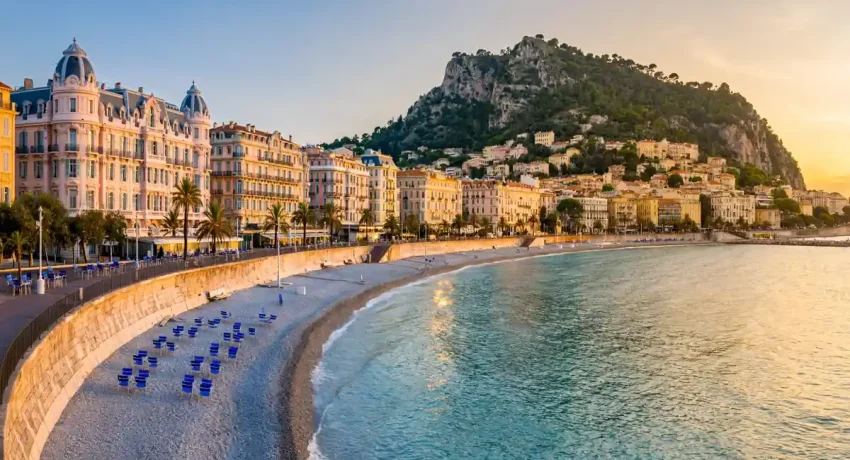
Every trip to Nice starts here. The Promenade des Anglais Nice is a seven-kilometre waterfront boulevard that curves along the Baie des Anges, the Bay of Angels. It has defined the city since English visitors funded its construction in the early nineteenth century. Walk it at sunrise and you will have it almost to yourself. At sunset you will share it with the whole city.
Look for the blue chairs. The chaises bleues are the promenade’s signature furniture. They face the sea in long rows. Sit in one. Nobody will hurry you. On the north side, grand Belle Époque facades line the street. The most famous is the Hôtel Negresco at number 37, with its pink dome. You do not need to stay there. Its bar is open to non-guests and worth a look.
The beach below is pebbles, not sand. That surprises first-timers. The water is clear and warm from June to October. Bring water shoes if you plan to swim. The closest free public beach to the Old Town is the Plage Publique des Ponchettes, near the Cours Saleya end. Private beaches like Castel Plage, at the foot of Castle Hill, charge for a sunlounger and umbrella. The sea is the same. Only the chair costs money.
How long should you allow? An hour for a stroll from the Old Town to the Negresco. Half a day if you stop for a swim and a coffee. The promenade is also the city’s running track, cycle path and evening meeting place. If you only do one thing in Nice, do this.
What Makes Castle Hill the Best View in Nice?
Castle Hill Nice, or Colline du Château, is the single best viewpoint in the city. The medieval castle itself is long gone. It was razed in 1706 on the orders of Louis XIV. What remains is one of the finest public parks in France. It is free and open daily. And the view from the top is the postcard.
From the terrace you see the whole curve of the Baie des Anges on one side. On the other side you look down over the red rooftops of Vieux Nice and the boats of Port Lympia. There is an artificial waterfall in the middle of the hill. There are shaded pine paths, a children’s playground, and the remains of the old cathedral. Allow 45 minutes to an hour.
How do you get up there? Climb the steep staircase from the Old Town, or take the free elevator near the Tour Bellanda. The climb is about 90 metres. The lift saves your legs for the rest of the day. The park opens at 8.30 am. It closes at 6 pm from October to March, and at 8 pm from April to September. Go at sunset in summer. The light on the bay is worth the crowd.
What Is Vieux Nice, and Why Should You Get Lost There?
Nice Old Town Vieux Nice is the pedestrian heart of the city. Its narrow lanes and Baroque facades sit between Castle Hill and Place Masséna. This is where Nice feels Italian. The city belonged to the House of Savoy for centuries. The architecture, the food and the pace of life still show it.
Start at Place Rossetti. The cathedral of Sainte-Réparate stands there, with its tiled dome. Then wander. The lanes are too narrow for cars. Every turn opens onto a small square, a bakery, or a shop selling olive oil and lavender. Do not rush. The Old Town rewards people who walk without a map.
Stop for socca. It is the food of Nice. A thin chickpea flatbread, cooked in a wood oven and eaten hot with black pepper. It costs a few euros. It is sold by weight at market stalls and in small shops around the Cours Saleya. Eat it standing up, like a local. This is Nice France food at its simplest and best.
What Can You Buy at the Cours Saleya Market?
The Cours Saleya market Nice is the city’s living room. It sits at the southern edge of the Old Town, a long square of striped awnings. It is ranked one of the most beautiful markets in France. Come in the morning, when the stalls are full and the light is good.
What is on sale? Flowers first. The flower market is the most famous part. Then fruit and vegetables, olives, spices, soap and lavender. On Mondays the food stalls give way to an antiques market. On summer evenings the square fills with restaurant tables. The market is free to wander. Buy a bag of olives, a socca, and a coffee. That is breakfast in Nice.
Two tips help. First, go before 10 am for the best produce and the fewest crowds. Second, bring cash. Many small stalls still prefer it. The market is also the best place to taste before you buy. Vendors expect it. A smile and a “bonjour” go a long way.
Why Is Place Masséna the Heart of the City?
Place Massena Nice is the city’s main square. It links the Old Town to the modern shopping streets. Its red buildings and black-and-white checkerboard pavement are unmistakable. The Fontaine du Soleil, with its statue of Apollo, stands at the centre. Seven statues perch on tall poles above the square. They glow at night.
From the square, walk north along the Promenade du Paillon. This is a green corridor of gardens that runs from the sea into the city. Its centrepiece is the Miroir d’Eau, a shallow reflecting pool with a grid of fountains. Children run through the jets in summer. It is free, and one of the best places in Nice with kids.
South of the square sits the Jardin Albert I. It is the oldest public garden in Nice. It has lawns, palm trees and sculptures. It is a good place to rest between the Old Town and the Promenade. Sit on a bench. Watch the trams cross the square. This is Nice at its most relaxed.
What Is the Matisse Museum in Cimiez Like?
The Matisse Museum Nice sits on Cimiez Hill, in a 17th-century Genoese villa surrounded by gardens. Henri Matisse lived in Nice for nearly 40 years. The museum holds one of the largest collections of his work anywhere. You will see early paintings, paper cut-outs, and the chapel designs from Vence.
How much does it cost? The museum is run by the city of Nice. All ten of the city’s municipal museums offer free admission to their permanent collections. That includes Matisse, MAMAC and the Museum of Fine Arts. A combined multi-day museum pass costs about €15. Check the current price at the museum door before you buy. It pays for itself if you visit three or more museums.
Allow 45 to 60 minutes inside. Then walk the Cimiez gardens. The Roman ruins of Cemenelum sit next door, with an archaeology museum on the same hill. Bus 5 and bus 15 both climb to Cimiez. Or walk up from the centre in about 30 minutes. The hill is gentle. The views over the city are a bonus.
Is the Marc Chagall Museum Worth a Separate Ticket?
Yes, if you like colour. The Marc Chagall Museum Nice is a small national museum in a low white modernist building. It was created during the artist’s lifetime. Its centrepiece is the Biblical Message: 17 large paintings that fill one calm, light-filled room. The stained-glass windows colour the walls as the sun moves.
Here is the catch. The Chagall museum is a national museum. It is not covered by the Nice municipal museum pass. You need a separate ticket. In 2026 the full price is €10 outside exhibition periods and €12 during exhibitions. Prices change from 1 April, so check before you go. Admission is free on the first Sunday of the month. Under-26s from the EU go free. The museum is closed on Tuesdays.
Hours matter. From 2 May to 31 October 2026 it opens 10 am to 6 pm. It closes for lunch from 1 pm to 2.30 pm. The garden and shop stay open during the break. Ticket sales close 30 minutes before the museum closes. Most visitors spend 60 to 90 minutes here. Reach it by bus 5, or by tram 1 to Gare Thiers and a 15-minute walk.
What Is MAMAC, and Who Will Love It?
MAMAC is the Museum of Modern and Contemporary Art of Nice. It sits on Place Yves Klein, a short walk from Place Masséna. Its collection covers art from the 1950s to today. Expect New Realism and Pop Art. Nice was home to Yves Klein and the Nouveaux Réalistes. This museum tells that story.
Who will love it? Anyone who likes bold, strange and playful art. The building itself is a landmark. Two towers face each other across a rooftop terrace. The terrace gives a 360-degree view of the city. It rivals Castle Hill, and it is free with the museum. MAMAC is municipal, so its permanent collection is free to enter.
Two more museums sit nearby. The Masséna Museum, in a Belle Époque villa on the Promenade des Anglais, tells the story of Nice itself. The Palais Lascaris, a Baroque palace in the Old Town, holds a collection of old musical instruments. Both are municipal and free for their permanent collections.
Where Are the Best Beaches in Nice?
Nice has no sandy beach in the centre. The shore is smooth grey pebbles. The water is clear, deep and blue. That is the deal. If you want sand, take the train 20 minutes east to Villefranche-sur-Mer or west to Antibes. Stay in Nice, and the pebbles are part of the charm.
Which beach should you pick? The Plage Publique des Ponchettes is the closest free beach to the Old Town. It is small and calm. Blue Beach and Ruhl Plage sit further west along the Promenade. They have restaurants and loungers for hire. Castel Plage, under Castle Hill, is the most popular private beach. It charges for a lounger and umbrella. Book in summer.
Three tips make the beach better. Bring water shoes. The pebbles hurt bare feet. Bring a towel, not a chair. The promenade’s blue chairs are free and a short walk away. And swim in the morning. The sea is calmest before the afternoon breeze. The water is warmest from late June to early October.
What Is the Russian Cathedral Doing in Nice?
Look up from the station and you will see onion domes. The Cathédrale Saint-Nicolas is the largest Russian Orthodox cathedral outside Russia. It was completed in 1912, when Nice was the winter home of Russian aristocrats. The domes are bright. The interior is dark and gold. It is one of the most surprising sights in Nice.
Why is it here? Nice was a winter resort long before it was a summer one. Wealthy visitors from Russia, Britain and northern Europe came for the mild winters. The cathedral was built for the Russian community. It still holds services. Visitors are welcome outside service times. Dress modestly. Photography inside is restricted.
The cathedral sits on Avenue Nicolas II, a 15-minute walk from the station. It is free to enter the grounds. The gardens are quiet and green. It is a good stop on the way to or from the Matisse Museum. The two are in the same part of the city.
How Do You Do a Nice to Monaco Day Trip?
Monaco is 20 minutes from Nice by train. The Nice to Monaco day trip is the easiest excursion on the Riviera. Trains run from Nice-Ville station every 20 to 30 minutes. A one-way ticket costs from about €5.50. Buy it at the station or on the SNCF app. The ride hugs the coast. Sit on the sea side.
What should you see in half a day? Start at the Prince’s Palace in Monaco-Ville, the old town on the Rock. The changing of the guard happens at 11.55 am. It is free to watch. Then walk to the Oceanographic Museum. It sits on the cliff edge and holds one of Europe’s oldest aquariums. The building alone is worth the visit.
Then go down to Monte Carlo. The casino square is free to visit from outside. Inside, the casino requires ID and a minimum age of 18. You do not need to gamble. Walk the harbour. Look at the yachts. Have a coffee on the square. Monaco is small. Four hours is enough. Return by train in the late afternoon.
One warning helps. Monaco is expensive. A coffee on the casino square costs several times the Nice price. Eat lunch in Nice before you go, or bring a picnic. The views are free. The food is not.
Is Èze the Prettiest Village on the Riviera?
Èze might be. This medieval village sits on a rocky peak 427 metres above the sea, between Nice and Monaco. Its stone lanes climb to the Jardin Exotique, a cactus garden with a view that stops people mid-sentence. Entry costs about €8. The panorama covers the whole coast from Italy to Saint-Tropez.
How do you get there? Take the train from Nice to Èze-sur-Mer station. It takes about 10 minutes. Then take bus 83 up the hill to the village. The bus is small and popular. Go early. Or take bus 112 direct from Nice. It is slower but simpler. An Eze village Nice day trip takes half a day.
What else is there? The village itself is the attraction. Stone houses, craft shops, and small restaurants with terraces. The famous Nietzsche Path drops from the village to the sea. The philosopher Friedrich Nietzsche walked it daily. It takes about an hour down. It is steep. Wear good shoes. Do not climb it up in summer heat.
What Can You See on a Cannes Day Trip from Nice?
Cannes is 30 minutes from Nice by train. A Cannes day trip from Nice costs about €7.60 each way. Trains run every 20 minutes from Nice-Ville. Walk the Croisette, the palm-lined waterfront. See the Palais des Festivals, home of the film festival. Climb to Le Suquet, the old town, for the best view over the bay.
When is Cannes busiest? During the film festival. The 79th Cannes Film Festival runs from 12 to 23 May 2026. Screenings are invitation-only. But anyone can watch the red carpet arrivals from the barriers. The Cinéma de la Plage shows classic films free on the beach each night. Hotels cost three to five times their normal rates during the festival. Visit the week after for the same Croisette at a normal price.
What if you want more? Antibes is 20 minutes west of Nice by train. Its Picasso Museum sits in the Château Grimaldi, where Picasso worked in 1946. The old town and Fort Carré are worth an hour. Villefranche-sur-Mer is 10 minutes east. Its harbour is one of the prettiest on the coast. Its beach is sandy. Both towns are easy half-day trips from Nice.
What Is the Best Way to See Villefranche-sur-Mer?
Take the train. Villefranche-sur-Mer is one stop east of Nice. The journey takes about 10 minutes. Walk down from the station to the harbour. The waterfront is a curve of ochre and pink houses. Fishing boats bob in the water. The Citadel of Saint-Elme stands at the eastern end. It is free to walk around.
Why come here? For the beach and the calm. Villefranche has one of the few sandy beaches near Nice. The bay is deep and sheltered. Cruise ships anchor here. The water is clear. Have lunch on the harbour. The seafood is fresh. The prices are lower than in Nice. Come in the morning. Leave after lunch. It is the easiest escape from the city.
When Is the Best Time to Visit Nice France?
May to June and September to October are the sweet spots. The best time to visit Nice France is late spring or early autumn. Days are warm. The sea is swimmable. The crowds are thinner. The top places to visit in Nice France shine brightest in these months. Hotel prices sit below the summer peak. This is when Nice feels like itself.
| Month | What to expect |
|---|---|
| January–February | Mild days around 13°C, quiet streets, Nice Carnival in February |
| March–April | Spring flowers, warming sea, good prices, occasional rain |
| May–June | Best overall: warm days, long light, sea warming up |
| July–August | Hottest and busiest, highs around 27–28°C, book everything early |
| September–October | Warm sea, golden light, harvest markets, fewer crowds |
| November–December | Cool and calm, Christmas markets, lowest hotel prices |
July and August are the warmest months. Daytime highs sit around 27 to 28°C. The city is full. Book hotels and restaurants well ahead. Winter is mild. Daytime temperatures hover around 13°C. Rain is possible but snow is rare. Couples planning a romantic trip will find the quiet months lovely; if you are weighing a honeymoon, our summer honeymoon guide pairs well with a Riviera stay. Autumn is underrated. The sea stays warm into October. The light turns golden. Our fall Europe guide explains why September and October suit city breaks so well.
What Does a Trip to Nice Cost in 2026?
Nice is not cheap. But it is cheaper than Paris, and much of the best of the city is free. The top places to visit in Nice France in 2026 include several free viewpoints, free museums and free beaches. That keeps the daily budget honest.
| Item | Typical range |
|---|---|
| Budget hotel or apartment | €80–€130 per night |
| Mid-range hotel | €150–€280 per night |
| Budget day (food, transport, one paid site) | €90–€140 per person |
| Mid-range day | €180–€280 per person |
| Socca and market lunch | €5–€10 |
| Café lunch in the Old Town | €15–€25 |
| Dinner in a good bistro | €30–€50 per person |
| 24-hour transport pass | €7 |
| Chagall Museum | €10–€12 |
| Day trip to Monaco by train | About €11 return |
All prices are typical planning ranges. Check before you book. The biggest saving is simple: walk everywhere, eat socca and market food at lunch, and use the free viewpoints. A picnic from the Cours Saleya market costs a few euros. The view from Castle Hill is free. That is the Nice way to travel.
How Do You Get Around Nice in 2026?
Walk first. The centre is flat and compact. The Promenade, the Old Town, Place Masséna and the museums are all within a 30-minute walk of each other. For longer trips, the tram and bus network is simple. A single ticket costs €1.70. It allows transfers for 74 minutes. A 24-hour pass costs €7. A 10-trip card costs €15 and can be shared. A 7-day pass costs €20.
From the airport, take tram line 2 or 3. Both connect the terminals to the city centre. An airport round-trip tram ticket costs €10. The ride takes about 25 minutes. Taxis from the airport to the centre cost far more. The tram is the smart choice.
For the whole region, the SudAzur Explore Pass costs €35 for three days. It covers buses and trams across the Alpes-Maritimes department and trains as far as Monaco. If you plan day trips to Monaco, Èze and Cannes, it can pay for itself. Check the current terms before you buy. Train tickets to Monaco and Cannes are cheap anyway. A Nice to Monaco day trip by train costs from about €5.50 each way.
Is the French Riviera Pass Worth It in 2026?
It depends on how many sites you visit. The French Riviera Pass gives free access to around 20 sites, museums and tours across the Riviera. Prices start from about €26 for 24 hours, €38 for 48 hours and €56 for 72 hours. Versions with transport cost more. Check the official site for the current price before you buy.
What is included? The Nice Le Grand Tour open-top bus. The little tourist train. The Villa Ephrussi de Rothschild. The Exotic Garden of Èze. The Oceanographic Museum in Monaco. The Grimaldi Castle in Cagnes-sur-Mer. Public transport is not included, except the tourist bus and train named above. You can add a Lignes d’Azur transport ticket: €7 for one day, €13 for two days, €20 for seven days.
Is it worth it? Do the maths. The Nice Le Grand Tour alone costs €24 for one day, or €28 for two days. Villa Ephrussi costs €18. If you visit three or four included sites in two days, the pass saves money. Travellers who mostly walk, swim and visit free museums should skip it. The free municipal museums and the free viewpoints are the better deal for slow travellers.
What Is the Nice Carnival, and When Is It in 2026?
The Nice Carnival is the largest winter event on the Riviera. Nice Carnival 2026 runs from 11 February to 1 March. The theme is “Vive la Reine!” — Long Live the Queen. It is the 152nd edition. For the first time in its 200-year history, the Carnival is governed by a woman. More than 200,000 spectators attend.
What happens? Daytime parades and night-time illuminated parades fill Place Masséna. The Flower Battles throw more than 100,000 flowers to the crowds. Giant heads up to 20 metres tall roll through the streets. The Carnival ends on 28 February with the burning of the King and a fireworks show. The closing ceremony is on 1 March.
What do tickets cost? Many events are free. Parade tickets cost from about €5 to €40. Standing tickets start at about €7. Flower Battle tickets start at about €14. Anyone in full costume gets free entry to the parades. A mask alone does not count. February is also a good month for a city break in general; our February guide covers where else to go that month.
What Does a Nice Itinerary 3 Days Look Like?
Three days is the perfect length for Nice. A Nice itinerary 3 days gives you the city plus one day trip. Here is a plan that works.
Day one: the seafront. Walk the Promenade des Anglais in the morning. Climb Castle Hill before lunch. This single walk covers the top places to visit in Nice France for first-timers. Spend the afternoon in Vieux Nice and the Cours Saleya market. Eat socca. Watch the sunset from the Castle Hill terrace or the Ponchettes beach.
Day two: art and gardens. Visit the Matisse Museum in the morning. Walk to the Chagall Museum. Spend the afternoon at MAMAC and the Promenade du Paillon. Cross Place Masséna at dusk, when the statues light up. Many travellers pair Nice with Paris on a longer France trip; our Paris guide covers the capital the same way.
Day three: the coast. Take the train to Monaco in the morning. See the palace and the Oceanographic Museum. Or choose Èze for the village and the garden. Or Cannes for the Croisette and Le Suquet. One day trip is enough. The train back is 20 to 30 minutes. Dinner in the Old Town ends the trip well.
Is Nice Safe for Tourists?
Nice is generally safe for tourists. The main risk is pickpocketing. It happens on crowded trams, at markets, and around the station. Keep your bag closed and your phone in a front pocket. The Old Town is safe at night. The Promenade is busy and well lit until late.
Women travelling alone will find Nice easy. The city is walkable, the trams are reliable, and the main sights are in busy areas. Our guide for single women travellers has practical tips that apply here too. For a wider view, see our safest places outside the US list, which includes France. As anywhere, check your government’s current travel advice before you go. Keep copies of your passport separate from the original.
What Should You Eat in Nice?
Nice has its own cuisine. It is simple, sunny and cheap. Start with socca. The classic chickpea flatbread is cooked in a wood oven and eaten hot with black pepper. It costs a few euros. It is the soul of the city.
What Is Nice France Food Socca?
Socca is a thin flatbread made from chickpea flour, water, olive oil and salt. It is baked in a copper pan in a fierce oven. The edges go crisp. The middle stays soft. It is cut into pieces and eaten with black pepper. You will find it at the Cours Saleya market and in small shops across the Old Town. Eat it hot, standing up.
What else should you try? Salade niçoise: tuna, eggs, green beans, tomatoes and olives. Pissaladière: an onion tart with anchovies and olives. Ratatouille: the vegetable stew that comes from Nice. Tourte de blettes: a sweet chard pie that sounds strange and tastes wonderful. Daube niçoise: beef slow-cooked in red wine.
Where should you eat? The Old Town has the best small restaurants. Avoid the places with picture menus on the Promenade. Walk one street back. Look for a full room of locals. Lunch menus are the best value. A two-course lunch in a good bistro costs far less than dinner. Drink the local rosé. It is made for this light.
Frequently Asked Questions
How many days do you need in Nice?
Three days is ideal. One day covers the Promenade, Castle Hill and the Old Town. A second day covers the museums. A third day covers a trip to Monaco, Èze or Cannes. Two days works if you skip the day trip. One day gives you a taste, not the city.
Is Nice expensive?
It is mid-range for Western Europe. Hotels are the biggest cost. Food can be cheap. Socca, market lunches and picnics keep daily spending low. Many of the best sights are free. A budget of €90 to €140 per person per day is realistic.
Can you swim in Nice?
Yes. The sea is clean and warm from June to October. The beaches are pebbles, so bring water shoes. The public beaches are free. The best swimming is in the morning, before the afternoon breeze.
Do you need a car in Nice?
No. The centre is walkable. Trams and buses cover the city. Trains reach Monaco, Cannes, Antibes and Menton. A car is only useful for the hill villages of the pre-Alps. Parking in Nice is expensive and scarce.
Is Nice good for families?
Yes. Nice with kids works well. Castle Hill has a playground. The Miroir d’Eau fountains entertain small children for free. The beach is a short walk from everywhere. The Phoenix Park has a zoo and greenhouses. The trams are easy with a stroller.
What is the best month to visit Nice?
May and September are the best months. The weather is warm. The sea is swimmable. The crowds are smaller than in July and August. Prices are lower. If you want the Carnival, come in February.
Nice rewards slow travel. The top places to visit in Nice France are not grand monuments. They are a promenade, a hill, a market and a museum garden. Give them time. Sit in a blue chair. Eat socca with your hands. Watch the light change over the bay. That is the trip. For more ideas in the same spirit, see our most interesting places in the world guide.