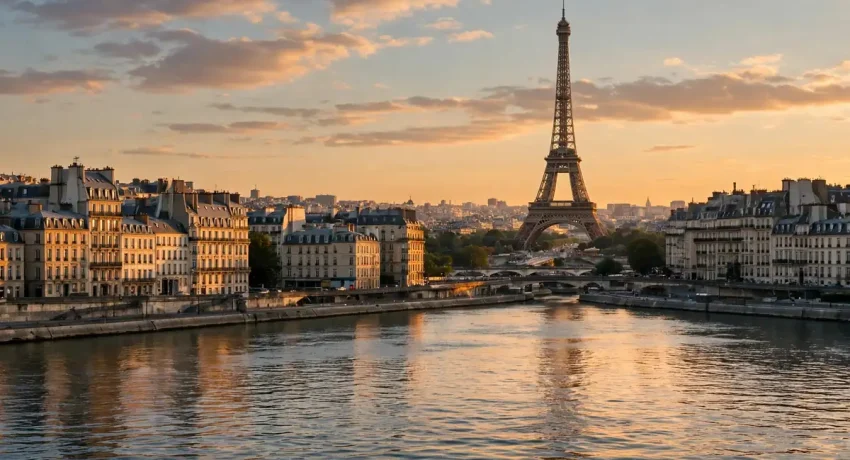

Paris does not need an introduction. It needs a plan. The city packs the Eiffel Tower, the Louvre, Notre-Dame, Montmartre and the Seine into a walkable centre, yet every one of those places runs on timed tickets, queues and opening hours in 2026. Show up without a booking and you will spend your trip in lines. Book the right things in the right order and Paris feels easy. This Paris travel guide 2026 covers the best places to visit in Paris in 2026 with verified prices, honest warnings about what is closed, and a working three-day plan. Paris sits near the top of almost every list of the most interesting places in the world to visit in 2026, and after a week here you will understand why.
Which Paris Is Right for You?
Paris rewards travellers who pick a pace before they land. The city has a different face for each kind of trip, and the table below matches the plan to the person.
| Traveller | Start here | Skip for now |
|---|---|---|
| First visit, 3 days | Eiffel Tower, Louvre, Notre-Dame, Seine cruise | Versailles on day one |
| Art lover | Louvre, Musée d’Orsay, Sainte-Chapelle | The big bus tour |
| Couple | Montmartre at sunset, Seine at night, Luxembourg Gardens | Rushing five sights a day |
| Family with kids | Eiffel Tower, Luxembourg Gardens, Seine cruise, Jardin des Plantes | Long museum marathons |
| Budget traveller | Notre-Dame, Sacré-Cœur, parks, covered passages | Summit tickets at peak hours |
| Slow traveller | Le Marais, Latin Quarter, Canal Saint-Martin | The checklist sprint |
Four days is the honest minimum for a satisfying first visit. Three days works if you book every timed ticket before you fly. Two days means choosing between the tower and the Louvre, not doing both well. Paris with kids works best at a slow pace, with one big sight in the morning and a park in the afternoon.
What Makes the Eiffel Tower Worth the Queue?
The Eiffel Tower opened in 1889 for the World’s Fair. It stands 330 metres tall, weighs about 10,100 tonnes of iron, and has 1,665 steps to the summit. That makes it the first stop on any list of the best places to visit in Paris. Nearly seven million people go up every year, which is why the ticket you choose matters more than the tower itself. Book online before you travel. Slots sell out three to four weeks ahead in peak season.
Which Eiffel Tower Ticket Should You Buy in 2026?
Eiffel Tower tickets 2026 run from €14.80 for the stairs to the second floor, €23.50 by lift to the second floor, €28.00 for the summit by stairs then lift, and €36.70 for the summit by lift all the way. Since 29 September 2026, stairs tickets also need an advance reservation. That used to be the easy walk-up option, and it is gone. Lift tickets go on sale up to 90 days ahead, stairs tickets up to 60 days ahead.
Most first-time visitors should book the summit by lift. The second floor is lovely, yet the summit is the view you came for. If the summit is sold out, take the second floor and book a Seine cruise for the skyline instead. Bring ID that matches the name on a named ticket, because staff do check it.
When Is the Best Time to Go Up?
Sunset is the golden slot. You watch the city turn gold, then the lights come on, then the tower sparkles for five minutes every hour on the hour after dark. Morning is the quietest time and the best choice with children. Midday is the worst time: the longest queues and the flattest light. Trocadéro, across the river, gives the classic straight-on photo. Champ de Mars, on the tower side, is better for a picnic with the ironwork above you.
Allow two to three hours for the visit, including security and lifts. The nearest metro stations are Bir-Hakeim and Trocadéro. If you are planning a romantic evening, this is the moment to pair with a summer honeymoon style dinner cruise on the Seine afterwards.
How Do You Beat the Louvre in 2026?
The Louvre is the largest art museum in the world, and one of the best places to visit in Paris for art lovers, with about 35,000 works on display. Nobody sees it all. The trick is to pick three wings and stop. Most visitors head straight for the Mona Lisa in the Denon wing, and that room is the most crowded space in the museum. Go there first, at opening time, or last, in the final hour.
Louvre tickets 2026 changed, and the change catches many travellers by surprise. Since 14 January 2026, a standard timed ticket costs €22 for visitors from the European Economic Area and €32 for everyone else. That is a 45 percent rise for non-European visitors. The extra money funds a €1.1 billion renovation plan called Louvre New Renaissance. Entry stays free for under-18s and for under-26s from the EEA, and the museum is free for everyone after 6 pm on the first Friday of the month, except in July and August. The Louvre is closed on Tuesdays.
Book a timed slot on the official site. Enter through the Carrousel du Louvre shopping entrance for a shorter queue than the glass pyramid. Pick a route before you arrive: Denon for the Mona Lisa and Italian painting, Sully for Egyptian antiquities, Richelieu for French sculpture and the Napoleon III apartments. Three hours is enough for a first visit. Six hours is enough to feel tired, not cultured.
What Is Notre-Dame Like After the Fire?
Notre-Dame Cathedral reopened on 8 December 2024, more than five years after the fire of 15 April 2019 destroyed its roof and spire. The stone is clean, the light is bright, and the cathedral feels new in a way that surprises people who remember the old, soot-dark interior. Entry is free. A free online time slot is optional and saves queueing in busy months.
Inside, look up at the rebuilt timber roof and the restored organ, then walk the ambulatory for the chapels. The towers are a separate ticket at €16, booked online only, with 424 steps and no lift. A €5 entrance fee was floated by the culture minister in 2024, but the cathedral still describes entry as free, so check the booking page before you go. The square in front, the Parvis, is the best place to take in the facade, and the bridge just downstream gives the classic river view of the cathedral.
Why Does Montmartre Feel Like a Village?
Montmartre Paris sits on a hill in the north of the city, and its lanes feel nothing like the grand boulevards below. Artists have worked here since the late 1800s, and the Place du Tertre still fills with portrait painters every morning. The Sacré-Cœur basilica crowns the hill at 130 metres, the highest point in the city. Sacre-Coeur Paris is free to enter. It was built between 1875 and 1914 and consecrated in 1919, all in white travertine stone that stays bright in any weather.
Come for sunset, when the steps fill with people and the whole city turns pink below you. Then walk down through the village streets: Rue des Saules and its vineyard, the pink house called La Maison Rose, the cafés of Rue Lepic. Avoid the string sellers and shell-game operators around the basilica steps, and keep your bag in front of you. The funicular up the hill costs one metro ticket, and the stairs beside it are free if your legs are willing.
Is Sainte-Chapelle the Best Hour You Will Spend in Paris?
Sainte-Chapelle sits a short walk from Notre-Dame on the Île de la Cité, and many visitors call it the most beautiful room in Paris. It was built in 1248 to hold holy relics, and its upper chapel is wrapped in 15 stained-glass windows telling 1,113 biblical scenes. On a sunny morning the whole room glows blue, red and gold.
Sainte-Chapelle Paris tickets cost €16 for EEA visitors and €22 for everyone else in 2026, and entry is by timed slot, so book ahead on the official ticketing page. EU residents under 26 enter free. Go on a bright morning, when the sun hits the glass, and allow one hour. The Conciergerie, the old royal palace and prison next door, sells a combined ticket if you want the full island story.
Should You Choose the Musée d’Orsay Over the Louvre?
Yes, if you love the Impressionists. The Musée d’Orsay holds Monet, Van Gogh, Renoir, Degas and Cézanne inside a former railway station, and it is a far calmer visit than the Louvre. The building itself is part of the show: a great glass clock face looks out over the Seine, and the main hall still feels like a station concourse. Entry costs €16 in 2026.
Start on the top floor with the Impressionists, then work down through Van Gogh and Gauguin to the sculpture hall. Two hours is enough. Musee d’Orsay tickets cost €16 in 2026. The museum café behind the clock is one of the prettiest lunch spots in Paris. If you can only visit one big museum, pick the Louvre for scale and the Orsay for joy.
What Do You See from the Arc de Triomphe?
The Arc de Triomphe stands at the western end of the Champs-Élysées, and its terrace gives the best 360-degree view in Paris. Twelve avenues radiate from the square below, and from the top you can trace the whole axis of the city: the Louvre, the Tuileries, the Concorde obelisk, the Eiffel Tower. The arch was built between 1806 and 1836, and the Tomb of the Unknown Soldier burns beneath it.
Arc de Triomphe Paris tickets cost €16 from October to March and €22 from April to September in 2026. The lift is out of service, so the terrace is a 284-step climb. Use the underground passage to reach the arch, never try to cross the traffic circle on foot. Sunset is the best time, when the Champs-Élysées lights come on in a straight golden line.
Is a Seine River Cruise Worth It?
Yes, especially on your first afternoon. A one-hour cruise passes Notre-Dame, the Louvre, the Musée d’Orsay and the Eiffel Tower without any walking, which is exactly what you need after a flight. Seine River cruise Paris tickets start from about €17 in 2026, with commentary in many languages. Evening cruises are the romantic choice, when the bridges and monuments light up.
Book a simple one-hour sightseeing cruise, not an expensive dinner cruise, unless the meal is the point. The boats leave from the Eiffel Tower, Pont Neuf and other piers along the river. In summer the Seine is swimmable again at supervised spots, a first since the 1920s, although the cruise is the way most visitors will enjoy the river. Pair the cruise with a walk along the quays afterwards: booksellers, painters and picnics line the banks, and the whole stretch is a UNESCO World Heritage site.
Where Do Parisians Actually Spend a Sunny Afternoon?
In the Luxembourg Gardens, on a green metal chair with a book. The gardens cover 23 hectares on the Left Bank, created in 1612 for Marie de’ Medici. Entry is free. Locals play chess at stone tables, sail toy boats on the pond, and sunbathe on the lawns in summer. The palace at the north end now houses the French Senate.
From the gardens, walk into the Latin Quarter, the student heart of Paris for 800 years. Rue Mouffetard has one of the oldest street markets in the city. The Panthéon, a short walk away, holds the tombs of Voltaire, Rousseau, Victor Hugo and Marie Curie. Its viewing platform is closed with no reopening date, so enjoy the building from the square instead. This is the Paris of cafés and bookshops, and it costs almost nothing to enjoy.
What Is the Marais, and Why Does Everyone End Up There?
Le Marais is the old aristocratic quarter turned into the city’s best neighbourhood for wandering. Its lanes hold falafel shops, vintage stores, art galleries and grand old mansions, all within a few minutes of each other. The Place des Vosges, built between 1605 and 1612, is the oldest planned square in Paris. Victor Hugo lived at number 6, and his house is now a free museum.
Start at the Place des Vosges, walk Rue des Rosiers for food, then browse the galleries around Rue de Turenne. The Picasso Museum sits here, and the Carnavalet Museum tells the story of Paris itself with free permanent collections. Sunday is the best day, when the streets fill with strollers and the shops stay open.
Should You Visit Père Lachaise Cemetery?
Yes, if you like quiet places with stories. Père Lachaise opened in 1804 and is the most visited cemetery in the world. Jim Morrison, Oscar Wilde, Édith Piaf, Chopin and Molière are all buried here among 70,000 tombs and tree-lined lanes. Entry is free.
Pick up a map at the entrance, because the cemetery is large and the famous graves are spread out. Oscar Wilde’s tomb, covered in lipstick kisses behind a glass screen, draws the biggest crowd. Come in the morning, when the light is soft and the paths are empty, and allow ninety minutes. It is a strange, peaceful contrast to the busy city outside the gates.
Is Versailles Worth a Whole Day?
Yes, and it needs one. The Palace of Versailles sits about 40 minutes from central Paris by RER C to Versailles-Château-Rive-Gauche. The Hall of Mirrors, the royal apartments and the gardens together tell the story of French royal power at its peak. Tickets for a Palace of Versailles day trip start from about €21 in 2026, and Versailles has introduced a similar two-tier price for visitors from outside Europe, so check the current rate before you book.
Go on a weekday, arrive at opening time, and see the palace first. Then spend the afternoon in the gardens, which are free except on fountain-show days, and walk to the Trianon palaces and Marie-Antoinette’s hamlet at the far end. The Musical Fountains show runs on weekends in summer. Bring comfortable shoes: the estate is enormous, and the walk from the palace to the hamlet takes half an hour.
What Has Changed in Paris in 2026?
Paris changed more in 2026 than in any recent year, and older guides will mislead you. The Centre Pompidou has been closed since 22 September 2025, with reopening planned for 2030. Do not plan a visit there. The Montparnasse Tower observation deck closed on 31 March 2026 for a renovation expected to last at least five years, so the tower is no longer an alternative viewpoint.
The Louvre and Versailles now charge visitors from outside Europe more, as explained above. The Eiffel Tower has required advance booking for stairs tickets since 29 September 2026. Paper metro tickets stopped being sold in November 2025, and they stop working on the metro and RER on 15 December 2026. The good news is that Notre-Dame is open again, the Seine is swimmable at supervised spots, and the city is as beautiful as ever.
When Is the Best Time to Visit Paris?
Late April to early June and mid-September to October give the best weather-to-crowd ratio of the year for the best places to visit in Paris. Spring brings chestnut blossom and terrace dining. Autumn brings golden light and quieter museums. July and August are hot, crowded and expensive. Winter is cold but festive, with Christmas markets and the shortest queues of the year.
| Month | Weather | Crowds | Good for |
|---|---|---|---|
| January | 0–7°C, cold | Low | Museums, sales, low prices |
| February | 1–8°C, grey | Low | Quiet streets, cafés |
| March | 4–12°C, changeable | Medium | Early spring walks |
| April | 7–16°C, blossom | Medium | Gardens, first terraces |
| May | 10–20°C, mild | High | Everything outdoors |
| June | 13–23°C, long days | High | Evening cruises, festivals |
| July | 15–25°C, hot spells | Very high | Bastille Day, 14 July |
| August | 15–25°C, hot | Very high | Seine swimming spots |
| September | 12–21°C, golden | Medium | Best all-round month |
| October | 8–16°C, crisp | Medium | Autumn colour, museums |
| November | 4–11°C, rainy | Low | Food, exhibitions |
| December | 2–8°C, festive | Medium | Christmas markets, lights |
February is the quietest month of all, and it has its own charm: the city belongs to locals, café windows steam up, and you can walk into restaurants without a booking. Our guide to the best places to visit in February covers winter trips in detail. Autumn is equally good, and our best fall places in Europe guide explains why Paris shines in October.
How Much Does a Paris Trip Cost in 2026?
Paris is not cheap, but it is easy to control. The big sights cost real money, while the best walks, parks and churches are free. The table below gives typical daily ranges for planning. Treat them as ranges, not promises, and check prices before you book.
| Item | Budget | Mid-range |
|---|---|---|
| Stay per night | €80–€120 | €180–€300 |
| Food per day | €30–€45 | €60–€100 |
| Transport per day | €2.55–€5 | €12.30 day pass |
| Sights per day | €0–€20 | €25–€40 |
| Total per day | €110–€190 | €280–€450 |
A single big day of sightseeing costs about €60–€70 in tickets: Eiffel Tower summit €36.70, Louvre €22 or €32, Seine cruise from €17. The Paris Museum Pass can save money if you visit three paid sites a day: the 2-day pass costs from about €55, the 4-day pass €70 and the 6-day pass €85. It covers more than 50 museums and monuments, including the Louvre, the Musée d’Orsay and Versailles, but it does not cover the Eiffel Tower, temporary exhibitions or audioguides. Check the current price before you buy, because pass prices move.
How Do You Get Around Paris in 2026?
The metro is the fastest way across the city, with 16 lines covering every neighbourhood in this guide. Paris metro tickets 2026 start with a single Metro-Train-RER ticket at €2.55, the same price everywhere in the Paris region whatever the distance. Paper tickets are gone: you travel with a Navigo Easy card, which costs €2 once, or with tickets on your phone through the Bonjour RATP app. A bus or tram ride costs €2.05.
There is no automatic daily cap, unlike London. Paris never picks the cheapest fare for you, so load a day pass yourself if you will travel a lot. The Navigo Jour day pass costs €12.30 and pays off at five rides. The Navigo Semaine weekly pass costs €32.40 and runs Monday to Sunday, which makes it great value if you arrive on a Monday or Tuesday. The airport ticket to Charles de Gaulle or Orly costs €14. Official taxis run at fixed rates from the airport: €56 to the Left Bank and €65 to the Right Bank. The RER B train reaches Gare du Nord in about 35 minutes.
Walk whenever you can. Central Paris is small, and the walk from the Louvre to Notre-Dame takes fifteen minutes along the river. The metro is for crossing the city, not for hopping between sights that sit two streets apart.
Where Should You Stay in Paris?
Le Marais is the best base for a first visit: central, full of restaurants, and safe to walk at night. Saint-Germain-des-Prés suits café lovers and bookshop browsers. The 9th arrondissement near Opéra is quieter and often cheaper, with good metro links. Montmartre is charming but hilly, and the climb home after dinner gets old fast.
Avoid staying near the big train stations or far out in the suburbs to save money, because the metro time eats the saving. Book early for May, June and September, when the best small hotels sell out. No specific hotel rate is stated here, because prices move with the season: check current rates for your dates and read recent reviews before you book.
What Does a Good 3-Day Paris Itinerary Look Like?
This Paris itinerary 3 days plan keeps the mornings for the big sights and the afternoons for wandering.
What Should You Do on Day One?
Start at the Eiffel Tower in the morning, booked for the summit. Walk through Champ de Mars, cross the river to Trocadéro for photos, then take a one-hour Seine cruise in the afternoon. End the day in Montmartre for sunset at Sacré-Cœur and dinner in the village lanes.
What Should You Do on Day Two?
Spend the morning at the Louvre, arriving at opening time and heading straight for the Mona Lisa. Walk through the Tuileries Gardens to the Place de la Concorde, then cross to the Musée d’Orsay for the afternoon. Finish with the Sainte-Chapelle at golden hour, when the glass glows, and dinner in the Latin Quarter.
What Should You Do on Day Three?
Begin at Notre-Dame in the morning, then explore the Marais and the Place des Vosges. Walk the Luxembourg Gardens in the afternoon, climb the Arc de Triomphe for sunset, and stroll the Champs-Élysées as the lights come on. If you have a fourth day, give it to Versailles.
Is Paris Safe for Visitors?
Paris is generally safe for tourists, and the main risk is pickpocketing, not violence. The metro, the Eiffel Tower area, Montmartre steps and the Champs-Élysées are the hotspots. Keep your phone and wallet in a front pocket or a zipped bag, and ignore the string sellers, petition signers and shell-game operators. Paris ranks among the safest places to visit outside the US for careful travellers, and our guide to the best places to visit for a single woman covers solo travel in the city in more detail.
At night, stick to busy streets and use the metro or a taxi rather than walking through empty areas. Scams are the same everywhere in Europe: a stranger who is too friendly, too fast, has a plan. Say no, keep walking, and enjoy the city.
What Should You Eat in Paris?
Start with breakfast the Parisian way: a croissant and a coffee at a corner café, standing at the counter like a local. For lunch, try a crêpe from a street stand or a baguette sandwich from a bakery. In the evening, pick a bistro in the Marais or Saint-Germain and order the plat du jour, the dish of the day, which is usually the best value on the menu.
Try escargots once, if only for the story. Onion soup is the thing to order on a cold evening. Save room for a tarte Tatin or a chocolate éclair. Paris food markets are part of the experience: Rue Mouffetard, the Marché des Enfants Rouges in the Marais, and the Bastille market on Sundays. A café lunch costs far less than a restaurant dinner, so eat your big meal at midday if your budget is tight.
Frequently Asked Questions
How Many Days Do You Need in Paris?
Four days is the honest minimum for a first visit. Three days works with every ticket booked in advance. One extra day lets you add Versailles without rushing the city itself.
Is the Louvre Free on Any Day?
Yes, after 6 pm on the first Friday of the month, except in July and August. Entry is also free for under-18s and for under-26s from the EEA at all times.
Can You Visit Notre-Dame for Free?
Yes. Entry to the cathedral is free, with an optional free online time slot. Only the towers, at €16, and special visits are ticketed.
Do You Need to Book the Eiffel Tower in Advance?
Yes. All tickets, including stairs tickets since 29 September 2026, need an advance reservation. Summit slots sell out three to four weeks ahead in peak season.
What Is the Cheapest Way to Get Around Paris?
Walk, then use single metro tickets at €2.55 on a Navigo Easy card. A day pass at €12.30 pays off at five rides, and a weekly pass at €32.40 pays off if your trip runs Monday to Sunday.
Is Paris Good for a City Break After Another Big City?
Yes. Paris pairs well with any great city break, and travellers who enjoy the mix of old streets and modern energy often compare it with the top ten places to visit in Hong Kong, another city where history and skyscrapers share the same skyline.
The best places to visit in Paris reward the traveller who plans a little and wanders a lot. Book the tower, the Louvre and Notre-Dame before you fly. Leave the afternoons open for the gardens, the markets and the river. The city has been the most visited in the world for a reason, and in 2026, with Notre-Dame open again and the Seine swimmable, it is ready for you.