
Hong Kong is a city of sharp contrasts. Glass towers rise over old temples. A ferry that costs less than a coffee crosses one of the world’s great harbours. You can hike a mountain ridge in the morning and eat Michelin-star dim sum for lunch. This Hong Kong travel guide 2026 covers the top ten places to visit in Hong Kong, with verified prices, the best months to go, and a working 3-day plan. These are the top places to visit in Hong Kong for a first trip.
Hong Kong sits on any list of the most interesting places in the world to visit. It packs a skyline, a harbour, temples, markets, beaches and theme parks into a small, safe and very efficient city. Three days cover the highlights. Five days let you add Disneyland, Ocean Park and a Macau day trip.
Which Hong Kong place should you visit first?
| If you want | Go here | Best time |
|---|---|---|
| The classic skyline photo | Victoria Peak at sunset | Golden hour, clear autumn day |
| The cheapest thrill in town | Star Ferry across the harbour | Sunset, upper deck |
| Peace and mountain air | Tian Tan Buddha on Lantau | Morning, before the crowds |
| A full family day | Hong Kong Disneyland | Weekday, arrive at opening |
| Street food and bargaining | Temple Street and Ladies’ Market | Evening, after 7 pm |
| Old Hong Kong culture | Man Mo Temple and Wong Tai Sin | Morning, when temples are calm |
| A hike with a view | Dragon’s Back trail | October to December |
Why is Victoria Peak the first stop on every Hong Kong trip?
Victoria Peak Hong Kong is the highest point on Hong Kong Island. It stands 552 metres above the harbour. The view from the top is the postcard image of Hong Kong. Skyscrapers, green hills and the harbour all fit into one frame.
The Peak Tram has carried visitors up the hill since 1888. It was rebuilt in 2022 with panoramic glass-roofed cabins. The climb is steep. The gradient hits 27 degrees in places. Buildings outside the window appear to lean as the tram climbs. Peak Tram tickets cost about HK$116 return for adults in 2026. Check the price before you go, as fares change.
Do not stop at the paid deck. Walk 20 minutes from the upper terminus to the Lugard Road and Harlech Road loop. This 3.5 km circuit is flat and shaded. It clings to the cliff face above Central. It is free and open 24 hours a day. It gives you the same skyline and harbour view without the platform crowd.
Sky Terrace 428 sits 428 metres above sea level. It is the highest viewing platform in the city. Admission costs extra on top of the tram fare. Book a timed sunset slot if you want the golden hour. Go on a clear autumn day for the sharpest views. Summer haze softens the skyline.
How cheap is the Star Ferry, and why is it unmissable?
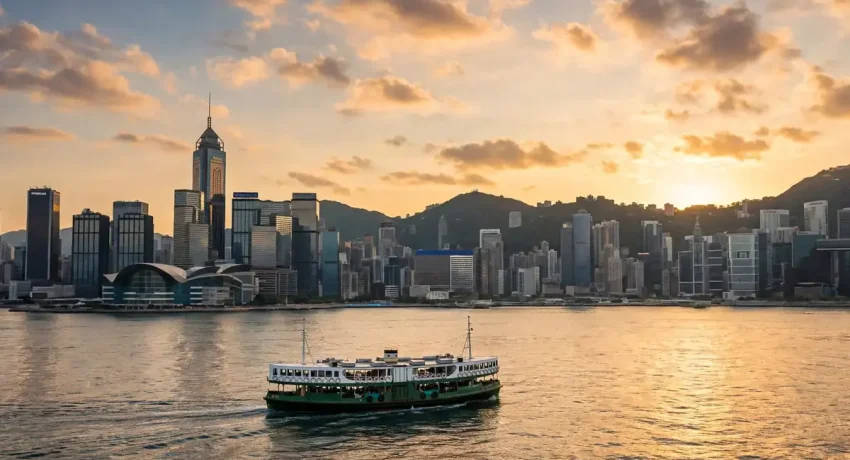
The Star Ferry Hong Kong service has crossed Victoria Harbour since 1888. The ride between Tsim Sha Tsui and Central takes about 8 minutes. It is one of the cheapest rides in the city. Lower-deck fares run HK$4.00 on weekdays and HK$5.60 on weekends. Upper-deck fares run HK$5.00 on weekdays and HK$6.50 on weekends. A fare increase was awaiting government approval in 2026, so check the board at the pier before you board.
Ride the upper deck at sunset. The skyline turns gold, then the lights come on. The ferry only crosses the harbour. It does not reach Lantau or the outer islands. For those, use the ferries from Central Piers.
The Star Ferry is also the cheapest way to see the Symphony of Lights. The Symphony of Lights Hong Kong show runs nightly at 8 pm. Buildings on both sides of the harbour light up in time with music. Watch it from the Tsim Sha Tsui waterfront for the full effect.
What makes the Tsim Sha Tsui Promenade the best skyline viewpoint?
The promenade along the Kowloon side gives the single best angle on Hong Kong Island’s skyline. It runs along the waterfront at Tsim Sha Tsui. The view is free, day and night. At dusk, the towers light up one by one. The Avenue of Stars runs alongside it. It honours Hong Kong cinema with handprints and statues, including Bruce Lee and Anita Mui.
Come here twice if you can. Once in daylight, for the harbour and the ferries. Once at 8 pm, for the Symphony of Lights. The promenade is flat and easy to walk. It suits families, couples and anyone with limited mobility.
How do you reach the Tian Tan Buddha, and is the climb worth it?
The Tian Tan Buddha sits on the Ngong Ping plateau on Lantau Island. It is one of the largest outdoor seated Buddhas in the world. The statue stands 34 metres tall including its lotus base. Climbing the 268 granite steps to its base is free. The view from the top stretches across green hills and the sea.
Po Lin Monastery stands beside the Buddha. It is a working Buddhist monastery. Visitors are welcome. A vegetarian lunch is available at the monastery. Ngong Ping Village sits where the cable car arrives. It has shops, snacks and small exhibitions.
The Ngong Ping 360 cable car is the best way up. It leaves Tung Chung, next to the MTR station and Citygate Outlets. The ride takes about 25 minutes each way. It crosses Tung Chung Bay and climbs over the hills of Nei Lak Shan. A Standard Cabin round trip starts from about HK$295 for adults in 2026. A Crystal Cabin, with a glass floor, costs from about HK$365 round trip. Children aged 3 to 11 pay less. Infants up to 2 ride free. Prices change, so check before you book.
Note the calendar. The cable car is closed for scheduled maintenance from 8 to 18 September 2026. The village and its indoor attractions stay open during the closure. Bus route 23 from Tung Chung, or a blue Lantau taxi, gets you there while the cable car is down. Strong winds can also close the cable car at short notice.
How much does Hong Kong Disneyland cost in 2026?
Hong Kong Disneyland sits on Lantau Island. It opened in 2005 and marked its 20th anniversary in 2025. One-day Hong Kong Disneyland tickets start from HK$535 on midweek Tier 1 days. Tier 2 days cost HK$607 for adults. Peak days cost more. Children aged 3 to 11 and seniors aged 60 and above pay less. Children under 3 enter free. Check the park’s ticket tier calendar before you buy. Your visit date cannot be changed after purchase.
Book direct on the official website for the best price. A midweek getaway offer gives 20 percent off the flexible rate on Wednesdays from 5 October to 30 December 2026, except 23 December. Halloween runs from 18 September to 1 November 2026. The theme is “Party Like a Villain”. A Disney Christmas runs from 20 November 2026 to 3 January 2027. Both are included with regular admission.
Arrive at opening and head to the newest rides first. Download the park app to check wait times. A full day covers the park. Two days suit families with small children. The park is compact compared with other Disney parks. That makes it easy to cover in one day.
Is Ocean Park worth a day in Hong Kong?
Ocean Park sits on the southern side of Hong Kong Island. It mixes a theme park with an aquarium and animal exhibits. Ocean Park Hong Kong tickets start from about HK$538 for adults at the gate in 2026. Online discounts often bring the price lower. Children aged 3 to 11 pay less. Check the official site before you go.
The park splits into two areas. The Waterfront sits near the entrance. The Summit sits on the hill above. A cable car and an ocean express train link the two. The cable car ride alone is worth the trip. It gives wide views over the South China Sea.
Halloween Fest returns from 5 September to 1 November 2026. The park runs night events during the season. Hong Kong with kids is easy here, with animal shows and rides in one place. Ocean Park suits families who want animals and rides in one place. Disneyland suits families who want Disney characters and shows. Pick one if you have three days. Pick both if you have five.
What happens at Temple Street Night Market after dark?
Temple Street Night Market is Hong Kong’s most atmospheric night market. It has run in Yau Ma Tei since the 1920s. Stalls open from about 2 pm. The street turns car-free in the afternoon. The real atmosphere starts after 8 pm and runs to midnight.
Fortune tellers set up small tables under neon signs. Cantonese opera singers perform near the historic Tin Hau Temple. Claypot rice steams at outdoor dai pai dong stalls. Antiques, jade, watches and souvenirs fill the stalls. Fortune telling costs about HK$50 to HK$200. Bring cash. Most small stalls do not take cards.
Reach it from MTR Yau Ma Tei, Exit C, or Jordan, Exit A. Eat dinner at the market. The seafood stalls and claypot rice are the point. Come hungry and stay late.
How do you bargain at Ladies’ Market in Mong Kok?
Ladies Market Hong Kong runs along Tung Choi Street in Mong Kok. It stretches about one kilometre between Argyle Street and Dundas Street. Stalls open at noon and run to 11 pm daily. Entry is free. The best shopping runs from 3 pm to 7 pm. The street turns pedestrian-only from 4 pm to midnight.
Clothing, fashion accessories, souvenirs and electronics fill the stalls. Never accept the first price. Counter at 40 to 50 percent off. Bundle several items for a better deal. Be ready to walk away politely. The price often drops as you turn to leave.
Cash is king here. Over 95 percent of street hawkers take cash only. Carry small Hong Kong dollar notes in HK$20, HK$50 and HK$100. A few larger stalls take Alipay or WeChat Pay. International cards are rarely accepted. Reach the market from MTR Mong Kok, Exit E2. It is a three-minute walk.
Combine both markets in one evening. Start at Ladies’ Market in the afternoon. Then take the MTR to Yau Ma Tei for Temple Street after 7 pm. The two are about 15 minutes apart.
Which temples show the spiritual side of Hong Kong?
Man Mo Temple sits on Hollywood Road in Central. It was built around 1847. It honours the gods of literature and war. Giant hanging incense coils burn inside. Each coil can smoulder for up to three weeks. Entry is free. The temple opens daily from 8 am to 6 pm. Go in the morning, when the light falls through the smoke and the temple is calm.
Wong Tai Sin Temple sits in Kowloon. It blends Taoist, Buddhist and Confucian traditions. Ornate halls, gardens and fortune-telling stalls fill the grounds. Locals come to pray and to ask the fortune sticks about love, work and health. The temple is free to enter. It is busiest on weekends and festival days.
Both temples are working places of worship, not museums. Dress modestly. Keep your voice low. Ask before taking photos of people at prayer.
What is the Central–Mid-Levels escalator, and why ride it?
The Central–Mid-Levels escalator is the world’s longest outdoor covered escalator system. It runs about 800 metres uphill from Central to the Mid-Levels. It opened in 1993. It carries commuters down in the morning and up from 10:30 am.
Ride it through SoHo, Hong Kong’s bar and restaurant quarter. Step off at Hollywood Road for Man Mo Temple. Higher up, the antique shops and galleries line the street. The escalator is free. It is also the best free sightseeing ride in the city.
Nearby, Tai Kwun is a restored colonial police and prison compound. It now holds galleries, shops and restaurants. PMQ, the former Police Married Quarters, holds local design studios. Both are free to enter. Together they show how old Hong Kong meets new Hong Kong.
Where do you escape the city for nature in Hong Kong?
Dragon’s Back is Hong Kong’s best-known hike. Time magazine named it Asia’s best urban hike. The trail runs along a ridge on Hong Kong Island. It gives sea views on both sides. The full walk takes about two to three hours. It ends near Big Wave Bay beach. Go in October to December for cool, clear weather.
Cheung Chau is a car-free island about an hour by ferry from Central Pier 5. It has beaches, seafood restaurants and narrow lanes. Rent a bicycle near the pier. Walk to the Pak Tai Temple. Eat at a harbourfront restaurant. It feels a world away from Central.
For a beach-focused trip, Thailand’s beaches are the classic Asian choice. Hong Kong’s beaches are smaller and quieter. Repulse Bay and Shek O suit a half-day swim in summer. The water is warmest from June to September.
What should you eat in Hong Kong?
Dim sum is the meal to plan your trip around. The Hong Kong food dim sum tradition is the city’s best introduction to Cantonese cooking. Small steamed dumplings, rice rolls and buns arrive in bamboo baskets. A dim sum lunch costs from about HK$40 to HK$60 per person at a local spot. Tim Ho Wan, the world’s cheapest Michelin-starred restaurant, built its name on a HK$40 dim sum meal. Go early. Queues form by late morning.
Try roast goose and char siu at a siu mei shop. Try wonton noodles at a dai pai dong. Try egg tarts from a bakery. Street food is safe and cheap. Drink from vending machines and convenience stores. A bottled drink costs about HK$10 to HK$15.
If street food is your thing, Metro Manila’s Binondo is the world’s oldest Chinatown and runs a famous food crawl. Hong Kong’s version is smaller but just as tasty. Eat where locals queue. That is the only rule that matters.
When is the best time to visit Hong Kong?
October to early December is the best time to visit Hong Kong. The weather is sunny, cool and pleasant. Temperatures sit around 25 degrees. Rainfall is low. The skies are clear. Hotel prices are high, so book early.
December to February is the coolest and driest season. Temperatures range from 14 to 19 degrees. The city sparkles with festive lights. Lunar New Year falls on 17 February 2026. It brings flower markets, parades and fireworks.
March to April is the second-best window. The air is mild and the flowers bloom. Summer, from May to September, is hot and humid. Temperatures reach 30 to 35 degrees. Rain falls often. Typhoon season runs from May to November. It peaks from July to September. When a Typhoon Signal 8 goes up, the whole city shuts down. Ferries, shops and even the MTR stop. August is usually the cheapest month to visit. It is hot, humid and deep in typhoon season. That is why flights drop and hotels run deals.
Tokyo in summer has the same heat-and-festival mix, as our Tokyo summer guide shows. The city in autumn is the easier choice for a first trip.
| Month | Weather | What is on |
|---|---|---|
| January | Cool, dry, 14–19°C | New Year sales, clear skies |
| February | Cool, dry, 16–20°C | Lunar New Year, 17 Feb 2026 |
| March | Mild, 18–23°C | Flower markets, spring walks |
| April | Warm, 21–26°C | Clear days, Easter crowds |
| May | Hot, humid, rain starts | Cheung Chau Bun Festival |
| June | Hot, wet, 28–31°C | Dragon Boat Festival |
| July | Hot, humid, typhoon risk | Summer sales, beach days |
| August | Hottest, wettest, 28–32°C | Cheapest hotels, typhoon risk |
| September | Cooling, still humid | Mid-Autumn Festival, 25 Sep 2026 |
| October | Sunny, 25–28°C | Best month, clear skies |
| November | Cool, dry, 22–27°C | Wine and dine festival |
| December | Cool, dry, 16–20°C | WinterFest, Christmas lights |
How much does a Hong Kong trip cost in 2026?
Hong Kong is not cheap, but the best experiences cost little. The Star Ferry costs a few dollars. The Peak walk is free. The temples are free. The markets are free to browse. Spend your money on the Peak Tram, the cable car and one theme park.
| Item | Cost (HK$) | Notes |
|---|---|---|
| Peak Tram return | About 116 | Adult, 2026 |
| Star Ferry | 4–6.50 | Per crossing |
| Ngong Ping 360 return | From about 295 | Standard Cabin |
| Disneyland 1-day | From 535 | Midweek Tier 1 |
| Ocean Park | From about 538 | Adult, gate price |
| Ding Ding tram | 3.30 | Flat fare |
| Dim sum lunch | 40–60 | Per person |
| MTR day travel | 40–80 | With Octopus card |
| Budget hotel | 500–900 | Per night |
| Mid-range hotel | 1,000–2,000 | Per night |
A mid-range traveller should budget about HK$800 to HK$1,400 per day. That covers a hotel, meals, transport and one paid attraction. A budget traveller can manage on less by eating at local spots and walking more. February is a good month for lower hotel prices after the Lunar New Year rush.
How do you get around Hong Kong?
The MTR is the fastest way to move. It runs from about 6 am to about midnight. Buy an Octopus card at the airport. It costs a HK$50 refundable deposit plus stored value. Tap it on the MTR, buses, trams and ferries. It also works at convenience stores.
The Airport Express reaches Central in about 24 minutes. The Ding Ding tram is the slowest and most charming ride in town. It has run since 1904. It is the world’s only double-decker tram system still running. A ride costs a flat HK$3.30. Sit upstairs at the front for the best view.
Taxis are metered and cheap by world standards. Most drivers speak little English. Show the address in Chinese characters on your phone. Ride-hailing apps also work. Walking is easy in Central and Tsim Sha Tsui. The city is compact.
What does a 3-day Hong Kong itinerary look like?
This Hong Kong itinerary 3 days plan covers the top ten places to visit in Hong Kong without rushing. Days stay short and evenings stay free.
Day one starts in Tsim Sha Tsui. Walk the promenade and the Avenue of Stars in the morning. Ride the Star Ferry to Central at sunset. Watch the Symphony of Lights at 8 pm from the waterfront. Eat dinner at Temple Street Night Market.
Day two starts early at Victoria Peak. Ride the Peak Tram up and walk the Lugard Road loop. Take the Central–Mid-Levels escalator down through SoHo. Visit Man Mo Temple. Spend the afternoon in Mong Kok at Ladies’ Market. End the day with dinner in the market streets.
Day three is Lantau Island. Take the MTR to Tung Chung. Ride the Ngong Ping 360 cable car to the Big Buddha. Climb the 268 steps. Eat a vegetarian lunch at Po Lin Monastery. Take a bus to Tai O fishing village in the afternoon. See the stilt houses and the harbour.
With five days, add Disneyland on day four and Ocean Park on day five. With a week, add a Macau day trip by ferry from Sheung Wan. The ferry takes about an hour each way.
Is Hong Kong safe for visitors?
Hong Kong is one of the safest big cities in Asia. Violent crime against visitors is rare. Pickpockets work the crowded markets and the MTR at rush hour. Keep your bag in front of you in Mong Kok and Temple Street. Leave your passport in the hotel safe.
Hong Kong ranks among the safest places to visit outside the US. Solo travellers, including women travelling alone, will find it easy. Our guide for single women travellers lists Hong Kong among the friendlier Asian cities for a first solo trip.
Watch the weather. Summer typhoons can close transport at short notice. Check the Hong Kong Observatory app each morning. Drink water in the summer heat. The humidity can make 30 degrees feel like 38.
Frequently Asked Questions
How many days do you need in Hong Kong?
Three days cover the highlights. Five days add Disneyland and Ocean Park. A week adds Macau and the outlying islands.
Do you need a visa for Hong Kong?
Most visitors enter visa-free. The length depends on your nationality. It ranges from 14 to 180 days. Check the rules for your passport before you fly.
What is the currency in Hong Kong?
The Hong Kong dollar (HK$) is the currency. ATMs are easy to find. Cards work in malls and restaurants. Cash is essential at street markets.
Can you drink tap water in Hong Kong?
Tap water is treated and safe by official standards. Most visitors drink bottled water. It costs about HK$10 to HK$15 from a convenience store.
Is Hong Kong expensive?
It can be. Hotels are the biggest cost. Food and transport are cheap. The best views and walks are free. A mid-range budget of HK$800 to HK$1,400 per day works well.
What should you pack for Hong Kong?
Pack light layers for October to December. Pack rain gear and sun protection for summer. Bring comfortable walking shoes. The city is hilly. Bring a light jacket for air-conditioned malls and the Peak.
Hong Kong rewards travellers who mix the famous sights with the free ones. These are the top ten places to visit in Hong Kong in 2026. Ride the Peak Tram, then walk the free loop. Cross the harbour for a few dollars, then eat at a market stall. Climb 268 steps to a Buddha, then ride a cable car back down. That is the city at its best. Book the tram and the cable car in advance. Check prices before you go. Then go in October, when the skies are clear and the city glows.