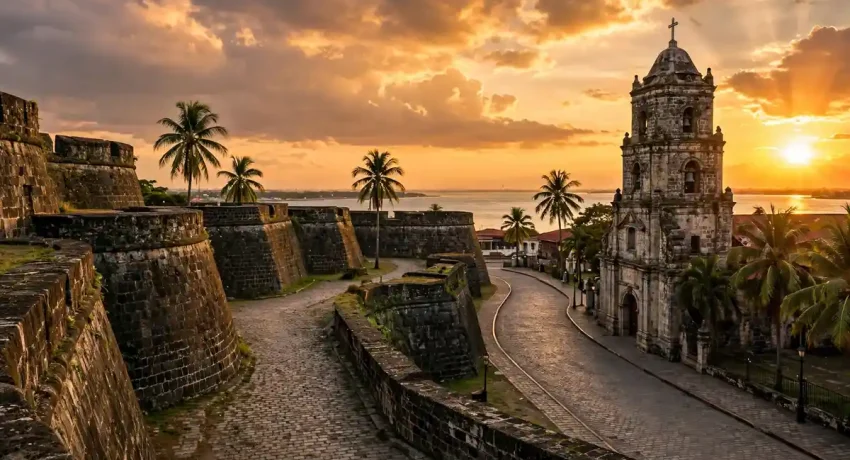

Manila does not try to impress you at first. It greets you with traffic, heat and noise. Then it opens up. Behind the rush sits a walled Spanish city, a bay famous for its sunsets, the oldest Chinatown on Earth and museums that cost nothing to enter. This Metro Manila travel guide 2026 covers the best place to visit in Metro Manila Philippines, with verified prices, honest safety notes and a plan that actually works.
Metro Manila is not one city. It is a region of 16 cities and one town, home to more than 15 million people. Most visitors land here and rush straight to the islands. That is a mistake. Give the capital three days. It repays the time.
Which Part of Metro Manila Should You Visit First?
Start with the old city. Then move to the bay. After that, go modern. This order keeps the walking easy and the story in sequence. The best places to visit in Metro Manila reward this order, because each stop builds on the last.
| What kind of traveller are you? | Go here first | Best month |
|---|---|---|
| History lover | Intramuros and Fort Santiago | January to February |
| Family with kids | Manila Ocean Park and Rizal Park | December to March |
| Food hunter | Binondo Chinatown | Any dry month |
| Art and museums | National Museum and Ayala Museum | Any month |
| Cool air escape | Tagaytay day trip | January to April |
| Shopping and photos | BGC and Venice Grand Canal Mall | December to February |
| Sunset chaser | Manila Bay and Baywalk | November to April |
What Is Intramuros and Why Does It Come First?
Intramuros Manila is the walled city where Manila began. Spanish colonists built it in the 1500s. Thick stone walls, cobbled lanes and old churches survive inside. Walking the public streets costs nothing. Only the museums and the fort charge entry.
Come early in the morning. The light is soft. The streets are quiet. By noon, the heat builds and the tour groups arrive. A full slow walk takes about three hours. Add another hour if you stop for coffee in the plaza.
Start at the main gate near Manila Cathedral. Walk the wall top at Baluarte de San Diego for the best view over the rooftops. Then work your way north to Fort Santiago. The whole route fits in one morning.
Is Fort Santiago Worth the ₱75 Ticket?
Yes. Fort Santiago is the single most important site in Intramuros. It guards the spot where the Pasig River meets Manila Bay. Spanish forces built the stone fort in 1571 on the site of an earlier settlement ruled by Rajah Sulayman.
Inside, the Rizal Shrine marks the cell where national hero José Rizal spent his final night before execution. Brass footprints in the courtyard trace his last walk. The dungeons below held prisoners through three occupations: Spanish, American and Japanese.
Fort Santiago tickets cost ₱75 for regular visitors. Students, senior citizens and persons with disabilities pay ₱50. Hours run Monday to Friday from 8 am to 10 pm, with last entry at 8 pm. On Saturday and Sunday, the fort opens at 6 am and closes at 10 pm, with last entry at 8:30 pm. Check the official hours page before an evening visit, because the administration’s own listings sometimes disagree.
Free guided walking tours run every Saturday and Sunday at 9 am and 4 pm. The guides are accredited by the Department of Tourism. Only 25 slots open per batch, first come first served. The tour itself is free, but the ₱75 site fee still applies. Meet at the Intramuros Visitors Center for the fort tour.
Prefer wheels to feet? A Bambike tour costs around ₱1,250. You ride a bamboo bicycle through the cobbled streets with a guide. It is the most fun way to cover the district in the heat.
Which Churches Should You See Inside Intramuros?
Two churches matter most. Both sit within a short walk of each other, and entry to both is free.
San Agustin Church was finished in 1607. It is the oldest stone church in the Philippines. Earthquakes and war flattened its neighbours, but this church survived. UNESCO lists it as a World Heritage Site. Step inside for the painted trompe-l’oeil ceiling and the carved choir stalls. The museum next door holds religious art, old manuscripts and colonial artefacts. Museum entry costs ₱200 for adults and ₱160 for students and seniors. Bring cash. The museum opens daily from 8 am to noon and from 1 pm to 5 pm.
Manila Cathedral stands across the plaza. It serves as the country’s premier Roman Catholic cathedral. Earthquakes and war forced it to be rebuilt several times. The current building has a grand facade and a calm, spacious interior. Entry is free. Hours run roughly 7 am to 5 pm.
Across the street from San Agustin, Casa Manila shows how a wealthy Filipino family lived in the late Spanish period. The house is furnished with pieces from Europe and China. Entry costs ₱75, or ₱50 discounted. It opens Tuesday to Sunday from 9 am to 6 pm, with last entry at 5 pm. Monday is the one closed day.
Round off the walk at Baluarte de San Diego. The bastion opens daily from 8 am to 5 pm, with last entry at 4 pm. Climb up for the wall-top view. The Museo de Intramuros nearby holds the administration’s ecclesiastical collection. Its fee runs around ₱75 to ₱200 depending on the listing, so confirm the price at the ticket desk.
What Can You Do for Free at Rizal Park?
Rizal Park Manila sits just outside the Intramuros walls. It covers 58 hectares. Entry is free. This is the spot where José Rizal was executed in 1896. His monument stands at the centre, guarded around the clock by Marine Corps personnel.
Watch the Changing of the Guard at 4 pm daily. Walk to the Kilometre Zero marker, the point from which all road distances in the Philippines are measured. Wander the Chinese Garden and the Japanese Garden. Families fly kites on the lawns on Sundays. The park opens early and stays busy until evening.
Pair the park with the National Museum complex across the road. The three buildings sit within a short walk of each other. One ticket desk serves them all, and admission is free.
Is the National Museum Really Free?
Yes. The National Museum of the Philippines charges no admission. Bring a valid government ID for walk-in registration. Dress smartly. Slippers and shorts may be refused at the door.
The complex has three buildings. The National Museum of Fine Arts holds Juan Luna’s Spoliarium, the most famous painting in Philippine art, plus works by Amorsolo and Hidalgo. Next door, the Anthropology museum covers the cultures of the country’s many regions. The Natural History building shows the archipelago’s wildlife and geology.
Hours run Monday to Sunday from 9 am to 6 pm. Arrive before 10 am to beat the school groups. Two hours covers the highlights. Four hours covers all three buildings at a relaxed pace.
The National Library sits across from the park too. It holds Rizal’s original manuscripts and documents from the Spanish period. History buffs and older children will enjoy it more than small kids.
Where Is the Best Place to Watch the Manila Bay Sunset?
Manila Bay is famous for its sunsets. The sky turns orange, pink and purple as the sun drops over the water. The best free spot is the Baywalk along Roxas Boulevard, near the Cultural Center of the Philippines.
Arrive by 5 pm. Find a bench or a patch of the seawall. The show lasts about 40 minutes. Dolomite Beach, the white-sand strip near the bay, draws crowds for the same view.
After dark, the bayfront stays lively. Street food vendors set up along the walk. The area around SM Mall of Asia, one of the largest malls in Southeast Asia, fills with families and buskers. It is an easy evening after a hot day of sightseeing.
What Should You Eat in Binondo, the World’s Oldest Chinatown?
Binondo was established in 1594. It is widely recognised as the world’s oldest Chinatown. The district sits a short ride from Intramuros, across the Pasig River.
Come hungry and come on foot. Ongpin Street is the main artery. Dumpling shops, hopia bakeries and noodle houses line the road. Old herbal pharmacies and goldsmiths fill the side streets. Binondo Church, one of the oldest churches in the city, anchors the district.
Join a food crawl if you want a guide. The walk itself is free. Food costs what you eat. Budget around ₱300 to ₱600 per person for a full tasting round. Morning works best, before the heat and the lunch crowds.
LRT-1 stops at Carriedo station, a short walk from the district. That is the easiest way in without a car.
Is Manila Ocean Park Worth It for Families?
Manila Ocean Park opened on 1 March 2008. It was the Philippines’ first world-class marine theme park. The site sits behind the Quirino Grandstand near Rizal Park, so it pairs naturally with a morning at Luneta.
The Oceanarium tunnel puts sharks and rays gliding over your head. The penguin exhibit, sea lion show, bird show and creepy-crawlies zone fill the rest of the day. Newer additions include the Philippine Biodome and a digital art museum.
Book online. Walk-in gate prices can exceed ₱2,000 per person. Online bundles cut that by half or more. Manila Ocean Park tickets for the Ocean to Jungle One Pass cost around ₱950 and cover the core eight attractions plus the Biodome. A water park only pass runs around ₱360. Children measuring two feet and below enter free. Senior citizens and persons with disabilities get a 20 percent discount on regular rates.
Hours run daily from 10 am to 6 pm, with last admission at 5:15 pm. Allow three to five hours. The park is fully indoors and air-conditioned, which makes it the best rainy-day backup in the city.
What Is Makati Like Beyond the Office Towers?
Makati is the business district. It also holds the greenest surprise in Metro Manila. Greenbelt Makati sits inside the Greenbelt mall complex. Trees, ponds and open lawns break up the shopping. Entry is free. It is the best lunch-break spot in the city.
The Ayala Museum Makati stands at the park’s edge, on Makati Avenue at the corner of Dela Rosa Street. It tells Philippine history through 60 handcrafted dioramas, plus pre-colonial gold artefacts and indigenous textiles. Admission is listed around ₱425 for adults on booking sites, though some listings run higher, up to about ₱650. Check the official site before you go. Hours run Tuesday to Sunday from 10 am to 6 pm. The museum stays closed on Monday.
Walk to Ayala Triangle Gardens after the museum. The gardens host a light show in the Christmas season and food stalls year round. Poblacion, the old Makati neighbourhood nearby, turns into a bar and restaurant strip after dark. It suits travellers who want nightlife without leaving the district.
Should You Visit BGC and the Venice Grand Canal Mall?
Bonifacio Global City, known as BGC, is the newest face of Metro Manila. Wide pavements, public art and cafes line Bonifacio High Street. It feels nothing like old Manila. That is the point.
From BGC, head to the Venice Grand Canal Mall in Taguig, at McKinley Hill. A man-made canal runs through the mall, with pastel facades and gondola rides. The ride costs extra, but the stroll is free. Allow two to three hours. Live buskers play near the canal in the evening.
BGC works best as a late-afternoon stop. Come for the sunset light on the towers, eat well, then ride back to your hotel. It is also the safest-feeling district for a night walk, with bright streets and visible security.
What About SM Mall of Asia and Star City?
SM Mall of Asia sits on Manila Bay in Pasay. It ranks among the largest malls in Southeast Asia. An ice rink, cinemas, a bowling alley and hundreds of shops fill the complex. The bayfront side gives another sunset viewpoint.
Star City, the amusement park beside it on Roxas Boulevard, suits families with older kids. Roller coasters, a free-fall tower, bumper cars and a haunted house fill the park. A ride-all-you-can pass costs around ₱699. Hours run on limited days, so check the day’s schedule before you go. The park opens in the early afternoon and closes around 10 pm.
Both stops work as a half-day. Combine them with the bay sunset and you have a full evening without a single museum.
Is a Tagaytay Day Trip Worth It from Manila?
Yes, if you want cool air. A Tagaytay day trip from Manila is the classic escape. Tagaytay sits on a ridge in Cavite province, about 55 to 65 kilometres from central Manila and roughly 700 metres above sea level. The temperature drops several degrees. Evenings can feel genuinely cool.
The ridge looks down over Taal Lake and the volcano sitting in the middle of it. On a clear day, you can see Manila Bay to the north. The dry season, January through April, gives the clearest views. Afternoon fog and rain are far more common the rest of the year.
Buses run from PITX in Parañaque, the DLTB terminal near LRT Buendia and Araneta City in Cubao. Fares run about ₱70 to ₱200. A weekday trip takes about two hours each way. A weekend or holiday can take three to five hours, because traffic on SLEX and Aguinaldo Highway builds fast.
At the ridge, the viewpoints are free. People’s Park in the Sky sits at the highest point in the province and gives the widest view. Sky Ranch, the small amusement park built for the view, charges around ₱80 on weekdays and ₱100 on weekends for entry, with rides extra. Its Sky Eye Ferris wheel is the main draw.
A join-in day tour on Klook costs around ₱1,050 per person. A fuller package runs around ₱1,950. A private car with driver costs roughly ₱2,500 to ₱5,000 per day, excluding fuel.
Taal Volcano itself needs a warning. PHIVOLCS, the volcanology institute, monitors it constantly. Tourist activities are generally allowed when the volcano sits at Alert Level 1 or 2. Always check the latest advisory before you book a boat or a hike. The volcano is a volcano within a lake, within a bigger lake. That is what makes the view so strange and so good.
When Is the Best Time to Visit Manila?
December to February is the best window for most travellers. The dry season runs from November to May. January and February are the most weather-stable months, with daily temperatures around 23 to 29 degrees Celsius and monthly rain near 21 millimetres.
March to May stays dry but turns hot. April is the sunniest month. Manila routinely hits 34 degrees Celsius, with heat indices far higher. Holy Week brings crowds and high prices, so book far ahead if you travel then.
June to November is typhoon season. About 20 tropical cyclones enter Philippine waters each year, and 8 to 9 make landfall, mostly from June to November. The real risk for a prepared traveller is flight cancellations and flooded roads, not personal danger. Hotel rates drop in this window, and the city empties out.
| Month | Weather | Crowds | Verdict |
|---|---|---|---|
| January | Dry, 23–28°C, ~30 mm rain | High | Best overall |
| February | Dry, 23–29°C, ~13 mm rain | High | Best overall |
| March | Dry, 24–31°C | Moderate | Great for walking |
| April | Hot and dry, up to 34°C | High at Holy Week | Great if you handle heat |
| May | Hot, rain begins, ~108 mm | Moderate | Typhoon season starts |
| June–August | Monsoon rain, 26–30°C | Low | Cheapest, wettest |
| September–October | Peak typhoon risk | Lowest | Cheapest, riskiest |
| November | Drying out, 25–29°C | Moderate | Good value |
| December | Dry and cool, 81°F average | High at Christmas | Festive, pricey |
How Much Does a Trip to Metro Manila Cost in 2026?
Manila is cheap by big-city standards. The big costs are the hotel and the flights. Everything on the ground is modest.
| Item | Typical cost |
|---|---|
| Budget hotel | ₱1,500–₱2,500 per night |
| Mid-range hotel | ₱3,000–₱6,000 per night |
| Street food meal | ₱100–₱200 |
| Restaurant meal | ₱300–₱600 |
| Fort Santiago | ₱75 |
| San Agustin Museum | ₱200 |
| Casa Manila | ₱75 |
| National Museum | Free |
| Rizal Park | Free |
| Manila Ocean Park online pass | ~₱950 |
| Ayala Museum | ~₱425–₱650 |
| Grab ride across town | ₱150–₱400 |
| Tagaytay bus, one way | ₱70–₱200 |
| Tagaytay join-in tour | ~₱1,050 |
A comfortable three-day trip for one person, staying mid-range and eating well, runs roughly ₱15,000 to ₱25,000 excluding flights. A budget trip with hostels and street food can run half that. Prices are typical ranges. Check before you book.
How Do You Get Around Metro Manila?
Traffic is the city’s hardest problem. Plan around it. Short distances can take an hour by car at rush hour.
Grab is the easiest option for visitors. Fares are fixed in the app. A cross-town ride runs about ₱150 to ₱400. Use it for hotel-to-sight trips and late nights.
The trains help when they run on your route. LRT-1 stops at United Nations and Central Terminal for Rizal Park and Intramuros. Carriedo station serves Binondo. MRT-3 runs along EDSA through Makati and Quezon City. Fares are low, but the trains get crowded at peak hours.
Jeepneys are the cheapest ride in the city. They run fixed routes for a few pesos. Ask the driver or a local which jeepney goes your way. Buses run longer routes, including the Tagaytay trip.
Most visitors arrive at Ninoy Aquino International Airport. A Grab from the airport to Makati or Ermita takes 30 minutes with no traffic and over an hour with traffic. Budget for the slow version.
Is Manila Safe to Visit in 2026?
Honestly, yes, with normal city care. The US State Department rates the Philippines Level 2, exercise increased caution. That advisory was updated on 1 September 2026. It covers Metro Manila, Cebu, Boracay and Palawan. The same tier applies to many popular destinations worldwide.
The stricter warnings apply elsewhere. The Sulu Archipelago and the Sulu Sea sit at Level 4, do not travel. Most of Mindanao outside Davao City, Siargao and the Dinagat Islands sits at Level 3, reconsider travel. Those places are far from Metro Manila.
Inside the capital, the real risks are pickpockets, bag snatching and traffic. Keep your bag in front of you in crowded markets and on the LRT. Use Grab at night instead of hailing a taxi on the street. Stay in well-lit areas after dark. Intramuros, Makati and BGC feel safest for evening walks.
One more risk deserves a line. Manila sits in a typhoon and earthquake zone. Natural disasters score highest on the travel risk index for the city. Check the weather forecast before a day trip. Follow local warnings if a storm approaches. For a fuller picture of how safety rankings work, see our guide to the safest places to visit outside the US.
What Does a 3-Day Manila Itinerary Look Like?
Three days cover the best of the city without rushing. This Manila itinerary 3 days plan keeps the walking short and the order logical. The walled city itself opens day one, the best place to visit in Metro Manila Philippines.
Day 1: Old Manila
Start at Fort Santiago at 8 am. Walk the walls to Baluarte de San Diego. Visit San Agustin Church and its museum. Step into Manila Cathedral. Tour Casa Manila. Eat lunch in the plaza. Spend the afternoon at Rizal Park. Watch the Changing of the Guard at 4 pm. End the day at Manila Bay for sunset.
Day 2: Museums, Ocean and Chinatown
Morning at the National Museum complex. All three buildings, free entry. Walk to Manila Ocean Park for the afternoon. The Oceanarium tunnel and the penguin exhibit suit kids best. In the late afternoon, take the LRT to Carriedo and eat your way through Binondo. Dumplings first, hopia for the road. That day adds the most family-friendly things to do in Manila.
Day 3: Modern Manila and Tagaytay
Choose one. For a city day, start at Greenbelt Park and the Ayala Museum in Makati. Move to BGC in the afternoon. Finish at the Venice Grand Canal Mall in Taguig for photos and dinner. For a day trip, leave by 7 am for Tagaytay. Ride the Sky Eye at Sky Ranch. Eat lunch with a Taal view. Return by late afternoon, before the traffic builds.
Frequently Asked Questions
What is the best place to visit in Metro Manila Philippines?
Intramuros is the best single place. It holds Fort Santiago, San Agustin Church, Manila Cathedral and Casa Manila in one walkable district. Add Rizal Park and the free National Museum next door, and you have a full day of history for under ₱400 in tickets. For most first-time visitors, Intramuros is the best place to visit in Metro Manila Philippines.
Is the National Museum Manila free?
Yes. The National Museum Manila free admission policy covers all three buildings: Fine Arts, Anthropology and Natural History. Bring a valid government ID for walk-in registration. Hours run Monday to Sunday from 9 am to 6 pm.
How many days do you need in Manila?
Three days cover the best of the city. One day for old Manila, one day for museums and Binondo, one day for modern Makati and BGC or a Tagaytay day trip. Two days work if you skip Tagaytay. One day only covers Intramuros and the bay.
Is Manila safe for solo travellers?
Yes, with normal city care. Stay in Makati, BGC or Ermita. Use Grab at night. Keep valuables out of sight in crowded markets. Intramuros and Rizal Park suit solo daytime walks well. For more solo-travel guidance, see our guide to the best places to visit for a single woman.
What is the best month to visit Manila?
January and February are the best months. The weather is dry and cool, with temperatures around 23 to 29 degrees Celsius and very little rain. December is festive but crowded and pricey. Avoid June to September for outdoor plans, when monsoon rain and typhoons are most likely.
Do you need a visa to visit the Philippines?
Many nationalities enter visa-free for 30 days, including citizens of the US, the UK, Canada, Australia and most of Europe. Check the current rule for your passport before you fly. Your passport should be valid for at least six months beyond your arrival date.
Can you visit Manila on a budget?
Yes. The National Museum and Rizal Park are free. Intramuros costs ₱75 for the fort and ₱200 for the San Agustin Museum. Street food runs ₱100 to ₱200 per meal. A budget traveller can cover three days for around ₱7,000 to ₱10,000 excluding flights and hotel.
Is Tagaytay worth a day trip from Manila?
Yes, in the dry season. The ridge gives cool air and a view of Taal Volcano that you cannot get in the city. Go on a weekday. Weekend traffic can turn a 2-hour trip into 5 hours. Check the PHIVOLCS advisory for Taal Volcano before you go.
What should you pack for Manila?
Light clothes, a rain jacket, sunscreen and comfortable walking shoes. Bring a valid ID for museum registration. Carry cash in small bills. Many small museums and food stalls do not take cards. A reusable water bottle helps in the heat.
Why Should Metro Manila Be More Than a Stopover?
Most travellers treat Manila as a transit stop. They land, sleep one night and fly on. The city rewards those who stay. Few capitals pack a 450-year-old walled city, a free world-class museum, the oldest Chinatown on Earth and a bay sunset into one walkable core. That is why so many first-time visitors call Intramuros the best place to visit in Metro Manila Philippines.
Manila is not polished. The city is loud, hot and sometimes chaotic. Yet it is also cheap, warm and full of stories. Give it three days. Walk the walls at dawn. Eat dumplings in Binondo. Watch the sun drop into the bay. Then decide where the islands can wait.
If Manila sparks a bigger trip, our guide to the most interesting places in the world puts the Philippines in a global frame. For a warm-weather escape in the same season, see the best places in Thailand for beaches. Couples planning a longer Asia trip can start with our summer honeymoon guide. And if you are timing a winter trip instead, our best places to visit in February covers the same dry-season window. That is the honest case for the best place to visit in Metro Manila Philippines.