
Mumbai does not slow down for anyone. The city runs on local trains, sea breeze, and street food. It is also one of the best cities in India for a family trip. The city gives you sea views, old caves, big museums, and theme parks. It gives you all of them in one weekend. This guide covers the best places in Mumbai to visit with family in 2026. It has real prices, real timings, and a plan that works with kids.
A Mumbai family trip works best when you plan around two things. The first is the heat. The second is the traffic. Start early. Rest in the afternoon. Go out again at sunset. That simple rhythm turns a hard city into an easy one.
Which Mumbai Is Right for Your Family?
Every family wants something different from Mumbai. Some families want history. Others want rides. A few just want the sea. Use this table to pick your days.
| Your family | Start here | Best day |
|---|---|---|
| First-timers with kids | Gateway of India and Marine Drive | Day 1 |
| History lovers | Elephanta Caves and CSMVS museum | Day 1 |
| Nature lovers | Sanjay Gandhi National Park | Day 2 |
| Science fans | Nehru Science Centre and Planetarium | Day 2 |
| Thrill seekers | EsselWorld and Water Kingdom | Day 3 |
| Rainy-day families | KidZania and museums | Any day |
| Slow travellers | Juhu Beach and Bandra Bandstand | Day 3 |
Why Is the Gateway of India the First Stop for Families?
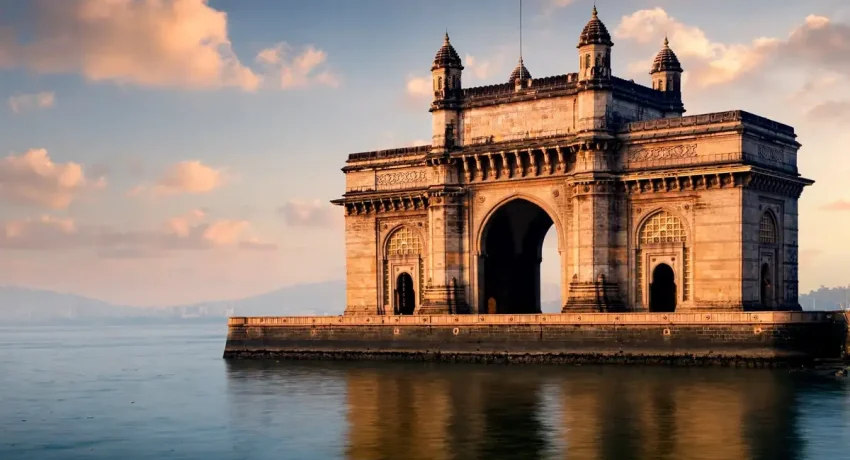
The Gateway of India is the face of Mumbai. It stands on the waterfront at Apollo Bunder in Colaba. From there it looks out over the Arabian Sea. Builders raised it to mark the landing of King George V and Queen Mary in December 1911. The foundation stone went down on 31 March 1911. The Scottish architect George Wittet designed it. Work finished in 1924. The arch opened to the public on 4 December 1924.
At 26 metres high, the arch towers over the waterfront. Yellow basalt gives it that warm glow. The Indo-Saracenic style mixes Hindu and Muslim design with a Roman triumphal arch. The same spot later saw the last British troops leave India in 1948. That makes it a history lesson and a photo stop in one place.
There is no entry fee. Gateway of India tickets do not exist, because the monument is free to visit. You just walk up to it. Go early in the morning for thin crowds and soft light. Sunset brings the best photos. The Taj Mahal Palace Hotel stands right beside it. It is one of the most photographed corners in India.
Kids love the boats. Small ferries and speedboats leave from the jetty behind the arch. A short harbour ride costs a few hundred rupees per person. Ask the price before you board. The Gateway is also the starting point for the Elephanta Caves ferry. Plan your day so the two fit together.
The Gateway sits on many world bucket lists. It is the kind of place that earns its fame. Our guide to the most interesting places in the world puts it in good company. Mumbai starts strong, and the Gateway is why.
How Do You Plan the Elephanta Caves Ferry Trip?
The Elephanta Caves sit on Gharapuri Island in Mumbai Harbour. The island is about 10 to 11 km from the Gateway. A ferry is the only way to reach it. The caves are a UNESCO World Heritage Site. They are rock-cut temples from the 5th to 7th centuries. The Great Cave holds a huge three-faced Shiva. Kids stare at it for a long time.
The Elephanta Caves ferry price is simple. A round trip costs about ₹150 to ₹200 in economy class. Luxury class costs ₹260. An upper-deck seat costs ₹10 more, paid inside the boat. The first ferry leaves the Gateway at 9 am. Boats leave about every 30 minutes. The last outbound boat leaves around 2 pm. For the way back, the final return boat leaves the island at 5:30 pm. The crossing takes about one hour each way.
The caves open from 9 am to 5 pm. They are closed on Mondays. The ferry service is also closed on Mondays. Plan for four to five hours door to door. That covers both ferry rides and the caves.
Entry to the caves costs ₹40 for Indian citizens and visitors from SAARC countries. Foreign visitors pay ₹600. Children under 15 enter free. The village entry costs ₹10 per person. A small toy train runs from the jetty to the cave entrance. A ride costs ₹10 per person. It saves little legs a hot walk.
There are about 120 steps up to the caves. Take water. Wear good shoes. The monsoon months of June to September can cancel ferries at short notice. The best months are November to February. The sea is calm then. The walking weather is kind.
What Makes Marine Drive Mumbai the Best Free Evening in the City?
Marine Drive Mumbai is a 3.6 km curved promenade along the bay. It runs from Nariman Point to Chowpatty. Locals call it the Queen’s Necklace. At night, the street lights curve like a string of pearls. Entry is free. The promenade stays open all day. For families, it is the best free evening in Mumbai.
Go at sunset. Sit on the sea wall with the kids. Watch the sky turn orange over the Arabian Sea. Vendors sell corn, ice cream, and kulfi. The walk is flat and safe for strollers. It is one of the few places in Mumbai where a family can slow down.
Girgaum Chowpatty sits at the northern end of Marine Drive. It is the classic Mumbai beach for families. The sand is not for swimming. The food is the point. Bhel puri, pav bhaji, and pani puri cost a few dozen rupees each. Eat where the locals queue. Choose food that is cooked hot in front of you.
Mumbai street food for kids works best with a few rules. Start with pav bhaji. It is mild, buttery, and filling. Try bhel puri next. It is crunchy and tangy. Save pani puri for older kids. It is spicy and messy. Drink only bottled water. Carry hand wipes. Most kids remember the food more than the monuments.
Why Is Juhu Beach Mumbai Still the Classic Family Evening?
Juhu Beach Mumbai is the city’s most famous beach. It sits in the western suburbs, near the airport side of the city. Families have come here for generations. The beach is long and wide. The sunset is big. The food stalls are endless.
Do not swim here. The water is not clean, and the currents are strong. Play on the sand instead. Fly a kite. Ride a pony. Eat pav bhaji from a stall. The beach comes alive after 5 pm. That is when the heat drops and the crowds arrive.
Juhu is also a good base for families. Hotels and serviced flats cluster around the area. The airport is about 20 to 30 minutes away by car, traffic permitting. Versova Beach sits just north of Juhu, quieter and calmer, and it suits families who want space.
Is Sanjay Gandhi National Park Worth a Full Family Day?
Yes. Sanjay Gandhi National Park is a real forest inside Mumbai. The park covers about 104 square km in Borivali. It is one of the few national parks in the world inside a big city. Leopards live here. So do deer, monkeys, and more than 250 kinds of birds. Kids who only know Mumbai’s traffic love this place.
The Sanjay Gandhi National Park entry fee is about ₹85 for Indian adults. Kids aged 5 to 12 pay about ₹45. Under-5s enter free. Foreign visitors pay more. Some listings show slightly different figures, so check the rate at the gate. The park is generally open from 7:30 am to 6:30 pm. Some attractions inside close on Mondays, so check before you go.
The Kanheri Caves sit deep inside the park. The complex holds more than 100 rock-cut Buddhist caves. They date from the 1st century BCE to the 10th century CE. Monks lived, studied, and prayed here. Entry to the caves costs ₹15 for Indian citizens and ₹200 for foreign visitors. The caves open from 7:30 am to 5 pm. A bus runs from the park gate toward the caves. You can also cycle. Cycles are available for hire near the gate.
The tiger and lion safari is the big draw for kids. It costs about ₹124 for adults and ₹50 for children. The safari runs in the morning and the afternoon. It is a caged bus ride through an enclosure. You will see lions and tigers at close range. This is not a wild safari. Even so, it is still a thrill for a seven-year-old.
Start at 8 am. The light is soft. The animals are active. The heat is low. Carry water, hats, and insect repellent. Leave by 1 pm. The afternoon heat in the forest is heavy.
What Will Kids Actually Enjoy at the CSMVS Museum?
The Chhatrapati Shivaji Maharaj Vastu Sangrahalaya is Mumbai’s biggest museum. Most people still call it the Prince of Wales Museum. It stands in Fort, near the Gateway. The domed Indo-Saracenic building was designed by George Wittet. Builders finished it in 1922. The museum took its current name in 1998. Today it holds about 50,000 objects. They cover art, archaeology, and natural history.
Chhatrapati Shivaji Maharaj Vastu Sangrahalaya tickets cost ₹200 for Indian adults and ₹40 for children aged 5 to 15. An audio guide adds ₹50. Foreign adults pay ₹700, with the audio guide included. The museum opens from 10:15 am to 6 pm. The ticket counter closes at 5:45 pm. It is closed on 26 January, 1 May, 15 August, and 2 October.
Kids like the natural history hall best. It has stuffed animals, skeletons, and dioramas. The sculpture gallery is next. The children’s museum runs hands-on activities. Two hours is enough for a family visit. Three hours is better if your kids like to read labels.
The museum garden is a good rest stop. It has shade, benches, and a cafe. Pair the museum with the Gateway and Colaba Causeway. All three sit within a short walk of each other. That is a full morning without a single taxi ride.
Why Is the Nehru Science Centre the Best Rainy-Day Plan?
The Nehru Science Centre in Worli is the largest science museum in India. It is built for touching, pressing, and trying. That is why kids love it. The exhibits cover physics, biology, space, and energy. The outdoor science park adds more hands-on fun. The 3D science shows and the Prehistoric Life gallery are the most popular parts.
Nehru Science Centre Mumbai tickets cost ₹65 for adults and ₹40 for children. The centre opens Tuesday to Sunday from 10 am to 5:30 pm. It is closed on Mondays. Plan for two to three hours. Younger kids finish faster. Older kids stay longer.
The Nehru Planetarium sits in the same complex. The planetarium opened on 3 March 1977. It is part of the Nehru Centre, which dates to 1972. Shows cost ₹150 per person for everyone above the age of 5. Children under 5 enter free. Shows run from 11 am to 5 pm, except on Mondays. Book the planetarium show first. Then fill the rest of the day with the science centre.
This is the best rainy-day plan in Mumbai. The monsoon runs from June to September. The science centre stays dry, cool, and busy. It is also the best hot-day plan. May afternoons in Mumbai cross 35°C. Air-conditioned science beats a sweaty street.
Is the Taraporewala Aquarium Worth a Visit in 2026?
The Taraporewala Aquarium sits on Marine Drive, near Charni Road station. This is India’s oldest aquarium. It opened in 1951. Dr Rajendra Prasad, the first President of India, inaugurated it. A big renovation in 2015 added a glass tunnel and modern tanks. It now holds more than 400 species of fish and marine life.
Taraporewala Aquarium tickets cost ₹60 for Indian adults and ₹30 for children aged 3 to 12. Foreign adults pay ₹200. The aquarium opens from 10 am to 8 pm. On weekends and holidays it stays open till 9 pm. Mondays are closed. One hour is enough to see it all.
Be honest about what it is. This is a small, old aquarium. It is not a giant ocean park. Kids still love the jellyfish tanks and the glass tunnel. The price is low. The location is perfect. It pairs well with Marine Drive and Chowpatty in one evening.
Check ahead before you go. The aquarium has had temporary closures for renovation work in the past. A quick check saves a wasted trip with disappointed kids.
How Do EsselWorld and Water Kingdom Work for Families?
EsselWorld sits on Gorai Island in Borivali West. The park opened in 1989. It is one of India’s most famous amusement parks. Water Kingdom sits next door. As one of Asia’s largest theme water parks, it covers about 22 acres. Together, they make a full family day.
EsselWorld Mumbai tickets cost about ₹885 to ₹949 for adults and ₹649 to ₹699 for children. Children are priced by height. Adults are above 4 feet 6 inches. Children are between 3 feet 3 inches and 4 feet 6 inches. Kids below 3 feet 3 inches enter free. Water Kingdom costs about ₹920 to ₹1,035 for adults and ₹660 to ₹699 for children. A combo ticket for both parks costs about ₹1,198 to ₹1,405 for adults. Prices change with the season and with online offers. Book online for the best rate.
Both parks open at 10 am. EsselWorld closes around 7 pm. Water Kingdom closes around 6 pm. Reach Gorai by ferry from Borivali. The ferry costs about ₹50 per person. Ferries run at regular intervals through the day.
Pick one park per day with young kids. The combo sounds good. It is tiring in practice. Water Kingdom suits hot days. EsselWorld suits older kids who like rides. Carry sunscreen, extra clothes, and a waterproof bag for phones.
What Is KidZania, and Is It Good for a Mumbai Family Trip?
KidZania is an indoor city built for children. Kids take on real jobs. They can be pilots, doctors, chefs, or firefighters. Each job earns play money. They spend it in the same mini city. That is learning dressed as play. The centre works best for ages 4 to 14.
KidZania Mumbai tickets start from about ₹300 to ₹400 for a three-hour pass. Full-day passes cost more. The centre sits in R City Mall in Ghatkopar. It opens from 11 am to 7 pm. Infants below 2 years enter free with a paying adult. The centre has more than 60 activities. Three hours is enough for younger kids. Older kids want five.
KidZania is the best backup plan in Mumbai. Rain, heat, or tired legs — it handles all three. Pair it with a mall lunch and an early dinner. That is a full day with zero weather risk.
Other indoor options fill the same gap. The Museum of Solutions in Lower Parel is built for curious kids. Snow Kingdom in R City Mall lets kids play in real snow. Both are good for a hot or wet afternoon.
Why Should Families Visit Bandra and the Sea Link?
Bandra is Mumbai’s most relaxed neighbourhood. It has cafes, street art, and sea views. Bandstand is a rocky walkway by the sea. Families come here at sunset. The breeze is strong. The skyline is wide. Mount Mary Church sits on a hill nearby. It opens from 6 am to 1 pm and 2 pm to 8:30 pm.
The Bandra Worli Sea Link is the bridge that joins Bandra to Worli. Its official name is the Rajiv Gandhi Sea Link. The bridge is 5.6 km long. It has eight lanes. Its cables carry it over the Arabian Sea. The first four lanes opened on 30 June 2009. All eight lanes opened on 24 March 2010. A drive across it takes about ten minutes. It saves up to 45 minutes in traffic. Kids love the view from the car window. Take the Sea Link at sunset if you can.
The Hanging Gardens sit on Malabar Hill in South Mumbai. Their official name is Pherozeshah Mehta Gardens. They are terraced gardens with topiary animal hedges. Entry is free. The sea view from the top is one of the best in the city. Kamala Nehru Park sits across the road. It has the giant shoe-shaped house from the nursery rhyme. Kids climb into it. Parents take photos. Both gardens suit a slow morning.
Chhatrapati Shivaji Terminus is worth a stop too. The station was built as Victoria Terminus. Renamed in 1996, it became a UNESCO World Heritage Site in 2004. The Victorian Gothic building is a palace of a station. You do not need a ticket to admire it from outside. It is one of the most photographed buildings in Mumbai.
Which Day Trips Work Best from Mumbai with Kids?
Imagicaa is the biggest day trip. The park sits near Khopoli, about 35 km from Mumbai, off the Mumbai-Pune Expressway. It is India’s largest theme park, with rides, a water park, and a snow park. Plan a full day. Leave by 8 am. Ticket prices change with the season. Check the official site before you book.
The Global Vipassana Pagoda sits near Gorai, close to EsselWorld. The pagoda is a giant stone meditation hall. It holds one of the largest stone domes in the world. Entry is free. Inside, all is calm, quiet, and beautiful. The pagoda suits families who want a slow hour after a loud morning.
Thane Creek is famous for flamingos. The birds arrive around November and stay till May. Boat safaris run from the creek side. Mornings are best. The flamingos are pink, tall, and unbothered. Kids love the boat ride as much as the birds.
Matheran is a car-free hill station about 80 km from Mumbai. A toy train climbs up from Neral. No cars are allowed inside the town. Horses and hand-pulled rickshaws do the work. Matheran is a full day out. It suits families with older kids who can walk.
If you love Indian city trips, Mumbai is not the only one. Our Chennai guide covers another big Indian city for families. It has temples, beaches, and food of its own.
When Is the Best Time to Visit Mumbai with Kids?
The best time to visit Mumbai is November to February. These are the months when the best places in Mumbai to visit with family shine brightest. The air is dry. The days are warm. The evenings are cool. Daytime temperatures sit around 28 to 32°C. Nights drop to about 18 to 20°C. This is the season for ferries, beaches, and long walks.
March to May is hot. Midday temperatures reach 33 to 38°C. Humidity makes it feel worse. Plan indoor mornings and sea evenings. June to September is the monsoon. Rain floods streets. Ferries get cancelled. The city turns green and dramatic. It is not the best season for a first family trip.
| Months | Weather | Family verdict |
|---|---|---|
| November to February | Dry, 18 to 32°C | Best for everything |
| March to May | Hot, 33 to 38°C | Museums and malls only |
| June to September | Monsoon rain | Plan indoor days |
| October | Warm, humid | Good, with care |
February is the sweet spot inside the best season. The air is at its coolest. The crowds are thinner than in December. Our February travel guide explains why this month works across India. Mumbai in February is at its best.
If your dates fall in the school summer holidays, think about the heat. Mumbai in May is hard on small children. Kerala handles the summer season differently. Our Kerala summer guide shows how to plan a cooler Indian summer.
How Much Does a Mumbai Family Trip Cost in 2026?
Mumbai can be cheap or costly. Most of the best places in Mumbai to visit with family cost little or nothing. Street food costs little. Theme parks cost more. Hotels set the budget. This table shows typical daily costs for a family of four. Prices vary by season. Check before you book.
| Item | Budget | Mid-range |
|---|---|---|
| Hotel room per night | ₹2,000 to ₹4,000 | ₹4,000 to ₹8,000 |
| Food for four per day | ₹1,500 to ₹2,500 | ₹2,500 to ₹5,000 |
| Local travel per day | ₹500 to ₹1,000 | ₹1,000 to ₹2,500 |
| Attractions per day | ₹500 to ₹1,000 | ₹1,500 to ₹4,000 |
| Total per day | ₹4,500 to ₹8,500 | ₹9,000 to ₹19,500 |
A realistic mid-range budget is about ₹6,000 to ₹15,000 per day for a family of four. That covers a hotel, local food, travel, and one paid attraction. Theme park days cost more. Free days cost less. Marine Drive, Juhu Beach, and the Gateway cost nothing at all.
How Do You Get Around Mumbai with Kids?
The Mumbai local train with family travel is an experience in itself. The local train is the lifeline of the city. The network carries around 7 to 8 million people every day. Trains are fast and cheap. They are also crowded. Avoid rush hours with kids. Rush hour runs from 8 to 11 am and 6 to 9 pm. Travel between 11 am and 4 pm instead.
Women-only compartments run on every train. They are marked clearly. Mums travelling with kids can use them. First-class compartments cost more. They are less crowded, and worth it with small children. Buy tickets at the station or use a smart card. Keep kids close on the platform. The gap between train and platform is real.
The Mumbai Metro is the easiest option for families. Line 1 runs from Versova to Ghatkopar. Newer lines reach the airport and the western suburbs. Metro stations are clean, cool, and clear. They suit strollers better than trains.
Taxis and ride apps fill the gaps. Buses and cabs connect the best places in Mumbai to visit with family without much walking. Black-and-yellow taxis are everywhere. App cabs are easy to book. Agree on the fare or use the meter. Traffic is slow. A 10 km ride can take 45 minutes. Plan extra time for every trip. Walking is best in South Mumbai. Colaba, Fort, and Marine Drive all sit close together.
Where Should Families Stay in Mumbai?
Mumbai family hotels cluster in four areas. Each area suits a different kind of family. Pick by your plan, not by the photos.
Colaba and Fort suit first-timers. The Gateway, the museum, and Marine Drive are all near. Hotels here cost more. The area is walkable and safe at night. Bandra suits families who want cafes and calm streets. Juhu suits beach lovers and airport access. Powai suits families who want lakes, malls, and space. It sits away from the sea.
Book a family room, not two rooms. Many Mumbai hotels offer rooms with an extra bed. Ask for a high floor away from the road. Traffic noise runs all night. Ask for a crib if you travel with a baby. Most mid-range hotels provide one free.
Travelling as a couple instead of a family? The city works for that too. Our summer honeymoon guide covers romantic trips in the same season. Mumbai has a different face for couples.
Is Mumbai Safe for Families with Kids?
Mumbai is one of the safer big cities in India for families. The streets are busy late into the night. That busy feel keeps things safe. South Mumbai and Bandra are the safest areas for tourists. Stick to well-lit streets after dark. Use app cabs at night instead of walking far.
Keep bags closed in crowds. Pickpockets work at stations and markets. Do not let kids run ahead in a crowd. Give older kids a card with your hotel name and phone number. Teach them to stay put if they get lost. A lost child who stays put is found fast.
Swimming needs care. Mumbai’s beaches are not for swimming. The water is polluted. The currents are strong. Use hotel pools and water parks instead. The sea is for looking, not for swimming.
Mums travelling alone with kids ask this question most. The answer is yes, with normal care. Our single woman travel guide covers safety tips that work for mums too. The same rules apply. Stay in busy areas. Use women-only train compartments. Book trusted stays.
Mumbai does not appear on the world’s safest-city lists. That is fine. It is a big Indian city, not a resort town. Our safest places guide shows how safety rankings work. They measure countries, not streets. A busy street in Mumbai can be safer than a quiet street elsewhere.
What Does a Mumbai Family Itinerary for 3 Days Look Like?
This Mumbai family itinerary 3 days plan uses the early-start rule. Mornings are for sights. Afternoons are for rest. Evenings are for the sea.
What Should Day 1 Look Like?
Start at the Gateway of India at 8 am. Take photos before the crowds arrive. Walk to the CSMVS museum at 10:15 am. Spend two hours inside. Eat lunch in Colaba. Walk through Colaba Causeway for shopping. Rest at the hotel from 2 to 4 pm. Go to Marine Drive at 5 pm. Walk to Girgaum Chowpatty for street food. End the day with kulfi on the sea wall.
What Should Day 2 Look Like?
Take the 9 am ferry to the Elephanta Caves. Return by 1 pm. Eat lunch near the Gateway. Rest in the afternoon. Go to the Nehru Science Centre at 3 pm. Book the planetarium show. End the day at Bandra Bandstand for sunset. Drive across the Sea Link on the way back.
What Should Day 3 Look Like?
Start early at Sanjay Gandhi National Park. Take the safari. Visit the Kanheri Caves. Leave by 1 pm. Rest in the afternoon. Spend the evening at Juhu Beach. Eat pav bhaji. Watch the sunset. That is Mumbai in three days.
Have a fourth day? Add EsselWorld and Water Kingdom. Or add a day trip to Imagicaa. Slowing down is a fine choice too. Mumbai rewards slow days too.
Frequently Asked Questions
How Many Days Do You Need for Mumbai with Family?
Three days cover the best places in Mumbai to visit with family. Two days work if you skip the theme parks. Five days let you add day trips. One day is too short. The city is too big for a single day.
Is Mumbai Good for Kids Under 5?
Yes, with a slow plan. Pick one paid attraction per day. Use the metro and taxis. Avoid the local train at rush hour. Carry a stroller for South Mumbai walks. Most attractions give free entry to children under 5.
What Is the Best Area to Stay in Mumbai with Family?
Colaba and Fort suit first-timers. Bandra suits calm streets and cafes. Juhu suits beach evenings and airport access. Powai suits space and malls. Pick by your plan, not by the photos.
Can You Drink the Tap Water in Mumbai?
No. Drink only bottled water. Use bottled water for brushing teeth with small children. Avoid ice in street drinks. Hotel and mall ice is usually safe.
Is the Local Train Safe for Families?
Yes, outside rush hours. Travel between 11 am and 4 pm. Use first-class compartments with kids. Women-only compartments are the better choice when travelling with children. Keep kids close on platforms.
What Should You Pack for Mumbai with Kids?
Pack light cotton clothes, hats, sunscreen, and good walking shoes. Carry a water bottle, hand wipes, and a small first-aid kit. Pack a rain jacket from June to September. A light jacket covers December evenings.
Mumbai is a city that gives families a lot. Think sea air, old caves, big museums, and loud theme parks. Mumbai also gives you food your kids will talk about for years. Plan around the heat. Start early. Rest in the afternoon. Go out at sunset. That is the whole secret. The best places in Mumbai to visit with family are not hidden. They are waiting on the waterfront, in the forest, and on the beach. Go and find them.