
A new set of tyres can change how a car feels overnight. Steering gets sharper, braking feels shorter, and the car seems to follow your hands instead of arguing with them. That is the promise of high-performance tyres. The question is whether a budget tyre can deliver any of it, or whether the low price is the whole story.
Zenna’s Sport Line sits right in that argument. It is an all-season, high-performance tyre for passenger cars, sold at a price far below the premium names. Owners rate it well. Reviewers call it good value. Yet it is not a Michelin or a Continental, and it does not pretend to be. This guide looks at what the Sport Line actually is, what it does well, where it falls short, and who should buy it in 2026.
What Is the Zenna Sport Line?
Zenna is a value-focused tyre brand owned by American Pacific Industries, Inc. (API), a company founded in 1982 and based in Scottsdale, Arizona. The tyres are made by Pegasus Rubber Co. in China, built to Zenna’s own designs. That setup explains the price. Zenna spends little on motorsport sponsorship or glossy advertising, and the savings show up on the shelf.
The Sport Line is Zenna’s all-season high-performance tyre for passenger cars and some SUVs. It is not a race tyre and it is not a touring tyre; it sits between the two. The tread is built for sharper steering and stronger grip than a standard all-season tyre, while the all-season compound keeps it usable through most of the year. Two stablemates share the range. The Zenna Argus-UHP is the sharper option, aimed at drivers who want dry grip above all else. By contrast, the Sport Line is the comfort pick, tuned for lower noise and a smoother ride.
Buyers usually find the Sport Line when they are replacing tyres on an older car. A 2015 Nissan Altima, a 2011 Hyundai Sonata, a 2016 Subaru Legacy, or a 2014 Toyota Corolla are all named by SimpleTire as good fits. These are cars whose owners want decent performance without paying premium prices for a car that is already ten years old. That is the Sport Line’s natural home.
What Makes a Tyre “High-Performance”?
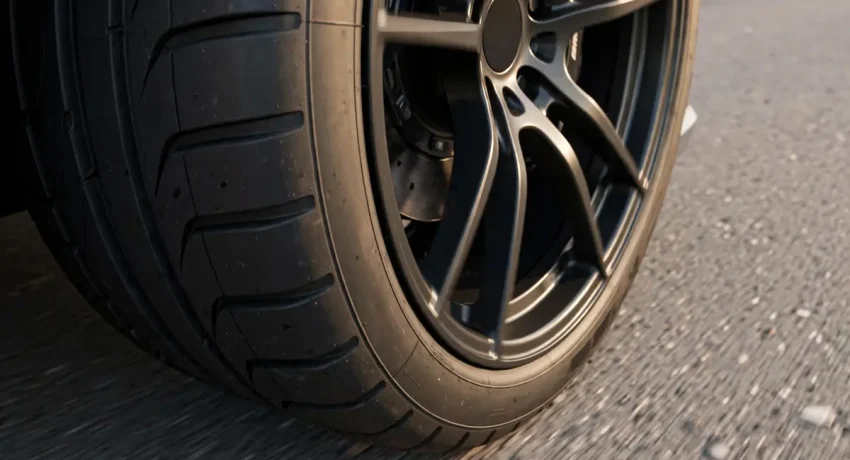
High-performance is a real category, not just a marketing label. Three things set these tyres apart from ordinary touring rubber. First, the compound is softer and stickier, so it grips the road harder when you brake or turn. Second, the tread has bigger blocks and fewer grooves, which puts more rubber on the road. Third, the sidewalls are stiffer, so the tyre flexes less in corners and the steering feels more direct.
Those choices come with a trade-off. A softer compound wears faster, so typical summer performance tyres last around 20,000 to 30,000 miles, while a touring tyre often passes 50,000 miles. That is why the price per tyre tells only half the story. A $300 performance tyre that lasts half as long as a $200 touring tyre costs more per mile, not less. Keep that maths in mind when you compare prices later in this guide.
Speed ratings matter too. Every tyre carries a letter on its sidewall that states the fastest speed it can sustain safely. The common ones for performance tyres are H (130 mph), V (149 mph), W (168 mph), and Y (186 mph). ZR means the tyre is rated above 149 mph. The Sport Line comes in H, V, and W rated sizes, with some T-rated touring sizes as well. Match the rating to your car, not to your ambition. A tyre rated below what your car needs is a safety problem, not a bargain.
| Speed rating | Maximum sustained speed | Typical use |
|---|---|---|
| T | 118 mph | Touring sizes of the Sport Line |
| H | 130 mph | Everyday performance driving |
| V | 149 mph | Stronger performance sedans |
| W | 168 mph | High-performance models |
| Y | 186 mph | Top-tier sports cars |
What Are the Zenna Sport Line Specs?
The headline numbers are simple: an all-season tyre for passenger vehicles, sold in sizes from 14 to 18 inches, and backed by a 60,000-mile limited manufacturer treadwear warranty. That warranty is generous for this price. Many budget tyres offer 40,000 miles or none at all. A 60,000-mile warranty signals that the maker expects the tyre to last, even if real-world mileage varies with driving style.
| Specification | Zenna Sport Line |
|---|---|
| Season | All-season |
| Type | High-performance, all-season |
| Vehicle fit | Passenger cars and some SUVs |
| Sizes | 14 to 18 inches |
| Speed ratings | H, V, and W (some T-rated touring sizes) |
| Tread life warranty | 60,000 miles, limited manufacturer treadwear warranty |
| Run flat | No |
| Seasons rating | M+S rated |
| Tread design | Twin center ribs, wide grooves, large shoulder blocks |
| SimpleTire owner rating | 4.7 out of 5 (27 reviews) |
The tread design does most of the work. Twin center ribs keep the tyre stable in a straight line and sharpen steering response. Wide grooves push water out from under the tread, which cuts the risk of hydroplaning on wet roads. Large shoulder blocks put more rubber on the road in corners, so the car holds its line when you turn hard. An optimised tread pattern also guides air through the footprint, which keeps road noise down on long drives.
How Does the Sport Line Actually Perform?
No tyre is good at everything. The Sport Line is honest about that. Here is how it behaves in each condition, based on retailer reviews and owner feedback.
How Does It Grip on Dry Roads?
Dry grip is the Sport Line’s strong point. The large contact patch and stiff shoulder blocks give it confident cornering for a budget tyre. Steering feels reasonably sharp, and the car gives you feedback through the wheel. It is not supercar precision. Nobody should expect that at this price. For daily driving and the odd enthusiastic back road, it is more than enough. Reviewers at Priority Tire note that the reinforced carcass handles high-speed driving pressure well, and the compound resists heat build-up on the tread.
How Does It Handle Rain?
Wet grip is also good. The wide grooves clear standing water from under the tyre, which keeps the rubber in contact with the road and reduces hydroplaning. SimpleTire lists improved wet grip as one of the tyre’s main strengths. That matters more than dry grip for most drivers, because a wet road is where accidents happen. A tyre that stays planted in the rain is worth more than one that corners a fraction faster on a dry day.
Is It Quiet?
Yes, by performance tyre standards. The optimised tread pattern breaks up sound waves instead of letting them build into a drone. Owners and reviewers both mention the quiet, comfortable ride. That is one reason the Sport Line suits older cars and daily drivers. A loud tyre gets tiring on a motorway, and this one does not shout.
What About Winter?
This is the weak spot. The Sport Line is M+S rated and carries sipes for light winter grip, but SimpleTire is blunt: winter grip is poor, even in light winter weather. All-season does not mean all-weather. If your winters bring real snow or ice, you need proper winter tyres. A budget all-season tyre will not save you on an icy road. Treat the Sport Line as a three-season tyre in cold climates, and swap it out when temperatures stay near freezing.
What Are the Pros and Cons?
- Pros: all-season traction with high-performance handling; strong wet grip and stability; quiet and comfortable ride; 60,000-mile tread life warranty; affordable pricing.
- Cons: poor winter grip, even in light snow; not suitable for off-road use; real-world mileage can fall short of the warranty; fuel efficiency could be better.
What Do Owners Say About Zenna Sport Line Tires?
Owners on SimpleTire rate the Sport Line 4.7 out of 5, based on 27 reviews. That is a small sample, so treat it as a signal rather than proof. Still, the pattern is consistent. Drivers praise the value, the quiet ride, and the grip in dry and wet weather. The complaints are familiar for a budget tyre. Some owners report faster wear than the warranty suggests, and a few note that fuel economy drops slightly compared with the tyres they replaced.
SimpleTire’s own verdict is measured. It calls the Sport Line a good fit if you want affordable all-season tyres that also deliver performance at higher speeds, with a smooth, quiet, comfortable drive and a long tread life warranty. At the same time, it notes that the Crosswind All Season UHP beats it slightly on handling and traction, while the Zenna wins on longevity and warranty. That kind of trade-off is normal in this price range. No budget tyre wins every category.
One honest review from a driver blog puts it well. These are not race tyres, it says, but they aim to give a daily commute or a weekend cruise a bit more zest and confidence. That is the right frame. Judge the Sport Line against other budget performance tyres, not against a Michelin Pilot Sport 4S. Against its real rivals, it holds up.
How Much Do Zenna Sport Line Tires Cost in 2026?
Price is the Sport Line’s main selling point. Listings checked in October 2026 show the tyre selling for around $68 to $82 per tyre in common sizes, before fitting. A P225/65R17 102H was listed at Walmart for $68.04, and a 235/50R17 ZR 96W was listed at $81.99 through Klarna’s shopping listings. Prices vary by size, retailer, and stock, so check current listings before you buy. A full set of four therefore costs roughly $270 to $330 before fitting, balancing, and alignment.
Compare that with the premium all-season performance tyres. The Michelin Pilot Sport All Season 4 sells for around $195 per tyre, and the Continental ExtremeContact DWS 06 Plus for around $170. A set of four Michelins costs close to $780, more than twice the Zenna set. That gap is the whole decision. The premium tyres are better tyres; the question is whether they are $450 better for your car and your driving.
| Tyre | Typical price per tyre | Tread life warranty |
|---|---|---|
| Zenna Sport Line | Around $68–$82 in common sizes | 60,000 miles |
| Continental ExtremeContact DWS 06 Plus | Around $170 | 50,000 miles |
| Michelin Pilot Sport All Season 4 | Around $195 | 45,000 miles |
| Michelin CrossClimate2 | Around $190–$220 | 60,000 miles |
Remember the cost-per-mile maths. The Zenna’s 60,000-mile warranty is longer than the Michelin’s 45,000 miles and the Continental’s 50,000 miles, at less than half the price. If the Zenna actually lasts 40,000 miles in your hands, it still costs less per mile than a premium tyre that lasts 45,000. But if it wears out in 25,000 miles, the maths flips. Your driving style decides which side of that line you land on.
How Does the Sport Line Compare With Premium Tyres?
The honest answer is that it does not beat them. It does not need to. The premium tyres win on outright grip, braking, and test results. In the 2026 ACE summer tyre test, the Michelin Pilot Sport 4S took first place with 141 out of 170 points, followed by the Continental SportContact 7 and the Bridgestone Potenza Sport Evo. Dry braking from 100 km/h showed the Bridgestone stopping in 32.8 to 32.9 metres, the Continental in about 33.2 metres, and the Michelin in about 33.4 metres. The Zenna was not in that test, and it would not have won it. That is not the point.
The point is the gap. On a dry road, the difference between a premium tyre and a good budget tyre is a metre or two of braking distance and a small step in cornering feel. When the road is wet, the gap grows, because premium compounds and tread designs evacuate water better. In snow, the gap is huge. So the comparison depends on where you drive. In a warm, dry climate with light rain, the Zenna gives you most of the experience for less than half the money. Where the climate is wet or cold, the premium tyre earns its price.
Inside Zenna’s own range, the Argus-UHP is the sharper sibling. It offers stronger dry grip and a more aggressive feel, while the Sport Line trades a little of that edge for comfort and low noise. If you drive a sporty sedan and want the firmest response, look at the Argus-UHP first. For a quieter ride on a family car, the Sport Line is the better pick. Both are all-season tyres, and both sit in the same budget bracket.
| Tyre | Best for | Price bracket | Tread life warranty |
|---|---|---|---|
| Zenna Sport Line | Quiet, comfortable all-season performance | Budget | 60,000 miles |
| Zenna Argus-UHP | Sharper dry grip, sportier feel | Budget | Check listing |
| Continental ExtremeContact DWS 06 Plus | Wet and ice grip, comfort, value | Premium | 50,000 miles |
| Michelin Pilot Sport All Season 4 | Dry and snow balance | Premium | 45,000 miles |
| Michelin Pilot Sport 4S | Maximum summer grip, track days | Premium | Check listing |
Who Should Buy the Zenna Sport Line?
The Sport Line suits a clear type of driver. You drive a passenger car or a small SUV, mostly in dry or mildly wet weather, and you want sharper handling than a basic touring tyre — but you will not pay $800 for a set. Your car is a few years old, and a premium tyre would cost more than the car is worth in proportion. You value a quiet ride and a long warranty. If that sounds like you, the Sport Line is a sensible buy.
It does not suit everyone. Skip it if you face real winters, if you drive a high-power sports car, or if you take your car to track days. A summer performance tyre or a dedicated winter set will serve you better. Skip it too if you drive very high annual mileage and need the longest possible tread life. A premium touring tyre may cost less per mile in that case.
| Buy the Sport Line if… | Skip it if… |
|---|---|
| You drive in dry or mildly wet weather | Your winters bring snow or ice |
| You want sharper handling on a budget | You drive a high-power sports car |
| Your car is older and premium tyres feel wasteful | You do track days |
| You value a quiet, comfortable ride | You need maximum tread life above all |
| You want a 60,000-mile warranty at a low price | You want the best wet braking money can buy |
How Do You Choose the Right Size?
Getting the size wrong is the most common tyre mistake, and it is easy to avoid — which is why learning how to choose performance tyres starts with the numbers on your car. Your car’s correct tyre size is printed on the driver’s door jamb sticker and in the owner’s manual. It looks like 205/55R16. The first number is the width in millimetres, the second is the aspect ratio — the sidewall height as a percentage of the width — and R16 is the wheel diameter in inches. Match all three numbers exactly, unless a tyre professional tells you otherwise.
Check the load index and speed rating too. The load index is a number that states how much weight each tyre can carry, and the speed rating is the letter we covered earlier. Both must meet or exceed your car’s requirements. A tyre with the right size but the wrong load index is not safe. If you are unsure, ask the retailer to confirm fitment for your exact car, year, and trim. A good seller will do this before taking your money.
The sidewall also carries a UTQG rating, which grades treadwear, traction, and temperature resistance. A higher treadwear number suggests a longer-lasting tyre, while the traction grade (AA, A, B, or C) rates wet stopping grip. Use the UTQG rating to compare tyres in the same category, not across categories, because the test conditions are not identical.
One more check: the Sport Line comes in sizes from 14 to 18 inches, which covers most passenger cars. If your car uses 19-inch or larger wheels, this tyre is not made for you. That is a hard limit. Do not try to fit a smaller tyre on a larger wheel, or a larger tyre on a smaller one. The bead will not seat properly, and the tyre can fail.
How Do You Make Performance Tyres Last?
Performance tyres wear faster than touring tyres, so care matters more. Check your tyre pressure every month. Under-inflation wears the shoulders, overheats the tyre, and dulls the steering. Over-inflation wears the centre and makes the ride harsh. Use the pressure on the door jamb sticker, not the maximum pressure printed on the sidewall.
Regular tyre rotation every 5,000 to 7,000 miles keeps wear even. Front tyres wear faster on most cars because they steer and, on front-wheel-drive cars, they also put the power down. Rotation spreads the wear evenly, so all four tyres last longer. Get the alignment checked when you fit new tyres, and again if the car pulls to one side or the steering wheel sits off-centre. Bad alignment can destroy a new set in a few thousand miles.
Watch the tread depth. The legal minimum in most places is 2/32 of an inch, but grip in the wet drops sharply long before that. Many drivers replace performance tyres at 4/32 of an inch. Use the tread wear indicators in the grooves, or a simple tread depth gauge, and check every few months. Store spare tyres away from sunlight and heat, and remember that manufacturers recommend replacing tyres after ten years, even if the tread looks fine.
Where Should You Get Them Fitted?
Buying the tyre is only half the job. Fitting, balancing, and alignment decide how it performs. A good fitter will mount the tyres, balance each wheel, check the alignment, and torque the wheel nuts to the right setting. By contrast, a careless fitter can damage a new tyre on the machine, or leave a wheel unbalanced so the car shakes at speed.
If you buy online, you still need a local shop for the fitting. Ask the shop to check the tyre pressures, look at the brakes while the wheels are off, and give you a printout of the alignment settings. That is a fair expectation, and a good shop will do it without being asked. If you are not sure which shop to trust, our guide on how to choose an auto repair shop walks through the checks that matter, from ASE certification to written estimates and warranties. A shop that passes those checks is a safe place to have new tyres fitted.
Expect to pay for fitting and balancing on top of the tyre price, usually a modest amount per wheel. Some retailers include it in a package, so compare the full fitted price rather than the tyre-only price. A $68 tyre with $30 fitting is not cheaper than a $90 tyre with fitting included.
Frequently Asked Questions
Are Zenna Sport Line tires good?
Yes, for their price. Owners rate them 4.7 out of 5 on SimpleTire, and reviewers praise the dry and wet grip, the quiet ride, and the 60,000-mile warranty. They are good budget all-season performance tyres, though not as good as premium tyres from Michelin or Continental — but they cost less than half as much.
How long do Zenna Sport Line tires last?
The maker backs them with a 60,000-mile limited tread life warranty. Real-world life depends on your driving. Gentle drivers on smooth roads may get close to that number. Hard driving, bad alignment, or low pressure will cut it short. Rotate every 5,000 to 7,000 miles and keep the pressure right to get the most from them.
Are Zenna Sport Line tires good in snow?
No. They are M+S rated and handle light winter conditions, but reviewers report poor winter grip even in light snow. If your winters bring real snow or ice, fit dedicated winter tyres. All-season does not mean all-weather.
What sizes does the Zenna Sport Line come in?
Sizes from 14 to 18 inches, in H, V, and W speed ratings, with some T-rated touring sizes. Common sizes include 205/55R16, a popular fit for cars like the Honda Civic and Hyundai Elantra. Check your door jamb sticker for your car’s exact size.
Is Zenna a good tire brand?
Zenna is a value brand owned by American Pacific Industries, founded in 1982. It makes budget tyres that perform well for the price, with the Sport Line and the Argus-UHP as its best-known models. Zenna’s tyres do not match premium brands on outright grip or test results, but they offer solid performance at a much lower price.
Should I buy Zenna Sport Line or Michelin Pilot Sport All Season 4?
It depends on your budget and your weather. The Michelin is the better tyre, with stronger grip and better test results, at around $195 per tyre. By contrast, the Zenna costs around $68 to $82 and gives you most of the everyday performance for less than half the money. If you drive in heavy rain or snow, buy the Michelin. Mostly dry-weather driving on a budget, though, makes the Zenna a sensible choice.
Sources: SimpleTire Zenna Sport Line review and owner ratings; Priority Tire Zenna Sport Line review; NeoTires Zenna brand and size guide; Newegg Zenna Sport Line listing; Walmart and Klarna price listings checked October 2026; Apex & Octane best all-season performance tires 2026; TyrePress 2026 ACE summer tyre test; Tyre Reviews all-season UHP rankings. Prices are listed prices at the time of checking and vary by size, retailer, and stock.