
Car Detailing Explained: Washing, Waxing and Interior Care
A car wash makes a car look clean for a day. Detailing makes it look cared for, inside and out, for weeks. Car detailing explained in plain terms is a deep clean and protection routine, done step by step. It covers the paint, the glass, the wheels, and every surface inside the cabin. This guide explains what detailing is, how to do it yourself, and when to leave it to a professional.
Firstly, you will learn what detailing means and how it differs from a car wash. Secondly, you will see the steps in order, from washing to waxing. Finally, you will learn about interior care, leather, upholstery and headlights. As a result, you can detail your car with confidence, without buying gear you do not need.
What Is Car Detailing?
What is car detailing? It is a thorough cleaning, restoration and protection process for a car, inside and out. A wash removes surface dirt. Detailing goes further. It cleans the paint properly, removes bonded contamination, protects the finish, and cleans every interior surface. The aim is to return the car to the best condition it can be in.
Car detailing vs car wash is therefore a question of depth. A car wash takes minutes and covers the outside. Detailing takes hours and covers everything. A wash is maintenance. Detailing is restoration. Both have a place, but they are not the same job.
Detailing does not need to be expensive. Car detailing for beginners starts with basic products and careful technique. A beginner can achieve good results without professional machines. The most important tools are patience and the right order of steps. Rushing causes swirl marks on paint and streaks on glass. Going slowly protects the finish.
Detailing also helps you spot problems early. While you clean, you see stone chips, scratches, worn wiper blades and tired trim. Catching those early means cheaper fixes. In that sense, detailing is inspection as well as cleaning.
What Are the Car Detailing Steps?
Car detailing steps follow a simple order: wash, decontaminate, protect, then interior. Working in that order stops you from undoing your own work. Washing first removes loose dirt. Decontamination removes bonded dirt. Protection seals the clean paint. The interior comes last, so you do not carry dirt inside after cleaning it.
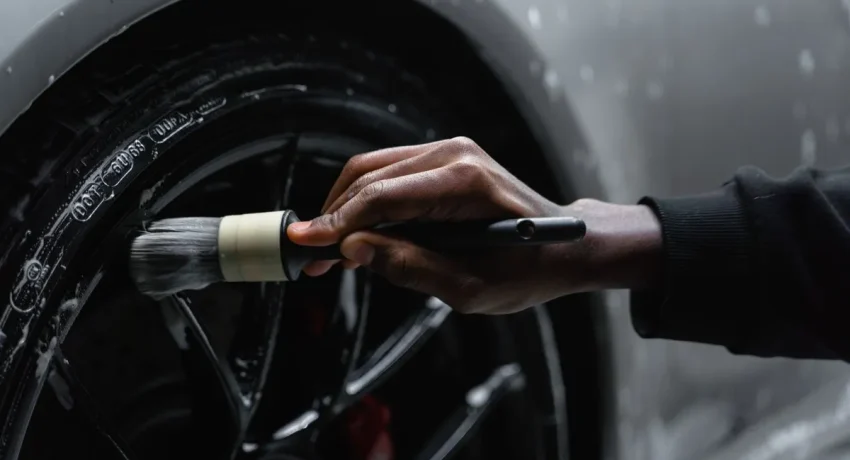
Start with the wheels, before the bodywork. Wheels collect brake dust and road grime. Clean them with a dedicated wheel cleaner and a brush. Rinse them well. Cleaning the wheels first stops dirty water from splashing onto clean paint later.
Next, rinse the whole car to remove loose dirt. Then wash it with the two-bucket method: one bucket for soapy water, one for rinsing the wash mitt. That keeps grit out of the soapy water. Grit in the mitt causes swirl marks. Rinse the mitt in the clean-water bucket after each panel.
After washing, dry the car with a clean microfibre towel. Do not let it air-dry in sunlight. Water spots form as droplets dry, and they can mark the paint. Dry panel by panel, working from the top down. In addition, dry the door shuts and the boot edges, where water hides.
Decontamination comes next. A clay bar or a clay mitt removes bonded contamination that washing leaves behind. Lubricate the surface well and glide the clay gently across it. You will feel the surface go smooth. That smoothness is the sign the contamination is gone. This step takes time, but it transforms how the paint feels.
How Do You Wash a Car Properly?
How to wash a car properly is mostly about avoiding damage. Paint is softer than most people think. A dirty sponge dragged across it leaves fine scratches. Those scratches show up as swirl marks in sunlight. Good technique prevents them.
Use a proper car shampoo, not washing-up liquid. Car shampoo is designed to clean without stripping wax or drying out rubber seals. Washing-up liquid is too harsh. It removes protection and dries out trim. A bottle of car shampoo lasts a long time and costs little.
Wash in the shade when you can. Direct sunlight dries shampoo on the paint before you can rinse it. That leaves marks. A cloudy day or a shaded driveway is ideal. If you must wash in sun, work panel by panel and rinse quickly.
Use a wash mitt, not a sponge. A mitt holds dirt away from the paint surface. A sponge traps dirt against it. Rinse the mitt often. In addition, use separate cloths for the bodywork, the glass and the wheels. Cross-contamination causes scratches.
Finish by drying thoroughly. A large microfibre drying towel absorbs water without scratching. Pat the towel rather than dragging it. Check the mirrors, the badges and the trim for trapped water. Those spots drip later and leave marks on clean paint.
Car Waxing and Paint Protection Explained
Car waxing explained simply is adding a protective layer over clean paint. Wax makes water bead and roll off. It adds shine and depth to the colour. It also protects the paint from sunlight, bird droppings and road grime. Wax is not permanent, so it needs reapplying regularly.
Car paint protection comes in several forms. Wax is the traditional choice. It is easy to apply and gives a warm shine. Sealants are synthetic products that last longer than wax. They give a sharper, glassier look. Ceramic coatings last longest of all, but they need careful preparation and are best applied by a professional.
Apply wax to clean, dry paint in the shade. Work in small sections with a foam applicator. Let it haze, then buff it off with a clean microfibre cloth. Do not apply wax in direct sunlight. It dries too fast and becomes hard to remove.
Protect the trim as well as the paint. Plastic trim fades in sunlight. A trim dressing restores the colour and adds protection. Apply it sparingly. Too much dressing looks greasy and attracts dust. A little goes a long way.
Do not wax over dirt. Wax seals in whatever is underneath it. If the paint is dirty, the wax locks the dirt against the paint. Wash and decontaminate first. That order is what makes the protection last.
How Do You Detail a Car Interior?
Car interior detailing starts with removing everything. Take out floor mats, personal items and rubbish. Vacuum every surface: seats, carpets, the boot and the gaps between seats. Use a crevice tool for the tight spots. Vacuum twice if the car is very dirty. The second pass picks up what the first one loosened.
Clean hard surfaces with a suitable interior cleaner and a microfibre cloth. Wipe the dashboard, the door cards and the centre console. Avoid shiny, greasy dressings on the dashboard. They look good for a day and then attract dust. A clean, matte finish lasts longer and looks better.
Clean the glass last, inside and out. Use a glass cleaner and a clean microfibre cloth. Wipe in one direction on the outside and the other direction on the inside. That way, you can tell which side a streak is on. Interior glass collects a film from plastics and breath. It needs cleaning more often than people expect.
Do not forget the small details. Clean the seatbelts, the steering wheel and the gear lever. Those are the surfaces you touch every drive. A quick wipe keeps them fresh. In addition, clean the air vents with a soft brush. Dust builds up in vents and blows out when the fan runs.
How Do You Care for Leather and Upholstery?
Car leather care starts with cleaning before conditioning. Use a leather cleaner to remove dirt and body oils from the surface. Wipe it off with a clean cloth. Then apply a leather conditioner sparingly. Conditioner keeps the leather soft and stops it from cracking. Too much conditioner leaves the seats greasy.
Vacuum leather seats before cleaning them. Dirt trapped in the seams can scratch the surface during cleaning. In addition, test any new product on a hidden area first. Leather varies, and a product that suits one car may not suit another.
Car upholstery cleaning is different for fabric seats. Vacuum first, then use a fabric cleaner or an upholstery shampoo. Work in small sections and do not soak the fabric. Too much water can leave watermarks and take days to dry. Blot, do not rub. Rubbing pushes stains deeper into the fabric.
For stains, act quickly. Blot the spill with a clean cloth. Do not rub it. Then clean the area with a suitable product. Old stains are harder to remove than fresh ones. If a stain will not shift, a professional detailer has stronger products and extraction machines.
Protect the seats after cleaning. Seat covers help on cars used for messy work or family trips. They are easier to wash than the seats themselves. However, check that covers do not interfere with side airbags. The handbook will say whether covers are safe for your car.
How Do You Restore Car Headlights?
Car headlight restoration fixes cloudy, yellowed headlights. Headlight lenses are plastic, and sunlight turns them cloudy over time. Cloudy lenses scatter light and reduce brightness at night. Restoration removes the cloudy layer and restores clarity.
The process starts with cleaning the lens. Then the surface is wet-sanded with fine abrasive paper, working from coarse to fine. That removes the damaged outer layer. After sanding, the lens is polished to a clear finish. Finally, a protective sealant is applied to slow down future clouding.
Restoration kits are available for home use. They include the abrasives and polish you need. Follow the instructions carefully. Rushing the sanding stages leaves the lens worse than before. Take your time and keep the surface wet while you sand.
Mask off the paint around the headlight before you start. Sandpaper near paint is a bad combination. In addition, work on one headlight at a time. That way, you can compare the finished lens with the cloudy one and see the improvement clearly.
How Often Should You Detail a Car?
How often to detail a car depends on how you use it. A car driven daily in all weathers needs detailing more often than a car kept in a garage. As a rough guide, a full detail twice a year suits most drivers. A wash and a wax top-up in between keeps the protection fresh.
Interior detailing follows the same logic. A family car with children and pets needs more frequent interior work than a car used only for commuting. Vacuum weekly and deep-clean the interior every few months. That routine stops dirt from building up to the point where it needs professional help.
Seasonal timing helps. Detail the car before winter to protect the paint from salt and grime. Detail it again in spring to remove the winter build-up. That rhythm keeps the car in good condition all year. It also makes each detail easier, since the dirt never gets too deep.
DIY Car Detailing and Costs
DIY car detailing is a good way to learn and to save money. Start with the basics: shampoo, wash mitt, microfibre towels, wheel cleaner and wax. That kit covers a full exterior detail. Add interior cleaner and glass cleaner for the cabin. You do not need professional machines to get good results.
Car detailing products vary widely in price and quality. Buy from reputable retailers and read reviews from independent testers. Avoid the cheapest products. They often perform poorly and can damage surfaces. A mid-range product from a known maker is usually the best value.
What Does Professional Detailing Cost?
Car detailing costs for professional work depend on the size of the car, its condition and the services included. A basic exterior detail costs less than a full interior and exterior detail. A car with heavy contamination or stained upholstery costs more, because it takes longer. Always ask what is included before booking.
When comparing quotes, check the detailer’s reputation and look at their previous work. A good detailer will explain the steps and the products they use. They will also be honest about what can and cannot be fixed. Deep scratches and torn leather need repair, not detailing.
Knowing typical car repair costs helps you judge a detailing quote too. Detailing is maintenance, not repair, but the same principle applies: a clear written quote beats a vague promise. Following a regular car maintenance schedule keeps detailing from being forgotten. If paint or trim needs attention beyond detailing, our guide to dealer vs independent mechanic servicing can help you choose a workshop. A quality auto repair workshop can advise on paint damage that detailing cannot fix. Check the wheels and tyres while you detail them. Our tyre guide explains what to look for on tread and sidewalls, and a tyre care guide can help you judge when a tyre needs replacing.
Detailing is satisfying work. A car that was dull and dusty becomes bright and clean. The paint feels smooth, the glass is clear, and the cabin smells fresh. Do it regularly, use the right order, and protect what you have cleaned. That is car detailing: not a luxury, but care that keeps your car looking and feeling its best.