
Ontario in summer feels like a different province. Lakes turn warm enough to swim in. Patios fill up by noon. Small towns run festivals every single weekend. And the long days stretch until nearly nine at night.
If you are looking for places to visit in Ontario Canada during summer, this guide covers twelve of them. It is a full Ontario summer travel guide 2026, built around the best places to visit in Ontario in summer. Big cities mix with quiet lakes in this guide. Famous icons sit beside places most visitors never hear about. Every price and date below was checked against 2026 sources.
Ontario covers more than 1.6 million square kilometres. That makes it larger than France, Germany and Spain combined. Most visitors stay in the southern corridor, where over twelve million of the province’s fifteen million people live. A car helps a lot outside Toronto and Ottawa. Public transport works well inside those two cities, and far less well beyond them.
Which Ontario summer place fits you best?
Not every traveller wants the same trip. Some want city lights. Others want a canoe and silence. Use this table to pick your starting point.
| Traveller | Best pick | Why it works |
|---|---|---|
| First-time visitor | Toronto and Niagara Falls | Icons, easy transport, endless food |
| Family with kids | Toronto Islands and Wasaga Beach | Beaches, rides, shallow water |
| Couple | Prince Edward County | Wineries, beaches, slow mornings |
| Outdoor lover | Algonquin Park | Canoeing, moose, dark skies |
| Photographer | Bruce Peninsula | Turquoise water, cliffs, caves |
| Festival fan | Toronto in June or July | A festival almost every weekend |
| Road tripper | Thousand Islands and Kingston | Castles, river views, small towns |
When is the best time to visit Ontario in summer?
June brings long days and fewer crowds. July is the warmest month, and also the busiest. August stays warm, with the Canadian National Exhibition closing the season. September feels like summer with thinner crowds.
| Month | Typical weather | Crowds | Best for |
|---|---|---|---|
| June | 20–26°C, long days | Moderate | Festivals, World Cup, hiking |
| July | 25–30°C, humid spells | Peak | Beaches, lakes, patios |
| August | 24–29°C, warm lakes | Peak | Swimming, camping, CNE |
| September | 18–24°C, cool nights | Light | Wine country, quiet trails |
Toronto summer highs usually sit around 25–30°C. Nights cool down fast, so pack a light jacket. Rain can arrive without warning. A small umbrella earns its place in your bag.
Why is Toronto the best place to start your Ontario summer?
Toronto is Canada’s largest city, and it works as a base for everything. You can spend three days here without repeating a single thing. Then you can drive out to the lakes, the falls and the wine country.
Start at the CN Tower. Toronto summer attractions 2026 start here, and CN Tower tickets 2026 begin with Timed General Admission at $47 for adults, $34 for seniors and youth, and $18 for children. The Top package costs $59 for adults and adds the highest observation platform in the Western Hemisphere. EdgeWalk starts at $199. That is the hands-free walk around the rim, 356 metres up. Toronto CityPASS costs $134.96 for adults and covers five attractions, saving up to 38 percent. It stays valid for nine days.
Book CN Tower tickets online, up to thirty days ahead. Timed entry keeps the queues moving. Sunset slots sell out first, so grab one about forty-five minutes before sunset if you can.
Walk south to the harbourfront after the tower. Streetcars run along Queens Quay. The waterfront path suits an evening stroll. Food stalls and patios line the route in summer.
Toronto also hosted the FIFA World Cup in 2026. Six matches took place at BMO Field, from June 12 to July 2. Canada opened the tournament at home on June 12 against Bosnia and Herzegovina. The stadium held 45,736 fans. A free Fan Festival ran at Fort York and The Bentway from June 11 to July 19. Hotels near the stadium filled fast during those weeks, and prices rose sharply.
What neighbourhoods should you explore in Toronto?
Kensington Market suits curious eaters. Small shops sell food from dozens of countries. Vintage stores sit beside bakeries and fruit stalls. It feels nothing like a mall, and that is the point.
The Distillery District suits an evening walk. Old brick lanes hold galleries, cafes and patios. It stays car-free, so kids can roam safely. Summer brings outdoor art and live music.
Queen Street West suits shoppers and people-watchers. Independent stores mix with big brands. Graffiti Alley, just south of Queen, makes a fun photo stop.
For a summer trip with a partner, our summer honeymoon guide has more romantic city ideas. Solo travellers can use the single woman travel guide for safety and planning in detail.
How do you spend a perfect day at Niagara Falls in summer?
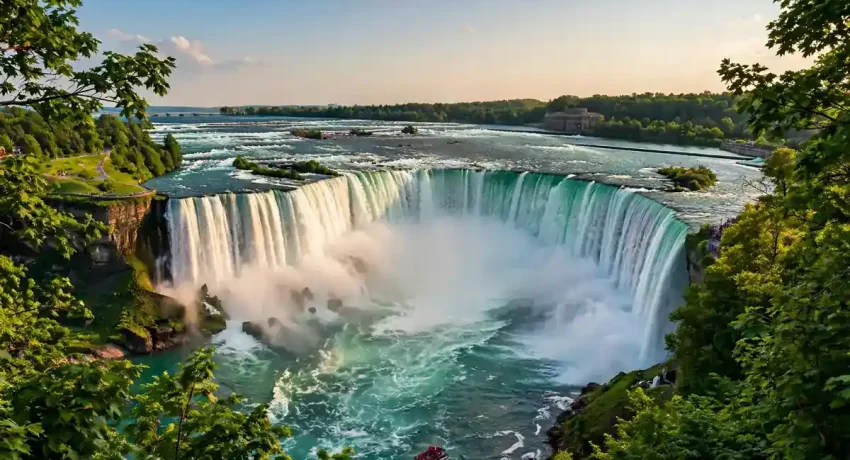
Niagara Falls sits about 130 kilometres from Toronto, roughly ninety minutes by car. Summer is its loudest season. Mist hangs over the river. Crowds gather at every viewpoint. Niagara Falls summer 2026 runs at full power, and the falls draw millions of visitors.
Start with the boat. Niagara City Cruises runs the red-poncho catamarans on the Canadian side. Tickets cost CA$47.95 for adults and CA$27.95 for children aged three to twelve, plus 13 percent HST. The ride lasts about twenty minutes on the water, and forty-five to sixty minutes in total. Boats run daily from May 1 to November 30. Two boats, Niagara Wonder and Niagara Thunder, each carry seven hundred passengers.
Book the boat online if you can. Walk-up lines grow long by midday. Early morning sailings feel calmer, and the light suits photos.
Journey Behind the Falls takes you through tunnels to a balcony right beside the water. It pairs well with the boat. Do the boat first, then the tunnels, then walk the clifftop path while you dry off.
At night, the falls light up in colour. Fireworks run on summer evenings, weather permitting. The town itself leans touristy, with arcades and chain restaurants. Walk a few blocks from Clifton Hill and the prices drop fast.
Niagara-on-the-Lake sits twenty-five minutes down the river. It feels like a different world. Tree-lined streets, old inns, and wineries fill the town. The Shaw Festival runs its sixty-third season there in 2026, until October 11. Book theatre tickets ahead in summer.
Why are the Toronto Islands the city’s best summer escape?
The Toronto Islands sit fifteen minutes by ferry from downtown. Cars stay behind. Beaches, bike paths and picnic lawns take over. The skyline view from the ferry alone justifies the trip.
Ferries leave from the Jack Layton Ferry Terminal at 9 Queens Quay West. Toronto Islands ferry 2026 fares start at CA$9.57 for an adult round trip. Seniors aged sixty-five and over pay CA$6.15. Juniors aged two to fourteen pay CA$4.51. Children under two ride free. Centre Island and Hanlan’s Point run from mid-April to mid-October. Ward’s Island runs all year.
Buy tickets online when you can. Online tickets work any day until the end of the year. Terminal tickets work only on the day you buy them. Morning boats fill fast on summer weekends, and the return queues peak between five and nine in the evening.
Centre Island suits families. Centreville Amusement Park sits right there, with rides for small children. The beach near the park has shallow water. Hanlan’s Point suits a quieter day, with a long sandy beach and a clothing-optional section at its far end. Ward’s Island suits a slow walk, with cottages and gardens along the boardwalk.
Rent a bike on the island if you like. The path runs the full length of the chain, and it stays flat the whole way. Bring water and sunscreen. Shade is thin on the beaches.
Getting to the terminal is easy. The TTC charges $3.30 per adult ride with PRESTO, debit or credit. Children twelve and under ride free. A two-hour transfer comes with every tap.
Why is Muskoka the classic Ontario summer escape?
Muskoka sits about two and a half hours north of Toronto. Torontonians call it cottage country. The region holds more than 1,600 lakes, and summer life revolves around them.
Base yourself in Bracebridge, Gravenhurst or Huntsville. Each town has its own feel. Gravenhurst holds the steamship port. Bracebridge has waterfalls right in town. Huntsville sits closest to Algonquin Park.
Rent a canoe or a kayak for a morning. Lake Muskoka and Lake Joseph suit slow paddling. Swim from a public beach in the afternoon. Many beaches stay uncrowded on weekdays. Evenings suit a dockside dinner or a campfire.
Cottages book early for July and August. Muskoka summer cottages on the water go first, often months ahead. If prices scare you, look inland. A cabin ten minutes from the water costs far less than a lakefront cottage.
The Segwun steamship sails from Gravenhurst in summer. It is the oldest operating steamship in North America. A cruise runs about two hours and shows the lake from the water. Book ahead on weekends.
How do you plan an Algonquin Park summer trip?
Algonquin Park covers more than 7,600 square kilometres of forest, lakes and canoe routes. It is Ontario’s oldest provincial park. Summer is its busiest season, and planning matters more here than anywhere else in the province.
First, the permits. A daily vehicle permit along Highway 60 costs $21 per vehicle per day in 2026. It covers one vehicle and all occupants, up to fourteen people. A summer seasonal permit costs $84.75. An annual permit costs $111.87. Buy day-use permits online, up to five days ahead. Sales open at seven in the morning. Permits are not sold in person at the park.
Camping reservations open five months ahead through Ontario Parks. A July long weekend site can be booked as early as February. Summer weekends sell out on the day they open. Be logged in at seven in the morning, ready to book.
Backcountry camping costs about $12.43 per adult per night. The park holds more than 1,500 kilometres of canoe routes. First-timers should start with a short route. Canoe Lake and Smoke Lake suit a first trip. Portages stay short, and campsites sit close to the water.
Highway 60 runs through the park’s south side. You can drive it without a permit if you never stop. The moment you pull over, you need one. Moose appear most often at dawn and dusk along this road. Slow down near wetlands, and never approach a moose on foot.
Day trails suit non-campers. The Lookout Trail takes about an hour and rewards you with a wide valley view. The Beaver Pond Trail suits families, with boardwalks over the marsh. The Logging Museum trail explains the park’s timber history in an easy outdoor walk.
For a longer northern summer trip, our Vermont summer guide covers a similar mountain-and-lake summer just across the border. And if you love beach days, the top US beach places guide has more shoreline ideas.
What makes the Bruce Peninsula Grotto worth the planning?
The Grotto is a sea cave on the edge of Georgian Bay. Turquoise water fills it. Sunlight pours through an opening in the rock. It looks like the Caribbean, until you dip a toe in and feel how cold the water really is.
Planning is not optional here. Bruce Peninsula Grotto 2026 runs on reservations, and parking at Cyprus Lake needs one from May 1 to October 31, 2026. Slots run four hours each. Summer weekends sell out, and walk-ins get turned away when the lot fills. Book through Parks Canada before you drive up.
Admission costs about $9 per adult, with youth free, plus a reservation fee and parking. The Canada Strong Pass gave free national-park admission from June 19 to September 7, 2026. It did not cover parking or the reservation fee. Check current fees at Parks Canada before you travel, because prices change.
The hike from the Cyprus Lake lot to the Grotto runs about three and a half kilometres one way. Allow two to three hours for the round trip. Wear water shoes if you plan to swim. The rock stays slippery, and the water stays cold even in August.
Flowerpot Island sits offshore from Tobermory. Boats run from the harbour from spring to autumn. The island’s sea stacks look like flowerpots, and the loop trail takes about an hour. Book boat tickets ahead on summer weekends.
One trail note for 2026: the Bruce Trail section from Crane Lake Road to High Dump is closed. Flooding made it unsafe on May 6, 2026. Check the Parks Canada trail status page before you set out.
Tobermory itself is a small harbour town. Fish and chips taste better here than almost anywhere in Ontario. The harbour fills with boats by mid-morning. Stay overnight if you can, because the town empties after the day-trippers leave.
Why is Prince Edward County Ontario’s summer food and beach stop?
Prince Edward County sits about two hours east of Toronto. It mixes wineries, beaches and small towns in one compact area. Prince Edward County summer is its peak season, and it earns the crowds.
Sandbanks Provincial Park holds the county’s famous beaches. Its dunes form the world’s largest freshwater sandbar and dune system. Outlet Beach, the main Sandbanks Provincial Park beach, suits families, with shallow water and soft sand. Dunes Beach suits a quieter afternoon. Day-use parking fills fast on summer weekends, so arrive early or book ahead.
Wineries cluster along County Road 10 and the surrounding back roads. Most offer tastings for a small fee. Many have patios with food. Designate a driver, or book a wine tour and let someone else drive.
Picton is the county’s main town. It holds cafes, bookshops and a main street made for walking. Wellington suits a slower afternoon, with a beach and a few good restaurants. Bloomfield holds galleries and a beloved ice cream shop.
Camping at Sandbanks books months ahead. Book through Ontario Parks as soon as your dates open. If campsites are full, look at motels in Picton or farm stays in the county.
For another summer wine-and-beach region, the US spring guide covers warm-weather trips south of the border. And the Florida beaches guide suits travellers who want even warmer water.
How do you explore the Thousand Islands in summer?
The Thousand Islands scatter across the St. Lawrence River near Kingston. The archipelago holds more than 1,800 islands. Some hold a single cottage. Others hold castles.
Cruises leave from Gananoque, Kingston, Rockport, Brockville and Ivy Lea. A Thousand Islands cruise 2026 starts from $29 per person, with one, three or five-hour sailings from Gananoque. The one-hour loop stays among the nearest islands. The three-hour circuit adds Boldt Castle and Millionaire’s Row from the water. The five-hour sailing docks at Heart Island for two hours inside Boldt Castle, with admission included.
Bring a passport if you take the castle stopover. Boldt Castle sits on Heart Island, which is United States territory. Sail-past routes stay in Canadian waters and need no passport. Boats run daily from May through October.
Kingston makes a good base. The city holds Fort Henry, a limestone downtown, and a waterfront full of patios. A three-hour sunset dinner cruise leaves from Kingston in summer, from about $102 per person. Book dinner cruises ahead, because they sell out on weekends.
Gananoque itself is a small town with a main street made for a slow evening. Ice cream shops and pubs line the waterfront. It suits an overnight stop between Toronto and Ottawa.
Why should you add Ottawa to a summer Ontario trip?
Ottawa is Canada’s capital, and it surprises first-time visitors. The city feels calm after Toronto. Parks, rivers and bike paths fill the summer. Most Ottawa summer attractions sit within walking distance of each other, and the big museums cluster downtown.
Parliament Hill anchors the downtown. Free tours run in summer, and the grounds suit a picnic. The Rideau Canal runs through the city. In summer it carries tour boats instead of skaters. Rent a bike and ride the canal path south to Dows Lake.
ByWard Market suits breakfast and lunch. Stalls sell local produce, cheese and maple treats. The market stays busy all summer. Arrive before ten to beat the crowds.
The Canadian Museum of History sits across the river in Gatineau. Its Grand Hall holds totem poles and a view back across the river to Parliament. The National Gallery holds Canadian and Indigenous art, plus the giant spider sculpture outside.
Ottawa sits about four and a half hours from Toronto by car, or by train on VIA Rail. The train takes about the same time, and it drops you downtown. Summer weekends fill fast, so book rail tickets early.
What can you do at Blue Mountain in summer?
Blue Mountain sits near Collingwood, about two hours northwest of Toronto. Winter brings skiers. Summer brings hikers, bikers and families. Blue Mountains Ontario summer activities start with the open-air gondola, which climbs to the top of the escarpment in about ten minutes.
Mountain biking suits confident riders. The bike park holds trails for every level. Rentals sit at the village base. Beginners should start with the green runs and a lesson.
The village at the base holds shops, restaurants and patios. Summer evenings bring live music and outdoor movies. The Apple Pie Trail links bakeries and orchards across the region. Each stop serves its own version of the classic pie.
Wasaga Beach sits twenty minutes away. Its fourteen kilometres of sand form the longest freshwater beach in the world. The main beach area gets busy, with crowds and music. Walk east or west and the beach empties fast. The water stays shallow for a long way out, which suits small children.
Why is Elora Gorge the best small-town summer stop?
Elora sits about ninety minutes west of Toronto. The town feels like a film set. Stone buildings line the main street. A river gorge cuts through the middle of town.
Tubing the gorge is the summer draw. You float down the Grand River between limestone cliffs. The run takes about two hours. Rentals include a tube and a shuttle back to town. Water levels change with rain, so check conditions before you go.
The Elora Gorge Conservation Area holds trails and a campground. The lookout over the gorge suits a photo at sunset. The town’s cafes and galleries fill the afternoon. The Elora Mill hotel sits right on the river, with a patio made for long lunches.
Pair Elora with the nearby town of Fergus. The two towns sit ten minutes apart. Fergus holds a Scottish heritage festival in summer, with pipe bands and Highland games.
For a fall trip to the same region, the Minnesota fall guide covers autumn colour in the American Midwest. And our safest places outside the US guide helps if you are planning a first trip to Canada.
What festivals are on in Ontario in summer 2026?
Ontario runs festivals all summer. Toronto alone hosts a major event almost every weekend. Ontario summer festivals 2026 fill the calendar from June to September, and this table covers the biggest ones, with dates checked for 2026.
| Festival | Dates 2026 | Where |
|---|---|---|
| Luminato Festival | June 3–28 | Toronto |
| TD Toronto Jazz Festival | June 19–28 | Toronto |
| Pride Toronto | June 26–28 | Toronto |
| Toronto Fringe Festival | June 30–July 12 | Toronto |
| Summerlicious | July 3–19 | Toronto |
| Salsa in Toronto | July 11–12 | Toronto |
| Toronto Caribbean Carnival | July 11–August 2 | Toronto |
| Canada’s Wonderland summer events | Until July 5 | Vaughan |
| Canadian National Exhibition | August 21–September 7 | Toronto |
| Fan Expo Canada | August 27–30 | Toronto |
| Toronto International BuskerFest | September 4–7 | Toronto |
| Canadian International Air Show | September 5–7 | Toronto |
| Toronto International Film Festival | September 10–20 | Toronto |
The Caribbean Carnival is North America’s largest Caribbean carnival. It began in 1967. The Grand Parade runs on August 1 at Exhibition Place. Book hotels early if you visit that weekend.
The Canadian National Exhibition, known as the Ex, closes the summer. It runs eighteen days and ends on Labour Day. The Air Show flies over Lake Ontario on the final weekend.
Smaller towns run their own festivals too. Stratford Festival runs until October 31, 2026. Shaw Festival runs until October 11. Check local listings before you drive, because dates shift.
How much does an Ontario summer trip cost in 2026?
Ontario is not a cheap destination. Prices in Canadian dollars sit below United States prices in most cases, but taxes add up. Ontario charges 13 percent HST on most goods and services. Hotels add a municipal accommodation tax of four to six percent on top. Budget for up to nineteen percent above the quoted price.
| Style | Daily cost per person | What it covers |
|---|---|---|
| Budget | CA$90–140 | Hostel or camping, groceries, transit, free sights |
| Mid-range | CA$160–260 | Hotel, restaurants, one paid attraction a day |
| Comfortable | CA$300–450 | Good hotel, nice dinners, tours and shows |
A week for two, not counting flights, runs roughly CA$2,500–4,000 at mid-range. Toronto hotels cost the most, especially during the World Cup and the Caribbean Carnival. Cottages in Muskoka cost the most in July and August. Book early for the best rates.
Save money with a Toronto CityPASS if you plan to visit five attractions. It costs $134.96 for adults and saves up to 38 percent. Pack lunches for park days. Many of Ontario’s best sights, like the beaches and the trails, cost nothing at all.
How do you get around Ontario in summer?
A car gives you the most freedom. Toronto to Niagara Falls takes about ninety minutes. Muskoka sits about two and a half hours away. Ottawa takes about four and a half hours by car. Highways are good, and summer road works can add delays on weekends.
Rent a car at Toronto Pearson Airport or downtown. Book early for summer weekends. One-way rentals between Toronto and Ottawa cost extra, so check the fee before you book.
Trains suit the Toronto to Ottawa route. VIA Rail runs several trains a day. The ride takes about four and a half hours. Book early for the cheapest fares.
Buses connect Toronto with Niagara Falls, Kingston and Ottawa. GO Transit runs trains and buses across the Greater Toronto Area. It reaches Niagara Falls in summer, with weekend service.
Inside Toronto, the TTC covers the city. A single ride costs $3.30 with PRESTO, debit or credit. Children twelve and under ride free. A two-hour transfer comes with every tap. The subway runs until about one-thirty in the morning.
Do you need a car in Toronto itself? No. Parking costs a lot, and traffic crawls in summer. Use transit in the city, and pick up a rental car only when you leave town.
What does a 3-day Ontario summer itinerary look like?
This plan works for a first visit. It mixes the city, the falls and the islands. Add extra days for Muskoka or Algonquin.
Day one belongs to Toronto. Start at the CN Tower in the morning, before the queues grow. Walk the harbourfront at lunch. Spend the afternoon in Kensington Market and the Distillery District. End the day with dinner on a patio in the Entertainment District.
Day two belongs to Niagara Falls. Drive out early, or catch a morning bus. Ride the boat first, then walk the clifftop path. Eat lunch in Niagara-on-the-Lake. Taste wine at one or two wineries. Drive back to Toronto in the evening, or stay overnight in the Falls and watch the lights.
Day three belongs to the Toronto Islands. Catch the first ferry to Centre Island. Rent bikes and ride the full length of the islands. Swim at Hanlan’s Point in the afternoon. Watch the skyline light up from the ferry on the way home.
Got more time? Add two days in Muskoka for lakes and canoeing. Prince Edward County adds a day of beaches and wineries. Kingston adds a day for a Thousand Islands cruise.
Is Ontario safe for summer travellers?
Ontario is one of the safest places in North America for travellers. Violent crime against visitors is rare. The main risks are practical, not criminal. Sun, water and wildlife cause more trouble than people do.
Swim only at marked beaches with lifeguards when you can. Lake water stays cold in June, even when the air feels hot. Cold water shocks the body fast. Never swim alone at a remote beach.
Black bears live in Algonquin and Muskoka. Store food in sealed containers, never in your tent. Make noise on trails. If you see a bear, back away slowly and never run.
Mosquitoes and blackflies peak in June, especially in the north. Pack repellent and long sleeves for evenings in the bush. Ticks live in tall grass, so check yourself after hikes.
Summer storms arrive fast on the lakes. Check the forecast before you paddle or sail. Get off the water at the first sign of lightning. A sunny morning can turn into a stormy afternoon.
What should you eat in Ontario in summer?
Ontario summers taste like fresh produce. Farmers’ markets run in every town from June to September. Peaches from Niagara, corn from the Holland Marsh, and berries from the Kawarthas fill the stalls.
Try a butter tart, Ontario’s signature sweet. Small bakeries across the province claim the best one. The town of Kawartha Lakes runs a butter tart tour in summer. It is worth a detour.
Fish and chips taste best in Tobermory and other lake towns. Whitefish comes straight from Georgian Bay. Eat it on the harbour wall, with the boats beside you.
Toronto’s food scene covers the world. Little Italy, Greektown and Chinatown each hold dozens of restaurants. Summerlicious runs from July 3 to 19, 2026, with fixed-price menus at top restaurants. Book tables early during the festival.
Wine lovers should try the Niagara Peninsula. Icewine is the region’s famous export. It is made from grapes frozen on the vine. Tastings cost a few dollars at most wineries.
Frequently Asked Questions
Is June or July better for Ontario?
June suits travellers who hate crowds. Days are long, and most attractions are open. July suits swimmers, because the lakes are warmest then. Crowds also peak in July, and prices rise with them. Pick June for comfort, or July for warmth.
Do you need a car to visit Ontario in summer?
You need a car outside Toronto and Ottawa. Public transport covers the cities well, and almost nothing beyond them. Rent a car for the days you leave the city. Use transit while you stay in town.
How many days do you need for Ontario in summer?
Five days cover Toronto, Niagara Falls and the Islands. Seven days add Muskoka or Prince Edward County. Ten days cover the full loop, with Ottawa and Algonquin. Anything less than three days feels rushed.
Can you swim in Ontario lakes in summer?
Yes, from late June onward. Shallow lakes warm up first. Deep lakes like Superior stay cold all summer. Check the beach water quality reports before you swim. City beaches post daily results in summer.
Is Niagara Falls better from the Canadian side?
Yes, most visitors say so. The Canadian side faces the Horseshoe Falls directly. The boat, the tunnels and the viewpoints all sit on this side. The American side suits a quieter walk, but the views are weaker.
What is the one thing you should book first?
Book your accommodation first, then your park permits. Algonquin campsites open five months ahead. Bruce Peninsula parking sells out for summer weekends. Hotels in Toronto fill fast during the World Cup and the Caribbean Carnival.
Ontario in summer rewards travellers who plan a little and wander a lot. The cities give you food and festivals. The lakes give you quiet water and long evenings. The parks give you forests that stretch further than the eye can see. Pick your places, book the permits, and go.