
Florida has 1,350 miles of coastline and 663 miles of beaches. That is the problem. When every town claims the best sand in America, how do you pick one beach?
You start with the coast, not the beach. Florida has two coasts that behave like different countries. The Gulf side gives you white quartz sand, calm water and sunsets. The Atlantic side gives you waves, surf towns and sunrises. Pick the coast first. Then pick the beach for what you actually want to do on it.
This guide does that. It covers the best place to visit in Florida for beaches in 2026, coast by coast, with the 2026 rankings, the real entry fees and the honest warnings the glossy lists skip. Every ranking, fee and date below is checked for Florida beaches 2026, so you can plan with confidence.
Which Florida Beach Should You Pick First?
Short on time? Use this table. Find your trip type, then read the section for that beach.
| If you want | Go here | Why it wins in 2026 |
|---|---|---|
| The single best beach day | Clearwater Beach | TripAdvisor’s No. 1 beach in Florida and No. 2 in the whole United States for 2026 |
| The softest sand on Earth | Siesta Key | 99% pure quartz sand that stays cool underfoot, even at noon in July |
| Emerald water and white sand | Destin and 30A | The Panhandle’s sugar-white sand and green water rival the Caribbean |
| A beach with almost nobody on it | Caladesi Island | No roads, no buildings, reached only by ferry or boat; Dr. Beach No. 3 in the US for 2026 |
| Surf and beach-town energy | Cocoa Beach | Florida’s surf capital, about an hour from Orlando |
| Snorkelling from the shore | Bahia Honda, Florida Keys | Clear, shallow water and three different beaches in one park |
| Shelling | Sanibel Island | The “Shelling Capital of the World” |
| Nightlife after the beach | South Beach, Miami | Art Deco streets, beach clubs and Ocean Drive |
Is the Gulf Coast or the Atlantic Coast Better for Beaches?
Neither coast is better overall. They suit different days. Here is the honest split.
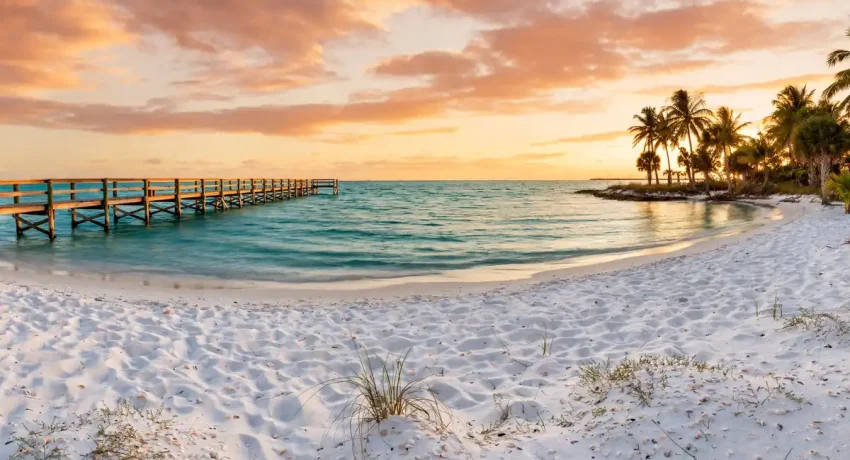
The Gulf Coast, on Florida’s west side, is the classic holiday beach. The Florida Gulf Coast beaches sit on shallow, warm water that stays calmer than the open ocean. The sand is soft and white. The water is shallow and calm. You can walk 100 yards out and still be waist-deep. The water runs 3 to 5 degrees warmer than the Atlantic in summer. And because the coast faces west, the sunsets are the show. Families with small children, swimmers and anyone who wants to float all afternoon should start here.
The Atlantic Coast, on the east side, is the livelier beach. The Florida Atlantic Coast beaches face the open ocean, so the waves are bigger and more consistent. The sand is coarser and darker, often tan or golden with crushed shell mixed in. The waves are bigger and more consistent. That makes it the surf coast. It also has the sunrise, the historic beach towns and the quickest escape from Orlando: Cocoa Beach is about an hour away, while Clearwater or Siesta Key take two to two and a half hours.
One more split matters. In winter, the warmest water sits in the far south. Miami, Naples and the Keys hold their warmth while the Panhandle cools off. The Panhandle is a summer destination. Its water is too cold for most swimmers in January, even when the air feels mild.
If your trip allows it, try both. Many visitors plan a quick Atlantic day trip from Orlando and a longer overnight stay on the Gulf side. That is often the best of Florida in one trip. There is no single best place to visit in Florida for beaches. The right beach depends on your trip.
What Makes Siesta Key Beach So Famous?
Siesta Key, off Sarasota on the southwest Gulf Coast, is the beach other beaches get compared to. Its sand is 99% pure quartz. It feels like powdered sugar. The sand stays cool to the touch even in the middle of a July afternoon. That is not marketing. Quartz does not hold heat the way normal sand does.
The main public beach is very wide. The water is shallow and calm. Lifeguards, bathrooms and volleyball courts are all there. Parking is free, which is rare for a beach this famous. In 2025, Siesta Beach topped the entire United States list on TripAdvisor. A year later it sits at No. 6 in the country. The beach did not get worse. The competition simply caught up. If you want to compare Florida’s softest sand with another classic beach destination, our guide to the best places to visit in Thailand for beaches covers a very different kind of coast, with the same honest look at prices and crowds.
Walk ten minutes south and you reach Crescent Beach, which is quieter and edged with low dunes. If soft sand is your top priority, this is the best place to visit in Florida for beaches in 2026. Siesta Key Village, a short stroll away, has the shops and seafood shacks for the evening. Come for the sand. Stay for the sunset. The Gulf sunset here is the kind people plan their whole day around.
Why Is Clearwater Beach Ranked No. 1 in Florida for 2026?
Clearwater Beach is the highest-ranked Florida beach on TripAdvisor’s 2026 Travelers’ Choice list for the United States. It climbed from No. 6 in 2025 to No. 2 in the country. That also makes it the No. 1 beach in Florida for 2026.
Why? It does everything well. The sand is wide and pale. The water is clear and calm. A long beachfront promenade runs behind the sand. A marina sits on the bay side. Restaurants, boat rentals and hotels are all within walking distance. It is the classic resort beach, and it earns the ranking through water quality and visitor amenities, not just looks.
Every evening, Pier 60 hosts a sunset celebration. Street performers, local artisans and live music gather as the sun drops into the Gulf. It runs nightly and costs nothing to watch. Families love it. Couples love it. If you want one beach that cannot disappoint, Clearwater is the best place to visit in Florida for beaches for first-timers.
One warning: Clearwater is popular, and it shows. Arrive before 10 in the morning in peak season or you will circle for parking. The beach is wide enough that it never feels packed once you are on the sand. Getting there is the hard part.
What Is So Special About Destin and the 30A Beaches?
Destin sits on the Panhandle, in the stretch nicknamed the Emerald Coast. The name is earned. On a calm day, the water turns a green so clear it looks edited. The sand is sugar-white quartz, washed down from the Appalachians over thousands of years. It squeaks under your feet.
Destin itself is the resort hub: fishing boats, boardwalks, dolphin cruises and calm coves that suit young children. Head east along Scenic Highway 30A and the mood changes. Grayton Beach, Seaside, Rosemary Beach and WaterColor are small, low-key towns with bike paths, food trucks and dune lakes. The state park at Grayton Beach is one of the prettiest and quietest stops on the whole coast.
The Florida Panhandle beaches are at their best from late April through June, then September into October. For Destin Florida beaches at their peak, come in May or early June, before the summer crowds and the afternoon storms settle in. Summer is peak season here. Winter is mild on land but the water is too cold for most swimmers. And if island water is what you are chasing, Hawaii takes the same idea further, with four islands, volcanoes and reservation-only beaches, all covered in our 2026 guide.
Which Florida State Park Beaches Made Dr. Beach’s 2026 Top 10?
Coastal scientist Stephen Leatherman, known as Dr. Beach, judged about 650 beaches across the United States in 2026 using 50 criteria: sand softness, water clarity, wave size, safety and more. Three Florida beaches made his national top 10. All three are state parks. That tells you something. Florida’s best sand is often the sand with the fewest buildings on it.
Why Is St Andrews State Park No. 2 in the Nation?
St. Andrews State Park sits at the edge of Panama City Beach, with the Gulf on one side and St. Andrews Bay on the other. It debuted at No. 8 on TripAdvisor’s 2026 United States list and took the No. 2 spot on Dr. Beach’s 2026 ranking. White sand, a sheltered jetty pool that is perfect for small children, snorkelling, shelling and a 1,000-foot fishing pier.
Entry is $8 per vehicle for two to eight people, $4 for a single-occupant vehicle and $2 for pedestrians and cyclists. Camping costs $28 per night plus tax, a $6.70 reservation fee and a $7 nightly utility fee. The park is open 8 a.m. until sundown, 365 days a year. Arrive early on weekends. The jetty side fills up fast.
How Do You Get to Caladesi Island?
Caladesi Island State Park, off Dunedin near Clearwater, is the beach you reach by boat. Roads do not cross the island. No buildings stand on the sand, and crowds are rare. The Caladesi Connection ferry leaves from Honeymoon Island State Park and crosses St. Joseph Sound in about 20 minutes. Dolphins are commonly spotted on the way.
The ferry costs $20 per adult and $10 for children aged 6 to 12. Children 5 and younger ride free. Honeymoon Island entry is $8 per vehicle. The ferry gives you a four-hour stay on the island. Three miles of beach, nature trails and a small concession stand wait on the other side. Dr. Beach ranked it No. 3 in the United States for 2026.
Honeymoon Island itself made TripAdvisor’s 2026 United States top 10 too, debuting at No. 10. Two miles west of Dunedin, it has beaches, nature trails and protected shoreline. Visit both in one day: Honeymoon Island in the morning, Caladesi by ferry in the afternoon.
What Is Delnor-Wiggins Pass State Park Like?
Delnor-Wiggins Pass State Park, near Naples, took the No. 6 spot on Dr. Beach’s 2026 list. It is a barrier island park known for bird watching, calm water and long, quiet beach views. The park is the opposite of a resort beach. There is no boardwalk scene here. Just sand, sea and space.
Come here if you want Naples without the Naples prices. The park sits minutes from the city’s restaurants and hotels, but the beach itself feels wild. Early morning is the best time: the light is soft, the birds are out and you may have a long stretch of sand to yourself.
What Is Miami South Beach Really Like?
South Beach is the beach you have already seen a hundred times. Art Deco hotels in pastel colours. Lifeguard towers painted like candy. Ocean Drive buzzing at midnight. The reality matches the pictures, and that is both the charm and the catch.
The beach itself is wide, clean and well kept. The water is warm and blue. The sand is pale and soft. By day, it is a classic city beach: sunbathers, volleyball, swimmers and joggers on the boardwalk. After dark, Ocean Drive’s restaurants and clubs take over. Few Florida beaches offer this much after dark.
South Beach is also the easiest Florida beach to reach without a car. Miami International Airport is about 20 minutes away. The free Miami Beach trolley runs along the main streets. Stay in South Beach and you can walk everywhere.
It is not the quietest beach in Florida. Nor is it the cheapest. But if you want a beach trip that is also a city trip, with food, music and architecture built in, South Beach is still the one. For a warm winter escape, Miami is at its best from December to May, when the rest of America is cold and the water here stays warm. If you want more warm winter escapes beyond Florida, our February travel guide covers Goa, Dubai, Thailand, the Maldives and more, with verified 2026 dates and costs.
Where Can You Surf in Florida?
Florida is not Hawaii. The waves are smaller and less consistent. But the Atlantic coast has a real surf culture, and two towns lead it.
Cocoa Beach is Florida’s surf capital. It is the hometown of 11-time world champion Kelly Slater, and the Ron Jon Surf Shop here is the largest surf shop in the world. Cocoa Beach surfing is gentle enough for beginners and steady enough for regulars. The town is also about an hour from Orlando, which makes it the easiest surf day trip in the state. The wide beach, the pier and the laid-back town all help.
New Smyrna Beach, just south of Daytona, is the other name surfers mention first. It has some of the most consistent waves on the east coast of Florida. The town is quieter than Daytona and less built-up than Cocoa. Daytona Beach itself is famous for a different reason: you can drive on parts of the sand, and the beach is enormously wide and flat. It suits families and first-timers who want space.
On the Gulf side, do not expect surf. The water is calm by design. That is the trade-off. Gulf for swimming. Atlantic for surfing.
Why Is Bahia Honda the Best Beach in the Florida Keys?
Bahia Honda State Park sits on Big Pine Key, at mile marker 37 on the Overseas Highway, about 37 miles from Key West. The Florida Keys beaches are different from the rest of the state: smaller, quieter and built for snorkelling as much as sunbathing. The park is open to both the Atlantic and the Gulf side of the Keys. Three beaches share the one park: Calusa Beach on the bay side, Loggerhead Beach on the Atlantic side and Sandspur Beach, the longest and most popular.
The water is clear and shallow. Snorkelling from the shore is genuinely good here, which is rare in Florida. The old Bahia Honda Bridge, abandoned since the 1970s, rises over the water and makes one of the best photo spots in the Keys. Kayaks and snorkelling gear can be rented in the park. Boat trips to the reef run from the marina. For another warm-water snorkelling destination, Mexico’s beaches offer reef access straight from the shore, with the same kind of practical price and timing detail.
Entry is $8 per vehicle for two to eight people, plus a $0.50 per person Monroe County surcharge. A single-occupant vehicle or motorcycle costs $4.50. Pedestrians and cyclists pay $2.50. The park is open 8 a.m. to sunset, 365 days a year. It can close when it reaches capacity, so arrive early on weekends and holidays. Campsites cost $36 per night plus tax and a $6.70 reservation fee. Cabins run $120 a night from May to October and $160 from November to April.
In 2025, Bahia Honda ranked No. 9 on TripAdvisor’s United States beach list. The beach slipped off the 2026 top 10, but it did not change. It remains the best all-round beach stop on the drive to Key West.
Where Is the Best Shelling in Florida?
Sanibel Island, off Fort Myers on the southwest Gulf Coast, is known as the “Shelling Capital of the World”. The island runs east to west, which is unusual. Most barrier islands run north to south. Sanibel’s shape catches shells carried by the Gulf currents and drops them on its beaches by the thousand.
Sanibel Island shelling is best at dawn, just after high tide, and especially after a storm. Bring a mesh bag, not a bucket. The “Sanibel stoop”, the bent-over walk every sheller does, is a local joke and a real back workout. Live shells are protected: if something is still living inside, put it back.
Captiva Island, just north of Sanibel, is quieter and prettier. The two islands share the same shelling luck. Sanibel’s beaches are also calmer and better for families than most Gulf beaches, with shallow water and gentle slopes. If your idea of a perfect beach day involves a treasure hunt, this is the place.
What About Naples, Fort Lauderdale and St. Augustine?
These three are the beaches people pick when they want a beach plus something else.
Naples Beach, on the southwest Gulf Coast, is the upscale option. Wide, clean sand. Calm water. A historic pier for fishing and sunset watching. Dolphin-watching boat tours leave from the marina. The town behind the beach is polished and expensive, but the beach itself is public and free. Delnor-Wiggins Pass State Park, minutes away, gives you the same coast without the crowds.
Fort Lauderdale is the Atlantic beach with the easiest logistics. The beach is wide and clean, the promenade is lined with restaurants, and the airport is ten minutes away. It suits a short trip or a first night in Florida before driving south to Miami or north to the Space Coast. The water is warmer here than further north, and the waves are gentle enough for casual swimming.
St. Augustine is America’s oldest city, and its beach is the history option. Tour the 17th-century Castillo de San Marcos fortress in the morning. Be on the wide, golden sands of St. Augustine Beach by lunch. The sand here is coarser and darker than the Gulf, and the waves are bigger. The town is the reason to come. Few beach trips in America mix 450 years of history with an afternoon swim.
Which Florida Beaches Are Best for Families?
Families should start on the Gulf. Calm water, shallow slopes and soft sand make the whole day easier. These four are the best beaches in Florida for families in 2026.
Clearwater Beach has everything within walking distance: food, bathrooms, lifeguards, boat trips and the Pier 60 sunset show. It is busy, but the beach is wide enough that children always have space.
Siesta Key has the softest sand and the calmest water. The free parking helps. The village has ice cream and pizza for the evening.
Fort De Soto Park, near St. Petersburg, has a huge beach, a historic fort to explore, nature trails and a dog beach. It is the park beach that locals pick over the resort beaches.
St. Andrews State Park has the jetty pool: a sheltered, shallow area where small children can paddle safely while older children snorkel nearby.
On the Atlantic side, Cocoa Beach works well for families with older children who want waves and the surf-town atmosphere. Keep small children close to shore on the Atlantic. The waves and currents are stronger than on the Gulf. Florida also works well as a honeymoon trip, especially in the shoulder months when the beaches are quieter: our summer honeymoon guide covers the best warm-weather honeymoon spots, costs and timing if you are planning a trip for two.
What Does a Florida Beach Trip Cost in 2026?
Florida beach trips can be cheap or expensive. Your Florida beach vacation cost depends mostly on where you sleep and when you travel. The beach itself is usually free. The costs are parking, food and where you sleep. Here are typical ranges. Check before you book, because prices move with the season.
| Cost | Budget | Mid-range | Comfortable |
|---|---|---|---|
| Hotel per night (2 people) | $80–$130 | $150–$250 | $300+ |
| State park entry per vehicle | $4–$8, depending on the park | ||
| Caladesi Island ferry per adult | $20 round trip; children 6–12 pay $10 | ||
| Bahia Honda entry per vehicle | $8 plus $0.50 per person surcharge | ||
| Beach parking (city beaches) | $2–$4 per hour, or $15–$25 per day | ||
| Casual lunch for two | $25–$45 | ||
| Beach umbrella and chair rental | $30–$50 per day | ||
| Snorkel gear rental | $15–$25 per day | ||
Winter is the expensive season. Hotels in South Florida and the Keys can cost 50 to 100% more from December to March than in the shoulder months. May, September, October and November are often 40 to 60% cheaper. April and November are the sweet spots: good weather, moderate crowds and prices 30 to 40% below the winter peak. For a budget trip, the best place to visit in Florida for beaches is a state park beach: entry is $4 to $8 per vehicle, and the sand is often better than the resort beaches.
When Is the Best Time to Visit Florida Beaches?
Florida does not have one best month. It has best months for different trips.
| Month | Weather | Water | Crowds and prices |
|---|---|---|---|
| January–February | Mild and dry in the south; cooler in the Panhandle | Warm in Miami and the Keys; cold in the Panhandle | Peak season, highest prices |
| March–April | Warm, low humidity, excellent almost everywhere | Warming up statewide | Spring break crowds in March; April is often the single best month |
| May | Warm and sunny, storms not yet regular | Warm statewide | Quiet, strong value |
| June–August | Hot and humid, daily afternoon storms | Very warm everywhere | Family peak; hurricane season opens June 1 |
| September | Still hot and wet | Very warm | Quietest and cheapest month; peak hurricane risk |
| October–November | Cooling, less humid | Still warm, especially in the south | Good value; hurricane season ends November 30 |
| December | Mild and dry in the south | Warm in South Florida and the Keys | Peak season returns |
The Atlantic hurricane season runs from June 1 to November 30, with the peak from mid-August to mid-October. That does not mean you should avoid summer. It means you should book flexible stays and watch the forecast. The best overall balance for most visitors is March to May. For a warm winter escape, December to April in South Florida and the Keys is hard to beat. The strongest value comes in late April to mid-May, or late August to September if you accept more weather risk. Summer heat is a factor everywhere warm: Kerala in summer is another warm-weather trip that needs the same kind of planning, with hill stations for escaping the heat and monsoon dates to watch.
How Do You Get Around Florida’s Beaches?
Florida is a driving state. The best beaches are spread across 1,350 miles of coast, and public transport between them is thin. Rent a car. It is the single best decision you can make for a Florida beach trip.
Fly into the airport nearest your beach. Miami for South Beach and the Keys. Tampa for Clearwater, St. Petersburg and Caladesi. Sarasota for Siesta Key. Fort Myers for Sanibel and Naples. Orlando for Cocoa Beach and Daytona, then drive west to the Gulf if you have time. Panama City or Pensacola for the Panhandle.
Distances are longer than they look. Miami to Key West is about 160 miles and takes three and a half to four hours on the Overseas Highway. Orlando to Clearwater is about two hours. Miami to Destin is a full day’s drive. Plan one coast per trip unless you have a week or more.
Inside the beach towns, walking, cycling and free trolleys cover most needs. Miami Beach has a free trolley. Anna Maria Island has a free trolley. Key West is small enough to walk or cycle. But between towns, you need a car.
What Should You Watch Out For on Florida Beaches?
Florida’s beaches are safe for most visitors. A few honest warnings make them safer. Florida beach safety starts with two habits: swim near a lifeguard and check the conditions before you go in.
Rip currents are the biggest danger. They are strong, narrow currents that pull swimmers away from shore. The Atlantic coast sees them most often. If you get caught, do not fight it. Swim parallel to the beach until you are out of the current, then swim back in. Always swim near a lifeguard. Never let children swim alone on the Atlantic side. If you are travelling on your own, our guide to the best places to visit for a single woman has a practical safety playbook that works just as well on a Florida beach as anywhere else.
Red tide is a natural algae bloom that can irritate eyes and lungs and kill fish. It hits the Gulf Coast some years and barely appears in others. Check the current red tide status before you travel. It changes week by week.
The sun is stronger than it feels. Florida sits far south, and the sea breeze hides the heat. Use reef-safe sunscreen, reapply after swimming and wear a hat. Sunburn is the most common injury on Florida beaches, and it is the most preventable.
Lightning is a real risk in summer. Afternoon thunderstorms build fast. If you hear thunder, leave the beach. The storm usually passes in 30 to 45 minutes.
Finally, respect the wildlife. Sea turtles nest on Florida beaches from March to October. Do not touch nests or hatchlings. Manatees gather in warm springs in winter: Crystal River is the only place in the world where you can legally swim with manatees in the wild, and only with a licensed guide. Keep your distance everywhere else.
How Would You Plan a 7-Day Florida Beach Trip?
Here is one plan that covers both coasts without rushing, and it works best from March to May. The trip starts at the best place to visit in Florida for beaches for first-timers: South Beach.
Days 1 and 2: Miami and South Beach. Arrive, walk Ocean Drive, swim at South Beach, eat Cuban food in Little Havana. Stay in South Beach so you can walk everywhere.
Day 3: Drive the Overseas Highway to the Keys. Stop at Bahia Honda for the afternoon. Sleep in Key West. Watch the sunset at Mallory Square.
Day 4: Fly or drive to Tampa. The drive is long, so flying saves a day. Settle in Clearwater. Evening at Pier 60.
Day 5: Caladesi Island by ferry from Honeymoon Island. Four hours of empty beach, then dinner in Dunedin.
Day 6: Drive south to Siesta Key. The softest sand in America, then sunset on the beach and dinner in the village.
Day 7: Sanibel Island for shelling in the morning, then fly home from Fort Myers.
If you have only four days, pick one coast. Gulf: Clearwater, Caladesi, Siesta Key and Sanibel. Atlantic: Miami, Fort Lauderdale, Cocoa Beach and St. Augustine. Either way, you will have seen the best of Florida’s beaches.
What About Florida’s Quiet Beaches?
Not every good Florida beach is famous. These three stay quiet even in peak season.
Anna Maria Island, just south of Tampa Bay, has a strict building code that keeps it low-rise and old-fashioned. High-rise condos are banned here, and neon is nowhere to be seen. Just wide beaches, pastel cottages and a free trolley. The island feels like the Florida of 50 years ago.
Cayo Costa State Park, off Captiva, is reachable only by boat. Nine miles of undeveloped beach, with shelling, birding and wild hogs in the interior. It is one of the few Florida beaches where you can walk for an hour and see nobody.
Canaveral National Seashore, near Titusville, is 24 miles of protected Atlantic beach next to the Kennedy Space Center. There are no buildings here. Crowds are rare too. Just dunes, sea turtles and the occasional rocket launch on the horizon. It is the wildest Atlantic beach in Florida.
Frequently Asked Questions
What is the best place to visit in Florida for beaches?
For the single best beach day, Clearwater Beach. It is TripAdvisor’s No. 1 beach in Florida and No. 2 in the United States for 2026. The softest sand belongs to Siesta Key. The clearest water sits off the Panhandle beaches around Destin. The emptiest beach is Caladesi Island. The best choice depends on what kind of beach day you want.
Which side of Florida has better beaches, Gulf or Atlantic?
The Gulf Coast has whiter sand, calmer water and sunsets. The Atlantic Coast has waves, surf towns and sunrises. Families and swimmers usually prefer the Gulf. Surfers and people who want lively beach towns usually prefer the Atlantic.
What is the best month to visit Florida beaches?
April is often the single best month: warm water, light rain and crowds easing after spring break. March to May is the best overall window. December to April is best for a warm winter escape in South Florida and the Keys. September is the cheapest and quietest month, but it carries the highest hurricane risk.
Are Florida beaches free?
Most city beaches are free. State park beaches charge $4 to $8 per vehicle. Bahia Honda costs $8 per vehicle plus a $0.50 per person surcharge. Beach parking in cities usually costs $2 to $4 per hour or $15 to $25 per day.
Is it safe to swim in Florida?
Yes, with care. Swim near lifeguards. Watch for rip currents, especially on the Atlantic coast. Check red tide conditions on the Gulf. Avoid swimming at dawn and dusk in remote areas, and never swim alone.
Can you visit Florida beaches in winter?
Yes. South Florida and the Keys are warm enough to swim all winter, with the best conditions from December to April. The Panhandle is too cold for most swimmers in winter, though the air is mild and the beaches are empty.