
Hawaii wins the argument before you even land. No other place on Earth packs this much variety into one trip. You can watch the sun rise above the clouds on a volcano, snorkel with sea turtles before lunch, and eat shave ice in a small town that feels a world away from the resort strip. The water stays warm all year. The trade winds keep the heat gentle. And every island feels like a different country, even though they share one state.
That is why Hawaii is the best place to visit. It is not one beach or one view. You get a whole menu of trips — volcanoes, rainforest, surf towns, stargazing, history, food — and you can build the version that fits you. This Hawaii travel guide 2026 covers the best places to visit in Hawaii, the real 2026 prices and reservation rules, and a plan that actually works.
What Makes Hawaii Different From Every Other Beach Trip?
Most beach trips give you one thing: sand and sun. Hawaii gives you six climates in a single day. Drive from Kona to Hilo on the Big Island and you cross desert, rainforest, and a volcano in about two hours. Kona averages around 15 inches of rain a year. Hilo, on the other side of the same island, can see well over 100 inches. That range is the whole point.
The islands are also the most remote inhabited land on the planet. The nearest continent is more than 2,000 miles away. That isolation built a culture and a landscape found nowhere else. Native plants and birds evolved here alone. Hawaiian culture — language, hula, food, the idea of aloha as a way of life — is still alive in daily use, not just on stage.
Then there is the practical side. United States citizens need no passport. The dollar is the currency. English is spoken everywhere. Yet the place feels foreign in the best way. Few destinations combine that ease with that much adventure. That mix is the first reason why Hawaii is the best place to visit.
Which Hawaiian Island Should You Pick First?
Four Hawaii islands carry almost all visitors: Oahu, Maui, the Big Island, and Kauai. Each one suits a different trip. Picking the wrong island is the most common first-timer mistake. The table below sorts them fast.
| Island | Best for | Feel | First trip? |
|---|---|---|---|
| Oahu | First-timers, history, city + beach | Busy, easy, packed with sights | Yes — the smartest start |
| Maui | Honeymoons, couples, scenic drives | Romantic, polished, resort-led | Yes — if romance is the point |
| Big Island | Volcanoes, stargazing, space | Wild, vast, slow driving | Yes — if you like driving |
| Kauai | Hiking, quiet, raw scenery | Green, calm, least crowded | Best as a second trip |
Oahu Hawaii is the efficient choice for a first visit. Flights to Honolulu are usually the cheapest. Waikiki, Pearl Harbor, Hanauma Bay, and the North Shore sit close together. You can stack a city, a beach, and a historic site into one week without a single inter-island flight.
Maui Hawaii suits couples and honeymooners. The Road to Hana and Haleakala anchor the scenic side. Kaanapali and Wailea handle the resort side. Kauai Hawaii suits hikers and anyone who wants quiet over nightlife. The Big Island Hawaii suits travellers who want the Earth itself as the attraction: active volcanoes, black sand, and the clearest night sky in the United States.
One honest warning: do not try to see all four islands in one week. Each hop costs half a day once you count check-in, security, and the drive. Two islands in seven days is the sweet spot. Three works in ten days if you keep the plan loose.
What Is the Best Time to Visit Hawaii in 2026?
Hawaii has two seasons, not four. The dry season runs May through October. The wet season runs November through April. Temperatures stay between 75 and 85 degrees Fahrenheit almost all year. The month you pick changes crowds and prices far more than it changes the weather.
September is the best month for value. Summer visitors have gone home. Schools are back in session. Ocean temperatures still sit near their July highs. Hotel prices and crowds fall sharply. The Aloha Festivals run island-wide in September, and 2026 marks their 80th anniversary.
April and May run a close second. Spring break crowds clear after Easter. The two weeks that follow are some of the best days of the year: warm, dry, and emptier than summer. Late May, before Memorial Day weekend, is a genuine sleeper sweet spot. October is nearly as good, and it is historically the quietest tourism month in Hawaii.
| Priority | Best months | Months to avoid |
|---|---|---|
| Best overall value | September, April–May | Christmas week, July |
| Best weather | April–October (dry season) | November–March on windward coasts |
| Whale watching | January–March, peak February | May–November |
| Big-wave surf viewing | November–February (North Shore) | May–September |
| Lowest prices | September, early October | Late December, July–August |
| Fewest crowds | September, October, early May | July–August, Christmas week |
Winter is whale season. Humpback whales arrive from mid-December through April, with peak viewing from January through March. February offers the highest whale density, and sightings occur on more than 95 percent of boat tours in peak weeks. Ask anyone who has watched a breach in February why Hawaii is the best place to visit, and the answer is the look on their face. If whales are your priority, book January or February and accept the higher hotel prices.
Summer brings the driest, most reliable beach weather, especially on leeward coasts. The trade-off is crowds. June and July are peak season, so you pay for that sunshine. If you want a warm escape in the cold months, our guide to the best places to visit in February 2026 covers other winter-sun options too. And if autumn colour is your thing instead, the best places to visit in Canada in autumn offer a completely different kind of seasonal trip.
What Are the Best Places to Visit on Oahu?
Oahu packs more famous sights into a small area than any other island. You can surf in the morning, visit a war memorial at noon, and watch the sunset from a crater rim in the evening. Here are the places that earn their fame.
Why Is Waikiki Beach Still Worth It?
Waikiki is the most famous beach in Hawaii for a reason. The water is calm enough for first-time surfers. Diamond Head rises green and steep at one end of the bay. Palm-lined streets behind the sand hold shops, restaurants, and hotels for every budget. It is busy, and it is honest about being busy. Come early in the morning for a quieter beach, or walk east toward Kapiolani Park, where the crowds thin fast.
Surf lessons run all day along the beach. Outrigger canoes launch from the sand. At night, the beachfront fills with music and food stalls. Waikiki is not a secret. It is a classic, and classics earn their reputation.
How Hard Is the Diamond Head Hike?
Diamond Head is the crater you see from every Waikiki postcard. The hike takes 60 to 90 minutes round trip. It climbs about 560 feet over less than a mile, with stairs and a tunnel near the top. The view from the summit covers Waikiki, Honolulu, and the whole south shore. It is one of the best payoffs in Hawaii for the effort involved.
Book ahead. Non-residents need a timed reservation, made up to 30 days in advance. Entry costs $5 per person, plus $10 to park. Walk-ins are turned away. Entry slots run from 6 a.m. to a last entry at 4 p.m. Go at sunrise if you can get the slot. The light is soft, the heat is low, and the crowds are thin.
What Should You Know Before Visiting Pearl Harbor?
Pearl Harbor is one of the most important historic sites in the United States. On December 7, 1941, Japanese aircraft attacked the Pacific Fleet here, and America entered World War II. The USS Arizona Memorial floats above the sunken battleship. The Battleship Missouri, the USS Bowfin submarine, and the Pearl Harbor Aviation Museum sit nearby.
Book the USS Arizona Memorial program through Recreation.gov. Tickets open eight weeks ahead, with a next-day release for leftover slots. The memorial itself is free. Allow at least half a day. The place is quiet and moving, and rushing it would be a mistake.
Is Hanauma Bay Worth the 7 A.M. Alarm?
Yes. Hanauma Bay is Oahu’s best-known snorkelling cove, a curved bay inside an old volcanic crater. The reef has genuinely recovered since the reservation system began, and the fish are back in numbers. Every visitor must watch a short educational video before entering. It is a reef-protection rule, and nobody gets out of it.
Non-residents pay $25 per person. Children 12 and under are free. Parking costs $3. Reservations open only two days ahead at 7 a.m. Hawaii time, and slots sell out within minutes. The bay is closed every Monday and Tuesday. It opens at 6:45 a.m. and last entry is 1:30 p.m. Set the alarm. The parking lot holds only 300 spaces and fills by 8 a.m. even on weekdays.
If turquoise water is your main draw, our guide to the best places to visit in Thailand for beaches covers another warm-water classic with very different prices. Hawaii’s reefs are special, though, because the bay system protects them so carefully. That care is one more reason why Hawaii is the best place to visit for snorkellers.
What Is the North Shore Like in Winter?
The North Shore is Oahu’s wild side. In summer, the water is calm and the beaches are gentle. In winter, from November through February, the surf turns enormous. Waves can reach 30 feet at Banzai Pipeline and Waimea Bay. Professional contests run through the season, and watching from the sand is free.
Do not swim at North Shore beaches in winter unless you are an expert. The same waves that thrill surfers are dangerous for swimmers. In summer, the same beaches are calm enough for families. The small towns of Haleiwa and Sunset Beach hold food trucks, shave ice stands, and surf shops. The shrimp trucks along Kamehameha Highway are a local institution.
Why Is Maui the Honeymoon Island?
Maui earns the title honestly. It balances romance and adventure better than any other island. You can drive a jungle road in the morning and sit at a candlelit table above the ocean at night. The sunsets over the West Maui mountains are the kind people remember for years.
West Maui holds the resort beaches: Kaanapali, once voted America’s best beach, and Wailea, wide and calm. South Maui around Kihei is drier and cheaper. Upcountry Maui, around Kula and Makawao, feels like a different world — farms, gardens, and cool air at 3,000 feet.
Couples planning a honeymoon should also read our guide to the best places to visit in summer for honeymoon, which covers warm-weather honeymoon ideas beyond Hawaii. For a Hawaii honeymoon, Maui is hard to beat: one island, no language barrier, and a new view every day. That balance is why Hawaii is the best place to visit for couples.
What Is the Road to Hana Really Like?
The Road to Hana is a 64-mile drive along Maui’s east coast. It crosses 59 bridges, many of them one lane, and winds through more than 600 curves. The drive itself is the attraction. Waterfalls drop beside the road. Bamboo forest closes overhead. Black sand beaches appear around sudden bends.
Start early. The road is slow, and a full loop takes ten to fourteen hours with stops. Do not try to combine the full Hana loop with a Haleakala sunrise on the same day. That is a common mistake, and it ruins both experiences. Drive the road one day. Watch the sunrise another day.
Wai’anapanapa State Park, home of the famous black sand beach, sits along the route. Non-residents need a reservation, made up to 30 days ahead. Entry costs $5 per person plus $10 per vehicle. The park opens at 7 a.m. and closes at 6 p.m. Arrive within the first 30 minutes of your slot or you may be denied entry.
How Do You See the Haleakala Sunrise?
Haleakala is a dormant volcano that rises 10,023 feet above the sea. Watching the sun rise above the clouds from its summit is one of Hawaii’s most unforgettable experiences. The sky fills with colour as clouds drift through the crater. The ground looks lunar: red cinder cones and black lava under a huge sky.
You need a reservation. Sunrise entry between 3 a.m. and 7 a.m. requires a $1 per-vehicle booking through Recreation.gov, made up to 60 days ahead, with a small release two days before. Park entry costs $30 per vehicle on top. Dress warmly. The summit can be near freezing before dawn, even in summer. Bring a blanket and a thermos. The cold surprises everyone.
What Is Iao Valley, and Why Does It Matter?
Iao Valley State Monument is Maui’s most sacred valley. A pivotal battle in 1790 helped unite the islands here. The Kuka’emoku needle, a green lava remnant, rises 1,200 feet above the valley floor. The valley is lush, wet, and quiet — the opposite of the resort coast.
Non-residents pay $5 per person plus $10 for parking, and advance reservations are required for out-of-state visitors. The valley opens at 7 a.m. and closes at 6 p.m. It is a short stop, under an hour, but it adds a layer of history that the beaches cannot.
What Happened to Lahaina?
Lahaina, Maui’s historic whaling town, was devastated by wildfire in August 2023. Much of the town is still rebuilding. The Old Lahaina Luau, one of the state’s best cultural evenings, reopened in March 2024. Visitors are welcome in the parts of West Maui that have reopened, and spending money there supports the recovery directly. Check the current status before you plan a Lahaina stop, and respect any areas that remain closed.
What Makes the Big Island Unlike Anywhere Else on Earth?
The Big Island is the youngest and largest island in the chain. It is still growing. Kilauea, one of the world’s most active volcanoes, has been erupting in episodes inside its summit crater since December 23, 2024. The island also holds snow-capped peaks, black sand beaches, green sand beaches, coffee farms, and the clearest stargazing in the country.
Because the island is so large, driving is the trip. Kona on the west coast is dry and sunny. Hilo on the east coast is wet and green. The drive between them crosses a volcano. Plan for distance. Nothing on the Big Island is close to anything else. For anyone who loves the natural world, that scale is why Hawaii is the best place to visit.
Can You See Lava at Kilauea in 2026?
Sometimes, and that is the honest answer. Since December 2024, Kilauea has erupted in episodes. Fountains and lava flows appear only during an episode, for hours or sometimes a day or two. Between episodes come pauses of days to weeks, with steam and at most a faint glow at night.
Episode 55 ran on October 17, 2026, with fountains up to 720 feet high. The United States Geological Survey forecast episode 56 for November 3 to 10, 2026. The alert level stands at ADVISORY, colour code YELLOW. Check the Hawaiian Volcano Observatory status page and webcams on the day you go. If it says paused, there are no fountains, whatever a travel blog promises.
Even without lava, the park is worth a full day. Entry costs $30 per vehicle, valid for seven days. The Crater Rim Drive, the Thurston lava tube, and the steam vents are all open. The visitor centre has been closed since February 18, 2025, for renovation, with reopening announced for late 2026. Check the park site for current closures before you drive out.
Why Is Mauna Kea the Best Place to See Stars?
Mauna Kea rises 13,796 feet above sea level. Its summit sits above most of the atmosphere’s moisture, under some of the darkest skies on Earth. On a clear night, the Milky Way looks close enough to touch. The summit is sacred to Native Hawaiians, so visit with respect: stay on marked paths, keep voices low, and never remove rocks or plants.
Most visitors stop at the visitor information station at 9,200 feet, where free stargazing programs run on clear nights. The summit road needs four-wheel drive and acclimatisation. If you drive up, stop at the visitor station first and spend at least 30 minutes adjusting to the altitude.
What Is the Manta Ray Night Snorkel?
Off the Kona coast, manta rays with wingspans over 20 feet glide through lights at night, feeding on plankton. The night snorkel is one of the most remarkable wildlife experiences in Hawaii. Tours typically cost in the $100 to $150 per person range, and they run most nights of the year. Book two to four weeks ahead in peak season. The rays are wild animals, so sightings are never guaranteed — but Kona has one of the most reliable manta populations anywhere.
Where Are the Black and Green Sand Beaches?
Punalu’u, on the south coast, is the famous black sand beach. Sea turtles haul out on the sand to rest, and the palms behind the beach frame the whole scene. Do not touch the turtles. Federal law protects them, and volunteers watch the beach.
Papakolea, the green sand beach, sits at the southern tip of the island. The green comes from olivine crystals in the sand. Reaching it takes a hike of about two and a half miles each way over rough ground. Local trucks offer rides, but the hike is the honest way in, and it keeps the beach quiet.
Why Do Hikers Call Kauai the Garden Isle?
Kauai is the oldest island in the chain, and it shows. Rain has carved it into deep valleys, sharp ridges, and cliffs that fall straight into the sea. It is the greenest island, the quietest, and the least crowded of the four. It has the fewest restaurants and shops, which is a feature if you want quiet and a problem if you do not.
Kauai rewards hikers above everyone else. The trails here are the best in Hawaii. The scenery is cinematic — parts of the island have starred in films for decades. But Kauai also demands planning. Its most famous trail needs a permit, and its most famous coast has no road at all. For hikers, that wildness is why Hawaii is the best place to visit.
How Do You See the Na Pali Coast?
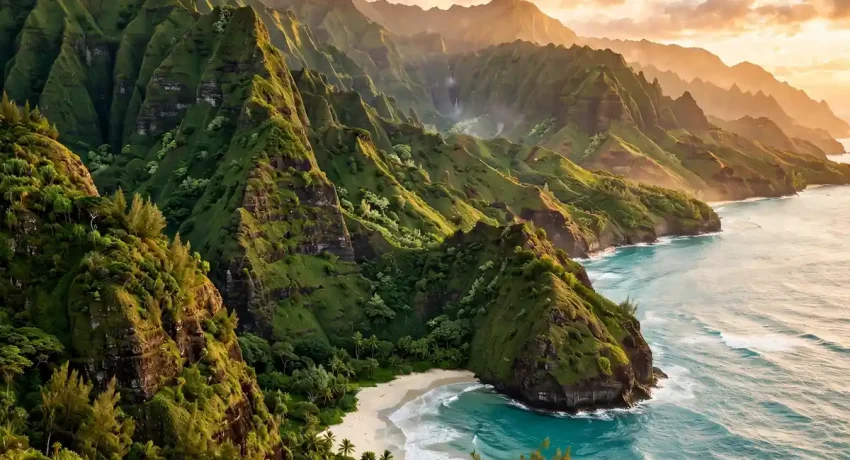
The Na Pali Coast is a 17-mile stretch of sea cliffs on Kauai’s northwest shore. The cliffs rise up to 4,000 feet from the ocean. There is no road. You see it by boat, by helicopter, or on foot. Each way shows a different coast.
Boat tours run from the west side in summer, when the ocean is calm. Typical prices fall in the $150 to $250 per person range for a half-day trip. Helicopter tours cost more, usually in the $250 to $400 per person range, and they fly over valleys no road can reach. The Kalalau Trail, an 11-mile hike along the coast, is one of the most famous trails in America — and it needs a permit beyond Hanakapiai Beach. Camping permits open 90 days ahead. Ha’ena State Park, the trailhead, requires its own reservation: $5 entry plus $10 parking for non-residents.
If you only do one thing on Kauai, make it a Na Pali boat trip in summer. The cliffs from the water are the single most beautiful view in Hawaii. Winter seas are rougher, and many boat tours stop running. Plan around that.
What Is Waimea Canyon?
Waimea Canyon is called the Grand Canyon of the Pacific. It runs about ten miles long and up to 3,600 feet deep, with red rock walls and green ridges. The drive up from Waimea town climbs through dry grassland into cloud forest. Lookouts along the road frame the canyon from different angles. The Canyon Trail to Waipo’o Falls is a moderate hike of about three miles round trip, and it is the best way to get below the rim.
Go in the morning. Clouds build over the canyon by afternoon, and the views close in. The same rule applies to most of Kauai’s high country. Early starts are not just advice here. They are the difference between seeing the island and seeing fog.
Where Should You Stay on Kauai?
Poipu, on the south shore, is the sunny resort base. Hanalei, on the north shore, is the prettier town — small, green, and ringed by mountains — but it gets far more rain. In December, Poipu often has sunny afternoons while Hanalei is getting drenched. Pick the south shore for reliable sun. Pick the north shore for beauty, and accept the rain as part of the deal.
What Do You Have to Book Before You Go to Hawaii in 2026?
Hawaii in 2026 runs on reservations. Eight famous sights now need advance booking, and the first five sell out in minutes. This is the single biggest change from the Hawaii of ten years ago. The table below is the cheat sheet. Set alarms, create accounts beforehand, and have backup plans.
| Experience | Book how far ahead | Cost (non-resident) |
|---|---|---|
| Haleakala sunrise (Maui) | Up to 60 days; release 2 days before | $1 per vehicle + $30 park entry |
| Hanauma Bay (Oahu) | 2 days, from 7 a.m. HST | $25 per person; parking $3 |
| Diamond Head (Oahu) | Up to 30 days | $5 per person; parking $10 |
| USS Arizona Memorial (Oahu) | 8 weeks; next-day release | Free (program ticket required) |
| Ha’ena State Park / Kalalau (Kauai) | Up to 30 days (camping 90 days) | $5 entry + $10 parking |
| Wai’anapanapa (Maui) | Up to 30 days | $5 per person + $10 parking |
| Iao Valley (Maui) | Advance reservation | $5 per person + $10 parking |
| Hawaii Volcanoes NP | No general reservation needed | $30 per vehicle, 7 days |
Use the official sites only. Recreation.gov covers Haleakala, the USS Arizona Memorial, and federal sites. The Hawaii state parks site covers Diamond Head, Ha’ena, Wai’anapanapa, and Iao Valley. Honolulu’s parks system covers Hanauma Bay. Third-party sellers charge more and cannot guarantee a slot.
A reservation is not the same as a park entry pass. The America the Beautiful pass, $80 a year, covers national park entry, but most per-person state fees still apply. Hawaii residents with a valid state ID enter free at almost every site on this list and need no reservation. That two-tier system is the law in Hawaii now, and it is worth knowing before you budget.
How Much Does a Hawaii Trip Cost in 2026?
Hawaii is expensive, and honest budgeting starts with the tax. On January 1, 2026, Hawaii raised its state accommodations tax from 10.25 percent to 11 percent. County surcharges of up to 3 percent and the general excise tax of roughly 4 percent push the total past 18 percent of your hotel bill, before any resort fee. Resort fees often add $30 to $60 a night on top. Hawaii became the first American state to pass a statewide visitor-impact fee for environmental conservation. The state expects it to raise around $100 million a year.
The table below shows typical daily costs per person. All figures are labelled ranges, and prices shift with season and island. Check before you book.
| Style | Hotel (per night) | Food (per day) | Car + fuel (per day) | Activities (per day) |
|---|---|---|---|---|
| Budget | $120–$180 | $40–$60 | $45–$70 | $20–$40 |
| Mid-range | $200–$350 | $60–$100 | $60–$90 | $50–$100 |
| Comfortable | $400+ | $120+ | $90+ | $150+ |
A week in Hawaii typically runs $2,000 to $5,000 or more per couple, depending on island, season, and lodging. Shoulder months — April to May and September to October — cut that by 30 to 50 percent against peak. Mid-range hotels average around $140 to $200 a night in shoulder season, against $200 to $300 in winter and $180 to $260 in summer.
Food is the easiest place to save. A plate lunch — rice, macaroni salad, and grilled meat — typically costs $12 to $18 and feeds one person well. Food trucks and farmers markets beat resort restaurants on price and often on quality. A luau, by contrast, typically costs $120 to $200 per person. It is a show and a feast, not a dinner, so judge it that way.
Flights to Hawaii are the other big line. Mainland round trips vary wildly by city and season. Once you are there, inter-island flights are the key cost to understand, and they get their own section next.
How Do You Get Between the Islands?
There is no ferry between the main islands. You fly. Three airlines carry inter-island passengers: Hawaiian Airlines, Southwest Airlines, and the small-plane carrier Mokulele, which serves the airports the jets skip, like Hana and Molokai. Inter-island flights Hawaii visitors book most often are the short hops between Honolulu and Kahului.
Southwest usually has the lowest fares, typically $39 to $99 one way, with a reliable floor near $49 when you book ahead. Hawaiian Airlines typically charges $69 to $189 one way, and short-notice fares often run $139 to $179. Most one-way economy fares on the main jet routes run about $79 to $149 when booked two to four weeks ahead. Sale fares can drop near $49. Last-minute or holiday fares often pass $200.
Add bags before you compare fares. A first checked bag costs about $30 on Hawaiian and Southwest in 2026, and a second about $40. A $90 fare plus two checked bags is really a $160 flight. Flights take 30 to 50 minutes in the air, but budget two to three hours door to door once you count check-in, security, boarding, and baggage claim. Book inter-island flights around your most time-sensitive activity, not the other way around. And if you are flying onward from the mainland, many routes connect through San Francisco — our guide to the best places to visit in San Francisco in 2026 makes a good stopover plan if you have a long layover.
What Should You Pack for Hawaii?
Pack light, and pack for two climates. The beach needs a swimsuit, sandals, and a hat. The volcano summits need a warm layer. Haleakala before dawn and Mauna Kea at night can both feel near freezing. A light rain jacket earns its place too, especially on Kauai and in Hilo.
Reef-safe sunscreen is not a suggestion. Hawaii bans sunscreens with oxybenzone and octinoxate, which damage coral. Buy mineral sunscreen before you travel, or buy it locally. The ban is enforced, and the reef is the reason the snorkelling is still good.
Bring hiking shoes with grip, not just sandals. The Kalalau Trail, the Diamond Head stairs, and the lava fields are all rough underfoot. A reusable water bottle helps on every hike. A dry bag protects your phone on boat trips and at the beach. And pack a small daypack. Hawaii rewards the traveller who can walk away from the car park.
How Can You Visit Hawaii Respectfully?
Hawaii is not a theme park. It is a living place with a living culture, and the way you visit matters. A few rules cover most of it.
First, learn a little Hawaiian. Aloha means hello, goodbye, and love. Mahalo means thank you. Kapu means forbidden — a kapu sign is not a suggestion. Stay out of closed areas, off sacred sites, and away from monk seal and turtle resting zones. Federal law protects both animals.
Second, support local businesses. Eat at family-run plate lunch spots. Buy from farmers markets. Book tours with local operators. Tourism brought $20.6 billion in visitor spending to Hawaii in 2024. Where that money lands is partly your choice.
Third, leave the place better than you found it. Take only photos. Stay on marked trails — the soil and the plants are fragile, and off-trail walking causes erosion that takes years to heal. Never take lava rocks, sand, or coral. And never touch the reef while snorkelling. One careless fin kick can kill coral that took decades to grow.
What Does a Perfect 7-Day Hawaii Trip Look Like?
This plan uses two islands: Oahu for four days and Maui for three. It is the classic first trip, and it works because the flights between Honolulu and Kahului are short and frequent.
Day 1 — Arrive in Honolulu. Settle into Waikiki. Walk the beach at sunset. Eat at a food truck, not a resort restaurant. Sleep early. The time difference is real.
Day 2 — Diamond Head and Waikiki. Hike Diamond Head at sunrise with your reserved slot. Spend the afternoon learning to surf at Waikiki or snorkelling at a calm beach. Watch the sunset from the beach.
Day 3 — Pearl Harbor and Hanauma Bay. Pearl Harbor in the morning, with your memorial ticket booked weeks ahead. Hanauma Bay in the afternoon, if you secured the two-day reservation. If not, swap in the Bishop Museum or Iolani Palace.
Day 4 — North Shore. Drive the circle island route. Stop at Haleiwa, the shrimp trucks, and a North Shore beach. In winter, watch the big surf from the sand. In summer, swim at a calm cove.
Day 5 — Fly to Maui. Land in Kahului, drive to West Maui, and settle in. Sunset at Kaanapali. Book dinner ahead — the good tables go weeks out.
Day 6 — Road to Hana. Leave before 7 a.m. Drive the coast slowly, with a reserved slot at Wai’anapanapa for the black sand beach. Stop at waterfalls. Turn back before dark. The road is no place to rush.
Day 7 — Haleakala sunrise, then home. Wake at 2:30 a.m. for your reserved sunrise slot. Watch the sun come up above the clouds. Drive down through upcountry Maui for breakfast in Makawao. Fly home from Kahului in the afternoon.
If you want a different season instead, our guide to the best places to visit during fall in Europe shows how shoulder-season planning works on another continent. The principle is the same: travel just after the crowds leave, and the place opens up.
Is Hawaii Good for Families?
Yes, with one condition: pick the right island and the right beaches. A Hawaii family vacation works best when you keep days short and the plan loose. Oahu and Maui are the easiest family islands. Waikiki has calm water, lifeguards, and food within a short walk. Kaanapali and Wailea on Maui have the same. Kauai and the Big Island need more driving and more planning, which suits older children better.
Keep days short. A morning beach, a lunch, and one activity beats a packed schedule. The Maui Ocean Center fills a rainy afternoon. The Waikiki Aquarium sits right on the beach. The Bishop Museum in Honolulu turns Hawaiian history into something children can touch and explore.
Watch the ocean. Hawaii’s shore break can be dangerous, and conditions change with the swell. Swim only at lifeguarded beaches. Check the daily surf report before you go in. And book family activities early — the manta ray snorkel, the Na Pali boat, and the good luaus all sell out in peak weeks.
Is Hawaii Worth It in 2026?
That is the real question behind the title, and the answer is yes — with eyes open. Hawaii costs more than it used to. The Green Fee, the reservation system, and the resort fees all add up. A week for two can run $2,000 to $5,000 or more. Nobody should pretend otherwise.
But no other American destination gives you this much in one trip. Volcanoes that are still erupting. A sunrise above the clouds. A coast with no road. Whales in winter, warm water all year, and a culture that is still alive in daily life. The beaches of Thailand are cheaper, and our guide to the best places to visit in Thailand for beaches is honest about that. Mexico offers warm water for less too, and our guide to the best places to visit in Mexico in 2026 lays out the trade-offs. Hawaii wins on variety, ease, and the sheer strangeness of a place where the Earth is still being built.
So that is why Hawaii is the best place to visit. Because it is not one trip. It is five trips in one state, and you get to choose which one you take. Book the reservations early, travel in September, and let the islands do the rest.
Frequently Asked Questions
Do you need a passport to visit Hawaii?
No, if you are a United States citizen. Hawaii is the 50th state. A government photo ID is enough for domestic flights. International visitors need a passport and must meet United States entry rules.
What is the cheapest month to visit Hawaii?
September and early October are usually the cheapest months. Hotel prices fall 30 to 50 percent below peak, and crowds drop sharply. Early December is also quiet, before the Christmas rush begins.
How many days do you need in Hawaii?
Seven days covers one island well or two islands at a brisk pace. Ten days is better for two islands. Five days works for a single island if you keep the plan simple.
Can you visit Hawaii without a rental car?
On Oahu, yes — Waikiki has buses, trolleys, and rideshares. On Maui, Kauai, and the Big Island, a rental car is almost essential. Public transport is thin outside Honolulu, and the best sights are spread far apart.
Is Hawaii safe for tourists?
Hawaii is one of the safest states for visitors. The main risks are natural: ocean currents, sun, and hiking terrain. Swim at lifeguarded beaches, respect warning signs, and check conditions before any ocean activity.
When is whale season in Hawaii?
Humpback whales arrive from mid-December through April, with peak viewing from January through March. February offers the highest whale density. Boat tours run from all four main islands.
Do you need reservations for Hawaii in 2026?
Yes, for the famous sights. Haleakala sunrise, Hanauma Bay, Diamond Head, the USS Arizona Memorial, Ha’ena State Park, Wai’anapanapa, and Iao Valley all need advance booking. Hawaii Volcanoes National Park does not need a general reservation.
What is the best island in Hawaii for a first visit?
Oahu, for most people. Flights to Honolulu are usually the cheapest, and Waikiki, Pearl Harbor, Hanauma Bay, and the North Shore sit close together. Maui is the better pick if the trip is a honeymoon. If you want cold mountains and northern lights instead of warm beaches, our guide to the best places to visit in Tromso in 2026 is the opposite end of the spectrum — and it shows why Hawaii’s warmth is such a draw.