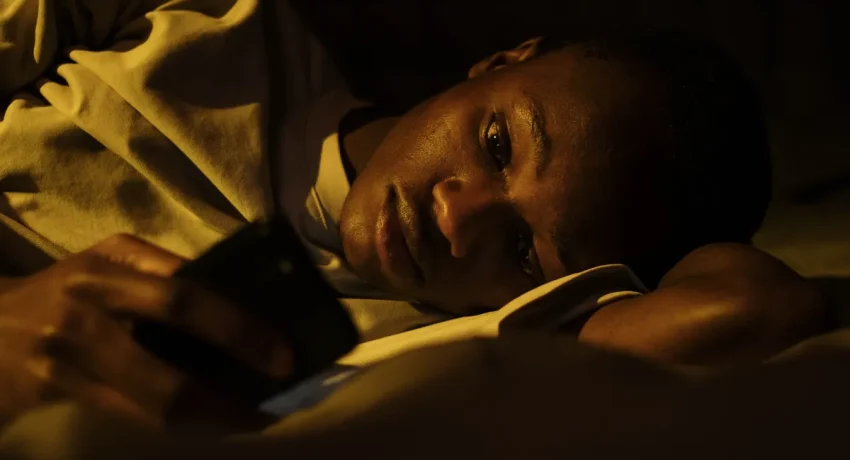

You check your phone one last time before bed. The screen glows in the dark room, and ten minutes later you are still scrolling. When you finally put the phone down, sleep feels further away than it did before you picked it up. Many people blame blue light for this. The story sounds simple: screens give off blue light, blue light blocks sleep, so screens ruin sleep. The real story is more interesting, and more useful, than that simple version.
Blue light does affect sleep, yet it is not the only factor, and it may not even be the most important one. Brightness, timing, and what you are doing on the screen all matter. This guide explains what blue light is, how it reaches your body clock, and what actually helps in the evening. It also gives an honest answer on blue-light glasses and night mode, so you can spend your effort on the steps that work.
What Is Blue Light?
Blue light is a part of visible light, the light our eyes can see. Visible light runs from violet at one end to red at the other, and blue sits near the violet end. It has a short wavelength and carries more energy than the longer wavelengths, such as red and orange. Sunlight contains plenty of blue light, and that is normal. Our bodies evolved under a sky that is blue during the day and dark at night.
In the modern world, blue light comes from many sources. The sun is still the strongest one by far. After that come LED lights, computer screens, phones, tablets, and televisions. All of these give off some blue light, because their white light is built from a mix that includes the blue part of the spectrum. The amounts are far smaller than daylight, yet they are enough to matter in the evening, when the body expects darkness.
It helps to think of blue light as a signal, not a poison. During the day, it tells the body to stay alert. At night, its absence tells the body to wind down. The problem is not blue light itself. It is blue light at the wrong time, when the body is trying to prepare for sleep.
Light’s Path to Your Body Clock
Your body runs on a roughly daily rhythm called the circadian rhythm. It controls when you feel sleepy, when you feel alert, when your body temperature rises and falls, and when hormones are released. The master clock for this rhythm sits in the brain, in a small region called the suprachiasmatic nucleus. That clock needs regular signals to stay in step with the day, and light is its strongest signal.
Light reaches the clock through the eyes, yet not through vision alone. The retina contains special cells called intrinsically photosensitive retinal ganglion cells. These cells do not help you see shapes or read words. Instead, they sense how much light is around, and they send that information straight to the master clock. When they sense bright light, the clock treats it as daytime. When light fades, the clock starts the evening programme, including the release of melatonin.
This pathway explains why light affects sleep even when you are not looking directly at a lamp or a screen. Light entering the eye from any direction reaches those special cells. That is why a bright room can delay sleep just as a bright screen can. It also explains why the timing of light matters so much. Morning light sets the clock forward, while evening light pushes it back.
Melanopsin Explained: The Light Sensor in Your Eye
The special cells described above work because they contain a pigment called melanopsin. Melanopsin explained in plain terms is a light-sensitive molecule that reacts most strongly to blue light. When blue light hits it, the cell fires a signal to the brain’s master clock. When the light fades, the signal stops. In this way, melanopsin acts as a daylight sensor, telling the brain whether it is day or night.
Melanopsin responds to brightness as well as colour. A dim blue light produces a weak signal, while a bright light of any colour produces a strong one. That detail matters a great deal for evening habits. It means that a dim phone screen has a smaller effect than a bright room, even if the phone’s light is bluer. It also means that turning down brightness is one of the most effective steps you can take, whatever the colour of the light.
Researchers discovered melanopsin relatively recently, and it changed how scientists think about light and sleep. Before its discovery, most people assumed that light affected sleep only through vision. Now we know that the eye has a separate, non-visual light system whose job is to set the body clock. That system is the reason evening light, including screen light, can shift your sleep timing.
Blue Light and Melatonin: The Evening Signal
Melatonin is a hormone that rises in the evening and helps the body prepare for sleep. It does not knock you out like a sedative. Instead, it signals that night has arrived, lowering alertness and body temperature so that sleep can take over. The pineal gland, a small gland in the brain, releases melatonin when darkness falls, and stops when light returns.
Blue light and melatonin are linked because light suppresses melatonin release. When the special cells in the retina sense bright light, they signal the master clock, which in turn tells the pineal gland to hold back melatonin. That is a useful response during the day, when you want to stay alert. In the evening, though, it delays the signal that sleep is near. As a result, you may feel less sleepy at bedtime, and take longer to fall asleep.
A controlled study illustrates the effect clearly. People who read on a bright light-emitting device for several hours before bed took longer to fall asleep, felt less sleepy in the evening, and showed lower melatonin levels than people who read a printed book. Their body clocks also shifted later, and they felt groggier the next morning. The study used a bright screen at full brightness in a dark room, so it shows the strongest version of the effect. Everyday phone use is usually dimmer and shorter, so the effect is usually smaller. Even so, the direction is clear: bright evening light delays the melatonin signal.
Blue Light and Circadian Rhythm: Why Timing Matters
The link between blue light and circadian rhythm is about timing as much as brightness. Your body clock is most sensitive to light in the evening, when it is preparing for sleep, and in the early morning, when it is preparing to wake. Light at those times has the biggest effect on the clock. Light in the middle of the day has far less effect, because the clock already expects daylight then.
Evening light pushes the clock later. That means the melatonin rise starts later, sleepiness arrives later, and the whole sleep window shifts. If you need to wake early, that shift can cut your sleep short, because the clock is still set to a later bedtime when the alarm goes off. Over several nights, the pattern can build into a regular late bedtime that is hard to move earlier.
Morning light does the opposite. Bright light soon after waking tells the clock that the day has started, and it helps anchor the rhythm. That is why spending time outside in the morning, or sitting near a bright window, can improve sleep at night. It gives the clock a strong daytime signal, so the evening signal is clearer by contrast. A regular rhythm of bright mornings and dim evenings is one of the most reliable ways to support sleep.
Screens and Sleep: Light Is Only Half the Story
When people ask how screens affect sleep, light is usually the first answer. Yet screens affect sleep in at least three ways, and light is only one of them. The second is mental arousal. A fast-moving game, a heated argument online, or a work email can all raise alertness and make it harder to wind down. The third is time. Screens are engaging, so they easily push bedtime later. Many people lose sleep not because the screen kept them awake, but because it kept them up.
These three effects combine. A bright screen showing stressful content at midnight is far worse for sleep than a dim screen showing something calm at nine in the evening. That is why the advice to simply avoid screens before bed, while useful, misses the detail. What you do on the screen, how bright it is, and how long you do it for all matter.
It is also worth noting that not all screen time is equal. Watching a gentle programme on a television across the room is very different from holding a phone close to your face in a dark bedroom. Distance matters, because light falls off quickly with distance. A television across the room delivers far less light to your eyes than a phone held at arm’s length. For that reason, the closest, brightest screens in the last hour before bed deserve the most attention.
Does Blue Light Affect Sleep?
So, does blue light affect sleep? The short answer is yes, but with an important qualification. Bright light in the evening, including blue-rich light from screens, can suppress melatonin and delay your body clock. That effect is well supported by controlled studies. However, the size of the effect depends on brightness, timing, and duration. A quick glance at a dim phone is very different from four hours of bright reading on a tablet.
That qualification matters, because it changes what you should do about it. If blue light were the whole story, then blocking blue light would fix the problem. In practice, the research shows that brightness and timing matter at least as much as colour. A bright white light and a bright blue light both delay sleep. A dim light, whatever its colour, has a much smaller effect. For that reason, the most useful steps are the ones that reduce brightness and shorten evening screen time, not just the ones that change colour.
There is another reason to keep the answer balanced. Sleep depends on many factors, including stress, caffeine, room temperature, and sleep habits. Blue light is one factor among many. For a person whose sleep is already disturbed by worry or an irregular schedule, fixing blue light alone will not solve the problem. It helps, yet it works best as part of a broader evening routine.
Blue Light From LED Lights: The Room Matters Too
Screens get most of the attention, yet blue light from LED lights in the home is also worth considering. Modern LED bulbs are efficient and bright, and many of them give off a cool, blue-rich white light. A brightly lit living room in the evening can deliver as much light to your eyes as a screen, or more. That means the room itself can delay your melatonin rise, even if you put the phone away.
The fix is simple: dim the lights in the evening. Use lamps rather than overhead lights, choose warm-toned bulbs for bedrooms and living rooms, and turn off lights you do not need. A dimmer switch, where available, is a useful tool. Even a small reduction in evening brightness helps, because the body clock responds to the total light in the environment, not just to one source.
It is also worth thinking about the bathroom and the kitchen, where bright lights are common. A brief visit to a bright bathroom in the middle of the night can wake the brain enough to make falling back asleep harder. A dim night light in the hallway is a better option for night trips. These small changes add up, and they cost little.
Screen Time Before Bed: What the Evening Looks Like
Screen time before bed is now a normal part of life for most people. The last hour of the day often includes messages, videos, news, or work. That is unlikely to change, so the practical question is how to make it less harmful. The answer is to shape the evening, rather than to ban screens entirely.
A useful way to think about it is in zones. The last hour before bed is the sensitive zone, where bright light and stimulating content have the biggest effect. The hour before that is a middle zone, where moderate screen use is less of a problem. Earlier in the evening, screens matter least of all. By moving the most engaging screen use earlier, and keeping the last hour calm and dim, you get most of the benefit without a strict ban.
Content matters in the sensitive zone. Calm, familiar content is far less disruptive than new, exciting, or stressful content. A programme you have seen before, a gentle podcast, or a few pages of an e-book are all gentler than a fast game or a heated debate. If you do use a screen in the last hour, choose the calmest option available, and keep the brightness low.
How Long Before Bed to Stop Screens?
Many guides suggest a screen-free hour before bed, and that is a reasonable target. But how long before bed to stop screens in practice? The answer depends on what you are doing. For bright, close screens, such as a phone held in a dark room, an hour is a good rule. For a television across the room, a shorter gap is usually enough, because the light is weaker and the content is often calmer.
If an hour feels impossible, start smaller. Try thirty minutes of screen-free time before bed, and see how your sleep responds. Even that shorter gap helps, because it gives the melatonin signal time to rise and the mind time to settle. You can lengthen the gap over time if it helps. The key is to make the change sustainable, not to set a rule you abandon after a week.
It helps to have a replacement ready. A paper book, a magazine, gentle stretching, or a short wind-down routine can fill the gap that screens leave. Without a replacement, the phone tends to creep back. With one, the screen-free hour becomes a habit rather than a struggle. Over time, many people find they prefer the quiet hour to the scrolling one.
Evening Screen Habits That Protect Sleep
Good evening screen habits are simple, and they work together. Start by lowering brightness on all devices in the evening. Most phones and tablets have an automatic brightness setting, and turning it on helps. Next, move the most engaging apps earlier in the evening, and keep the last hour for calm content. Then, charge your phone outside the bedroom if you can, so the bed stays a screen-free place.
Notifications deserve attention too. A phone that buzzes through the night will wake you, whatever the light settings. Turning on a do-not-disturb mode at bedtime is a simple step that protects sleep. It also removes the temptation to check messages that arrive late. If you need the phone as an alarm, a basic alarm clock is a cheap alternative that removes the phone from the bedroom entirely.
Finally, keep the routine steady. The body clock responds to regularity, so a consistent wind-down each night trains it to expect sleep. A regular pattern of dim light, calm content, and a screen-free last half hour is far more effective than an occasional perfect evening followed by chaotic ones. Consistency is the habit that makes the other habits work.
Reducing Blue Light at Night
Knowing how to reduce blue light at night is useful, and the steps are straightforward. First, reduce brightness. This is the single most effective step, because brightness drives the effect more than colour. Lower the screen brightness, dim the room lights, and use lamps instead of overhead lights. Second, increase distance. Hold the phone further away, or watch television from across the room rather than from a laptop on your lap.
Third, use the built-in tools on your devices. Most phones, tablets, and computers now have a night mode or a blue light filter. These shift the screen towards warmer colours in the evening, reducing the blue part of the light. They help, and they cost nothing. However, they are not a complete fix, because they reduce blue light without reducing brightness or mental arousal. Use them as part of a broader routine, not as a substitute for it.
Fourth, think about the room. Warm-toned bulbs, dim lamps, and a dark bedroom all reduce the total light your eyes receive in the evening. Fifth, wear the right habits rather than the right glasses, a point we cover in the section on blue-light glasses below. The steps that cost nothing, brightness, distance, and timing, are the ones that matter most.
Blue Light Filter Phone Settings and Night Mode: Does It Help?
Most phones now offer a blue light filter, often called night mode or night shift. These settings shift the screen towards amber or warm tones in the evening. The question is, night mode does it help? The answer is that it helps a little, but not as much as many people hope. A blue light filter on a phone reduces the blue part of the light, which should in theory reduce melatonin suppression. In practice, the reduction is partial, and the screen is still bright and still engaging.
That does not mean night mode is useless. It is a free, easy step, and it does reduce the blue light your eyes receive. It is worth turning on. But it should not be treated as a licence to scroll late into the night. A phone with night mode on is still a bright, engaging device held close to your face. The bigger wins come from lowering brightness, shortening screen time, and choosing calm content.
To get the most from a blue light filter, combine it with the other steps. Turn the filter on, lower the brightness as well, and keep the phone further from your eyes. On most phones, you can schedule the filter to switch on automatically in the evening, so you do not need to remember it. That automation makes the habit stick, which is half the battle.
Blue Light Glasses: Do They Work?
Blue-light glasses are widely sold as a fix for evening screen use. The lenses are tinted, usually amber or yellow, and they filter out some of the blue light before it reaches your eyes. The question is, blue light glasses do they work for sleep? The honest answer, based on the best available reviews, is that they probably make little or no difference to sleep quality.
Reviews that pooled the results of many trials found no clear improvement in sleep from blue-light filtering lenses. There are several reasons for this. First, the glasses block only part of the blue light, and the screen is still bright. Second, they do nothing about mental arousal or late bedtimes, which are often the bigger problems. Third, many of the trials were small, and the results varied widely. Taken together, the evidence does not support buying glasses as a sleep fix.
That does not mean glasses are harmful. If you find them comfortable, and they reduce eye strain, there is no reason to stop wearing them. But if you are buying them mainly to improve sleep, the money is better spent elsewhere, or not spent at all. The free steps in this guide, dimming lights, shortening screen time, and keeping a steady wind-down, have stronger support. For a broader look at how wearables relate to sleep, see our guide to smart rings and sleep tracking and the Apple Watch sleep features.
Blue Light and Sleep Quality: Putting the Evidence Together
Blue light and sleep quality are linked, yet the link is smaller and more specific than the headlines suggest. Bright evening light can delay sleep and make it lighter, especially when it comes from a close, bright screen used for hours. Dim, brief, or distant light has a much smaller effect. That is the balanced picture the research supports.
It is also worth remembering that sleep quality depends on the whole evening, not just on light. Stress, caffeine, alcohol, and an irregular schedule all affect sleep, often more than screens do. A person who fixes their blue light but still drinks coffee late and worries in bed is unlikely to see a big change. For that reason, the best approach is to treat light as one part of an evening routine, alongside the other habits that support sleep.
If you take one idea from this guide, let it be this: brightness and timing matter more than colour. Dim the lights, shorten the bright screen time, and keep the last hour calm. Those three steps do more for sleep than any filter or pair of glasses. And if sleep problems persist, or if you feel very sleepy during the day, speak to a health professional. Our guide to health insurance coverage can help you understand what a sleep check may involve, and our guide to what science knows about the human brain explains the body clock in more depth.
A Simple Evening Routine for Better Sleep
Here is a routine that puts this guide into practice. Two hours before bed, dim the room lights and switch on night mode on your devices. One hour before bed, put the phone on charge outside the bedroom, or at least switch on do-not-disturb. In the last half hour, choose a calm activity, such as reading, gentle stretching, or listening to quiet music. Keep the bedroom dark and cool, and keep the same routine each night.
During the day, support the same clock from the other side. Get bright light in the morning, ideally by spending time outside or near a window. Keep caffeine to the morning and early afternoon. And keep sleep hours steady, including at weekends. These daytime steps make the evening steps work better, because the body clock responds to the whole pattern of light and dark, not just to one hour.
Finally, be patient. The body clock shifts gradually, not overnight. A few evenings of dim light will not reset a late rhythm in a day. Give the routine a week or two, and keep notes on how you sleep. If your mood or energy is part of the picture, our guide to mental health and sleep may help, and home health care options are worth knowing about for people who need support at home. The goal is not a perfect evening. It is a steadier rhythm, and that is well within reach.