
Comics and Graphic Novels Explained: Issues, Trades, Manga and How Sequential Art Works
Comics tell stories with pictures in sequence. A reader follows panels across a page, and the story moves. Comics and graphic novels explained for readers starts with this simple idea: words and pictures working together.
This guide covers the medium in full. Firstly, you will learn what comics, graphic novels and manga are. Secondly, you will explore panels, genres and art styles. Finally, you will see how comics are made and how to start reading. As a result, you will know how sequential art works.
What Is a Comic Book?
A comic book is a short, serial story told in panels. Issues usually run for about twenty pages and appear regularly. Comic book format explained simply means a thin, stapled booklet that tells one chapter of a longer story.
Comic books often feature ongoing heroes and cliffhangers. The reader must buy the next issue to learn what happens. In addition, comic books use covers, splash pages and lettering to create impact. The format is cheap, portable and collectible. Therefore, comic books remain the heart of the medium.
What Is a Graphic Novel?
A graphic novel is a longer comic story in book form. It may be an original work or a collection of issues. What is a graphic novel, in plain terms? It is a comic with the length and shape of a book.
Graphic novels often tell a complete story in one volume. The reader does not need to follow monthly issues. In addition, graphic novels cover many genres, from memoir to history. Libraries and bookshops shelve them with other books. As a result, graphic novels have brought comics to new readers.
How Are Comic Books and Graphic Novels Different?
Comic books vs graphic novels comes down to length and form. A comic book is a short serial issue. A graphic novel is a long, complete book. Comic books vs graphic novels is a useful distinction for any new reader.
The difference also affects how stories are told. A comic issue must hook the reader fast and end with a cliffhanger. A graphic novel can pace itself like a novel. In addition, the two forms often work together: issues collect into a graphic novel later. Therefore, readers can enjoy both forms without choosing one.
What Is Manga?
Manga is the Japanese form of comics. It covers every genre, from adventure to romance to cooking. Manga explained simply means Japanese comics, read right to left.
Manga differs from Western comics in reading direction and style. Pages flow from right to left, and art often uses expressive faces and speed lines. In addition, manga appears in magazines first, then collects into volumes. The range is huge, with series for every age and taste. As a result, manga has become one of the most popular forms of comics worldwide. For fans of Japanese culture, places to visit in Tokyo for anime fans shows where manga culture lives in the real world.
How Is Manga Different From Comics?
Comic book vs manga comes down to origin, direction and style. Manga comes from Japan and reads right to left. Western comics come from the West and read left to right. Comic book vs manga is a useful distinction, yet the two forms share the same core: panels in sequence.
Manga often uses black and white art, while Western comics often use colour. Manga series can run for many volumes, while Western comics often reboot their heroes. In addition, manga covers a wider range of everyday genres. Therefore, readers who enjoy one form often enjoy the other. The anime fitness guide shows how Japanese pop culture inspires fans beyond the page.
How Do Comic Panels Work?
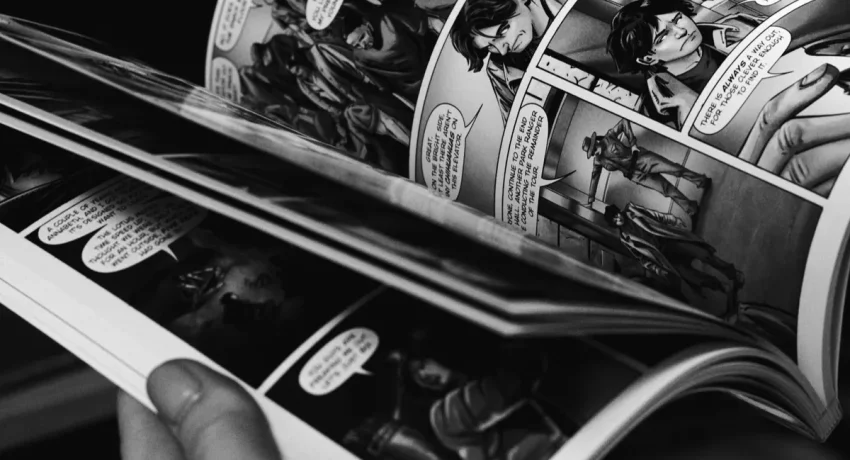
Comic book panels explained simply means the boxes that hold each moment. A panel shows one beat of the story. The gutter, the space between panels, is where the reader fills in the action.
Panels control time and pace. A wide panel can slow the story, while small panels can speed it up. In addition, panel shapes can show emotion: a tilted panel feels unstable, while a borderless panel feels dreamlike. The reader’s eye follows the panels in order. Therefore, panels are the grammar of comics.
Skilled artists break panel rules on purpose. A character may burst through a border to show power. A page may use one huge panel to mark a turning point. Meanwhile, the gutter can hide a surprise: the reader turns the page, and the next panel reveals it. As a result, panels do far more than hold pictures. They direct attention, set rhythm and create surprise.
How Is Comic Book Storytelling Built?
Comic book storytelling mixes words, pictures and layout. Dialogue lives in speech bubbles, while narration lives in captions. Comic book storytelling works when the pictures carry the action and the words carry the voice.
Storytelling in comics also uses the page itself. A splash page can mark a big moment. A silent page can create tension. In addition, the artist controls the reader’s eye through size and placement. A large panel draws attention first. As a result, comic storytelling is a visual craft as much as a written one.
How Are Comics Made?
How comics are made follows a team process. A writer creates the script. An artist draws the pages. An inker, a colourist and a letterer finish the work. How comics are made is a story of collaboration.
Each role shapes the final book. The writer plans the plot and dialogue. The artist designs characters and layouts. In addition, the colourist sets mood, while the letterer places words clearly. Some creators do every job alone. Therefore, comics can be a team effort or a solo art.
What Are Graphic Novel Genres?
Graphic novel genres cover almost every kind of story. Superhero, memoir, history, horror and romance all appear in comics form. Graphic novel genres work because the medium suits any subject.
Memoir comics use pictures to show memory and feeling. History comics use pictures to show the past. In addition, superhero comics remain the most famous genre, yet they are far from the only one. Readers who think comics are only for children should try a memoir. As a result, the genre range surprises most new readers.
What Are Superhero Comics?
Superhero comics explained simply means stories about heroes with powers. The hero fights villains, saves cities and struggles with a double life. Superhero comics remain the most famous face of the medium.
Superhero comics often run for decades, with many writers and artists. The hero stays, yet the stories change with the times. In addition, superhero comics explore power, responsibility and identity. A hero with great power must choose how to use it. Therefore, superhero comics endure because their questions never age.
What Are Comic Book Art Styles?
Comic book art styles range from realistic to cartoonish. Some artists draw detailed, lifelike figures. Others use simple lines and bold shapes. Comic book art styles shape how a story feels.
Art style also signals genre. A horror comic may use shadows and rough lines. A humour comic may use bright colours and round shapes. In addition, art styles change over time as new artists bring new ideas. The fashion illustration books show how drawing styles shape a whole field. Therefore, art style is as important as story in comics.
What Are Graphic Novel Memoirs?
Graphic novel memoirs tell true life stories in comics form. The author draws their own memories, from childhood to adulthood. Graphic novel memoirs work because pictures can show feelings that words alone cannot.
Memoir comics often explore family, identity and loss. The art makes personal history visible. In addition, memoir comics have won major literary awards. They prove that comics can carry serious stories. As a result, memoirs have brought new respect to the medium.
Memoir artists use visual metaphor to show inner life. A childhood home may loom large on the page, while a difficult memory appears in shadow. In addition, the mix of words and pictures lets the author show two truths at once: what happened, and how it felt. Therefore, memoirs may be the most personal form of comics, and often the most moving.
How Do Comic Book Collections Work?
Comic book collections gather issues into a single volume. A trade paperback collects a story arc. Comic book collections help readers follow a long story without hunting for issues.
Collections also preserve comics for libraries and new readers. A trade volume is sturdier than a thin issue. In addition, collections often include extras, such as sketches and notes. Readers can start with a collection and skip the hunt for back issues. Therefore, collections are the easiest way into long-running series.
What Are Webcomics?
Webcomics explained simply means comics published online. They appear on websites, apps and social media. Webcomics range from daily strips to long, scrolling stories.
Webcomics changed the medium by removing gatekeepers. Anyone can publish a comic online. In addition, webcomics use formats that print cannot: infinite scroll, animation and links. Some webcomics later become print books. As a result, webcomics have opened the medium to new creators and new readers. The fun places in New York City include comic shops where print and digital fans meet.
What Is the History of Comic Books?
Comic book history stretches back over a century. Early comics appeared in newspapers as short strips. Later, comic books became their own form. Comic book history shows how the medium grew from jokes to full stories.
Each era added something new. The early era created superheroes. Later eras added horror, romance and underground comics. In addition, manga grew alongside Western comics with its own traditions. Therefore, comic history is a story of constant reinvention.
What Are Comic Strips?
Comic strips are short comics that appear in newspapers or online. A strip usually runs for a few panels and tells one joke or moment. Comic strips work because they deliver a complete beat in seconds.
Strips differ from comic books because they are brief and often comic. A strip may feature the same characters for years. In addition, strips introduced many readers to comics. A funny strip in a newspaper can lead to a lifelong love of the medium. As a result, strips remain an important doorway into comics.
How Do You Start Reading Comics?
Starting comics is easier than it looks. Pick a genre you already enjoy, then find a standalone graphic novel in that genre. A complete book needs no prior knowledge. In addition, libraries offer many graphic novels for free.
New readers should avoid starting with a long-running series. A standalone story teaches the medium without homework. Moreover, comic shops and librarians can recommend a first book. The places near Universal Studios Orlando include shops where fans browse new titles. To persuade, entertain and inform is the aim of good comics too, and the persuade, entertain and inform guide explains that balance. As a result, the right first comic is the one that matches your taste.
Why Do Comics Endure?
Comics endure because they mix two arts into one. Words tell, pictures show, and the reader joins them together. No other medium asks the reader to complete the story in quite this way.
Comics also adapt to every new platform. They moved from newspapers to books to screens without losing their core. In addition, comics keep welcoming new readers with new genres and new voices. Therefore, comics remain one of the most lively forms of storytelling. Their panels change, yet their promise stays the same: look, read, and imagine what happens between the pictures.
Visit a library or a comic shop this week and browse the graphic novel shelves. Pick one book that catches your eye, read its first ten pages, and see where the panels take you. The medium rewards curiosity, and your next favourite story may be waiting in a single frame.
Comics also reward a second reading. Once you know how a story ends, the early panels take on new meaning. You notice the detail you skipped and the clue hidden in the art. The gutter between two panels can hold a whole secret. That second read often feels richer than the first, because you are reading the pictures as well as the words.