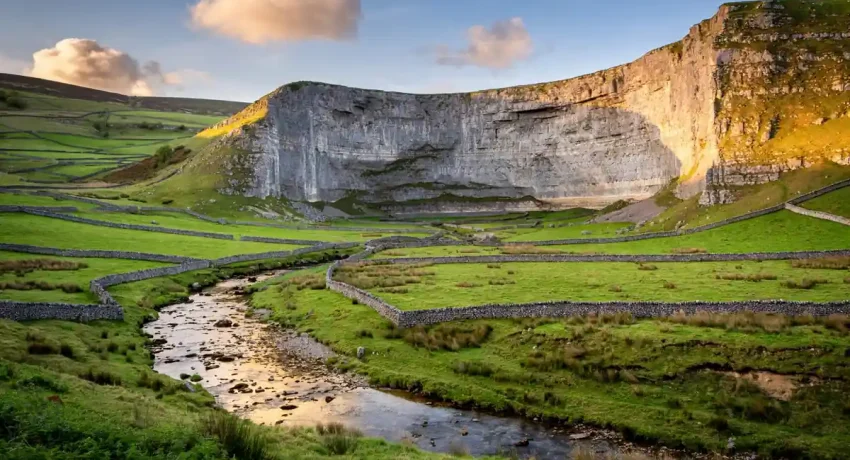

The North Yorkshire Dales does not shout. It does not need to. Limestone cliffs rise out of green valleys. Dry-stone walls run for miles across the hills. Waterfalls drop over wide stone steps. Villages of grey stone sit quietly beside rivers. This is the England of walking boots, tea rooms and long views.
Most visitors rush to the Lake District or the Cotswolds. The Dales rewards those who slow down. You can walk from a famous cove to a fairy waterfall in one morning. Wensleydale cheese tastes best in the town where it is made. And you can watch the sun set over a viaduct that has carried trains since 1874.
This Yorkshire Dales National Park guide covers the best places to visit in Yorkshire Dales in 2026. It gives verified prices, walk times and a plan that works. Every figure comes from a published 2026 source. Where prices vary, the guide says so plainly. If you want a wider England summer plan first, our best places to visit in England during summer guide covers London, the Cotswolds and the Lakes as well.
| Who you are | Start here |
|---|---|
| First-time visitors | Malham Cove, then Aysgarth Falls |
| Walkers | Malham Landscape Trail and the Three Peaks |
| Families with kids | Bolton Abbey, Ingleton Waterfalls Trail |
| Waterfall chasers | Aysgarth Falls, Janet’s Foss, Hardraw Force |
| History lovers | Bolton Abbey, Ribblehead Viaduct, Fountains Abbey |
| Food lovers | Hawes and the Wensleydale Creamery |
| TV fans | Grassington, the real Darrowby |
Why Is the North Yorkshire Dales Worth a Trip in 2026?
Yorkshire Dales National Park covers 2,178 square kilometres across North Yorkshire, Cumbria and Lancashire. It was created in 1954 and extended in 2016. Entry to the park itself is free. You pay only for parking at some sites and for entry to a few attractions inside it.
What makes the Dales different from other English parks? Limestone shapes everything here. Rainwater has carved cliffs, gorges, caves and pavements out of the rock. Rivers drop over wide steps. Dry-stone walls divide the green valleys into a patchwork. Sheep graze on the high moors. Villages keep their stone cottages, pubs and market squares.
Autumn 2026 gave the Dales fresh praise. Condé Nast Traveller named it one of the best autumn road trips in the UK. Its route starts at Bolton Abbey, runs through Malhamdale and ends at Aysgarth Falls. That same route works in any season. This guide follows it, with extra stops for walkers and food lovers.
When Is the Best Time to Visit the North Yorkshire Dales?
The best time to visit Yorkshire Dales depends on what you want most. April to October brings the longest days and the greenest valleys. May and June offer wildflowers, lambs and lighter crowds. July and August bring the warmest weather and the busiest car parks. September keeps much of the warmth with far fewer visitors. October brings autumn colour to the woods around Bolton Abbey and Aysgarth.
Daytime highs in the north of England sit around 19–22°C in summer. Rain can arrive in any month, so pack a light waterproof even on a sunny forecast. Winter brings short days and muddy paths, but also empty trails and low hotel prices. If you love autumn colour, our places to visit in the US during fall guide shows how the season looks across the Atlantic too. For winter trips in general, see our best places to visit in February guide.
| Month | What to expect | Crowds |
|---|---|---|
| April–May | Wildflowers, lambs, fresh green valleys | Low to medium |
| June | Longest days, Grassington Festival, warm walks | Medium |
| July–August | Warmest weather, full bus services, busy car parks | High |
| September | Warm days, quieter trails, harvest colours | Low to medium |
| October | Autumn colour, Cheese Festival, crisp air | Low to medium |
| November–March | Short days, mud, empty paths, low prices | Very low |
What Makes Malham Cove the Dales’ Most Famous Sight?
Malham Cove is a huge curved cliff of limestone. Its face rises about 80 metres above the valley floor. Glacial meltwater carved it during the last ice age. Today the rock stands dry most of the year. Rain sinks into the limestone instead of running over the edge.
Climb the 400 stone steps to the top. You reach a limestone pavement. Deep cracks, called grykes, split the pale rock into blocks. The view runs across the village and the valley. Film fans may recognise the pavement. It appeared in Harry Potter and the Deathly Hallows Part 1.
Entry to Malham Cove is free. It is open 24 hours a day, all year. The only cost is parking in Malham village. National Park car parks charge £3.80 for up to two hours, £6 for over two hours and £7 for 24 hours. A seven-day ticket costs £20 and covers all ten authority car parks. An annual pass costs £62. Blue Badge holders get an extra free hour on a two-hour ticket.
Plan the Malham Cove walk 2026 route from the Malham National Park Centre, BD23 4DA. The walk to the foot of the cove takes about 20 minutes. The full Malham Landscape Trail runs five miles and takes about three hours. It links Janet’s Foss, Gordale Scar and the cove in one loop. Bus 580 runs from Skipton to Malham, though the service is limited. DalesBus 881 runs on Sundays from April to October. Check timetables before you travel.
Why Should You Walk to Janet’s Foss and Gordale Scar?
Janet’s Foss sits in a beech wood near Malham. Water drops over a small cliff into a clear pool. Local folklore says Janet, queen of the fairies, lived in the cave behind the falls. The walk from Malham village takes about 20 minutes. It suits families and casual walkers.
Gordale Scar lies a short walk further on. Two towering cliffs form a narrow gorge. Waterfalls drop between the rocks. The path through the gorge needs care after rain. Rocks can be slippery. Wear walking boots with good grip. Both falls are free to visit, like Malham Cove.
Walkers often combine the Gordale Scar Janet’s Foss loop with Malham Cove in one morning. The route runs about five miles. Allow three hours with stops for photos. Bring water and a snack. There are no toilets at the cove itself. Facilities sit in Malham village, about a mile away.
Is Malham Tarn Worth the Climb?
Malham Tarn sits on the moor above Malham village. It is a rare upland lake in the Yorkshire Dales. The National Trust protects it as a nature reserve. Still water reflects the sky and the surrounding moor. Birdlife gathers here, including waders and wildfowl.
Reach it by a steady climb from the village. The walk takes about 45 minutes one way. Or drive to the tarn car park and walk the short lakeside path. The tarn suits a quiet hour after the busy cove. It also works as a picnic stop on a longer walk across the moor.
What Makes Aysgarth Falls Special?
Aysgarth Falls is not one waterfall. It is a series of three broad cascades on the River Ure. Water drops over wide limestone steps. The falls cover about a mile of river. After rain, thousands of gallons pour over the stone. In dry weather the flow thins to a gentle sheet.
The Aysgarth Falls Yorkshire Dales National Park Centre, Church Bank, Aysgarth, DL8 3TH, is the best starting point. The Upper Falls sit about five minutes from the car park. A walk of about 1,200 metres covers all three falls. The path has slopes and steps. At most 30 steps lead back up from the Lower Falls. An all-terrain wheelchair can be arranged at the centre for the upper and middle falls.
Entry to the falls is free. Parking follows the National Park rates: £3.80 for up to two hours, £6 for over two hours, £7 for 24 hours. The visitor centre opens daily from 10 am to 5 pm. It has a café, a shop and toilets. Note that toilet improvement works were under way in October 2026. Portable toilets were provided from early morning until 5 pm.
Film fans will know the Lower Falls. Scenes from Robin Hood: Prince of Thieves were filmed here in 1991. The falls look their best after rain. Visit in the morning for softer light and fewer people.
Why Is Grassington the Prettiest Village in the Dales?
Grassington sits in Upper Wharfedale. Its cobbled square holds Georgian and Victorian frontages, a pub at one end and a museum at the other. The village has been the main settlement of Upper Wharfedale since medieval times. The Grassington Yorkshire Dales market has run on this square for centuries.
Television made Grassington famous. The cobbled square plays Darrowby, the market town in All Creatures Great and Small. It served the role in the original 1978 series. The square returned for the new series, with Series 7 filming in 2026. Fans walk the square and spot the familiar shopfronts.
Grassington Festival brings two weeks of music, theatre, art and comedy to the village each summer. Check grassington-festival.org.uk for dates, as the timing varies. The Grassington 1940s Weekend ran from 18 to 20 September 2026, with vintage music, dancing, military vehicles and re-enactments. The Dickensian Festival traditionally runs on the first three weekends of December. Its format has changed in recent years, so check the village site before you plan around it.
Grassington Folk Museum sits on the square. It shows local life in old miners’ cottages. The museum closes at 4.30 pm and stays shut on Mondays. It closes for winter from 2 November. Linton Falls, a short walk from the village, roars after rain. The Dales Way long-distance path passes nearby.
What Should You Know Before Visiting Bolton Abbey and the Strid?
Bolton Abbey sits in Wharfedale, south of Grassington. A 12th-century Augustinian priory stands in ruins beside the River Wharfe. Bolton Abbey Strid Wood covers the hillside above the river. Paths run along the river through ancient woodland. The estate opens daily from 9 am to 5.30 pm.
Entry to Bolton Abbey is free. Parking is the cost. It runs £15 per car on the day, or £12.50 if you book online in advance. One ticket covers all three estate car parks: the abbey, Cavendish Pavilion and the Strid. Free layby parking sits at Barden Bridge, if you arrive early enough to find a space.
The Strid is the estate’s most famous and most dangerous feature. The River Wharfe narrows from about 20 to 30 feet wide to about three feet. Water rushes through the gap with huge force. Undercut rocks hide below the surface. Never step into the water here. Keep dogs on a lead. The walk from Cavendish Pavilion to the Strid runs about a mile. The climb back up is steep.
Bolton Abbey suits a half day. Walk the riverside path from the abbey to the Strid. Stop at Cavendish Pavilion for tea. Families enjoy the woodland trails and the stepping stones further up the river. Arrive before 10 am on summer weekends to beat the crowds.
What Makes Hawes the Heart of Wensleydale?
Hawes is one of the highest market towns in England. It sits in Wensleydale, the valley of the River Ure. The town makes a good base for the northern Dales. It has pubs, tea rooms, shops and a weekly market.
Dales Countryside Museum sits in the old railway station. It tells the story of Dales life, from farming to lead mining. Adults pay £5. Visitors aged 60 and over pay £4.50. Children under 16 and carers go free. Tickets last seven days. A car park ticket gives £1 off museum entry. The museum opens daily from 10 am to 5 pm from February to October, and 10 am to 4 pm in November and December. Last entry is one hour before closing. It closes from 4 to 31 January 2027.
The Hawes Wensleydale Creamery sits in the town too. Its Cheese Experience shows cheese being made, with a viewing gallery above the production floor and a tasting room. Adult tickets cost £5.95. Children under 16 go free. The experience runs from 10 am to 4.30 pm. Yorkshire Wensleydale holds protected geographical indication status since 2013. Only cheese made to the set specification can carry the name.
Time your visit for the Yorkshire Dales Cheese Festival. It ran from 9 to 18 October 2026, with tastings, demonstrations and farm visits across the Dales. The creamery ran cheese-making demonstrations through the festival. Hardraw Force, England’s highest single-drop waterfall, sits a short drive from Hawes. It drops about 30 metres behind the Green Dragon Inn.
Why Is Ribblehead Viaduct Worth a Detour?
Ribblehead Viaduct carries the Settle to Carlisle railway across Batty Moss. It has 24 arches. The structure runs 400 metres long and 32 metres high. Construction took four years and finished in 1874. Trains still cross it every day.
The Ribblehead Viaduct walk starts at the station car park. Walk under the arches to feel the scale from below. Photographers come for the morning light. Walkers use the viaduct as a start point for Ingleborough or Whernside. Ribblehead station sits on the Leeds to Settle to Carlisle line. Nine trains run each day from Monday to Saturday, and five on Sundays.
Combine the viaduct with a walk to the Three Peaks. Or drive ten minutes to Ingleton for the waterfalls trail. The Station Inn at Ribblehead serves food and drink. It makes a good lunch stop after a morning walk.
Is the Ingleton Waterfalls Trail Worth £11?
Ingleton Waterfalls Trail is a 4.5-mile circular walk through ancient woodland. It passes a series of waterfalls on the Rivers Twiss and Doe. Thornton Force, a wide fall about 14 metres high, is the highlight. The trail takes two to three hours. It has steps, uneven ground and narrow paths in places. Good walking shoes help.
Admission costs around £11 per adult in 2026, based on visitor reports from the summer. The fee pays for path upkeep. Parking is free. The trail opens seven days a week, all year, except Christmas Day. Payment is by card only at the ticket office. No pre-booking is needed.
Ingleton village sits on the edge of the National Park. It has cafés, pubs and shops. The trail starts at Broadwood Entrance, LA6 3ET. Go early on summer weekends. The path gets busy by midday.
What Awaits You Inside White Scar Cave?
White Scar Cave sits just outside Ingleton. It is the longest show cave in England. White Scar Cave Ingleton tours run about 80 minutes. They lead through vast chambers, past stalactites and an underground waterfall. The cave stays cool all year. Bring a warm layer even in summer.
Tours cost around £15 per adult, based on recent prices. Check the cave website before you go, as prices change. The cave can flood in bad weather. It may close at short notice after heavy rain. Call ahead on wet days.
Pair the cave with the Ingleton Waterfalls Trail for a full day. The two sites sit minutes apart. Together they show the Dales above ground and below it.
Should You Attempt the Yorkshire Three Peaks?
The North Yorkshire Dales walks suit every level, from gentle riverside paths to the full Three Peaks challenge. The Yorkshire Three Peaks walk covers Pen-y-ghent (694 metres), Ingleborough (724 metres) and Whernside (736 metres). The full route runs 24 miles. Most walkers take about 12 hours. The challenge asks you to finish all three peaks in that time.
You do not need to do all three at once. Each peak works as a separate day walk. Pen-y-ghent from Horton-in-Ribblesdale takes about three hours. Ingleborough from Clapham takes about four hours. Whernside from Ribblehead takes about four hours. All three give wide views across the Dales on a clear day.
Start early. Carry water, food, a map and waterproofs. Weather changes fast on the tops. The paths are well marked, but mist can close in quickly. Summer weekends bring the most walkers. Midweek walks feel quieter.
Which Villages Should You Not Miss in Wharfedale?
Burnsall sits on the River Wharfe between Bolton Abbey and Grassington. Its wide village green runs down to the river. A five-arched bridge crosses the water. The village suits a picnic stop on a drive through Wharfedale.
Kettlewell lies further up the valley. Stone cottages line its main street. A village potter works here. Footpaths leave straight from the high street. Cam Gill Road pull-ins give big valley views above the village.
Dent village sits in Dentdale, west of the main valleys. Its cobbled streets feel untouched by time. The village has a small museum and a pub. Askrigg, in Wensleydale, holds a market cross and stone cottages. It played a part in All Creatures Great and Small too.
These Yorkshire Dales villages have tea rooms and pubs. None has big crowds. That is the point. Slow down. Order a pot of tea. Watch the valley light change.
How Much Does a Yorkshire Dales Trip Cost in 2026?
The Dales suits most budgets. Most natural sights cost nothing. Parking and a few attractions make up the main costs. Food and stays set the rest. The table below gives typical ranges for one person per day, not fixed prices.
| Style | Per person per day | What it covers |
|---|---|---|
| Budget | £60–90 | Hostel or campsite, self-catering, free walks, bus travel |
| Mid-range | £110–170 | B&B or inn, pub meals, car hire share, one paid attraction |
| Comfortable | £200–300 | Country hotel, restaurant dinners, car hire, guided walks |
Parking adds £6 to £15 a day, depending on the site. A seven-day National Park parking ticket costs £20. It covers all ten authority car parks. Bolton Abbey parking costs £15 on the day, or £12.50 pre-booked. Most walks, waterfalls and viewpoints cost nothing at all.
How Do You Get Around the Yorkshire Dales Without a Car?
A car gives the most freedom. Villages sit miles apart. Rural buses run every two hours, or not at all on Sundays. But a car-free trip still works with planning.
Trains from Leeds reach Skipton in about 30 minutes. From Skipton, buses run towards Grassington and Malham. Bus 580 links Skipton and Malham. DalesBus Yorkshire Dales services run seasonally, with Sunday services from April to October. Check dalesbus.org for current timetables.
Base yourself in Skipton, Grassington or Hawes. Skipton has the best transport links. Grassington puts you in the heart of Wharfedale. Hawes suits the northern valleys. Walk from your base each day. Use buses for one-way walks. Download offline maps before you go. Mobile signal dips in the valleys.
Cyclists enjoy the quiet lanes. The Dales has steep climbs, so bring gears and fitness. Bike hire runs in Skipton and Grassington. If you want more ideas for a first trip to Europe without a car, our places to visit in Spain for first timers guide covers trains, buses and city passes in detail.
What Does a 3-Day Yorkshire Dales Itinerary Look Like?
This Yorkshire Dales itinerary 3 days plan covers Malham, Wharfedale and Ingleton in a logical loop.
Why Should Day One Focus on Malham?
Start in Malham village. Walk the five-mile Landscape Trail. It covers Janet’s Foss, Gordale Scar and Malham Cove in about three hours. Eat lunch at a village pub. Spend the afternoon at Malham Tarn. Drive to Grassington for the night. Walk the cobbled square at dusk.
Why Should Day Two Cover Wharfedale and Wensleydale?
Morning at Bolton Abbey. Walk the riverside path to the Strid. Allow two hours. Drive north through Burnsall and Kettlewell to Hawes. Visit the Dales Countryside Museum. Taste cheese at the Wensleydale Creamery. Stay in Hawes overnight.
Why Should Day Three Head West to Ribblehead and Ingleton?
Morning at Ribblehead Viaduct. Walk under the arches and photograph the 24 spans. Drive ten minutes to Ingleton. Walk the 4.5-mile Waterfalls Trail. Allow three hours. Finish with a tour of White Scar Cave. Drive back to Skipton or Leeds in the evening.
Got a fourth day? Add Aysgarth Falls and a drive through Wensleydale. Or head east to the Yorkshire coast. Scarborough sits about two hours away. Our places to visit in Scarborough at night guide covers the seaside town after dark.
Where Should You Stay in the Yorkshire Dales?
Grassington makes the best base for Wharfedale. It has inns, B&Bs, holiday cottages and tea rooms. You can walk from the village to Linton Falls and the Dales Way. Hawes suits the northern valleys and the cheese trail. Malham suits walkers who want the cove on their doorstep. Skipton, just outside the park, has the widest choice and the best transport links.
Book early for July and August. The best cottages and inns sell out months ahead. Consider June or September for lower prices and emptier trails. Campsites and hostels suit budget travellers. Many farms offer camping in summer. Check the National Park site for licensed sites.
What Should You Eat in the Yorkshire Dales?
Start with Wensleydale cheese. The crumbly white cheese comes from Hawes. Try it plain, with cranberries, or with fruit cake. The combination sounds odd. It works.
Pub food rules the Dales. Expect Yorkshire pudding with roast beef, steak and ale pie, and fish and chips. Tea rooms serve cream teas, homemade cakes and strong Yorkshire tea. Farm shops sell local lamb, jams and chutneys. The Yorkshire Dales Cheese Festival in October turns the whole park into a tasting trail.
Pack a picnic for long walks. Village shops sell sandwiches, sausage rolls and fruit. Carry water. Shops are few and far between on the high moors.
Is the Yorkshire Dales Safe for Solo Travellers?
The Dales is one of the safest rural areas in England. Crime is very low. Villages are friendly. Solo walkers are common on the main trails. Tell someone your route on remote walks. Carry a charged phone and a map.
Weather is the main risk. Rain makes rocks slippery. Mist can hide the path on the high fells. Rivers rise fast after rain. Never cross a flooded stream. Stay out of the Strid at all times. If you travel alone often, our best places to visit for a single woman guide and our safest places to visit outside the US guide cover solo travel in more depth. Summer walking in the hills also features in our best places to visit in Vermont in summer guide.
Frequently Asked Questions
How many days do you need in the North Yorkshire Dales?
Three days cover the highlights: Malham, Grassington, Bolton Abbey, Hawes, Ribblehead and Ingleton. Five days let you walk the Three Peaks and explore the villages at a slower pace. A week suits walkers who want the Dales Way or the Coast to Coast path.
Is the Yorkshire Dales National Park free to enter?
Yes. Entry to the park is free. You pay for parking at National Park car parks and for entry to a few attractions, such as the Dales Countryside Museum and the Ingleton Waterfalls Trail. Most waterfalls, viewpoints and walks cost nothing.
Can you visit the Yorkshire Dales without a car?
Yes, with planning. Trains from Leeds reach Skipton in about 30 minutes. Buses link Skipton with Grassington and Malham. DalesBus runs seasonal Sunday services. Base yourself in Skipton or Grassington and walk from there. Download offline maps first, as mobile signal dips in the valleys.
What is the best village to stay in the Yorkshire Dales?
Grassington suits most visitors. It has inns, B&Bs, tea rooms and walks from the door. Hawes suits the northern valleys. Malham suits walkers. Skipton, just outside the park, has the best transport links and the widest choice of stays.
What is the best time to visit Yorkshire Dales?
April to October brings the best walking weather. May and June offer wildflowers and lighter crowds. September keeps the warmth with fewer visitors. October brings autumn colour and the Cheese Festival. Winter brings empty trails and low prices, but short days and muddy paths.
Is Malham Cove suitable for children?
Yes, with care. The walk to the foot of the cove is flat and easy. The 400 steps to the top suit older children. Keep young children away from the edge of the limestone pavement. The cracks between the rocks are deep. Janet’s Foss and Bolton Abbey suit younger children better.
The places to visit in North Yorkshire Dales reward slow travel. Walk the limestone trails. Eat cheese in Hawes. Watch the light change over Wharfedale. Three days here will leave you planning a return before you have even left.