
Miami is not one city. It is a beach town, a Cuban neighbourhood, a street-art district, a museum quarter and a wild river of grass, all stacked within an hour of each other. Ask ten people for the best place to visit in Miami and you will get ten different answers. A surfer will say South Beach. An art lover will say Wynwood. A food lover will say Calle Ocho. They are all right, because Miami rewards the traveller who moves between its worlds instead of staying in one. That is why the best place to visit in Miami is a matter of matching the neighbourhood to your mood.
This Miami travel guide 2026 does what the thin top-ten lists do not. It gives you verified 2026 ticket prices, honest warnings about the new Everglades fee, a real cost table and a four-day plan that actually works. Prices vary by season. The range is labelled as typical, so check before you book.
Where Is the Best Place to Visit in Miami?
South Beach is the best place to visit in Miami for a first trip. It packs the beach, the Art Deco streets, the boardwalk and the sunset into one walkable square mile. If you only have one day, spend it there.
But the best place to visit in Miami depends on what you want. Miami is a city of neighbourhoods, and each one feels like a different trip. Pick your base by mood, not by a single ranking.
| Your mood | Best neighbourhood | Why it fits |
|---|---|---|
| Beach and glamour | South Beach | White sand, Art Deco hotels, Ocean Drive at golden hour |
| Art and street culture | Wynwood | Giant murals, galleries, breweries, food halls |
| Food and music | Little Havana | Cuban coffee, salsa, dominoes on Calle Ocho |
| Calm and green | Coral Gables and Coconut Grove | Tree-lined streets, Vizcaya, bayfront parks |
| Wild nature | Everglades day trip | Alligators, airboats, sawgrass horizons |
| Family with kids | Key Biscayne | Gentle beaches, a lighthouse, bike paths |
Most first-time visitors do best with three bases in four days: two days around Miami Beach, one day in Wynwood and Little Havana, and one day out west in the Everglades. That mix is the spine of the itinerary at the end of this guide.
What Makes South Beach Worth the Hype?
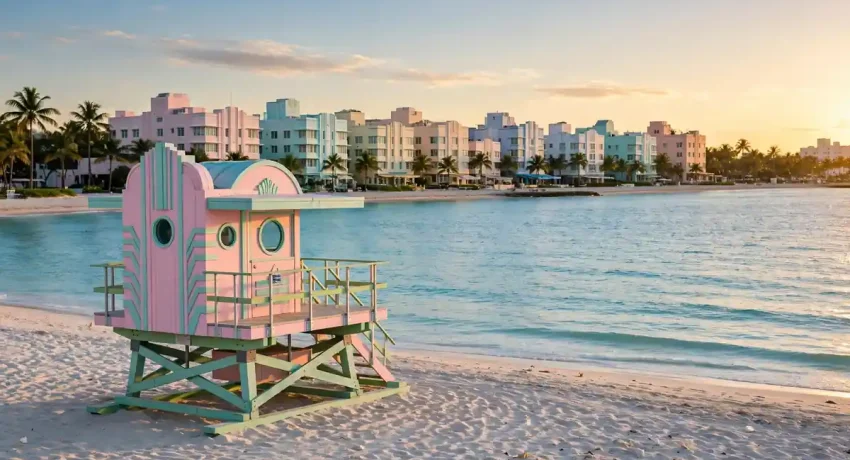
South Beach earns its fame. Miami South Beach is the city’s postcard: soft white sand, warm turquoise water and lifeguard towers painted in candy colours. Behind the beach, Ocean Drive glows with neon over pastel Art Deco hotels from the 1920s and 1930s.
Start at South Pointe Park, at the southern tip of the island. Cruise ships slide past the point. Fishermen cast lines from the pier. The view back up the beach shows the whole Miami Beach skyline in one frame. Walk north along the boardwalk from there. The Miami Beach Boardwalk runs for about four miles, and the best stretch is the southern half, where Lummus Park separates the sand from Ocean Drive.
Come at golden hour, not at noon. The light turns the pastel facades gold. The heat eases. The cafés fill with people watching. Ocean Drive is at its best when the neon comes on, and the South Beach Art Deco Historic District holds more than 800 protected buildings, the largest collection of its kind in the world. A self-guided walk costs nothing, and the Art Deco Welcome Center runs guided tours if you want the stories behind the facades.
Swimming is easy at South Beach, but respect the water. Swim near a lifeguard tower. Watch for rip current flags. The surf is usually gentle, yet afternoon thunderstorms can roll in fast in summer, so check the sky before a long swim.
How Do You Explore Wynwood Walls Without Wasting Money?
Wynwood Walls began in 2009, when blank warehouse walls became canvases for the world’s best street artists. Today the district covers six industrial blocks of murals, galleries, breweries and food halls. It is one of the most photographed places in Florida, and it is also one of the easiest to overspend in.
Here is the honest split. The street murals outside the paid area are free, always. You can walk NW 2nd Avenue and see huge works for nothing. The curated interior museum, the Wynwood Walls park itself, charges admission, and Wynwood Walls tickets cost around $12 to $15 for adults, with lower prices for seniors and children. Hours run roughly 10:30 am to 6:30 pm, with last admission at 6:00 pm. Buy tickets online in advance on busy weekends.
Go on a weekday morning if you can. The light is better for photos. The crowds are thinner. The nearby galleries are open and quiet. Pair the Walls with the Institute of Contemporary Art Miami, which is free from Wednesday to Sunday, and with a wander through the Design District, where luxury shops sit beside bold public art. If you want a deeper dive, the Museum of Graffiti sits nearby and tells the story of the art form itself.
Budget two to three hours for Wynwood. Eat at one of the food halls rather than a sit-down restaurant on the main strip, and you will save money without missing the flavour. Wynwood is at its liveliest in the late afternoon, when the breweries open their patios and the murals catch the low sun.
What Should You Eat and See in Little Havana?
Little Havana is the cultural heart of Miami’s Cuban community, and Little Havana Calle Ocho is the neighbourhood’s main street. Start at Domino Park, officially Máximo Gómez Park, where longtime residents gather daily for loud, passionate games of dominoes. It is free to watch, and it is the most honest window into the neighbourhood you will find.
Order a café cubano from a ventanita, a walk-up coffee window. It costs around $1.50, and it is strong, sweet and tiny. Follow it with a pastelito, a flaky pastry filled with guava and cheese. Walk the street slowly. Cigar rollers work in shop windows. Salsa drifts from doorways. Murals tell the story of the Cuban exile community in bright paint.
Friday evenings are special. Viernes Culturales, the monthly cultural Friday, brings live music, dancing and open galleries to Calle Ocho. If your trip falls on a Friday, plan your Little Havana evening for then. Ball & Chain, a storied live-music bar on Calle Ocho, often has free entry and salsa from around 8 pm.
Look for a family-run Cuban restaurant rather than a tourist spot on the main drag. For Miami food Cuban restaurants are the headline act, and the best plates are often the cheapest ones. A complete traditional meal costs around $16 at an affordable local place. Order ropa vieja, black beans and rice, and plantains. You will eat well for less than a South Beach cocktail.
Is Vizcaya Museum Worth $25?
Yes, if you like gardens, history or quiet beauty. Vizcaya Museum and Gardens is a 1916 winter estate on Biscayne Bay, built like an Italian Renaissance villa and filled with European art. The gardens are the real draw: terraces, fountains and a stone barge that juts into the bay.
Admission is $25 for adults aged 13 and over, $10 for children aged 6 to 12, and free for children aged 5 and under, according to the official Vizcaya site, so Vizcaya Museum tickets are straightforward to budget. The price is temporarily reduced from $32 while restoration work continues on site, and the Stone House will not be accessible through late 2026. Check the official site before you go, because restoration schedules change.
Go early in the morning. The light on the bay is soft. The gardens are cooler. Iguanas bask on the balustrades. Allow two hours, and pair the visit with Coconut Grove, the leafy village next door. Walk the Grove’s bayfront parks, browse its bookshops, and eat lunch under the banyan trees. It is the calmest corner of Miami, and a good antidote to a loud South Beach night.
What Can You Do in Downtown Miami and Brickell for Free?
Downtown Miami surprises people. The Metromover, the free elevated train that loops through downtown and Brickell, costs nothing and gives you a skyline tour from above the streets. Ride the full loop once, just for the view. It is the best free ride in the city.
Bayfront Park sits on the water in the heart of downtown. It hosts Ultra Music Festival every March, and on ordinary days it is a green lawn with a bay view, a good place for a picnic. Maurice A. Ferré Park, next door, holds the Pérez Art Museum Miami and the Frost Museum of Science side by side.
Perez Art Museum Miami, known as PAMM, charges $18 for an adult ticket. It is free every second Saturday of the month and free on Thursdays after 5 pm. The building itself, designed by Herzog & de Meuron, is worth the visit, with hanging gardens and a bayfront terrace. In 2026 the museum hosts a major Basquiat exhibition from 25 June 2026 to 6 June 2027, and a Modernism show covering Picasso, Klee and Matisse from 29 October 2026 to 28 February 2027.
The Frost Museum of Science stands right beside PAMM, so the two make an easy half-day pair. A cross-venue discount sometimes applies, so ask at the desk. Finish the afternoon with a stroll along the bayfront, then take the Metromover to Brickell for rooftop views as the sun sets.
Where Do Locals Go When Tourists Stay on the Beach?
Ask a Miamian where they spend a slow Sunday and the answer is rarely South Beach. It is Coral Gables, Coconut Grove or Key Biscayne. These are the neighbourhoods where Miami feels like home rather than a postcard.
Coral Gables is a planned city of tree-lined streets, Mediterranean architecture and the Miracle Mile shopping street. The Venetian Pool, a historic coral-rock swimming pool fed by spring water, is its most unusual attraction. The Gables also runs a free trolley, which makes it easy to explore without a car.
Key Biscayne is a barrier island south of downtown, reached by the Rickenbacker Causeway. Bill Baggs Cape Florida State Park sits at its southern tip, with a historic lighthouse, calm beaches and bike paths. The Key Biscayne beach water is gentler than on the Atlantic side, which makes it a good pick for families with small children.
Coconut Grove, the oldest neighbourhood in Miami, has a village feel: bookshops, cafés, a farmers’ market and the Barnacle Historic State Park, a bayfront house from 1891. Come on a Sunday morning, when the Grove is at its most relaxed.
How Do You Plan an Everglades Day Trip From Miami?
The Everglades is the wild counterweight to Miami’s glitter, and it is closer than most visitors think. Shark Valley, the easiest entrance from Miami, sits about 45 minutes west on the Tamiami Trail. A 15-mile paved loop runs through the sawgrass to an observation tower with a view across the whole marsh. You can walk it, cycle it or ride the narrated tram tour, which costs around $35 per person and should be booked ahead in the busy season.
Entry to Everglades National Park costs $35 per private vehicle, valid for seven days at all entrances. Here is the warning every 2026 guide should carry: from 1 January 2026, non-US residents aged 16 and over pay an extra $100 per person on top of the standard fee. An America the Beautiful annual pass costs $80 for US residents and $250 for everyone else, so do the maths before you pay at the gate. If the Everglades is your only surcharge park, paying the $100 fee is cheaper for one person, while the pass can be cheaper for a couple.
Airboats do not run inside the national park. They operate on the Tamiami Trail outside the boundary, mostly on Miccosukee tribal land. A shared Everglades airboat tour runs from around $30 to $60 per person. A 30 to 60 minute ride across the sawgrass, with alligators and wading birds along the way, is the classic Everglades experience, and it pairs well with a Shark Valley morning.
Go in the dry season, from December to April. Alligators gather around shrinking water holes, which makes them easier to spot. The mosquitoes are fewer. The heat is kinder. Bring sun protection, water and insect repellent even in winter, and leave by mid-afternoon if you want to be back in Miami for dinner.
When Is the Best Time to Visit Miami in 2026?
December to April is the best time to visit Miami. Days run around 24 to 28°C, humidity is low, rain is rare, and the city is at its liveliest. This is also the most expensive season, so book hotels early if you travel then.
May is the shoulder month. Prices soften. The heat builds but stays bearable. June to August brings heat, humidity and afternoon thunderstorms. Mid-August to October is hurricane season at its peak, and most experienced Miami guides advise avoiding those weeks. September is the quietest and cheapest month, but it carries the highest storm risk.
| Month | Weather | Crowds and prices | Best for |
|---|---|---|---|
| December to February | 24–28°C, dry | Peak crowds, highest prices | Beaches, Art Basel, escaping winter |
| March to April | 25–29°C, mostly dry | Busy, Ultra and spring break | Festivals, warm water, long days |
| May to June | 28–32°C, some rain | Shoulder, prices easing | Value, fewer crowds |
| July to August | 31–34°C, humid, storms | Summer deals, hot | Families, indoor museums |
| September to October | 29–32°C, storm risk | Quietest, cheapest | Budget trips, if you watch the forecast |
| November | 26–29°C, drying out | Rising, good value | Warm escape before peak season |
Two events shape the calendar. Ultra Music Festival 2026 runs from 27 to 29 March at Bayfront Park, with three-day general admission passes from around $380 to $480. Art Basel Miami 2026 runs from 4 to 6 December, with more than 250 galleries and packed hotels. If you want the festival energy, book around those dates. For calm and lower prices, avoid them.
How Much Does a Miami Trip Cost in 2026?
A Miami cost trip can be a budget break or a luxury blowout. The difference is where you stay and how many paid attractions you stack. Many of the best experiences, from South Beach to the Wynwood street murals to the Metromover, cost nothing.
| Item | Budget | Mid-range | Comfortable |
|---|---|---|---|
| Hotel per night | $80–$130 | $180–$300 | $400+ |
| Food per day | $30–$50 | $60–$100 | $150+ |
| Transport per day | $0–$10 (trolley, Metromover) | $15–$30 (rideshare) | $40+ (rental car, parking) |
| Attractions per day | $0–$15 | $25–$50 | $75+ |
| Total per day | $110–$205 | $280–$480 | $665+ |
These are typical ranges, so check current prices before you book. The biggest savings come from free days: PAMM is free on second Saturdays, the Institute of Contemporary Art is always free, and the beaches, boardwalk, street art and Metromover cost nothing at all. Parking and peak-season hotels cost the most, so consider staying in Downtown or Brickell and riding the free Metromover instead of paying South Beach garage rates.
How Do You Get Around Miami Without a Car?
You do not need a car for a first Miami trip, and in South Beach a car is often a burden. Miami public transport is free in the places that matter most, and rideshares cover the rest. The city is spread out, so the trick is to group sights by area and use the right transport for each hop.
The Metromover is free and loops through Downtown and Brickell. Free trolleys run in Miami Beach, Coral Gables and Wynwood. Between neighbourhoods, rideshares are usually faster than buses and cheaper than parking. Miami Beach itself is walkable, and the boardwalk covers the beachfront.
If you do rent a car, use it for the Everglades and Key Biscayne, then return it. Parking in South Beach is pricey, and garages often charge $20 or more a day. For the airport, the Metrorail connects Miami International Airport to downtown, and rideshares to South Beach take around 20 to 30 minutes outside rush hour.
One honest warning: Miami is built for cars, so walking between neighbourhoods is rarely practical. Wynwood to Little Havana is a short drive but a long, hot walk. Plan your days by area, and you will spend your time seeing things instead of sitting in traffic.
Is Miami Safe for First-Time Visitors?
Miami is safe for most visitors who follow a few simple Miami safety tips. The main tourist areas, South Beach, Wynwood, Little Havana, Brickell and Coral Gables, are busy and well patrolled. Use the same care you would in any big city.
Keep valuables out of sight on the beach. Do not leave bags unattended while you swim. Take a rideshare late at night rather than walking through quiet streets. Stay aware around ATMs and in crowded nightlife areas. If you are travelling alone, the same habits apply, and the busy, well-lit areas are your friend after dark.
Water safety matters more than street safety for most visitors. Swim near lifeguards. Watch for rip current flags. Drink water in the heat, because Miami humidity can drain you faster than you expect. Afternoon thunderstorms are common in summer, so head indoors when lightning starts, and never shelter under a tree.
For a deeper take on travelling alone, including the habits that keep solo trips smooth, read our guide to the best places to visit for single woman travellers. Miami is a good solo destination, and the busy beachfront and free trolleys make it easy to explore without a car.
What Does a Perfect 4-Day Miami Itinerary Look Like?
Four days is the sweet spot for Miami. It gives you the beach, the art, the food and the wild, without rushing any of them. Here is a Miami itinerary 4 days long that groups sights by area, so you spend your time exploring instead of driving.
What should day one cover?
South Beach. Start at South Pointe Park in the morning, walk the boardwalk north through Lummus Park, and spend the afternoon on the sand. As the sun drops, walk Ocean Drive through the Art Deco Historic District, then eat dinner on Lincoln Road, the pedestrian shopping street a few blocks inland.
What should day two cover?
Wynwood and the Design District in the morning, then Little Havana in the evening. See the murals before the crowds, visit the free Institute of Contemporary Art, and eat lunch at a Wynwood food hall. In the evening, head to Calle Ocho for a café cubano, Domino Park and live salsa.
What should day three cover?
Downtown and the bay. Ride the free Metromover loop, visit Pérez Art Museum Miami and the Frost Museum of Science, and walk Bayfront Park. In the afternoon, take a Biscayne Bay boat tour to see the skyline and the islands from the water. End the day in Brickell, watching the towers light up.
What should day four cover?
The Everglades in the morning and Vizcaya and Coconut Grove in the afternoon. Leave early for Shark Valley, ride the tram or take an airboat tour, and be back in the city by mid-afternoon. Spend the rest of the day in the gardens of Vizcaya and the leafy streets of the Grove, which is the calmest possible end to a Miami trip.
If you have a fifth day, add Key Biscayne for the lighthouse and the calm beaches, or drive south toward the Florida Keys. For more Florida beach ideas beyond Miami, see our guide to the best place to visit in Florida for beaches, which ranks the Gulf and Atlantic coasts side by side.
Where Should You Stay in Miami?
South Beach puts the sand at your door, though you will pay for the privilege. Downtown or Brickell gives you better value, the free Metromover and easy access to museums. Coral Gables suits travellers who want quiet streets, gardens and a slower pace.
South Beach hotels cost the most, especially from December to April. Downtown and Brickell offer similar quality for less, and the ride to the beach is short. Coral Gables suits travellers who plan to use a car for day trips to the Everglades and the Keys. Wherever you stay, book early for Ultra week in late March and Art Basel week in early December, because prices spike and rooms sell out.
If Miami is part of a bigger Florida trip, it pairs well with the Keys, the Everglades and Orlando. For warm-weather escapes in the same season, our February travel guide covers eight sunny destinations, and our Hawaii guide is the best next step if you want another island trip after Florida.
What Should You Pack for Miami?
Pack light, but pack smart. Miami’s heat and humidity punish heavy luggage, and its sudden rainstorms punish the unprepared. A small day bag, a reusable water bottle, sunscreen and a light rain jacket cover most situations.
Beach days need swimwear, a towel, sandals and a hat. Museum days need comfortable walking shoes, because you will cover miles on foot. Evenings on Ocean Drive or in Brickell are dressier than the beach, so bring one smart outfit. A light jacket is useful for air-conditioned museums and restaurants, which can feel cold after the outdoor heat.
For a honeymoon or a romantic trip, Miami works well as a first stop before the islands. Our summer honeymoon guide covers the best warm-weather escapes for couples, and our Thailand beaches guide is a good follow-on if Miami leaves you wanting more sand and sea.
Frequently Asked Questions
Is South Beach the best place to visit in Miami?
For a first trip, yes. South Beach has the beach, the Art Deco district, the boardwalk and the nightlife in one walkable area. If you want art, go to Wynwood. Food and culture live in Little Havana. The best place to visit in Miami is the one that matches your mood.
How many days do you need in Miami?
Four days is ideal. Two days for Miami Beach, one day for Wynwood and Little Havana, and one day for Downtown and the Everglades. Three days works if you skip the Everglades. Five days lets you add Key Biscayne or the Florida Keys.
Is Miami expensive?
It can be, but it does not have to be. A budget traveller can manage on around $110 to $205 a day, because the beaches, street art, Metromover and many museums are free or cheap. Hotels and parking are the biggest costs, especially in peak season.
Do you need a car in Miami?
No, not for the city itself. The Metromover is free downtown, free trolleys run in Miami Beach, Coral Gables and Wynwood, and rideshares cover the gaps. Rent a car only for the Everglades or the Keys, and return it when you are done.
When is the best time to visit Miami?
December to April, when days run around 24 to 28°C with low humidity and little rain. May is a good shoulder month. Avoid mid-August to October, when hurricane season peaks and the heat is at its worst.
Is the Everglades worth a day trip from Miami?
Yes. Shark Valley is about 45 minutes from the city, and the tram tour and airboat rides show you a landscape unlike anywhere else in the United States. Remember the 2026 rule: non-US residents aged 16 and over pay an extra $100 per person on top of the $35 vehicle fee.