North Albania does not announce itself. There is no famous skyline, no beach resort strip, no single postcard view that sums it up. Instead, you get a slow ferry through a canyon that looks like a fjord. A stone village follows, where the church bell still sets the pace of the day. Higher up, a mountain pass offers only goat bells and wind. The Albanian Alps are known locally as Bjeshkët e Nemuna. In English they are called the Accursed Mountains. They run along the borders with Montenegro and Kosovo. Their highest peak, Maja Jezerca, reaches 2,694 metres.
Yet the region feels human in scale. Villages sit in green valleys. Guesthouse owners cook dinner for their guests. Rivers run so clear you can count the stones on the bottom. This guide covers the best places to visit in North Albania in 2026. It gives verified prices, transport times, and a four-day plan that joins the whole region together. For hikers planning their first trip, North Albania hiking starts here, with the places that matter most.
North Albania at a glance: the season runs roughly May to September for hiking. The Komani Lake ferry operates from mid-April to early November. Shkodra is the gateway city. Theth and Valbona are the two great valleys, joined by a one-day hike over Valbona Pass. A full three-day loop from Shkodra costs roughly €80–100 per person, not counting your flight to Albania. There is no entrance fee for Theth National Park. Cash is king in the mountains. There is no ATM in Valbona, so withdraw lek in Shkodra before you go.
Why is North Albania suddenly on every hiker’s list?
For years, Albania was the blank space on the map of Europe. Travellers flew over it on their way to Greece or Croatia. That changed fast. Cheap flights into Tirana helped. So did social media photos of the Komani Lake ferry. Word of mouth about the Theth to Valbona hike did the rest. Together, they turned the north into one of the continent’s most talked-about mountain regions. What keeps people coming back is not hype. That is why the best places to visit in North Albania now appear on so many bucket lists. It is the combination of dramatic scenery and low prices, plus a feeling that the place is still real. Farmers still cut hay by hand in Theth. Shepherds still move flocks through Valbona. Guesthouses are family homes with extra rooms, not hotels with lobbies.
The region also suits a short trip. You can see the highlights in four days, which is rare for a mountain destination. The classic loop runs from Shkodra to Theth, over the pass to Valbona, then back by ferry across Komani Lake. Every day brings a different landscape. One day you walk through beech forest. The next you cross a rocky saddle at nearly 1,800 metres. The day after, you sit on a boat deck watching limestone cliffs slide past. Few European trips pack that much variety into so few days.
There is a catch, and honest guides should say it plainly. July and August are busy now. The main trails in Theth can feel crowded. Guesthouses fill weeks ahead. The road to Theth carries more 4×4 traffic than it used to. Go in June or September and you get the same mountains with half the people. The advice in this guide leans toward those shoulder months wherever the choice is yours.
What is the best time to visit North Albania?
The best time to visit North Albania depends on what you want to do. For hiking, the core season is June to September. Snow can linger on Valbona Pass until late May or early June. Check conditions with guesthouses before booking a May crossing. July and August bring the warmest weather and the fullest guesthouses. September is the sweet spot for many travellers: the crowds thin, the light turns golden, and the trails stay open. October can be beautiful too, but days shorten and some guesthouses close by mid-month.
The Komani Lake ferry runs longer than the hiking season, roughly mid-April to early November. Boat tours to the Shala River start around 15 April and run to mid-October. If you only want the ferry and the Shkodra area, late April or October works well. Winter is a different world. Snow closes the high roads, most guesthouses shut, and the pass is impassable on foot. A winter trip to the north means Shkodra and the lowlands only, not the high valleys. If your dates fall in deep winter and you still want sun, try a warm escape instead. Our guide to the best places to visit in February covers the options.
Weather in the valleys is milder than the peaks suggest. Summer days in Theth and Valbona usually reach the low to mid-20s Celsius. Nights stay cool, and a fleece helps even in August. Rain can arrive fast in the mountains, and afternoon storms are common in July. Pack a waterproof jacket whatever the forecast says. Autumn brings crisp air and the first snow dustings on the high ridges, which is when the region photographs best.
How do you get to North Albania?
Almost every trip starts in Shkodra, the city at the foot of the mountains. The best places to visit in North Albania are spread across two valleys and a lake. Shkodra sits about two hours by road from Tirana and its international airport. Buses and minibuses run regularly between Tirana and Shkodra for a few euros. The drive is straightforward on a good highway. From Shkodra, the mountains take over. Roads narrow, timetables loosen, and the journey becomes part of the trip.
To reach Theth, take a furgon, the shared minibus, from Shkodra. The ride costs roughly €12–15 and takes two to three hours. It climbs over the Qafa e Thore pass at about 1,700 metres before dropping into the valley. Furgons leave when full rather than to a strict timetable. Arrive early in the morning for the best chance of a seat. In peak season, guesthouses in Theth can arrange the transfer for you, which is worth doing in July and August. The road is paved now but still narrow and winding. The views from the pass are the first real taste of the Alps.
Valbona is reached differently. Most travellers arrive by the Komani Lake ferry, which docks at Fierza. From Fierza, a minibus reaches Valbona in about an hour. The alternative is the long road drive from Shkodra around the mountains via Bajram Curri. It takes five to six hours. The ferry route is slower on paper but far more rewarding, and it is how most itineraries are built. Book the ferry in advance from June onward, as July and August sailings fill weeks ahead.
Where is Theth and why does everyone start there?
Theth Albania is a small stone village in a high valley of the Albanian Alps. It is the most popular base in the region. The village sits inside Theth National Park, surrounded by sharp limestone peaks, beech forest, and cold rivers. Stone houses with slate roofs line a single valley road. There is a church, a school, a handful of guesthouses, and a tower with a dark history. Cars are few. The air smells of woodsmoke and hay. Nights are dark enough to see the Milky Way. For many visitors, Theth is their first taste of the Albanian Alps, and it sets the tone for everything after.
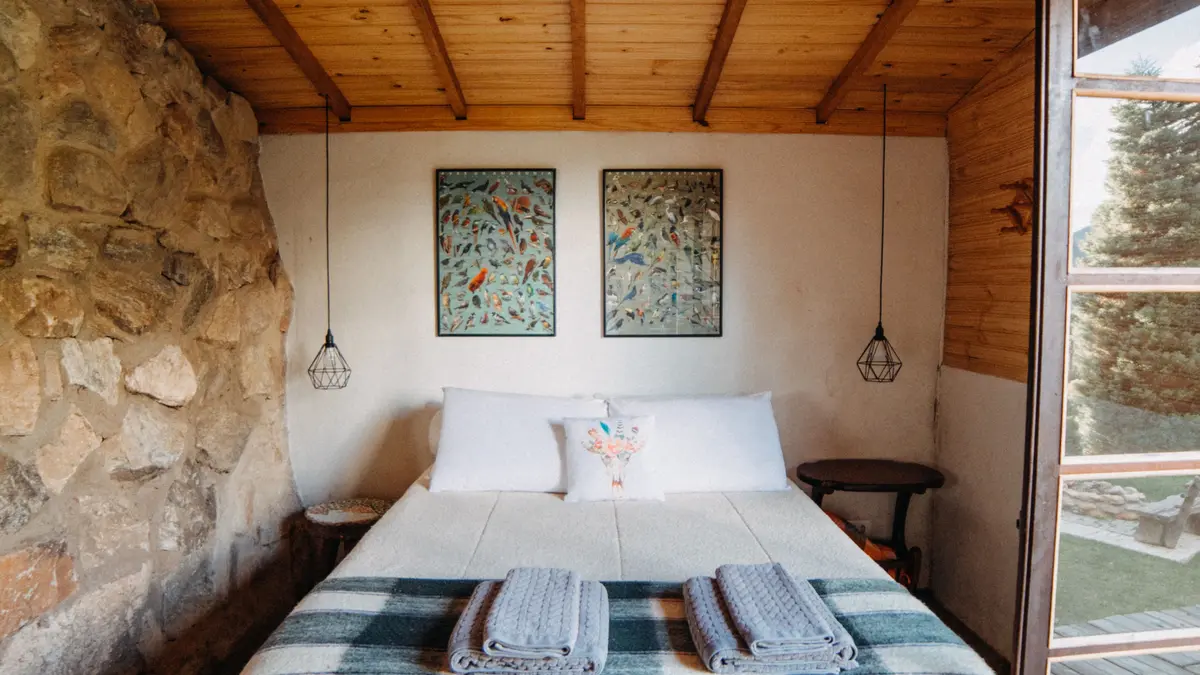
The village works well as a base because the best day hikes start from its centre. The Blue Eye pool, the Grunas Waterfall, and the pass trail to Valbona all begin within walking distance. The guesthouses sit close to every trailhead. You can spend two full days here without repeating a route. Theth also has the most guesthouses in the mountains. That means more choice and easier bookings than in Valbona. July and August still sell out, though. Staying in Theth guesthouses means half-board: a bed, a home-cooked dinner, and breakfast, usually for €22–30 per person per night.
Theth has changed quickly. A decade ago, only a handful of travellers came each summer. Now the village has a zipline, a growing number of guesthouses, and construction noise on some streets in peak season. Some visitors find that disappointing. The honest view is that Theth is still a working mountain village, just a busier one. Walk ten minutes from the centre and the crowds thin fast. The trails beyond the village remain quiet, and the mountains have not changed at all.
What is the Blue Eye of Theth really like?
The Blue Eye Theth trail leads to a natural spring pool hidden in the forest above the village. Its Albanian name is Syri i Kalter. Water bubbles up from underground, so cold and clear that it looks turquoise against the dark rock. The pool sits at the end of a forest trail through the Nderlysaj hamlet. The path passes stone groves shaped by water and time. The water temperature is only about 5 degrees Celsius, which means a swim is a dare rather than a pleasure. Most people paddle, take photos, and sit on the rocks to eat lunch.
Getting there takes planning. From the hamlet of Nderlysaj, the walk is roughly an hour each way over rocky ground. A local transfer from Theth to Nderlysaj shortens the day considerably. The full loop from Theth centre covers about 16.5 kilometres. It takes in the Grunas Waterfall on the way and takes seven to eight hours. That is a proper day hike, not a stroll. Start early, carry at least two litres of water, and wear proper walking shoes. The trail is rocky and there is little shade on the open sections.
Is it worth it? Yes, with one honest note. The Blue Eye is the most photographed spot in Theth. On a July afternoon it can feel crowded for a place that is supposed to feel wild. Go early in the morning or late in the afternoon and you will likely have it to yourself. The pool is at its best in soft light, when the turquoise colour deepens and the forest goes quiet.
Is the Grunas Waterfall worth the short walk?
The Grunas Waterfall is the easiest rewarding hike in Theth. The trail leaves the village centre and follows the river into a narrow canyon. It reaches a waterfall that drops 25 to 30 metres into a clear pool. The walk takes roughly 40 minutes each way over a path of about 2 kilometres. It is rated easy to moderate. Families with children manage it comfortably in summer. It makes a good half-day outing with a slow afternoon in the village.
What makes the waterfall special is the canyon itself. The river has cut a deep slot through limestone, and the cliffs close in as you walk. Moss, ferns, and cold spray fill the air near the falls. In spring, snowmelt makes the waterfall thunder. By late summer it softens to a steady cascade, which is better for photographs. The pool at the base is cold enough to numb your feet in seconds. A few brave visitors do wade in. Most simply sit on the rocks and enjoy the sound of falling water after the climb back.
What should you know about the Church and the Lock-in Tower?
Two buildings in Theth tell the story of the highlands better than any museum. The Church of Theth, a small stone church with a modest bell tower, stands at the centre of the village. It was built in the late 19th century and remains the social heart of Theth. Weddings, funerals, and feast days still gather the whole village here. Visitors are welcome to look around quietly. The churchyard is a good place to sit and watch village life pass.
A short walk away stands the Lock-in Tower, or Kulla e Ngujimit. Under the Kanun, the highland code, a man in a blood feud could take refuge in the tower. Inside, he was safe from attack. The tower is small, stone-built, and heavy with history. It is one of the most photographed buildings in Albania. It reminds visitors that the mountains were once governed by customs far older than the modern state. The tower is a symbol of Theth, and it appears on almost every guide to the village.
What makes Valbona Valley different from Theth?
Valbona is often called Theth’s quieter cousin, and the description fits. The valley is wider, the river is bigger, and the crowds are thinner. Valbona Valley National Park protects a glacial valley of pale riverbed, pine forest, and jagged peaks. It lies deep in the Accursed Mountains. The Valbona River runs cold and clear through the middle of it all. Guesthouses sit scattered along the valley road rather than clustered in one village. That gives the place a slower, more spread-out feel. If Theth is the social hub of the Albanian Alps, Valbona is where you go to breathe.
The valley rewards travellers who stay more than one night. Short walks from the guesthouses lead to waterfalls, meadows, and viewpoints over the river. Longer routes climb toward the surrounding peaks, including trails to the Valbona Pass itself from the Valbona side. Wildlife lives here in numbers that surprise first-time visitors. Brown bears, lynx, chamois, grey wolves, and wild goats all range through the park. Sightings are rare, and mostly at dawn or dusk. Birds are everywhere, and the valley is a good place for travellers who enjoy watching rather than ticking off sights.
Practical notes matter in Valbona. There is no ATM in the valley, and most guesthouses take cash only. Withdraw what you need in Shkodra or Bajram Curri before you arrive. Mobile signal is patchy in the valley and gone entirely on the high trail. Download offline maps before you set out. Guesthouses will accept euros at their own exchange rate, but paying in lek is usually better value. Ask your host about the Komani Lake ferry when you book your room. They can often arrange the ticket and the minibus connection at the same time.
How hard is the Theth to Valbona hike?
The Theth to Valbona hike is the flagship trail of the Albanian Alps. It is the experience most visitors build their whole trip around. The route is about 16 kilometres point to point. It climbs roughly 1,000 metres to Valbona Pass, known in Albanian as Qafa e Valbonës. The pass sits at about 1,795 metres. Then the trail descends into the Valbona Valley. Most hikers take six to eight hours, including breaks and photo stops. The trail is well marked with red and white blazes. No guide is required if you stay on the marked path and carry enough water.
The day breaks into three acts. The climb out of Theth passes through beech forest and open meadow, with the village shrinking below you. The middle section crosses the rocky saddle of the pass itself. The wind cuts through a sweaty shirt, and the views open in every direction. The descent into Valbona follows a gravel track beside the river. You hear goat bells long before you see the first guesthouse roof. It is a moderate hike rather than a technical one, but it is a full day on foot. You need proper walking boots, sun protection, and at least two litres of water. There is no reliable water source on the high section.
Direction matters less than most people think. Walking from Theth to Valbona is slightly more popular. The descent into Valbona is gentler than the climb out of it. Walking the other way works just as well and can be quieter. Either way, leave by 7 or 8 in the morning. Afternoon storms build quickly over the peaks, and you want to be off the exposed saddle well before they arrive. In May or October, check snow conditions at the pass with guesthouses first, as snow can linger into early June. For a taste of the same high-mountain walking in a very different range, read our guide to the best places to visit in South Germany. It covers the Bavarian Alps. The best places to visit in Canada in autumn pairs mountain scenery with fall colour.
Is the Komani Lake ferry really like a Norwegian fjord?
The Komani Lake ferry is the most famous boat ride in Albania, and the fjord comparison is not an exaggeration. Lake Koman is a reservoir about 34 kilometres long, created by damming the Drin River. Steep limestone walls rise straight from the water on both sides. The boat threads a narrow canyon for about two and a half hours. The water is a milky jade green. Small farms and cottages appear at invisible landings where locals step off with sacks of flour on their shoulders. Travellers who have been to Norway often say the scenery rivals the fjords, at a fraction of the price. The ferry costs roughly €10–12 per person each way, which makes it one of the great value journeys in Europe.
Two boats run the route between Koman and Fierza. Each Komani Lake boat on this route is a working ferry, not a tour cruise. The Berisha is the larger car-and-passenger ferry, departing Koman at 9:00 in the morning and returning from Fierza at 13:00. The smaller Dragobia passenger boat runs a similar schedule. Peak season runs from mid-April to early November, and the boats run daily in summer. The Berisha also runs a connecting minibus from Fierza to Valbona. It meets the morning arrival and covers the roughly 30-kilometre transfer in about an hour. The fare is around €10 per person.
Book the ferry online in advance from June onward, as July and August sailings fill weeks ahead. If you are continuing to Theth, the classic loop runs Shkodra to Koman by minibus. Then take the ferry to Fierza, a minibus to Valbona, the hike to Theth, and a minibus back to Shkodra.
A practical tip: sit outside if the weather allows. The deck is where the scenery happens, and the breeze keeps the diesel smell away. Bring a jacket even on warm days, as the canyon wind is cool. The boat has no cafe, so carry water and snacks. For travellers who love water-level mountain scenery, the best places to visit in Tromsø offers real Norwegian fjords. Our best places to visit in fall in Europe covers shoulder-season mountain trips across the continent.
How does the Shala River fit into the ferry day?
The Shala River is the hidden gem of the Komani Lake area, and it deserves a place in your plans. The river flows into Lake Koman through a narrow gorge. Its water is so clear and turquoise that boat tours call the area the Thailand of Albania. Day trips from Shkodra leave early, usually around 6:30 in the morning. They combine the lake ferry with a smaller boat up the Shala River. The boat stops at a riverside beach and guesthouse. The season runs from about 15 April to mid-October. At the river, you can swim and kayak. Eat lunch at a wooden guesthouse. Walk the short trails along the bank. It is a full day out, returning to Shkodra in the early evening. It suits travellers who want the fjord scenery without the hiking.
What is there to do in Shkodra before the mountains?
Shkodra, spelled Shkodër in Albanian, is the gateway to North Albania, and it deserves more than a night in transit. It is the gateway to the best places to visit in North Albania. Shkodra Albania sits beside Lake Shkodra, the largest lake in the Balkans. It is one of the oldest cities in Europe. The old town has pastel-coloured buildings, cafes, and a relaxed pace that feels a world away from Tirana. The pedestrian street fills in the evening with families and students. Shkodra is also the practical base for the mountains. This is where you withdraw cash, buy supplies, and charge your devices. Sort out ferry and furgon tickets here too. Do all of that here, because the mountains offer none of it.
The city has a cycling culture that surprises first-time visitors. Flat streets, a lakeside promenade, and bike hire shops make it easy to explore on two wheels. The lake itself is worth an evening. The sunset over the water, with the mountains behind, is one of the best free views in Albania. Shkodra also has good restaurants serving lake fish, grilled meat, and the byrek pastries that fuel every Albanian morning. Prices are lower than in Tirana, and a good dinner for two rarely costs more than €20–25.
Is Rozafa Castle worth the climb?
Rozafa Castle is the one sight in Shkodra that no visitor should skip. The fortress sits on a rocky hill above the meeting of the Buna, Drin, and Kir rivers. It looks over Lake Shkodra and the mountains beyond. The climb takes about 20 minutes on foot from the old town. The panorama from the ramparts is the best in the city. The castle carries a legend. A woman named Rozafa was walled into the foundations so the fortress would stand. Her story is told in every Albanian school. The small museum inside explains the history of the site, from Illyrian times through Venetian and Ottoman rule. Go at sunset, when the light turns the lake gold and the crowds thin out.
What does a North Albania trip cost in 2026?
North Albania remains one of the cheapest mountain destinations in Europe. The numbers below are based on verified 2026 prices from hiking guides and ferry operators. Costs are given as labelled ranges, since guesthouse and transport prices move with the season. A three-day Shkodra loop built around the Theth to Valbona hike costs roughly €80–100 per person in total. Flights are not included. That covers transport, two nights of half-board guesthouse stays, a packed lunch, and the ferry.
| Item | Typical cost in 2026 |
|---|---|
| Furgon Shkodra to Theth | €12–15 one way |
| Guesthouse half-board, Theth or Valbona | €22–30 per person per night |
| Packed lunch for the pass hike | About €6 |
| Komani Lake ferry, one way | €10–12 per person |
| Minibus Fierza to Valbona | About €10 per person |
| Minibus Theth to Shkodra | About €14 per person |
| Dinner in Shkodra for two | €20–25 |
| Three-day loop total | Roughly €80–100 per person |
Budget travellers can spend less by camping. Wild camping is best done with local advice on where it is welcome. The best places to visit in North Albania stay affordable because guesthouses and ferries are locally run. Mid-range travellers who add a Shala River day trip and a private transfer should budget €150–200 per person. That covers four days. Guided multi-day tours of the Albanian Alps start at around €450 for four days, which covers transport, guiding, and accommodation. For comparison, a walking holiday in the English countryside costs considerably more for the same number of days. Our guide to the best places to visit in England during summer shows the difference.
How do you plan a 4-day North Albania itinerary?
This North Albania itinerary covers the best places to visit in North Albania in four days without rushing. It works best from June to September, when every link in the chain is running. The plan below assumes you start and end in Shkodra, which is where most travellers base themselves. Guesthouses in Theth and Valbona should be booked in advance, especially in July and August. Book the ferry at the same time as your Valbona room.
Day 1 — Shkodra to Theth. Take the morning furgon from Shkodra, arriving in Theth by midday. Spend the afternoon walking to the Grunas Waterfall, then visit the church and the Lock-in Tower. Eat dinner at your guesthouse and sleep early. Day 2 — Theth to the Blue Eye. Walk to the Blue Eye, either the full loop from the village centre or the shorter route via Nderlysaj. Return to Theth for a second night, or rest your legs for the big day ahead.
Day 3 — Theth to Valbona. Leave by 7 or 8 in the morning for the hike over Valbona Pass. Arrive in Valbona by mid-afternoon, check into your guesthouse, and swim in the river if the weather is warm. Day 4 — Valbona to Shkodra. Take the minibus to Fierza, the 9:00 ferry across Komani Lake, and the minibus back to Shkodra. If you have a fifth day, add the Shala River trip. Or take an extra night in Valbona for the quieter trails.
Short on time? A three-day version skips the Blue Eye day and goes straight from Theth to Valbona on day two. A two-day version is possible but rushed: one night in Theth, the pass hike, and the ferry out. Travellers with a week can add a Shala River day and a second night in Valbona. A slow day in Shkodra rounds out the trip. The region rewards slow travel more than most places in Europe. The best memories usually come from the unplanned hours. Think of a long lunch at a guesthouse, an evening walk along the river, or a chat with a shepherd.
Do you need a visa for Albania in 2026?
For most travellers, the answer is no. Albania visa free entry covers citizens of the European Union, the United States, the United Kingdom, and Canada. It also covers more than 100 other countries. Stays run up to 90 days in any 180-day period. US passport holders may stay up to a year. Albania is not part of the Schengen Area. Time spent in Albania does not count against your Schengen 90-in-180 allowance. That makes it a useful stop for long-term travellers in Europe. Holders of a valid multiple-entry Schengen, US, or UK visa or residence permit can also enter visa-free. The visa must have been used at least once.
Travellers who do need a visa must apply for an Albanian e-visa before departure. There is no visa on arrival in Albania. The Type C short-stay e-visa costs around €15 for many nationalities and allows stays of up to 90 days. Processing can take up to 15 business days, longer at peak summer, so apply well ahead of your trip. Always check the current rules for your nationality before you travel, as visa policy can change. Your passport should be valid for at least three months beyond your entry date.
How does money work in the Albanian Alps?
Albania uses the Albanian lek, not the euro. The exchange rate in 2026 sits at roughly 90–95 lek to one euro. One US dollar buys about 80 lek. Rates move with the market, though. Euros are accepted in some tourist businesses in Tirana and Shkodra. The exchange rate they offer is almost never in your favour. In the mountains, lek is the only practical currency. Guesthouses, furgons, ferry tickets, and village shops all run on cash. Card payments are effectively unavailable once you leave Shkodra.
The practical rule is simple: withdraw enough lek in Shkodra for your whole mountain stay. There is no ATM in Valbona and none in Theth. A three-day loop needs roughly €80–100 per person in lek. Add a buffer for extras like a packed lunch or a taxi. Exchange offices in Shkodra and Tirana offer better rates than the airport. Keep small notes for furgons and market stalls, as large notes can be hard to change in the villages. Tell your bank you are travelling to Albania before you go. Your card will then work when you reach an ATM in the cities.
Is North Albania safe for solo travellers?
North Albania is generally safe for travellers, including solo travellers and solo women. The region has a strong culture of hospitality toward guests. Guesthouse owners look after their visitors, trails are well marked, and violent crime against tourists is rare. The risks in the mountains are practical rather than criminal: weather, rough trails, and isolation. Mobile signal disappears on the high trail. Tell your guesthouse where you are going and when you expect to return. Carry water, sun protection, and a charged phone with offline maps downloaded.
A few honest warnings belong in any guide. The roads to Theth and Valbona are narrow and winding, and driving them yourself demands care, especially after rain. The Komani Lake ferry and the furgons run to local timetables that shift with the season. Build buffer time into your plans. Swimming in mountain rivers is cold and the currents can be strong, so ask locals before you jump in. The Blue Eye pool is only about 5 degrees Celsius, and the shock of cold water is real. Finally, respect the Kanun traditions of the highlands. Dress modestly at churches, ask before photographing people, and accept the raki when it is offered. Hospitality here is a point of pride, and a little respect goes a long way.
What should you pack for the Albanian Alps?
Packing for North Albania is about layers and practicality, not fashion. Proper walking boots with ankle support are the single most important item. The trails are rocky, and the pass descent is long. A waterproof jacket is essential even in high summer, when afternoon storms build fast over the peaks. Pack a fleece or light insulated layer for cool evenings in the valleys. Sun protection matters more than most people expect. The high-altitude sun is strong, and there is little shade on the open sections of the pass trail.
Beyond clothing, bring a day pack, at least two litres of water capacity, snacks for the trail, and a headlamp. Add a power bank, since guesthouse electricity can be limited. Download offline maps before you leave Shkodra, as signal is patchy in the valleys and absent on the high trail. Carry cash in lek, small notes included. A dry bag protects your phone and documents on the ferry and river trips. Trekking poles help on the long descent into Valbona, though many hikers manage without them. Leave the wheeled suitcase in Shkodra: a backpack is the only luggage that works on mountain trails and furgons.
Frequently Asked Questions
How many days do you need for North Albania? Four days covers the classic loop comfortably. The route runs Shkodra to Theth, the Blue Eye, the pass hike to Valbona, and the ferry back. Three days works if you skip the Blue Eye. Five days lets you add the Shala River and a rest day in Valbona.
Can you visit North Albania without a car? Yes. Furgons, minibuses, and the ferry connect Shkodra, Theth, Valbona, and Fierza. Public transport runs to local timetables rather than strict schedules, so allow buffer time. A car is not needed and can be a burden on the narrow mountain roads.
Is the Theth to Valbona hike suitable for beginners? The hike is moderate rather than technical. It is a full day of walking with about 1,000 metres of climbing. Reasonably fit beginners manage it in six to eight hours. The trail is well marked, and no guide is required. Beginners should go in June to September, start early, and carry plenty of water.
Do you need to book guesthouses in advance? Yes, especially in July and August, when the best guesthouses fill weeks ahead. Book your Theth and Valbona rooms before you arrive. Arrange the ferry ticket at the same time as your Valbona booking. In June and September, a few days ahead is usually enough.
Can you swim in the Blue Eye? You can, but the water is about 5 degrees Celsius, so most people paddle rather than swim. The pool is small and the rocks are slippery. Swim only if you are comfortable with very cold water, and never dive.
What currency should you bring? Albanian lek, withdrawn in Shkodra or Tirana before you head into the mountains. There is no ATM in Valbona or Theth, and most mountain businesses take cash only. Budget roughly €80–100 per person for a three-day loop.
The best places to visit in North Albania reward travellers who slow down. The ferry, the pass, the Blue Eye, and the quiet valleys are not checkboxes to rush through. They are places to sit, walk, and breathe. Come in June or September, book ahead, carry cash, and give the mountains the time they deserve. The Albanian Alps will give it back.