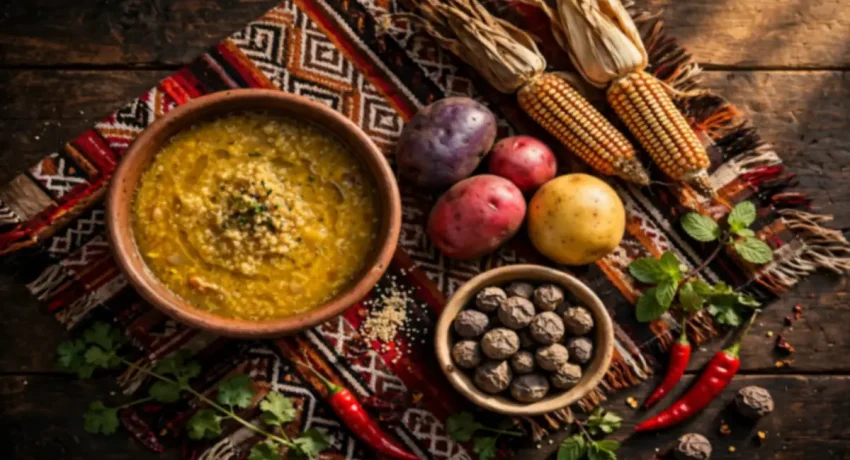

Picture a kitchen without a stove. There is no oven, no fridge, and no pantry full of jars. Instead, there is a clay pot, a pile of hot stones, and a sack of potatoes that can feed a family for months. That was the daily reality of Inca food recipes, and it lasted for centuries in the Andes.
The Incas built the largest empire in pre-Columbian America. Their food was simple, clever, and built to survive. Potatoes kept for years. Corn fed workers and priests. Quinoa grew where nothing else would. These Inca food recipes are not museum foods. You can still eat them today in Cusco, in Lima, and in your own kitchen.
This guide walks through a day in the life of ancient flavors. You will learn what the Incas ate, how they cooked it, and which dishes still survive. Three modern recipes are included, each one honest about what is ancient and what came later.
What Did the Incas Actually Eat?
The Inca diet was mostly plant-based. A farming family ate potatoes, maize, quinoa, beans, and chili peppers most days. Meat was a feast food, not a daily food. Drinks came from corn. Flavor came from chili and mountain herbs.
| Food group | What the Incas ate | Where you find it today |
|---|---|---|
| Tubers | Potatoes, oca, olluco, mashua, maca | Causa, papa a la huancaína, olluquito, chuño soups |
| Grains | Maize, quinoa, kañiwa, kiwicha (amaranth) | Cancha, mote, humitas, quinoa soup |
| Vegetables | Squash, chili peppers, tomatoes | Locro de zapallo, ají sauces |
| Protein | Guinea pig (cuy), llama, alpaca, duck, fish | Cuy, pachamanca, charqui |
| Preserved foods | Chuño, charqui, dried fish | Chuño soups, olluquito con charqui |
| Flavor | Ají chili, huacatay, muña, salt | Peruvian sauces and marinades |
| Drink | Chicha de jora, chicha morada | Chicherías and restaurants in Cusco |
The Incas ate two meals a day. The first came early in the morning. It was usually simple: boiled potatoes or chuño, mote (boiled corn), a quinoa porridge, or soup, with chicha to drink. The second meal came later in the day, often after work in the fields.
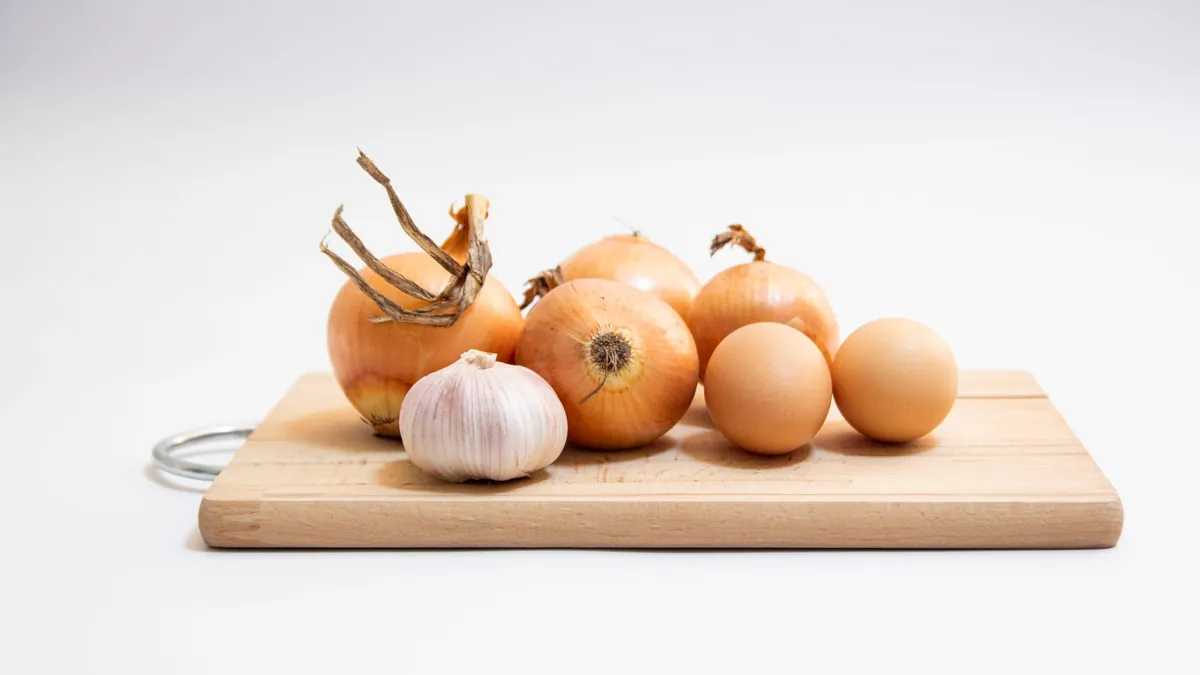
What the Incas never tasted is just as telling. Beef, pork, chicken, rice, wheat, limes, onions, garlic, and cheese all arrived with the Spanish after 1532. If a modern recipe calls itself Inca and leans on garlic and cheese, it is a modern dish with Inca roots, not an ancient one.
Who Were the Incas, and When Did They Eat This Way?
Inca food history starts long before the empire. The Inca people began as a small group around Cusco in the early 1200s. Under Manco Capac, they formed the Kingdom of Cusco. In 1438, the ninth ruler, Pachacuti, began a huge expansion. He turned the kingdom into Tawantinsuyu, the Realm of the Four Parts.
From 1438 to 1533, the empire grew across the Andes. At its largest, around 1525, it covered about 2,000,000 square kilometres. It joined what are now Peru, Ecuador, Bolivia, and parts of Colombia, Argentina, and Chile. Cusco was the capital and the centre of it all.
The Spanish conquest began in 1532. Atahualpa, the last sovereign emperor, was executed in 1533. The last Inca resistance ended in 1572. Yet the food outlived the empire. Farmers kept growing the same potatoes and grains. Cooks kept the same methods. That is why ancient Peruvian food is still on the table today. Inca cuisine survived because farmers and cooks kept its core alive.
Pachacuti is also thought to have built Machu Picchu, either as a family home or as a summer retreat. Machu Picchu food was cooked in the same clay vessels found at the site, and archaeologists have studied those pots to learn how meals were served.
What Made the Potato the Backbone of the Empire?
The potato was born in the Andes. Peru is home to more than 4,000 native potato varieties, according to the International Potato Center in Lima. Farmers there have cultivated potatoes for about 8,000 years. The United Nations even named 2008 the International Year of the Potato.
Inca potato varieties came in shapes and colors most of the world has never seen. Some were purple. Others were red. A few were small and knobbly, built for thin mountain soil. Farmers bred different types for different altitudes and microclimates on stone terraces.
Potatoes fed everyone. They went into stews and soups. Cooks boiled them, baked them in earth ovens, and dried them for storage. A poor family could live on potatoes and quinoa for weeks. A rich household ate them too, just with better meat and more chicha beside them.
The potato also fed the empire’s armies and workers. State storehouses, called qollqa, held huge stocks. At any given time, the warehouses were said to hold three to seven years’ worth of food. That stockpile is what let the Incas survive bad harvests and feed laborers building roads and terraces.
Why Was Quinoa Called the Mother Grain?
Quinoa was sacred to the Incas. They called it the mother grain. It grew in thin air where maize could not survive. On the high altiplano, quinoa was the difference between eating and going hungry.
The quinoa Inca farmers planted was kinwa, a word that still lives in Quechua today. They cooked it into porridges and soups after washing off its bitter coating. The leaves went into stews. The seeds were toasted and ground into flour for breads. Quinoa even stood in for maize in some chicha.
Modern science caught up with the Incas. Quinoa contains all nine essential amino acids, which is rare for a plant food. The United Nations declared 2013 the International Year of Quinoa to raise awareness of its role in food security. Peru remains one of the world’s largest producers and exporters of the grain.
Two smaller cousins filled the same role. Kañiwa is a tiny, dark grain that grows even higher than quinoa. Kiwicha, also called amaranth, added color and protein to the highland diet. All three are now sold around the world as Peruvian superfoods.
What Role Did Maize Play Beyond Food?
Maize, called sara in Quechua, was the prestige crop. It ranked above potatoes and tubers in the Inca food order. Maize could not grow much above about 3,200 metres, so the Incas carved terraces into warm valleys like the Sacred Valley to grow it.
People ate maize boiled as mote, toasted as cancha, and ground into dough for humitas. Its most important job was chicha. The fermented corn beer was served at festivals, paid to laborers, and poured at religious rituals. Maize was food, money, and ceremony in one crop.
Purple corn deserves its own mention. It is one of the oldest Andean maize types. Today it is the base of chicha morada, the sweet purple drink sold across Peru. The ancient drink was simpler, but the corn is the same.
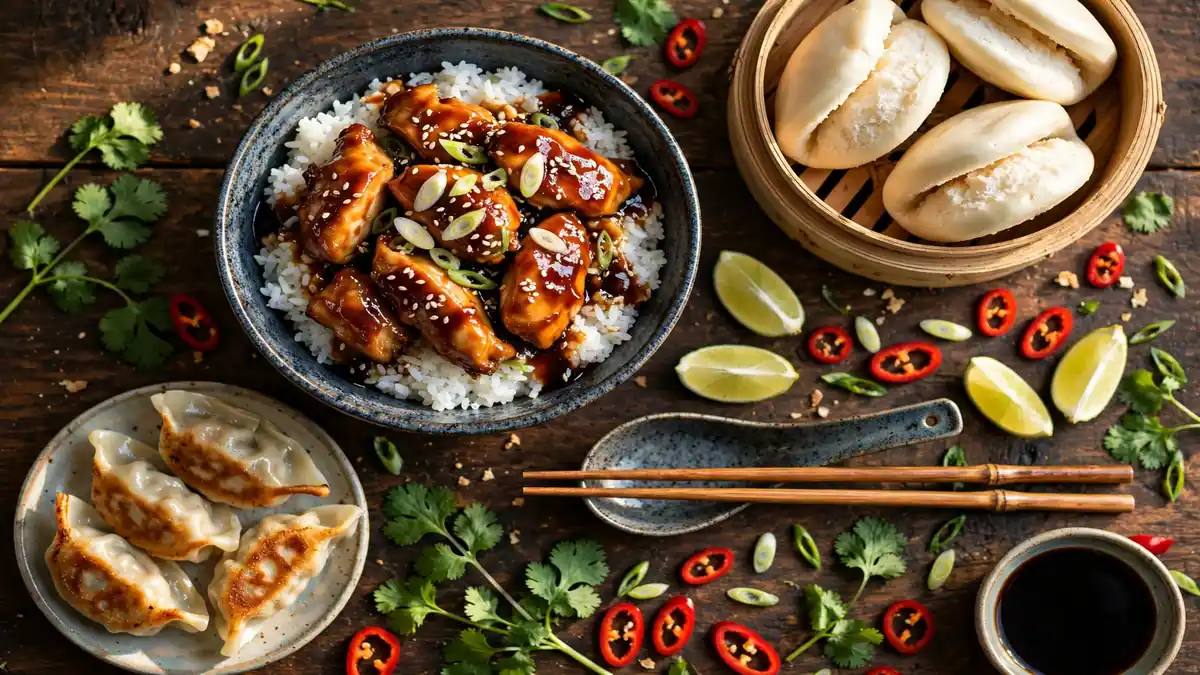
Grains have always travelled. Rice and noodles now dominate menus far from the Andes, and Asian restaurant menus show how far grain dishes can wander. Quinoa has made the same journey in reverse, from Andean terraces to health food shops on every continent.
How Did the Incas Cook Without Modern Kitchens?
Inca cooking methods were built around fire, stone, and earth. There was no metal oven and no frying pan. Cooks put hot stones into cooking vessels to heat food. They used the huatia, a type of earth oven, and the paila, an earthenware bowl.
The most famous method is the pachamanca. The name comes from Quechua and means “earth oven.” A pit is dug and lined with stones heated by a large fire. Once the stones are white-hot, layers of meat, tubers, and corn go in, separated by aromatic herbs like chincho. The pit is covered with damp sacks and earth. The food slow-cooks in trapped heat and comes out smoky and tender.
Clay pots mattered too. Archaeologists digging at Machu Picchu found ceramic vessels called cazuelas. Their shape suggests they were used for serving soups, stews, porridges, and chicha. Meals were served in decorated pottery, not plain bowls. Food was part of ceremony, not just fuel.
Flavor came from the mountains. Ají chili peppers were a highly praised part of the diet. Huacatay, a black mint, and muña, a mountain mint, seasoned soups and meats. There was also pasa, an edible clay used as a sauce for potatoes. It sounds strange today, but it was a normal part of the Inca table.
How Did Chuño Keep an Empire Fed for Years?
Chuño is the Inca answer to the freezer. It is a freeze-dried potato, made by leaving tubers out in the dry days and freezing nights of the high Andes. Farmers helped the process along by covering the crops to protect them from dew, then stomping on them to squeeze out water.
The result is a blackened, rock-hard potato that can be stored for years without spoiling. Some sources say it keeps for up to a decade. That shelf life made chuño a lifeline. When harvests failed, chuño filled the gap. Armies marched with chuño in their packs too.
Chuño still feeds Andean highlanders today. The Q’ero people of Peru keep it as a staple of their diet in the harsh highlands. Modern cooks soak it overnight to soften it, then drop it into soups and stews. A simple chuño recipe is just chuño, water, potatoes, and herbs — and it tastes like the mountains themselves.
What Meat Did the Incas Eat?
Meat was not the centre of the Inca diet. It was a feast food. The main domestic animal raised for meat was the cuy, or guinea pig. Cuy lived in kitchens, fed on scraps, and gave families a ready source of lean protein. It has been eaten in the Andes for centuries and is still a traditional dish today.
Llamas and alpacas gave meat too, but they were more valuable alive. The animals carried loads, and alpacas gave wool. Fresh meat from camelids was eaten at festivals, while the everyday version was charqui — meat sliced thin, salted, and dried in the high-altitude sun and cold night air. Charqui is the ancestor of modern jerky.
Fish mattered on the coast. Dried fish travelled inland along Inca roads. The chronicler Bernabé Cobo wrote that relay runners, called chasquis, carried fresh fish up from the ocean in less than two days. Wild game, ducks, and frogs added variety where they were available.
Tarwi deserves a note here. It is a high-protein Andean lupin, eaten with chili and onion after careful treatment. The warning matters: improper treatment can leave the crop poisonous. The Incas knew how to prepare it safely, and modern cooks should only buy tarwi that is already prepared.
What Did the Incas Drink?
Chicha de jora was the drink of the empire. It is a fermented corn beer made by malting the corn, boiling it, and letting natural yeasts turn sugars into alcohol. The maize was chewed or sprouted to start the process, then cooked and strained through cloth with clean water.
Chicha was more than a drink. It sealed friendships, paid workers, and honoured the gods. Drinkers raised it in wooden cups called keros, often painted with bold designs. Richer households drank from silver and gold vessels. Quinoa could also stand in for maize in chicha when corn was scarce.
Chicha morada is the non-alcoholic cousin. It is made from purple corn boiled with pineapple peel, cinnamon, and cloves, then sweetened. The drink dates back to pre-Columbian times. One honest note: the lime juice in the modern version arrived with the Spanish, since limes did not exist in the Andes before 1532. The purple corn itself is ancient.
Lucuma is the sweet ending. The fruit is often called the “Gold of the Incas.” Its flavor sits somewhere between maple and sweet potato. It shows up in ice creams and desserts across Peru today.
Which Inca Dishes Can You Still Eat Today?
A lot of the Inca pantry behind these Inca food recipes is still on Peruvian tables. Pachamanca, olluquito con charqui, carapulcra, chuño soups, toasted corn, and chicha de jora all come straight from it. Most picked up a few Spanish-era additions, so each dish below shows what is old and what came later.
| Dish | Inca roots | Added later |
|---|---|---|
| Pachamanca | Earth oven, hot stones, potatoes, oca, corn, cuy | Pork, lamb, chicken, beans |
| Olluquito con charqui | Olluco tubers, dried meat | Onion, garlic, rice on the side |
| Carapulcra | Dried potatoes, meat, chili | Pork, peanuts in some versions |
| Locro de zapallo | Squash, potatoes, chili | Cheese, milk, onion |
| Humitas | Ground corn dough, steamed in husks | Cheese, sugar in sweet versions |
| Pesque de quinua | Quinoa, highland grains | Milk, butter, cheese |
| Chuño soup | Freeze-dried potatoes, herbs | Onion, garlic, cheese |
| Cuy | Guinea pig, Andean herbs | Modern marinades, potatoes |
Peruvian Inca dishes are easy to find in Cusco restaurants. Look for the words pachamanca, olluquito, carapulcra, and locro on menus. If a menu hides its ingredients behind vague names, a good restaurant menu decoder habit helps anywhere: ask what is in the dish, and check whether the old ingredients are really there.
Can You Cook Inca Food at Home?
Yes, and you do not need an earth oven. Three Inca food recipes below use ingredients you can find in most supermarkets. Each one says plainly what is ancient and what is modern. Quantities are for four servings.
How Do You Make Quinoa Soup the Andean Way?
Quinoa soup is the simplest Inca food recipe to start with. Rinse one cup of quinoa under cold water until the water runs clear. This removes the bitter coating, called saponin. The Incas washed it off too.
Peel and dice three potatoes and two carrots. Put them in a pot with the quinoa and six cups of water or light stock. Add a pinch of salt. Bring it to a boil, then lower the heat and simmer for about 20 minutes. The quinoa should be soft, and the potatoes should break apart easily.
Stir in a handful of chopped herbs at the end. Fresh cilantro or parsley works well. If you want the modern version, fry a little onion and garlic first and cook the soup on that base. The ancient version skipped both, since neither existed in the Andes before 1532. Serve hot, with toasted corn on the side if you can find it.
What Is a Simple Chuño Recipe You Can Try at Home?
Chuño is sold dried in Latin American shops and online. Soak one cup of chuño in cold water overnight. It will swell and soften. Rinse it well, then squeeze out the extra water.
Boil four potatoes in salted water until soft. In a second pot, simmer the soaked chuño with a chopped carrot and a handful of peas for about 15 minutes. Add the boiled potatoes, cut into chunks, and a pinch of salt. A spoonful of ají chili paste adds heat the Inca way.
The modern version often adds onion, garlic, and a little cheese on top. The ancient version was plainer, but the chuño itself is the star either way. It has an earthy, slightly smoky taste that no fresh potato can copy.
What Is a Pachamanca Recipe You Can Try at Home?
A real pachamanca needs a pit and hot stones. A home version needs an oven and a heavy pot. Cut potatoes, sweet potatoes, and corn on the cob into large pieces. Season chicken or lamb with salt, chili, and herbs.
Heat a cast-iron pot until it is very hot. Layer the meat at the bottom, then the tubers and corn, with herbs between the layers. Add half a cup of water, cover tightly, and bake at 200°C for about 90 minutes. The trapped steam does the work of the earth oven.
Open the pot at the table so everyone smells the herbs at once. That moment is the closest a home kitchen gets to a pachamanca pit. Serve with cancha, toasted corn, on the side.
How Do You Make Chicha Morada at Home?
Boil three dried purple corn cobs in two litres of water with a cinnamon stick and a few cloves. Add the peel of one pineapple. Simmer for about 45 minutes, until the liquid turns deep purple. Strain it, sweeten to taste, and chill.
Add lime juice just before serving. Remember that the lime is the modern touch. The purple corn, the cinnamon, and the pineapple peel carry the old flavor. Chicha morada is best cold, poured over ice, on a hot day.
What Should You Eat in Cusco in 2026?
Cusco food is the easiest way to taste Inca history. The city was the capital of the empire, and its markets still sell the same ingredients. Start at a local market in the morning. You will see piles of native potatoes in purple, red, and yellow, dried chuño, quinoa by the kilo, and ají chilies in every shade.
Order a quinoa soup for lunch. It is cheap, filling, and everywhere. Try olluquito con charqui if you see it on a menu. Ask for pachamanca if you are staying a few days, since some restaurants only cook it on weekends or for groups. Finish with a glass of chicha morada, or a cup of chicha de jora if you want the fermented original.
Day trips help too. The Sacred Valley grows the maize the Incas prized, and its terraces are still farmed. If you are planning a wider trip, our South America travel guide covers the region around Peru, including where to base yourself and how to move between cities.
One practical tip: eat light on your first day. Cusco sits at about 3,400 metres above sea level. Heavy food and altitude do not mix well. Soup, quinoa, and potatoes are gentle on the stomach. Save the big pachamanca feast for day two or three.
Grains travel well, and so do food ideas. A bowl of quinoa in Cusco and a bowl of rice at a takeaway counter are cousins in spirit. If you want a modern contrast, Asian garden fast food shows how ancient grains and fresh herbs became quick bowls. And if takeout is more your speed than cooking, the Chinatown restaurant guide explains how to read a menu and order well.
What Did the Incas Never Taste?
The Inca diet ended where the Spanish ships began. Beef, pork, chicken, rice, wheat, limes, onions, garlic, and cheese all arrived after 1532. None of them existed in the Andes before the conquest.
That fact is a useful test. A recipe that calls itself ancient Inca food but leans on garlic, onion, and cheese is a modern fusion dish. It can still be delicious. That dish is just not what the Incas ate. The honest version names the old ingredients and flags the new ones.
Wheat changed the Andes most of all. Bread became a daily food where there had been none. Rice spread through the valleys. Chicken and pork joined cuy on the table. The Inca diet did not vanish. It absorbed the newcomers and kept its core: potatoes, maize, quinoa, chili, and chuño.
Why Does Inca Food Still Matter in 2026?
Inca food matters because it solved hard problems. It fed an empire across deserts, coasts, and mountains above 4,000 metres. Storage worked for years without a fridge. Terraces grew crops where flat land did not exist. Those are not history lessons. They are answers to questions farmers still ask.
The food is also honest. Nothing in the Inca diet was ultra-processed. Ingredients were local, seasonal, and cooked simply. Quinoa, potatoes, and maize are now global health foods, but they were ordinary foods in the Andes for thousands of years.
Cook one of these Inca food recipes this week. Start with the quinoa soup. It takes half an hour, it costs very little, and it connects your kitchen to a mountain empire that fed millions on potatoes and grain. That is a day in the life of ancient flavors, and it still tastes good.
Frequently Asked Questions
What did the Incas eat every day?
Potatoes, maize, quinoa, beans, and chili peppers, with chicha to drink. Meat was mostly a feast food. Two meals a day was normal, with the first meal early in the morning.
Is quinoa really an Inca food?
Yes. Quinoa was sacred to the Incas and was called the mother grain. It grew in high places where maize could not survive. The United Nations named 2013 the International Year of Quinoa.
What is chuño, and can I buy it?
Chuño is a freeze-dried potato made in the high Andes. It stores for years. You can buy it dried in Latin American food shops and online. Soak it overnight before cooking.
What is pachamanca?
Pachamanca is an earth-oven feast. Food cooks in a pit on hot stones, covered with earth. The name means “earth oven” in Quechua. A home version uses a heavy pot and an oven.
Did the Incas eat guinea pig?
Yes. Cuy, or guinea pig, was the main domestic animal raised for meat. It lived in kitchens and fed on scraps. Today, cuy is still a traditional dish in the Andes.
Where can I try real Inca food?
Cusco is the best place to try Inca food recipes in their home setting. Its markets sell native potatoes, chuño, and quinoa, and its restaurants serve pachamanca, olluquito, and chicha. The Sacred Valley is worth a day trip for the terraces and the maize.
Planning a food trip? Ancient flavors reward slow travel. Eat the soup, walk the terraces, and taste what an empire ate.