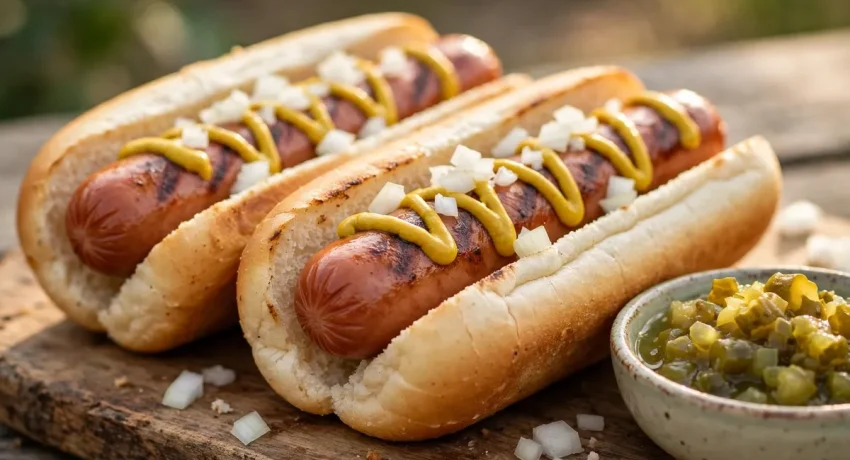

Some hot dogs are just lunch. Others have fans who drive across state lines to find them. Ambassador Old Fashioned Wieners fall into the second group. They have been made in Minnesota since 1932, and they have a loyal following across the Midwest. And in 2025, Food Republic ranked them second only to Costco’s famous Kirkland franks in a multi-brand taste test.
So what makes this old-fashioned wiener different from the dozens of other dogs on the shelf? It starts with the casing, and it continues with the spice blend. And it ends with a snap you can hear. This guide covers the history, the ingredients, the nutrition, the best ways to cook them, and how they stack up against the big national brands in 2026.
What Are Ambassador Old Fashioned Wieners?
Ambassador Old Fashioned Wieners are Scandinavian hot dogs with a natural casing. The brand has served them in Minnesota since 1932. That is more than 90 years of history. The wieners are hardwood smoked. They use all-natural spices, with no fillers and no artificial colors or flavors.
The brand is now owned by Land O’Frost, a meat company based in Munster, Indiana. Land O’Frost also makes three other brands of sausages and hot dogs. Ambassador remains its old-world, natural casing line. The official site is ambassadorhotdogs.com.
The “old fashioned” label is not just marketing. It points to a style of hot dog that was common a century ago. The meat is stuffed into a natural casing, usually pork or lamb. The casing gives the dog its bite. It also gives it the snap that fans talk about most.
Ambassador is a regional brand at heart. It is easy to find in the Midwest, especially in Minnesota. Among Minnesota hot dogs, Ambassador is the name most locals reach for first. Outside that region, you may have to search a little harder. Target and Sam’s Club both carry it. Some shoppers outside the Midwest order it online or pick it up on trips through the region.
What Makes Ambassador Wieners Different?
Three things set Ambassador apart from most grocery store hot dogs. The first is the natural casing. The second is the meat blend. The third is the spice profile.
Most mass-market hot dogs are skinless. They are cooked in a cellulose casing that is stripped away before packing. That gives a soft, uniform bite. Ambassador keeps its natural casing. When you bite into one, the casing resists for a split second. Then it gives way with a sharp snap. Food Republic’s taste tester called that snap the feature that sealed the deal. Reviewers on Target say the same thing. One wrote that the crunch and juicy flavor need no toppings at all.
The meat blend is also unusual. Most leading brands lead with beef. Ambassador leads with pork. The first three ingredients are pork, water, and beef. Pork gives the frank a smoother texture than many all-beef dogs. Food Republic’s tester also found it less salty than the beef-heavy competition. That is a real difference when you eat the dog plain.
Then there are the spices. The brand describes them as slightly sweet Swedish spices. That sweetness is subtle. It does not taste like sugar; it reads more like a warm, old-world seasoning in the background. The wieners are hardwood smoked, which adds a gentle smoky note that skinless dogs often lack.
What Is in an Ambassador Old Fashioned Wiener?
The label is refreshingly short for a processed meat. Here are the hot dog ingredients for the 12.8-ounce Old Fashioned Wieners, as listed by Open Food Facts from the package:
Pork, water, beef, dextrose, salt, corn syrup, potassium lactate, sodium phosphates, paprika, sodium diacetate, natural spices, sodium erythorbate, spice extractives, natural flavoring, sodium nitrite, and natural casing (pork and/or lamb).
A few of those names deserve a plain-English note. Dextrose and corn syrup add the faint sweetness. Potassium lactate and sodium diacetate help keep the meat safe and fresh. Sodium erythorbate helps the cure work evenly and keeps the pink color. Nitrite is the standard curing agent in almost every hot dog. It is also the ingredient that health-conscious shoppers ask about most.
What is not on the list matters too. There are no fillers and no artificial colors or flavors. The brand makes that promise on its packaging, and the ingredient list backs it up.
How does the hot dog nutrition look? Here are the figures for one link (45 grams), from nutrition databases that track the product:
| Nutrient | Per 1 link (45 g) |
|---|---|
| Calories | 150 |
| Total fat | 13 g |
| Saturated fat | 5.2 g |
| Cholesterol | 25 mg |
| Sodium | 310 mg |
| Total carbohydrate | 1 g |
| Sugars | about 1 g |
| Protein | 6 g |
Those numbers are typical for a natural casing wiener. The sodium is moderate for the category. The protein is decent. But like all hot dogs, this is a processed meat. It is best as a weekend treat, not a daily staple. Consumer Reports made the same point in its 2026 hot dog guide. Hot dogs are high in sodium and heavily processed by nature.
How Do Ambassador Wieners Compare to Other Top Brands in 2026?
Ambassador holds up well against the national names. Here is how the best hot dog brands 2026 lists stack up, based on recent taste tests from Food Republic, Consumer Reports, USA Today, and Tasty:
| Brand | Meat | Casing | What testers said |
|---|---|---|---|
| Costco Kirkland Signature Beef Dinner Franks | 100% beef | Natural | Ranked number one overall by Food Republic; best budget and overall winner at Tasty; $1.50 with a soda at the food court |
| Ambassador Old Fashioned Wieners | Pork first, then beef | Natural | Ranked second only to Costco by Food Republic; smoother texture, less salty, signature snap |
| Nathan’s Famous Beef Franks | 100% beef | Skinless | Consumer Reports Editor’s Choice 2026 ($6.49 for 8); best on the grill in USA Today’s test |
| Hebrew National Beef Franks | 100% beef, kosher | Natural | Nearly tied with Nathan’s at Consumer Reports; fatty, umami-rich, slightly smoky |
| Johnsonville Classic Pork Hot Dogs | All pork | Natural | Best in the pot in USA Today’s test; larger than most dogs; watch for casing flare-ups on the grill |
| Ball Park Beef Franks | Beef | Skinless | Plumps up on the grill; softer texture; some testers compared the flavor to bologna |
| Oscar Mayer Classic Wieners | Pork, turkey, chicken | Skinless | Best boiled in USA Today’s test; a solid base for any topping style |
What does this table tell you? Ambassador is the only brand in the top tier that leads with pork. That gives it a different texture from the beef-first dogs. It is smoother and a little less salty, with a hot dog snap that skinless dogs like Nathan’s and Ball Park cannot offer.
Price is the other factor. At Target, the 12.8-ounce pack of Ambassador Our Old Fashion Wieners was listed at $5.19 at the time of writing. Check your local store, since prices vary by region. Nathan’s ran $6.49 for eight franks at FreshDirect in the Consumer Reports test. Kirkland remains the value king, but you need a Costco membership and a big freezer. Ambassador sits in the middle: a premium regional dog at a fair grocery price.
One honest note: Ambassador is harder to find than the national brands. If you live outside the Midwest, you may not see it at all. That scarcity is part of its cult appeal. It is also a real drawback. Nathan’s, Hebrew National, and Ball Park are on sale almost everywhere.
How Should You Cook Ambassador Old Fashioned Wieners?
If you want to know how to cook natural casing hot dogs, the rules are simple. This section covers how to cook hot dogs two ways: simmering and grilling. Ambassador wieners are already fully cooked when you buy them. You are really reheating them, not cooking them raw. The brand recommends simmering or grilling. Both methods work well. Each gives a different result.
How do you simmer Ambassador wieners?
Simmering is the gentlest method. It protects the natural casing. Bring a pot of water to a simmer, around 180 to 200 degrees Fahrenheit. Do not let it reach a rolling boil. A hard boil can split the casing. Add the wieners and cook for 5 to 7 minutes, until they are heated through.
For extra flavor, simmer them in broth or beer instead of plain water. The brand itself suggests this. The casing will pick up a little of the liquid’s flavor. This is the best method when you cook for a crowd. It is also the best method if you want the plumpest, juiciest dog.
How do you grill Ambassador wieners?
Grilling adds smoke and char. It also tightens the casing, which makes the snap even sharper. Preheat the grill to medium heat, around 300 to 350 degrees. Place the wieners over indirect heat when you can. Turn them often. They need about 5 to 7 minutes total.
Do not cook them over direct high heat. That is the most common grilling mistake. The casing can split or burn before the center is hot. Do not poke holes in the wieners either. That drains the juices. Let the casing do its job.
For a richer result, brush the wieners lightly with oil before grilling. Chef Daniel Boulud has suggested cooking them with fresh herbs right on the grill. That works well with Ambassador’s mild, slightly sweet spice blend.
What temperature is safe for hot dogs?
The USDA recommends heating hot dogs to an internal temperature of 165 degrees Fahrenheit. That kills any bacteria, including listeria, that may be present. This matters most for pregnant women, young children, older adults, and anyone with a weakened immune system.
Use a meat thermometer if you want to be sure. Insert it into the center of the dog. Color is not a reliable guide. A hot dog can look done on the outside and still be cool in the middle. Keep hot food at 140 degrees or above when serving. Do not leave cooked hot dogs out for more than two hours.
What mistakes should you avoid?
Boiling hard is the biggest one. A rolling boil splits natural casings and washes out flavor. High direct heat on the grill is the second. It chars the outside before the inside is warm. Overcooking is the third. A few minutes is enough. Longer cooking dries the dog out and makes the casing tough.
One more tip: warm the buns. A cold bun cools the dog fast. Toast the buns lightly on the grill or in the oven. It takes a minute, and it makes a real difference.
Where Can You Buy Ambassador Old Fashioned Wieners?
If you are wondering where to buy Ambassador hot dogs, start close to home. Ambassador is a Midwest brand first. Minnesota is its home. It is also sold across the Upper Midwest and in parts of the surrounding region. Target carries two varieties: the 12.8-ounce Our Old Fashion Wieners and the 9.75-ounce Casing Beef Wieners. Sam’s Club shoppers have also praised the brand in reviews.
Outside the Midwest, availability gets patchy. Some grocery chains in neighboring states stock it, while others do not. If your local store does not carry it, ask the meat department. Stores often bring in a product when enough shoppers request it. You can also check the brand’s site, ambassadorhotdogs.com, for store information.
What about price? At Target, the 12.8-ounce pack was listed at $5.19 at the time of writing. Prices vary by store and region, so treat that as a snapshot, not a promise. The 9.75-ounce Casing Beef Wieners are a smaller pack for smaller households. Both are priced in line with other premium hot dogs.
How do you pick a good pack? Check the date first. Look for a pack with no torn packaging and no excess liquid inside. The wieners should look plump and even in color. Once opened, use them within a few days. Keep them refrigerated at 40 degrees or below.
What Are the Best Toppings for Ambassador Wieners?
Target reviewers say Ambassador wieners need no toppings at all. They may be right. But hot dog toppings are half the fun. The dog’s mild, slightly sweet flavor works with almost any regional style. Here are the classics:
How do you build a Chicago-style dog?
The Chicago style hot dog is the most famous regional style in America. It starts with an all-beef frank, but Ambassador’s pork blend works well too. Use a steamed poppy seed bun. Add yellow mustard, chopped white onion, neon green sweet relish, tomato slices, a pickle spear, sport peppers, and a dash of celery salt. That is seven toppings, in that order. The rule is simple: no ketchup. Chicagoans say ketchup overpowers the rest.
What goes on a New York dog?
New York keeps it simple. Use spicy brown mustard and sauerkraut. Or try the sweet onion sauce that street carts serve. Sabrett is the classic New York brand, but the build works with any good natural casing dog. The point is speed and simplicity. Mustard, kraut, done.
What is a Detroit Coney dog?
The Coney dog comes from Detroit, where Greek immigrants created it in the early 1900s. It uses a beanless beef chili, called Coney sauce, over the frank. Add diced white onion and yellow mustard. Two rival restaurants, American Coney Island and Lafayette Coney Island, sit side by side in Detroit. Each claims to be the original. Both are worth a visit if you are ever in town.
What is a Sonoran dog?
The Sonoran dog comes from Sonora, Mexico, and is now a Tucson favorite. Wrap the frank in bacon and grill it. Place it in a bolillo roll, a crusty Mexican-style bun. Top it with pinto beans, diced tomato, onion, mustard, mayo, and jalapeño salsa. It is spicy, creamy, and completely different from any other dog on this list.
What about Seattle, New Jersey, and the South?
Seattle adds cream cheese to the bun, plus grilled onions and jalapeños. It sounds strange, but it works. New Jersey offers the “ripper”: a natural casing dog deep-fried until the casing splits open, with crispy edges. The South adds creamy coleslaw for a slaw dog. Cincinnati tops its coney with shredded cheddar cheese.
Ambassador’s mild flavor lets each style shine. The snap holds up under heavy toppings. The pork blend stays smooth under chili and cheese. Try two or three styles at your next cookout. Let your guests vote.
Are Ambassador Old Fashioned Wieners Healthy?
Let us be honest. No hot dog is a health food. Ambassador is no exception. One link has 150 calories, 13 grams of fat, and 310 milligrams of sodium. That is about 13 percent of the daily sodium limit for most adults. The saturated fat is 5.2 grams per link.
Open Food Facts gives the product a Nutri-Score of E, the lowest grade. That score reflects the saturated fat, salt, and processing. The product also contains sodium nitrite, a curing agent that some shoppers prefer to avoid. The EWG food database flags sodium nitrite as an additive of concern.
None of that makes Ambassador a bad choice. It makes it an occasional food. Consumer Reports reached the same conclusion in its 2026 guide. Hot dogs are best reserved for weekends and cookouts. A few things help keep them in balance. Choose a whole-grain bun. Load up on fresh toppings like onion, tomato, and sauerkraut. Skip the extra cheese and bacon on the same dog. And keep portions sensible: one dog, not three.
On the plus side, Ambassador has no fillers and no artificial colors or flavors. Its ingredient list is shorter than many competitors. The pork-first recipe means less salt than some beef dogs. Those are real advantages. They do not turn a hot dog into a salad, but they do make it a better version of what it is.
What Else Does Ambassador Make?
Old Fashioned Wieners are the flagship, but they are not the only product. The brand’s range covers several old-world sausages and hot dogs.
In May 2024, Ambassador launched Skinless Franks. They use the same spices and hardwood smoke as the original, but without the natural casing. The company aimed them at younger shoppers and anyone who prefers a softer bite. They are made with premium cuts of pork and beef.
Ambassador Smoked Bratwurst is another product in the range. It is sold at events like the U.S. Pond Hockey Championships, where Ambassador serves as the Official Hot Dog partner. The brand also makes a Polish Sausage, with a similar pork-first recipe and natural casing.
All of these products share the same approach: hardwood smoke, natural spices, no fillers, and no artificial colors or flavors. If you like the wieners, the bratwurst is the natural next try. It takes the same smoke and spice in a heartier direction.
Why Do Minnesotans Love Ambassador So Much?
Ambassador is more than a grocery item in Minnesota. It is a local institution. The brand sponsors the U.S. Pond Hockey Championships, Minnesota’s premier pond hockey event. It has done so for consecutive years, serving as the Official Hot Dog partner and Championship Rink sponsor. Its air-powered hot dog cannon, called “Der Viener Schlinger,” launches hot dogs into the crowd at events.
In July 2024, Ambassador partnered with the 90th Lumberjack Days in Stillwater, Minnesota, as the Official Hot Dog partner. Lumberjack Days is one of the state’s longest-running summer events. The partnership paired two Minnesota classics with more than 90 years of history each.
That local loyalty shows in the reviews. Target shoppers from Minnesota write about growing up with the brand. One said they had searched for Ambassador wieners since childhood. Another said nothing compares, and that they will never go back to other brands. A Sam’s Club shopper called them the best, with perfect snap and outstanding flavor.
Regional food loyalty is powerful. It works the same way for Vienna Beef in Chicago and Koegel’s in Michigan. People grow up with a taste. They carry it with them. Ambassador has earned that loyalty over nine decades.
Frequently Asked Questions
Are Ambassador Old Fashioned Wieners gluten-free?
The Old Fashioned Wieners are listed as gluten-free on retail and nutrition sites. Always check the package you buy. Recipes can change, and the label is the final word.
Do Ambassador wieners need to be cooked?
They are fully cooked during production. You should still heat them to 165 degrees Fahrenheit before eating. That is the USDA recommendation for all hot dogs. Simmering or grilling both work well.
What is the difference between wieners, franks, and hot dogs?
The words are often used as synonyms. Strictly speaking, a wiener or frank is the sausage itself. A hot dog is the sausage served in a bun. In practice, most people use all three words for the same thing.
Where can I buy Ambassador hot dogs outside Minnesota?
Target and Sam’s Club carry them in some regions. Availability outside the Midwest is limited. Ask your local meat department to stock them. Or check ambassadorhotdogs.com for store information.
Are Ambassador Skinless Franks the same as the Old Fashioned Wieners?
They share the same spices and hardwood smoke. The difference is the casing. Skinless Franks have no natural casing, so they have a softer bite and no snap. The Old Fashioned Wieners keep the casing and the snap.
What Is the Bottom Line on Ambassador Old Fashioned Wieners in 2026?
Ambassador Old Fashioned Wieners are a real Minnesota classic. The recipe has stayed the same since 1932: a natural casing, a pork-first blend, hardwood smoke, and slightly sweet Swedish spices. There are no fillers and no artificial colors or flavors.
The price is fair for a premium dog, though outside the Midwest they can be hard to find. But they earned second place in Food Republic’s 2025 taste test, behind only Costco’s Kirkland franks. Reviewers praise the snap, the juicy texture, and the flavor that needs no toppings.
If you live in the Midwest, pick up a pack and grill them over indirect heat. Elsewhere, look for them at Target or Sam’s Club on your next trip. Simmer them gently or grill them with care. Warm the buns. Try a Chicago-style build, or keep it simple with mustard and onion. Either way, you will understand why Minnesotans have stayed loyal for more than 90 years.