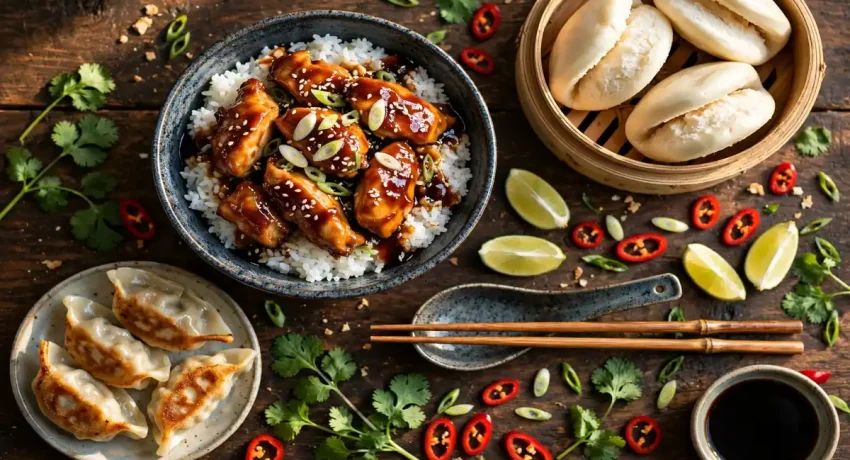

Asian garden fast food is fast food with a garden inside it. Fresh herbs sit next to hot woks. Crisp vegetables share a bowl with glossy sauces. A meal arrives in minutes, yet it tastes like someone cooked it with care. That mix is why this style of food keeps growing in 2026. It suits a lunch break, a family dinner, and a late-night craving too.
The name needs one honest note first. “Asian Garden” is not one big chain. Many small local restaurants share that name across the United States. One sits in Martinsburg, West Virginia. Another sits in Sidney, Montana. Each one is run by its own family. This guide is about the idea they all share. Fresh Asian food, served fast, with garden flavours at the front.
Asia-Pacific fast food is a huge market in 2026. One research firm puts it at about $193 billion this year. It could reach about $293 billion by 2034. Asian food as a whole is growing even faster. The global Asian food market is worth about $38.55 billion in 2026. It could pass $71 billion by 2034. Those are market-research estimates, not exact counts. The direction is clear though. People want Asian flavours, and they want them fast.
This guide covers 12 dishes that define the trend. They are the best Asian fast food dishes to try first in 2026. You will learn what it is, where it comes from, what to order, and what it costs. Prices are typical ranges for the United States in 2026. They change by city and by shop, so check the menu before you order.
Which Asian Garden Fast Food Dish Fits You Best?
Start here if you feel lost on a big menu. Find your mood in the left column. Order the dish in the right column.
| If you want | Order this | Why it works |
|---|---|---|
| Something filling and simple | Teriyaki chicken bowl | Chicken, rice, and vegetables in one bowl |
| Something you can eat while walking | Sushi burrito or bao buns | Handheld, no plate, no chopsticks needed |
| Something warm and comforting | Pho or ramen | Hot broth, soft noodles, fresh herbs |
| Something spicy | Pad thai or pad kra pao style dishes | Chilli, lime, and tamarind wake up the palate |
| Something crispy | Chicken katsu curry or dumplings | Crunch outside, soft inside |
| Something light and fresh | Banh mi or a Super Greens side | Herbs, pickled vegetables, and lean protein |
| Something for the whole family | A Panda Express family meal | Two large sides and three large entrees, about $43 to $54 |
What Is Asian Garden Fast Food?
Asian garden fast food is a style, not a single restaurant. It takes Asian cooking and serves it at fast-food speed. The “garden” part matters most. Fresh herbs, crisp vegetables, and bright sauces do the heavy lifting. A dish should smell fresh before you taste it. Basil, cilantro, mint, lime, and spring onions show up again and again.
The wok is the heart of the style. A wok cooks food fast at very high heat. Vegetables stay crisp. Meat gets a light char. Sauces cling instead of pooling. That speed is why a meal can reach your table in five minutes and still taste freshly made. Asian street food dishes across the region have worked this way for generations. Bangkok woks, Hanoi soup pots, and Tokyo ramen counters all follow the same logic. Cook fast, serve fresh, keep the flavours bold.
American fast food gave the style its format. Counter service, clear menus, and set meals make ordering easy. Panda Express is the biggest example in the United States. Andrew and Peggy Cherng founded it in 1983. Today it has more than 2,500 locations. Revenue reached $6.205 billion in 2024. It is the 11th largest restaurant chain in the country. In March 2026, Nation’s Restaurant News named it the 2026 Brand Icon. That award honours a chain that keeps its roots while it keeps innovating.
Other Asian fast food chains fill the same space in different ways. P.F. Chang’s began in 1993 in Scottsdale, Arizona. Pei Wei started in 2000 as its fast-casual offshoot. Jollibee began in the Philippines in 1978. It keeps opening new stores across North America. Each chain has its own menu. All of them sell speed plus Asian flavour. Local shops with names like Asian Garden do the same job in one neighbourhood at a time.
Delivery apps pushed the trend further. Asian dishes travel well in a box. Rice bowls, noodle boxes, and dumplings hold their heat. Sauces stay in small tubs until you pour them. A meal ordered at noon can still taste fresh at 12:20. That is why Asian food shows up near the top of most delivery lists in American cities.
What Makes a Good Bowl?
Bowls are the backbone of Asian garden fast food. Rice or noodles sit at the bottom. Protein and vegetables sit on top. Sauce ties it together. A good bowl balances five tastes. Sweet, salty, sour, bitter, and umami all play a part. No single taste should shout. The bowl should feel complete in one hand.
Why Does a Teriyaki Chicken Bowl Work So Well?
Teriyaki is a Japanese cooking method. The word joins two ideas. “Teri” means shine. “Yaki” means grill. Chicken gets grilled, then brushed with a glossy sauce. The sauce blends soy sauce, mirin, sake, and sugar. It turns sticky and sweet on the grill. That shine is the point.
A teriyaki chicken bowl adds steamed rice and vegetables. Broccoli, carrots, and snap peas are common. The rice soaks up the extra sauce. The vegetables add crunch and colour. Panda Express sells its grilled teriyaki chicken as a lighter choice. One serving has about 280 calories. That is far less than most fried options on the same menu.
Order it when you want something safe and satisfying. Ask for brown rice if the shop offers it. Extra vegetables instead of a second scoop of rice work well too. The bowl usually costs about the same as other fast-casual meals. Expect a typical range of $9 to $13 in the United States in 2026. Prices vary by city, so check the menu first.
What Is Bibimbap, and Why Is It So Popular?
Bibimbap is Korea’s most famous rice bowl. The name means “mixed rice.” A bowl holds rice, sauteed vegetables, meat, and a fried egg. Gochujang, a fermented chilli paste, sits on top. You mix everything together before you eat. The mix is the ritual. Each bite gets a little of everything.
Seoul made the dish famous. Spring in Seoul is a good time to try it at the source, when markets fill with fresh greens. In the United States, fast-casual Korean spots serve it in a bowl or a hot stone pot. The stone pot version is called dolsot bibimbap. Rice crisps against the hot stone. That crunch is worth the wait.
Bibimbap suits almost every diet. Vegetarian versions swap meat for mushrooms and tofu. Spicy versions add extra gochujang. Mild versions skip it. A typical fast-casual bibimbap bowl costs about $12 to $16 in 2026. It is a full meal in one bowl. No side dish is needed.
Why Is Orange Chicken Still the King?
The orange chicken Panda Express sells is the dish that built the chain. Chef Andy Kao created it in 1987. Crispy chicken gets tossed in a sweet and spicy orange glaze. The glaze is sticky, bright, and hard to forget. One in three dollars the chain earns comes from this one dish. The chain sells about 90 million pounds of it every year.
That scale is hard to grasp. Picture a line of delivery trucks full of orange chicken. Now picture that line running all year. That is the scale of one dish. It works because it hits three notes at once. Sweet orange, mild heat, and crispy chicken. Kids love it. Adults order it too. Nobody pretends it is health food. One serving has about 510 calories. It is a treat, and it knows it.
Order orange chicken as part of a plate, not alone. A plate at Panda Express costs about $10.50 to $12.60 in 2026. It comes with one side and two entrees. Pick Super Greens as the side. It has about 130 calories. Chow mein has about 600. Fried rice has about 620. The side you pick changes the meal more than the entree does.
What Can You Eat With One Hand?
Handheld food is the fastest kind of fast food. No bowl, no spoon, no table needed. You hold it, you bite it, you keep walking. Asian cooking has always had handheld dishes. Bao buns, spring rolls, and banh mi all fit in one hand. The sushi burrito joined them in 2011. Together they make lunch fit a busy day.
What Is a Sushi Burrito?
A sushi burrito is a sushi roll the size of a burrito. Rice, fish, vegetables, and sauce get rolled in seaweed. The roll stays whole. You eat it from the hand, like a burrito. No chopsticks, no small pieces, no soy sauce dish to balance.
Peter Yen created the idea in San Francisco. He filed the Sushirrito trademark in 2008. The first shop opened in January 2011 at 226 Kearny Street. Yen wanted sushi that fit a fast lunch hour. Sit-down sushi took too long. Pre-made sushi tasted stale. A big hand roll solved both problems. The idea spread across the United States in the mid-2010s. Food trucks and city shops copied it fast.
The story has a sad ending in 2026. Sushirrito wound down its operations in May 2026. Peter Yen announced the closure after 15 years in business. The chain had once grown to 10 locations. Only one remained open at the end. The sushi burrito itself lives on. Many other shops still sell it. A typical sushi burrito costs about $11 to $15 in 2026. Prices vary by city and by fish. Spicy tuna is usually cheapest. Salmon and yellowfin cost more.
Why Are Bao Buns So Addictive?
Bao buns are soft, white, steamed buns from China. They fold like a taco. Inside goes pork belly, chicken, or vegetables. Pickled cucumber and fresh herbs cut the richness. The bun is pillowy and slightly sweet. The filling is savoury and bold. That contrast is why one bun is never enough.
Gua bao comes from Fujian province and Taiwan. Street vendors have sold it for generations. It travelled to the West through night markets and food trucks. David Chang’s Momofuku helped make it famous in New York. Now bao buns show up on fast-casual menus everywhere. They suit sharing. Order two or three and split them with a friend.
Watch the filling, not the bun. Pork belly is rich and fatty. Chicken is lighter. Mushroom and tofu versions suit vegetarians. A single bao bun usually costs about $4 to $7 in 2026. Two buns plus a side make a full lunch. Three buns make a feast.
What Makes Banh Mi So Good?
Banh mi is Vietnam’s gift to fast food. A crusty baguette holds grilled pork, pate, pickled carrots, cucumber, cilantro, and mayonnaise. The bread comes from French colonial rule. The fillings are pure Vietnamese. Crunchy outside, soft inside, fresh and rich at once.
Vietnamese bakeries sell banh mi for a few dollars at home. In the United States, a good banh mi costs about $7 to $11 in 2026. It is one of the best value lunches in any city. The sandwich travels well too. It holds up for an hour in a bag. That makes it a smart delivery order.
Vietnam with family is the best way to taste banh mi at the source. Street stalls in Ho Chi Minh City sell them from dawn. Each stall has its own pate recipe. Every vendor claims to be the best. Try two stalls and decide for yourself.
Which Soups and Noodles Warm You Up?
Soup is the oldest fast food in Asia. A pot of broth simmers all day. Noodles cook in minutes. Fresh herbs go in at the last second. The bowl arrives steaming. It warms your hands before it warms your stomach. Pho, ramen, and pad thai all work this way, even though only two of them are soups.
Why Is Pho the Ultimate Comfort Food?
Pho is Vietnam’s national soup. Flat rice noodles swim in clear beef or chicken broth. The broth simmers for hours with bones, star anise, cinnamon, and cloves. Sliced beef, bean sprouts, basil, lime, and chilli go on top. You add the herbs yourself. That is part of the fun.
Pho began in northern Vietnam in the early 20th century. It travelled south with migrants. Then it travelled the world with refugees and restaurants. Today it is one of the most loved soups on the planet. Vietnamese pho fast food shops now serve it in under ten minutes. The broth is made in advance. The noodles cook fresh. The herbs stay raw and bright.
A bowl of pho usually costs about $12 to $16 in the United States in 2026. Chicken pho costs less than beef. Extra meat costs more. Ask for the herbs on the side if you like to control the flavour. Squeeze the lime in last. It lifts the whole bowl.
What Makes Ramen Different From Instant Noodles?
Ramen is a Japanese noodle soup with deep roots. Wheat noodles sit in rich broth. Toppings add texture and flavour. Sliced pork, a soft egg, green onions, and nori are classic. The broth is the soul of the dish. Tonkotsu broth simmers pork bones for hours. Shoyu broth leans on soy sauce. Miso broth leans on fermented paste.
Instant ramen is a different thing. Momofuku Ando invented it in 1958. His Nissin Chicken Ramen cooked in minutes with hot water. It fed a hungry world. That success gave ramen a cheap reputation too. Real ramen fast food shops fight that image every day. Their broth takes hours. The noodles are fresh. The eggs are soft-boiled to order.
Tokyo in summer is ramen season in a strange way. Hot soup in hot weather sounds wrong. Tokyo locals do it anyway. The salt replaces what sweat takes away. A bowl in a Tokyo shop costs about 900 to 1,200 yen. In the United States, a good bowl costs about $13 to $18 in 2026. Add an egg for a dollar or two. It is worth it.
Why Does Everyone Love Pad Thai?
Pad thai is Thailand’s most famous noodle dish. Flat rice noodles get stir-fried with egg, tofu or shrimp, bean sprouts, and peanuts. Tamarind sauce gives it a tangy sweetness. Lime and chilli sit on the side. The dish balances sweet, sour, salty, and spicy in every bite.
Pad thai became a national dish in the 1930s. The Thai government promoted it as a symbol of the country. Rice noodles were cheap and local. The dish spread fast. Today it is the first Thai dish most people try. Thailand’s beaches are full of stalls that cook it on a hot wok in front of you. The smell alone pulls people in.
Pad thai fast food is a smart first order in any Thai takeout spot. Fast-casual pad thai costs about $11 to $15 in the United States in 2026. Shrimp costs more than tofu. Ask for it less sweet if you like. Many shops add too much sugar. A squeeze of lime fixes that. Crushed peanuts add crunch. Bean sprouts add freshness. Eat it hot, straight from the wok.
What Small Plates Are Worth Ordering?
Small plates are the fun part of Asian garden fast food. They arrive fast and cost little. One order lets you taste three things instead of one. Dumplings, katsu curry, and fried rice all work as small plates. Order one as a starter, or two as a meal.
Why Do Dumplings Disappear So Fast?
Dumplings are small pockets of dough with a savoury filling. Pork, chicken, shrimp, or vegetables sit inside. The dough gets steamed, boiled, or pan-fried. Pan-fried gyoza have a crisp bottom and a soft top. That mix of textures is hard to resist.
China has eaten dumplings for well over a thousand years. Jiaozi, the classic Chinese dumpling, is a Lunar New Year food. Families fold them together at home. Japan adapted them as gyoza. Korea has mandu. Each country has its own fold and its own filling. The idea stays the same. Small, hot, and full of flavour.
Hong Kong is the best place to eat dumplings at scale. Dim sum halls serve dozens of kinds from rolling carts. A decoded Chinese restaurant menu helps too, because dumpling menus can confuse first-timers. In the United States, dumplings fast food usually runs about $7 to $10 for six in 2026. Order them as a side. They pair with any bowl or noodle dish.
What Is Chicken Katsu Curry?
Chicken katsu curry is Japan’s comfort food. A breaded chicken cutlet gets sliced and laid over rice. Thick curry sauce pours over the top. The cutlet stays crisp under the sauce. The curry is mild, sweet, and rich. It is nothing like Indian curry. This dish stands on its own.
Curry reached Japan in the Meiji era. It came through Britain, not directly from India. Japanese cooks made it milder and thicker. They served it with rice. Katsu, the fried cutlet, joined later. The pair became a staple. School cafeterias, train stations, and fast-food chains all serve it. CoCo Ichibanya, Japan’s biggest curry chain, has hundreds of shops.
A katsu curry plate costs about $12 to $16 in the United States in 2026. It is a heavy meal. The cutlet is fried. The sauce is rich. The rice is generous. Eat it when you are truly hungry. Skip it when you want something light.
Why Is Nasi Goreng the Perfect Fried Rice?
Nasi goreng is Indonesia’s fried rice. The name means “fried rice” in Indonesian. Day-old rice gets fried with kecap manis, a sweet soy sauce. Shallots, garlic, chilli, and egg join the wok. A fried egg sits on top. Prawn crackers add crunch on the side. It is street food at its best.
Bali serves nasi goreng everywhere. Beach cafes, night markets, and hotel breakfasts all offer it. It costs a few dollars on the island. In the United States, it costs about $11 to $14 in 2026. It is a smart order when you want something filling but not heavy. The egg adds protein. The vegetables add freshness. The chilli adds heat.
Where Can You Find Asian Garden Fast Food?
Asian garden fast food lives in three places. Big chains, fast-casual shops, and local family restaurants. Each one has its own strengths. Chains are consistent. Fast-casual shops are fresh. Local restaurants are personal. Try all three before you pick a favourite.
| Place | What it is | Best for | Typical price |
|---|---|---|---|
| Panda Express | America’s largest Asian fast-food chain, 2,500+ locations, founded 1983 | Orange chicken, bowls, family meals | Bowl about $9 to $10 |
| P.F. Chang’s | Full-service Asian chain, founded 1993 in Scottsdale, Arizona | Lettuce wraps, dumplings, sit-down meals | Entrees about $15 to $20 |
| Pei Wei | Fast-casual offshoot of P.F. Chang’s, started 2000 | Quick bowls and noodles | Bowls about $10 to $13 |
| Jollibee | Filipino chain, founded 1978, growing fast in North America | Chickenjoy, spaghetti, peach mango pie | Meals about $8 to $12 |
| Local Asian Garden restaurants | Independent family shops, many share the name | Pad thai, General Tso’s chicken, wonton soup | Entrees about $10 to $15 |
| Food trucks and night markets | Mobile stalls and festival vendors | Bao buns, skewers, bubble tea | Items about $5 to $12 |
Local shops deserve a closer look. The Asian Garden in Martinsburg, West Virginia, earns a 4.6-star rating from more than 10,000 reviews. Customers praise the shrimp dishes and the wonton soup. The Asian Garden in Sidney, Montana, has served Thai and Chinese food from the same family kitchen since 2009. No chain owns it. One family, one kitchen, and seventeen years on the same corner define the place. A Chinatown restaurant menu guide shows how to read these local menus. The codes and numbers make sense once you know the pattern.
Delivery apps are the fourth place. DoorDash, Uber Eats, and Grubhub all list Asian restaurants near you. Search “asian fast food near me” and compare. Check the ratings and the delivery time. Then compare the menu prices against the shop’s own site. Apps often add a markup. A bowl that costs $10 in the shop can cost $12 on an app.
How Much Does Asian Garden Fast Food Cost in 2026?
Asian garden fast food is mid-priced fast food. It costs more than a burger, yet less than a sit-down dinner. A single person can eat well for about $10 to $15. A family of four can eat for about $40 to $55. These are typical ranges for the United States in 2026. Big cities cost more. Small towns cost less. The table below starts with Panda Express menu prices 2026, then covers the rest of the style.
| Meal | Typical price in 2026 | What you get |
|---|---|---|
| Panda Express Bowl | About $9 to $10 | One side and one entree |
| Panda Express Plate | About $11 to $13 | One side and two entrees |
| Panda Express Bigger Plate | About $13 to $15 | One side and three entrees |
| Panda Express Family Meal | About $43 to $54 | Two large sides, three large entrees, feeds 4 to 5 |
| Sushi burrito | About $11 to $15 | One large hand roll |
| Pho or ramen bowl | About $12 to $18 | One large bowl with toppings |
| Pad thai or fried rice | About $11 to $15 | One noodle or rice plate |
| Six dumplings | About $7 to $10 | One side order |
| Two bao buns | About $8 to $14 | Two buns, sometimes with a side |
| Banh mi sandwich | About $7 to $11 | One sandwich, full meal |
Delivery adds cost. Apps charge fees and tips on top of menu prices. A $12 bowl can reach $18 by the time it arrives. Pick up the food yourself when you can. Many shops offer a discount for pickup orders. Some offer loyalty points. Panda Express has a rewards programme. Regulars earn points on every order. Those points turn into free food over time.
How Do You Eat Asian Fast Food and Stay Healthy?
Healthy Asian fast food is easy to find once you know the swaps. Asian fast food can be healthy or heavy. The choice is yours. The same menu holds both options. Steamed dishes are light. Fried dishes are heavy. Vegetables are your friend. Extra sauce is not. A few smart swaps change the whole meal.
| Swap this | For this | What changes |
|---|---|---|
| Fried rice, about 620 calories | Super Greens, about 130 calories | You save about 490 calories |
| Chow mein, about 600 calories | Steamed white rice | Less oil, fewer calories |
| Orange chicken, about 510 calories | Grilled teriyaki chicken, about 280 calories | Less sugar, less fat |
| Full-sugar bubble tea | Unsweetened green tea | No added sugar at all |
| Extra soy sauce | Fresh lime and chilli | Flavour without the salt |
| Fried spring rolls | Fresh summer rolls | Steamed rice paper instead of fried dough |
Sodium is the hidden problem. Soy sauce, fish sauce, and soup broths all carry salt. One bowl of ramen can hold more than a full day of sodium. Drink water with your meal. Skip the extra soy sauce packet. Ask for sauce on the side when you can. You control the amount that way.
Vegetables are the easy win. Most Asian dishes already include them. Broccoli, snap peas, bean sprouts, and bok choy add crunch and fibre. They fill you up without many calories. Ask for extra vegetables when the shop allows it. Many shops add them free. Fresh herbs count too. Basil, mint, and cilantro add flavour with almost no calories.
Can You Make Asian Garden Fast Food at Home?
Yes, and it is easier than it looks. Most dishes need three things. A hot pan, a good sauce, and fresh herbs. You do not need a wok. A large frying pan works fine. You do not need rare ingredients. Soy sauce, sesame oil, garlic, and ginger cover most recipes.
Start with a teriyaki chicken bowl. Mix soy sauce, mirin, sake, and sugar in a small pan. Simmer it until it thickens. Grill chicken thighs in a hot pan. Brush the sauce on near the end. Serve over rice with steamed broccoli. The whole meal takes about 25 minutes. It costs far less than takeout.
Try pad thai next. Soak flat rice noodles in warm water. Fry garlic, egg, and tofu in a hot pan. Add the noodles and tamarind sauce. Toss in bean sprouts and peanuts. Squeeze lime over the top. The sauce is the hard part. Buy a bottle of pad thai sauce first. Make your own later, once you know the taste.
Keep a small Asian pantry. Soy sauce, rice vinegar, sesame oil, sriracha, and fish sauce last for months. Fresh ginger and garlic last for weeks in the fridge. Frozen dumplings cook in ten minutes, and frozen edamame takes five. With those basics, a fast Asian dinner is always ten minutes away.
How Should You Order on a Delivery App?
Asian fast food delivery makes dinner easy to get. It also makes it easy to overspend. A few habits keep the cost down and the food fresh. Order from shops close to you. Short trips keep noodles firm and dumplings crisp. Long trips turn everything soft.
Pick dishes that travel well. Rice bowls, fried rice, and dumplings hold up best. Soups travel badly. Broth spills. Noodles soak it up and go soft. If you order pho, ask for the broth in a separate container. Pour it in when the food arrives. Many shops do this by default. Ask anyway.
Check the menu price against the shop’s own site. Apps often charge more per item. A $10 bowl can cost $12 on an app. Add fees and a tip, and the meal can cost double. Pick up the food yourself when the shop is near. You save money. The food tastes better too.
Frequently Asked Questions
What is Asian garden fast food?
Asian garden fast food is a style of quick Asian cooking built on fresh herbs, crisp vegetables, and bold sauces. It covers dishes like teriyaki bowls, pad thai, pho, ramen, bao buns, and dumplings. The name “Asian Garden” also belongs to many small independent restaurants. There is no single chain behind the name.
What is the most popular Asian fast food dish?
Orange chicken is the most popular by sales. Panda Express sells about 90 million pounds of it every year. It makes up about one third of the chain’s sales. Pad thai and teriyaki chicken bowls are close behind. They lead most other Asian fast-food menus.
Is Asian fast food healthy?
It can be. Steamed dishes, grilled chicken, fresh vegetables, and clear soups are light and healthy. Fried dishes, sweet sauces, and large rice portions add calories fast. Pick Super Greens instead of fried rice. Swap orange chicken for grilled teriyaki chicken too. Drink water instead of sweet tea.
How much does a Panda Express bowl cost in 2026?
A Bowl costs about $9 to $10 in most of the United States in 2026. A Plate costs about $11 to $13. A Bigger Plate costs about $13 to $15. A Family Meal costs about $43 to $54. Prices vary by city and by location. Delivery apps charge more.
Where can I find Asian fast food near me?
Search “asian fast food near me” on any map or delivery app. Panda Express has more than 2,500 locations in the United States. Local shops with names like Asian Garden serve most towns. Food trucks and night markets sell bao buns and skewers in many cities.
What should I order first at an Asian fast food place?
A teriyaki chicken bowl is the safe first pick. Pad thai is the classic choice. A sushi burrito is the fun one. Six dumplings work as a side with any of them. Those four dishes cover the whole style. Start there, then explore.
What Should You Try First?
Asian garden fast food rewards the curious. Start with one dish you know. Add one dish you have never tried. A teriyaki bowl plus six dumplings is a safe first order. A sushi burrito plus a banh mi is a bold one. Either way, you will eat well for about $12.
The trend is not slowing down. The Asia-Pacific fast food market grows every year. New chains open. Old shops get better. Delivery gets faster. The food stays fresh, fast, and full of flavour. That is the whole idea. A garden on a plate, served in minutes.
So do not panic. Your next Asian garden fast food meal could be a game changer. Pick a dish from this guide. Order it fresh. Eat it hot. Then come back and try the next one. Twelve dishes are waiting. The wok is already hot.