
Car Battery Problems Explained: Jump-Starting, Charging and Replacement
A flat battery is one of the most common reasons a car will not start. It usually happens at the worst moment: a cold morning, a late night, or just as you are leaving for something important. The good news is that most car battery problems are simple to understand. This guide explains the causes, the warning signs, and what to do when the battery lets you down.
Firstly, you will learn to spot the early signs of a failing battery. Secondly, you will see how to jump-start and charge a battery safely. Finally, you will learn when to test, maintain or replace it. As a result, a flat battery will be an inconvenience, not a mystery.
What Are the Car Battery Warning Signs?
Car battery warning signs usually appear before the battery fails completely. The engine may turn over slowly when you start the car. That slow, tired cranking sound is the classic early sign. Lights may look dimmer than usual, especially when the engine is off. In addition, the dashboard may show a battery-shaped warning light.
Electrical quirks can also point to a weak battery. Windows may move slowly. The radio may cut out. The central locking may act strangely. Each quirk alone could mean something else. Together, they suggest the battery is struggling to hold charge.
Pay attention to how the car behaves after sitting unused. A healthy battery should start the car after a week or two of rest. If the car struggles after only a few days, something is draining the battery or the battery is ageing. Either way, get it checked before it fails completely.
Do not ignore the warning light. It looks like a small battery symbol on the dashboard. It can mean the battery is not charging, not only that the battery is flat. A charging fault can flatten even a new battery. Get the car checked promptly when that light stays on.
What Causes a Flat Battery?
Car battery flat causes fall into three groups: age, drain and cold. Age is the simplest. Batteries wear out with use. Each charge and discharge cycle takes a little life from the battery. Over time, it holds less charge and delivers less power.
Drain is the second cause. Car battery drain overnight often comes from something left on: an interior light, a boot light, or a phone charger. It can also come from a fault, such as a light that stays on inside the boot when the lid is closed. A small drain, repeated night after night, will flatten a battery.
Cold is the third cause. Car battery in cold weather works harder and delivers less power. Cold thickens the engine oil, so the starter motor needs more effort to turn the engine. At the same time, the battery’s chemical reactions slow down. That combination is why so many batteries fail on the first cold morning of winter.
Short trips make all three causes worse. A short drive does not give the alternator time to recharge the battery after starting. Repeated short trips slowly drain the battery down. If most of your journeys are short, take the car for a longer drive regularly. That gives the battery a proper charge.
Car Battery Dead: What to Do
Car battery dead what to do is a question best answered calmly. First, check the simple things. Is the car in park or neutral? Are the headlights off? Is anything plugged in that could drain power? A quick check can save a call-out.
Try starting the car again, but do not keep cranking it. Repeated attempts drain the battery further and can damage the starter motor. If the engine turns over slowly and will not catch, stop. The battery needs help, not more effort.
Check the battery terminals if you can do so safely. Car battery terminals corrosion looks like a pale, crusty build-up around the metal posts. Corrosion blocks the connection between the battery and the car. Cleaning it can restore the connection. However, only do this if you know how. Wear gloves and eye protection, and never let a metal tool touch both terminals at once.
If you have breakdown cover, call for help. Your insurance coverage types determine whether battery assistance is included. Many policies include a jump start or a tow. Keep the assistance number saved in your phone, so you are not searching for it at the roadside.
How Do You Jump Start a Car?
How to jump start a car safely starts with the handbook. Every car is slightly different, and some cars need special care. Read the jump-starting section before you connect anything. If the battery is damaged, swollen or leaking, do not jump-start it. Call a professional instead.
You need jump leads and a second car with a charged battery, or a portable jump starter. Park the helper car close enough for the leads to reach, but do not let the cars touch. Switch off both cars, including lights and heaters. That protects the electronics in both cars.
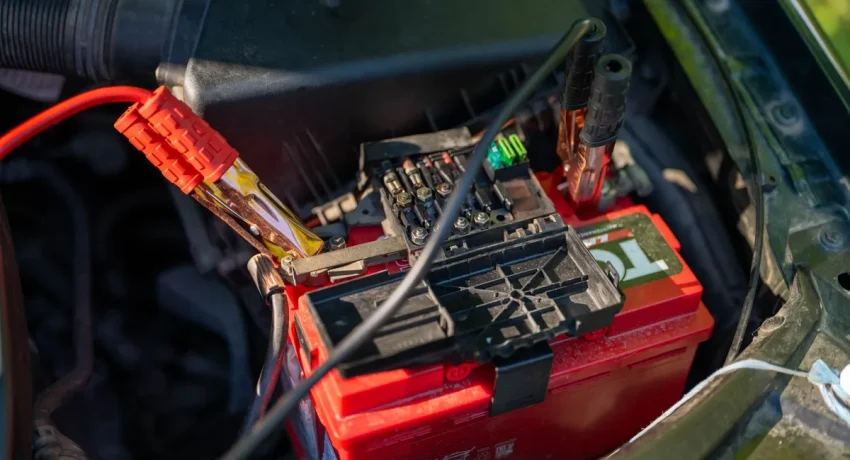
Connect the leads in the order your handbook gives. The usual order is: red lead to the flat battery’s positive terminal, red lead to the helper battery’s positive terminal, black lead to the helper battery’s negative terminal, and black lead to an unpainted metal part of the flat car’s engine, away from the battery. That last step matters. It keeps sparks away from the battery.
Start the helper car and let it run for a few minutes. Then try to start the flat car. If it starts, leave both cars running for a few minutes. Remove the leads in the reverse order. Drive the car for a good stretch, so the battery recharges. If the car will not start after a jump, the fault may be elsewhere. Call for help.
Portable jump starters are a useful alternative. They are small battery packs with leads attached. They remove the need for a second car. Keep one charged in the boot if you drive an older car. However, check its charge regularly. A flat jump starter is no help at all.
How Do You Charge a Car Battery?
How to charge a car battery at home starts with the right charger. A mains battery charger connects to the battery terminals and charges it slowly. A slow charge is kinder to the battery than a fast one. Follow the charger instructions exactly. Wrong settings can damage the battery.
Disconnect the battery before charging if your handbook tells you to. Some cars need the battery disconnected to protect the electronics. Others can be charged in place. The handbook knows your car. Trust it over general advice.
Charge in a well-ventilated place. Charging produces gas, and that gas can build up in a closed space. Never smoke near a charging battery. Keep the charger away from water. In addition, wear gloves and eye protection when you handle the terminals.
A full charge can take several hours, depending on how flat the battery is. Do not rush it. A battery that is only partly charged will fail again soon. If the battery will not hold a charge, it is likely worn out. No amount of charging will fix a battery that has reached the end of its life.
How Do You Test a Car Battery?
Car battery test methods range from simple to precise. The simplest test is observation: slow cranking, dim lights and electrical quirks all point to a weak battery. However, observation cannot tell you how much life is left. A proper test can.
Most garages offer a battery test that takes minutes. The tester measures the voltage and the battery’s ability to deliver current. It gives a clear result: good, weak, or replace. That test is worth doing before winter, or before a long journey. It is also worth doing when you buy a used car.
Car battery age matters for the test result. An old battery can test as weak even when it still starts the car. That is a warning, not a pass. Plan a replacement before it fails. A battery that tests as good but is very old deserves a retest in a few months.
Some drivers use a multimeter at home. A healthy battery usually reads around twelve and a half volts or more when the car has been resting. A lower reading suggests a weak or discharged battery. However, a voltage reading alone does not tell the whole story. A load test, done by a garage, is more reliable.
Is It the Battery or the Alternator?
Car battery vs alternator problem is a common confusion. Both cause similar symptoms: a flat battery, dim lights and a car that will not start. The difference is where the fault lies. The battery stores power. The alternator makes power while the engine runs and recharges the battery.
One clue is timing. If the car starts with a jump and then runs fine, the battery was probably flat. If the car starts and then dies again soon after, the alternator may not be charging. Another clue is the warning light. A battery warning light that stays on while driving often points to a charging fault.
Do not guess. A garage can test both parts quickly. The battery test checks storage. The charging test checks the alternator’s output. Replacing a good battery will not fix a bad alternator. Replacing a good alternator will not fix a worn battery. A proper diagnosis saves money and time.
If the alternator is faulty, the car needs professional repair. Alternator work involves the engine’s electrical system and is not a roadside job. Our guide to dealer vs independent mechanic servicing can help you choose where to take the car. Knowing typical car repair costs also helps you judge a quote.
Car Battery Not Charging: What Does It Mean?
Car battery not charging can mean several things. The alternator may be faulty. The drive belt may be loose or worn. A connection may be corroded. Or the battery itself may be so worn that it cannot accept a charge. Each cause needs a different fix.
Check the obvious first. Are the terminals clean and tight? Is the drive belt in good condition? Can you see any damaged wiring? If the terminals are corroded, cleaning them may restore charging. However, do not attempt belt or wiring work unless you know how. Those jobs belong to a mechanic.
A battery that will not charge after a proper charging session is likely worn out. Age is the usual reason. Heat is another. Batteries in hot climates age faster. If the battery is old and will not hold charge, replacement is the sensible answer.
Do not keep jump-starting a car that will not charge. Each jump masks the fault and risks a breakdown somewhere worse. Get the charging system tested. A quality auto repair workshop can test the battery, the alternator and the connections in one visit.
When Should You Replace a Car Battery?
Car battery replacement is needed when the battery can no longer hold a useful charge. The signs are clear: slow starting, repeated flat batteries, and a test result that says weak or replace. A battery that needs jump-starting more than once is telling you it is finished.
How long do car batteries last? There is no single answer. Climate, driving patterns and battery type all play a part. A battery in a mild climate, used for regular longer journeys, usually lasts longer than one in a hot climate used only for short trips. Watch for the warning signs rather than counting the years.
Choose a replacement that matches your car’s specification. The handbook lists the size, the capacity and the terminal layout. A battery that does not fit properly is a poor buy, even if it is cheap. Ask the seller to confirm the fit for your car before you buy.
Replacement is a straightforward job for a garage. It takes minutes. The old battery should be recycled, not thrown away. Most sellers take the old battery when they fit the new one. A new battery is a routine maintenance cost, not a major purchase. For larger car expenses, our car financing guide explains the options in plain terms.
How Do You Maintain a Car Battery?
How to maintain a car battery is mostly about routine. Keep the terminals clean and tight. Check them when you check the oil. A quick look costs nothing. If you see corrosion, clean it carefully or ask a garage to do it.
Drive the car regularly. A car that sits for weeks slowly drains its battery. If you leave the car unused for a long period, consider a trickle charger. It keeps the battery topped up without overcharging it. In addition, disconnecting the battery is an option, but it can reset the car’s electronics. Check the handbook first.
Turn off lights, heaters and chargers before switching off the engine. That small habit reduces the drain on the battery. It also means the battery starts the next journey with a full charge, not a partial one.
Prepare the battery for winter. Car battery in cold weather needs a full charge to cope with the extra strain. Get the battery tested before the cold arrives. Following a regular car maintenance schedule keeps battery checks from being forgotten. A tested battery, clean terminals and regular driving are the best maintenance there is.
Battery problems feel sudden, but they rarely are. The warning signs build up over weeks: slow cranking, dim lights, a battery that struggles after a few days of rest. Listen to those signs. Test the battery, clean the terminals, and replace it before it strands you. That is how a small maintenance job saves you from a large roadside problem.