
Badminton Rules Explained: How Badminton Works
Badminton looks simple at first glance. Two players, or two pairs, hit a shuttlecock over a net. The shuttle must land inside the court. However, the rules behind that simple idea surprise many new players.
This guide explains badminton rules for beginners in plain English. Firstly, you will learn how badminton works from the first serve to match point. Secondly, you will see the scoring system, the court lines and the serve rules. Finally, you will meet the shots, the faults and the singles-versus-doubles difference. As a result, you can play your first game with confidence.
What Is Badminton?
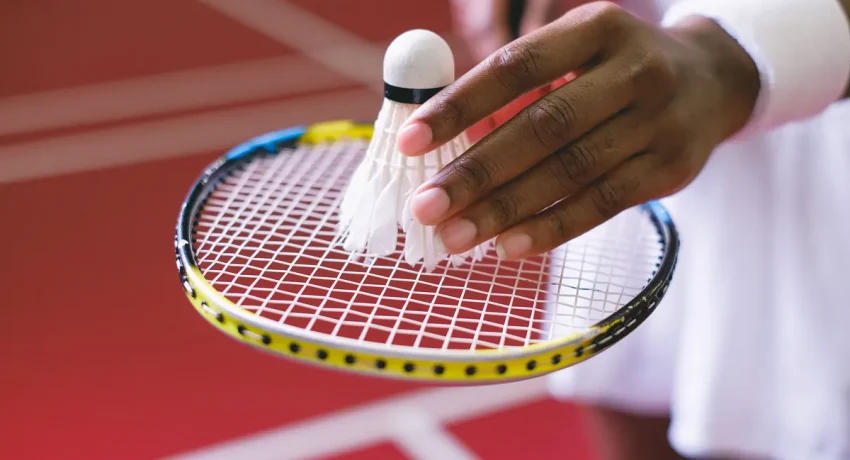
Badminton is a racket sport played on a rectangular court. A net divides the court in half. Players use lightweight rackets to hit a shuttlecock, often called a shuttle or birdie. In addition, the shuttle has feathers or a plastic skirt that slows it in the air.
The aim is to land the shuttle in your opponent’s half of the court. Your opponent must return it before it hits the floor. If the shuttle lands in, you win the rally. If it lands out, your opponent wins the rally. Therefore, accuracy matters as much as power.
Badminton is one of the fastest racket sports in the world. Smashes can travel at remarkable speeds. Yet the game also rewards touch, placement and patience. Consequently, players of many ages enjoy it at clubs, schools and leisure centres.
How Badminton Scoring Works?
How badminton scoring works is simple once you learn the numbers. Matches are usually best of three games. Each game goes to 21 points. The first player or pair to reach 21 wins the game, provided they lead by two points.
How many points in badminton must you win? You need 21 points with a two-point lead. If the score reaches 20-20, play continues until one side leads by two. At 29-29, the next point wins the game. In other words, 30 is the highest possible score in a game.
Badminton rally scoring explained means every rally scores a point. The winner of each rally scores, whether they served or not. The server changes after each rally. As a result, games move quickly and every rally matters.
A match usually lasts between thirty and sixty minutes. Short games can end sooner. Long three-game matches can run longer. Moreover, players change ends after each game. They also change ends in the third game when one side reaches eleven points.
Badminton Serve Rules
Badminton serve rules start with the service courts. The court has a short service line near the net and a long service line at the back. The server must stand inside the correct service box. In addition, the server must hit the shuttle below waist height.
The serve must travel diagonally across the net. It must land in the opposite service box. If the serve hits the net and drops short, it is a fault. Similarly, a serve that lands outside the box gives the point away.
The serving side depends on the score. When the server’s score is even, they serve from the right box. When the score is odd, they serve from the left box. In doubles, the same rule applies to the serving player. Therefore, the score tells you where to stand.
Players alternate serves after winning rallies. The winner of a rally serves next. In singles, the same player keeps serving while they keep winning rallies. In doubles, the serve passes between partners in a set order. As a result, the even-odd rule keeps the game organised.
Badminton Court Dimensions
Badminton court dimensions are set by the world governing body. A full court measures 13.4 metres long. It is 6.1 metres wide for doubles and 5.18 metres wide for singles. The net stands 1.55 metres high at the posts and 1.524 metres high in the centre.
Several lines shape play. The short service line sits 1.98 metres from the net. At the back of the court sits the long service line for doubles. Inside the doubles sidelines run the singles sidelines. In addition, the centre line divides the service boxes left and right.
Badminton net height matters for every shot. The net dips slightly in the middle, so the centre is lower than the posts. A net shot that brushes the tape can still drop in. However, touching the net with your racket or body is a fault.
Most leisure centres mark courts on a shared hall floor. Lines for several sports may overlap. Therefore, check which colour marks the badminton court before you start. A clear court makes the game far easier to follow.
Badminton Singles vs Doubles
Badminton singles vs doubles changes the game in clear ways. Singles uses the narrower court. Players cover the whole court alone. Rallies last longer, and movement matters most. In contrast, doubles uses the full width and rewards fast reactions at the net.
In doubles, partners split the court. One player often takes the front while the other covers the back. They switch roles as the rally moves. Good doubles pairs talk constantly. Moreover, they avoid hitting the same shuttle twice.
The serving rules differ slightly too. In singles, the server serves from the side matching their own score. In doubles, the serving team rotates its server based on points won. When the serving team loses a rally, the serve passes to the other side. As a result, doubles needs a little more scorekeeping.
Beginners often start with singles to learn the basics. Doubles suits players who enjoy teamwork. Both formats use the same scoring system. In short, try both and see which style suits you.
What Is a Fault in Badminton?
What is a fault in badminton? A fault is any break of the rules that loses the rally. The most common fault is hitting the shuttle out of court. Another is hitting the shuttle into the net. Both give the point to the other side.
Service faults are common among beginners. A serve above waist height is a fault. A serve that does not travel diagonally is a fault. Similarly, standing on a line while serving is a fault. The server’s feet must stay inside the service box.
Other faults include touching the net, reaching over the net to hit the shuttle, and hitting the shuttle twice. A player must not distract the opponent either. Deliberate shouting during a rally can count as a fault. Therefore, good manners and good rules go together.
When a fault happens, the rally ends at once. The other side wins the point and serves next. Umpires call faults in formal matches. In friendly games, players usually call their own faults honestly. As a result, trust keeps casual badminton enjoyable.
What Is Deuce in Badminton?
What is deuce in badminton? Deuce describes a tied score late in a game. The most common deuce score is 20-20. At that point, a side must win by two clear points. The game continues until one side leads by two.
The two-point rule creates tense finishes. A game can reach 21-20, then 21-21, then 22-21. Each rally feels bigger than the last. If the score reaches 29-29, the next point wins. In other words, the cap at 30 ends the game for certain.
Deuce also tests fitness and nerve. Players must stay calm after long rallies. They must choose safe shots rather than risky smashes. Moreover, the server must remember the even-odd serving rule under pressure. A wrong service box at deuce can cost the game.
Fans love deuce finishes. The crowd grows louder with each rally. Players dig deep for one more sprint. Consequently, deuce is the moment when badminton feels most like a contest of will.
Badminton Shots Explained
Badminton shots explained simply start with five main shots. The clear sends the shuttle high and deep. The drop shot falls softly just over the net. Then the smash drives the shuttle down fast. After that, the net shot brushes the tape. Finally, the drive travels flat and quick across the court.
Each shot has a purpose. A clear buys time and pushes the opponent back. Meanwhile, a drop shot pulls the opponent forward. A smash finishes a rally when the shuttle sits high. In contrast, a net shot forces a lift. Finally, a drive keeps the rally fast and flat.
Footwork links every shot together. Players return to a base position after each hit. They split-step as the opponent strikes. They move with small quick steps rather than long lunges. In addition, good footwork saves energy across a long match.
Beginners should learn the clear and the drop shot first. Those two shots control the rally. The smash can wait until timing improves. An Apple Watch fitness guide can help a player track heart rate during footwork drills and practice sessions.
Badminton Terms Explained
Badminton terms explained in plain language help new fans follow a match. A rally is the exchange of shots between serves. A let means the rally is replayed, often when a serve hits the net and still lands in. Match point is the point that would win the match.
Other terms describe the shuttle’s flight. A lift sends the shuttle high to the back. Next comes the block, a soft reply to a smash. A kill is a sharp downward shot at the net. Lastly, a carry happens when the shuttle rests on the racket instead of being hit cleanly. That counts as a fault.
Umpires use set phrases during a match. Umpires announce the score before each serve. They call “service over” when the serve changes sides. They also call “game” when a game ends. Therefore, listening to the umpire teaches you the terms quickly.
Commentators add more colour. Commentators talk about “deception” when a player disguises a shot. They praise “court coverage” when a player reaches everything. They also mention “tempo” when rallies speed up. As a result, the vocabulary grows naturally as you watch more matches.
How to Win a Badminton Match?
How to win a badminton match comes down to three habits. Firstly, keep the shuttle in play. Secondly, move your opponent around the court. Finally, stay patient and wait for a short shuttle to attack.
Consistency beats power for most beginners. A player who returns ten shots in a row wins more rallies than a player who smashes hard and misses. Aim for the deep corners. Vary the height of your shots. In addition, watch your opponent’s balance and hit where they are not standing.
Stamina matters in long matches. A third game tests legs and lungs. Players who train footwork last longer. They also make fewer errors when tired. An i9 Sports summer camp guide shows how young athletes build stamina through structured summer sport programmes.
Between games, rest and rethink. Drink water. Check the score and the serving side. Talk to a coach if one is courtside. Moreover, reset your focus rather than dwelling on lost points. A fresh game is a fresh chance.
How to Play Badminton for Beginners?
How to play badminton for beginners starts with a racket and a shuttle. Borrow a racket first if you can. Many clubs lend equipment to new players. Wear court shoes with good grip. Ordinary running shoes can slip on a wooden floor.
Learn the grip before anything else. Hold the racket like a handshake. Keep the grip relaxed, not tight. Practise the basic serve from the service box. Then rally gently with a partner, aiming for soft clears over the net. Short sessions build skill faster than exhausting ones.
Join a club or a beginner session. Coaches teach the serve, the footwork and the first shots. They also explain the scoring as you play. In addition, club nights give you partners at your own level. That social side keeps many players coming back.
Can Families Play Badminton Together?
Families often start together. Badminton suits mixed ages because the shuttle moves slowly enough for children to enjoy. A places to visit in Maui with kids guide covers family holidays where a resort court can introduce children to the game. Meanwhile, a cheap summer places to visit guide can help plan an affordable trip that includes court time.
Food and rest matter on playing days. Eat a light meal before a session. A Inca food recipes guide offers hearty but simple meal ideas for after a hard game. Drink water during breaks. As a result, you will enjoy the session rather than struggle through it.
Finally, remember that badminton is a game of touch as much as power. It rewards patience, movement and placement. While a cryptocurrency esports guide covers competition on screens, badminton offers the same competitive thrill in a sports hall. A anime fitness guide also shows how sport-themed stories inspire young fans to try real sports. That mix of skill, fitness and fun explains why badminton keeps growing around the world.